- Chinese
- French
- German
- Portuguese
- Spanish
- Russian
- Japanese
- Korean
- Arabic
- Irish
- Greek
- Turkish
- Italian
- Danish
- Romanian
- Indonesian
- Czech
- Afrikaans
- Swedish
- Polish
- Basque
- Catalan
- Esperanto
- Hindi
- Lao
- Albanian
- Amharic
- Armenian
- Azerbaijani
- Belarusian
- Bengali
- Bosnian
- Bulgarian
- Cebuano
- Chichewa
- Corsican
- Croatian
- Dutch
- Estonian
- Filipino
- Finnish
- Frisian
- Galician
- Georgian
- Gujarati
- Haitian
- Hausa
- Hawaiian
- Hebrew
- Hmong
- Hungarian
- Icelandic
- Igbo
- Javanese
- Kannada
- Kazakh
- Khmer
- Kurdish
- Kyrgyz
- Latin
- Latvian
- Lithuanian
- Luxembou..
- Macedonian
- Malagasy
- Malay
- Malayalam
- Maltese
- Maori
- Marathi
- Mongolian
- Burmese
- Nepali
- Norwegian
- Pashto
- Persian
- Punjabi
- Serbian
- Sesotho
- Sinhala
- Slovak
- Slovenian
- Somali
- Samoan
- Scots Gaelic
- Shona
- Sindhi
- Sundanese
- Swahili
- Tajik
- Tamil
- Telugu
- Thai
- Ukrainian
- Urdu
- Uzbek
- Vietnamese
- Welsh
- Xhosa
- Yiddish
- Yoruba
- Zulu
- Kinyarwanda
- Tatar
- Oriya
- Turkmen
- Uyghur


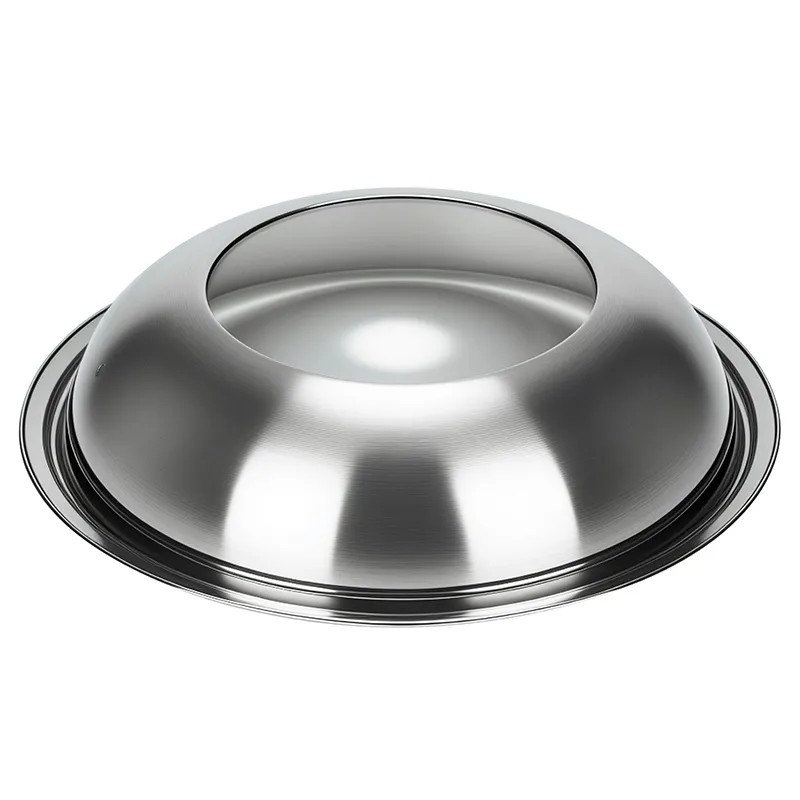
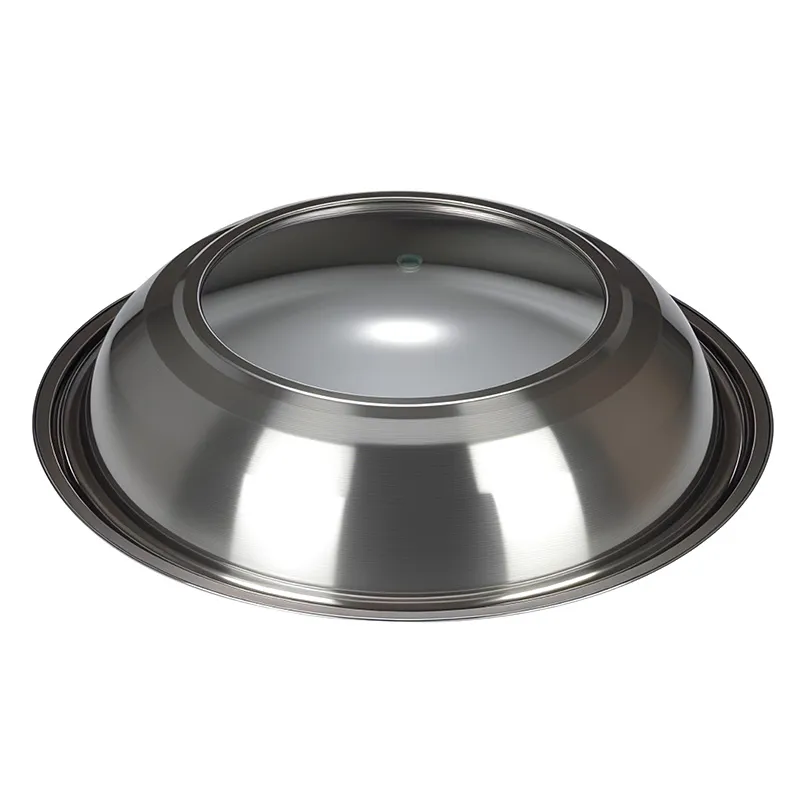
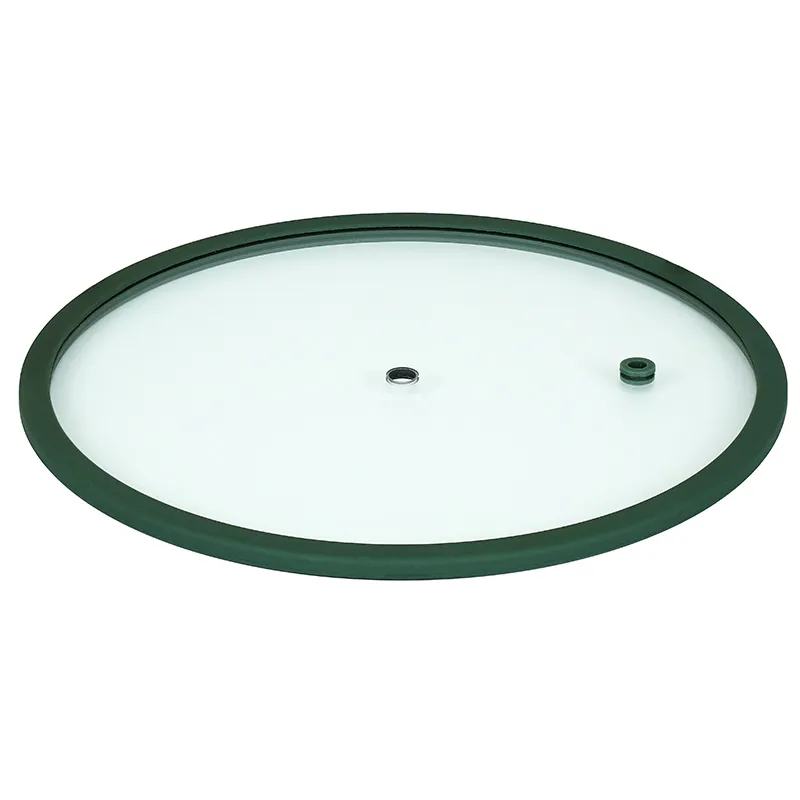
lodge lid tempered glass
When you hear 'lodge lid tempered glass,' most folks immediately picture that heavy, iconic cast iron skillet with a clear glass top. But here's the thing—that mental image often glosses over the real engineering and failure points. It's not just a piece of hardened glass; it's a thermal shock absorber, a fit-and-seal component, and a point of constant stress. I've seen too many discussions online fixate on thickness or brand names, missing the critical nuances of edgework, annealing consistency, and how the geometry of the lid actually interacts with the Lodge cookware's specific rim design. That's where the real stories, and the real problems, live.
The Core Misconception: Tempering Equals Invincibility
Let's get this straight first. Tempering gives the glass its strength, creating that characteristic surface compression. But it also creates a tension balance inside the panel. For a lodge lid tempered glass, the weak point is almost never the center of the panel under direct heat—it's the edges, and specifically the transition zone where the glass meets the metal handle assembly or the silicone gasket. I've had batches where the glass itself passed every standard impact test, but failed in the field because the metal clamp ring, when heated and cooled repeatedly, exerted uneven pressure on the glass edge. That's a design integration issue, not a glass quality issue. You can't just source a generic tempered glass circle and expect it to work.
This is where working with a specialized manufacturer makes a tangible difference. Take EUR-ASIA COOKWARE CO.,LTD. (https://www.glass-lid.com), for instance. Their entire operation is built around these specific products. When you're producing over 15 million pieces annually, primarily for export markets with strict compliance needs (think Germany's GS certification or France's NF standards), you develop a different calibration for failure modes. Their focus on low to high-level household glass products means they've likely seen every iteration of a tempered glass lid failure, from thermal shock cracks originating from a microscopic chip on the underside of the rim, to stress points caused by an improperly sized silicone seal that's just half a millimeter too tight.
The annealing process is another black box. Properly done, it relieves the internal stresses from cutting and drilling the handle hole before the glass goes into the tempering furnace. If that cycle is off—maybe the furnace has a cold spot, or the cycle time is shortened to increase throughput—you get latent stress. The lid might ship out fine, pass a thermal shock test, but then shatter on a customer's stove during the third use because that residual stress finally found a release point. It's a ghost in the machine that only shows up with volume and time.
Handle Attachment: The Real-World Stress Concentrator
If I had to pinpoint the single most common point of failure for a lodge lid glass, it's the handle. Not the knob itself, but the method of attachment. The industry standard is a metal stem that passes through a drilled hole in the glass, secured with a nut and often a silicone or phenolic washer. The theory is simple: the washer cushions and allows for expansion. The reality is messier.
We did a failure analysis on a batch of returns for a European client. The lids were cracking radially from the handle hole. The immediate assumption was over-tightening at the factory. But upon inspection, the nut torque was within spec. The culprit was the washer material. The original silicone compound became less resilient after repeated exposure to steam and high heat, eventually compressing permanently. This transferred the full thermal expansion stress directly to the glass edge of the hole. The fix wasn't to mandate higher torque control; it was to source a higher-grade, heat-stable silicone compound for that washer. A tiny component costing pennies, dictating the lifespan of the whole product.
Some manufacturers, like EUR-ASIA COOKWARE, likely have jigs and processes specifically for this. With a 20,000㎡ production base and a dedicated output, they can afford to optimize this step. They might use a flared metal bushing in the hole to distribute the load, or a specific two-stage tightening process after the glass has been heated to simulate its operating temperature. These are the granular details you only learn from doing it at scale and dealing with the returns. It's not in any spec sheet.
Thermal Shock and the Preheated Lid Debate
There's a persistent piece of advice floating around: always preheat your glass lid with the pan. The logic is sound—reduce the temperature differential. But in practice, it's more nuanced. The critical factor is the rate of temperature change, not just the delta. A tempered glass lid for Lodge-style cast iron faces a unique challenge: cast iron heats slowly but retains heat intensely. If you place a room-temperature lid on a searing-hot pan, the center of the glass gets a massive, immediate heat influx from rising steam and radiant heat, while the periphery, especially the edges clamped in metal, remain cooler. That gradient can exceed the glass's designed thermal shock resistance, typically rated around 220°C to 250°C differential.
I recall a test we ran, mimicking a worst-case home cook scenario: a lid pulled from a cool dishwasher rack and placed on a pan at a rolling boil. The failure rate jumped by 30% compared to a lid starting at room temperature. The lesson wasn't to warn against dishwashers (they're fine), but to understand that the product's rated spec exists in a lab. Real-world abuse is the true test. A robust design accounts for this by ensuring the tempering is exceptionally even, so the stress tolerance is uniform across the entire disk. This is where a manufacturer's consistency matters. A facility with tight process control over their tempering furnaces will have fewer outliers that fail under this kind of unpredictable user behavior.
This also ties into the glass composition itself. Borosilicate is often touted as the superior option for its low thermal expansion. But for a mass-market, durable lodge lid glass, soda-lime tempered glass is far more common. It's cheaper, it tempers to a higher surface hardness, and when properly engineered for the application, it's perfectly adequate. The key phrase is properly engineered. It means knowing the exact coefficient of expansion and designing the metal interface to accommodate it. Trying to switch to borosilicate on an existing design built for soda-lime can cause new sealing issues, as the growth dimensions differ.
The Geometry of the Dome and Condensation Management
The dome height of a glass lid isn't just for aesthetics or pot volume. It's a primary tool for managing condensation. A steeper dome causes condensate to drip down the sides more readily, potentially away from the food. A flatter dome might cause larger droplets to form and fall directly back onto the cooking surface. For a Lodge lid, which often sits on a deep skillet or Dutch oven, the dome profile needs to work with the cookware's high walls.
We had a project where a client wanted a lower-profile lid for sleek storage. The first prototypes created a rainstorm effect inside—large droplets constantly falling back into a braise, making it impossible to get a good sear or reduction. It watered down the dish. The solution wasn't a material change, but a geometry one. We added a very slight, almost imperceptible inward curve near the apex of the dome. This changed the surface tension behavior of the condensate, guiding it toward the edges. It's a subtle detail that you'd never notice unless you were looking for it, but it fundamentally changed the lid's performance. This is the kind of R&D that happens on the factory floor, through trial and error, not just in a CAD model.
A manufacturer entrenched in this niche, like EUR-ASIA COOKWARE CO.,LTD., with their specialization in various types of tempered glass lid products, would have a library of dome molds for different applications. Their experience exporting to diverse markets means they've probably adapted lid geometries for different regional cooking styles—perhaps a taller dome for the European market where braising is common, and a different profile for other uses. This practical, application-driven knowledge is what separates a catalog supplier from a solutions provider.
Looking at the Label: What Certifications Actually Mean
When you see a lodge lid tempered glass product, especially from a volume exporter, the certifications are telling a story. CE, LFGB, FDA... they're not just stickers. For glass, LFGB (the German food safety standard) is particularly rigorous on heavy metal release from any printed inks or enamels on the glass surface. If a lid has a painted border or logo, that ink needs to be formulated and fired on at a temperature that fuses it to the glass without leaving migratable substances.
I've seen failures here that had nothing to do with the glass's integrity. A batch was rejected because the black border ink, when subjected to an acetic acid wash test (simulating acidic food splatter), showed trace lead release. The problem was in the ink supplier's batch. This is where a vertically integrated or highly audit-conscious manufacturer has an edge. Their production base in Shandong's High-tech Development Zone suggests a setup geared for compliance. Controlling more of the supply chain, or at least having stringent inbound material checks, prevents these downstream surprises. It's not glamorous, but it's what ensures that annual output of 15 million pieces doesn't turn into a recall nightmare.
Finally, it's worth considering the sheer logistics. Producing at that scale for markets from Brazil to Japan means managing different regulatory landscapes, retailer packaging requirements, and even consumer expectations about feel and weight. The glass lid that works perfectly in a German kitchen might be considered too light or cheap-feeling in another market, prompting adjustments in thickness or handle design. This isn't a one-size-fits-all game, even for a seemingly simple product. The expertise lies in navigating these variations while maintaining a core of reliable, safe performance. That's the real mark of a specialist, the kind of depth you find in a company that doesn't just make glass, but makes glass for this specific purpose.
Related Products
Related Products