- Chinese
- French
- German
- Portuguese
- Spanish
- Russian
- Japanese
- Korean
- Arabic
- Irish
- Greek
- Turkish
- Italian
- Danish
- Romanian
- Indonesian
- Czech
- Afrikaans
- Swedish
- Polish
- Basque
- Catalan
- Esperanto
- Hindi
- Lao
- Albanian
- Amharic
- Armenian
- Azerbaijani
- Belarusian
- Bengali
- Bosnian
- Bulgarian
- Cebuano
- Chichewa
- Corsican
- Croatian
- Dutch
- Estonian
- Filipino
- Finnish
- Frisian
- Galician
- Georgian
- Gujarati
- Haitian
- Hausa
- Hawaiian
- Hebrew
- Hmong
- Hungarian
- Icelandic
- Igbo
- Javanese
- Kannada
- Kazakh
- Khmer
- Kurdish
- Kyrgyz
- Latin
- Latvian
- Lithuanian
- Luxembou..
- Macedonian
- Malagasy
- Malay
- Malayalam
- Maltese
- Maori
- Marathi
- Mongolian
- Burmese
- Nepali
- Norwegian
- Pashto
- Persian
- Punjabi
- Serbian
- Sesotho
- Sinhala
- Slovak
- Slovenian
- Somali
- Samoan
- Scots Gaelic
- Shona
- Sindhi
- Sundanese
- Swahili
- Tajik
- Tamil
- Telugu
- Thai
- Ukrainian
- Urdu
- Uzbek
- Vietnamese
- Welsh
- Xhosa
- Yiddish
- Yoruba
- Zulu
- Kinyarwanda
- Tatar
- Oriya
- Turkmen
- Uyghur


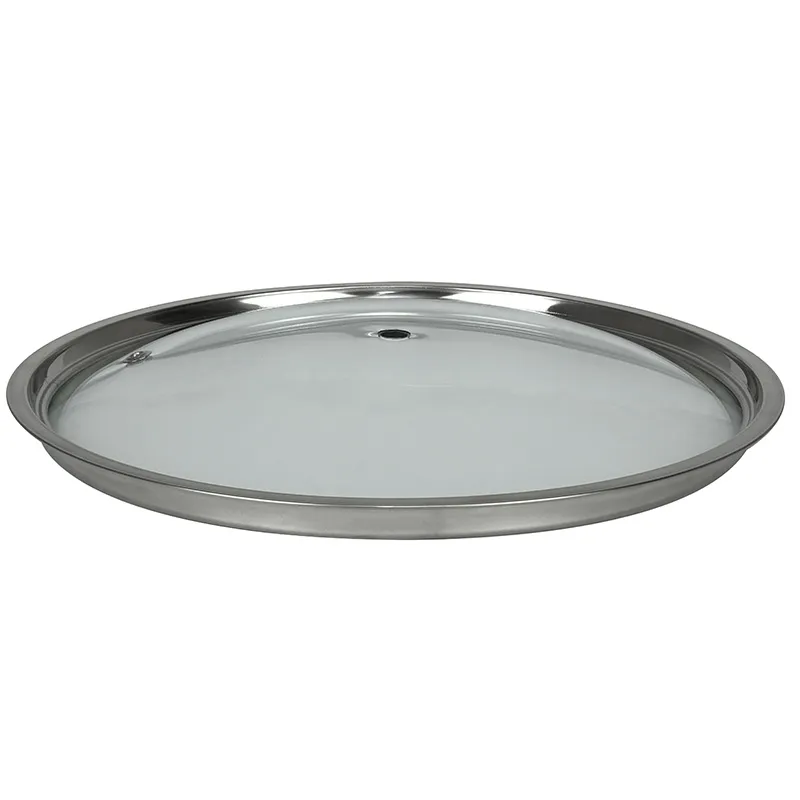
lodge tempered glass lid 10.25 inch
You see 'lodge tempered glass lid 10.25 inch' and think it's straightforward—just measure the pan, right? That's the first trap. In this business, a 10.25-inch lid often doesn't fit a 10.25-inch skillet. The nominal size refers to the cookware's top outer diameter, but the critical measurement is the inner lip or groove where the lid actually sits. For a Lodge cast iron skillet, that landing zone is typically smaller. I've seen too many returns because someone bought a generic 10.25 lid expecting a perfect seal on their 10.25 Lodge. It usually doesn't work. The fit is everything.
The Nominal Size Conundrum and Cast Iron Specifics
Let's get into the weeds. Lodge's 10.25-inch skillet, like their classic 10.25 Chef Skillet, has a top outer diameter hovering around 10.25 inches. But the inside rim where a lid would rest? That's closer to 9.5 inches. So, a lid marketed as 10.25 inches needs to be designed for that specific inner dimension, not the outer one. Most off-the-shelf universal lids fail here. They assume a standard slope. Cast iron doesn't play by those rules; its walls are thick and its geometry is unique.
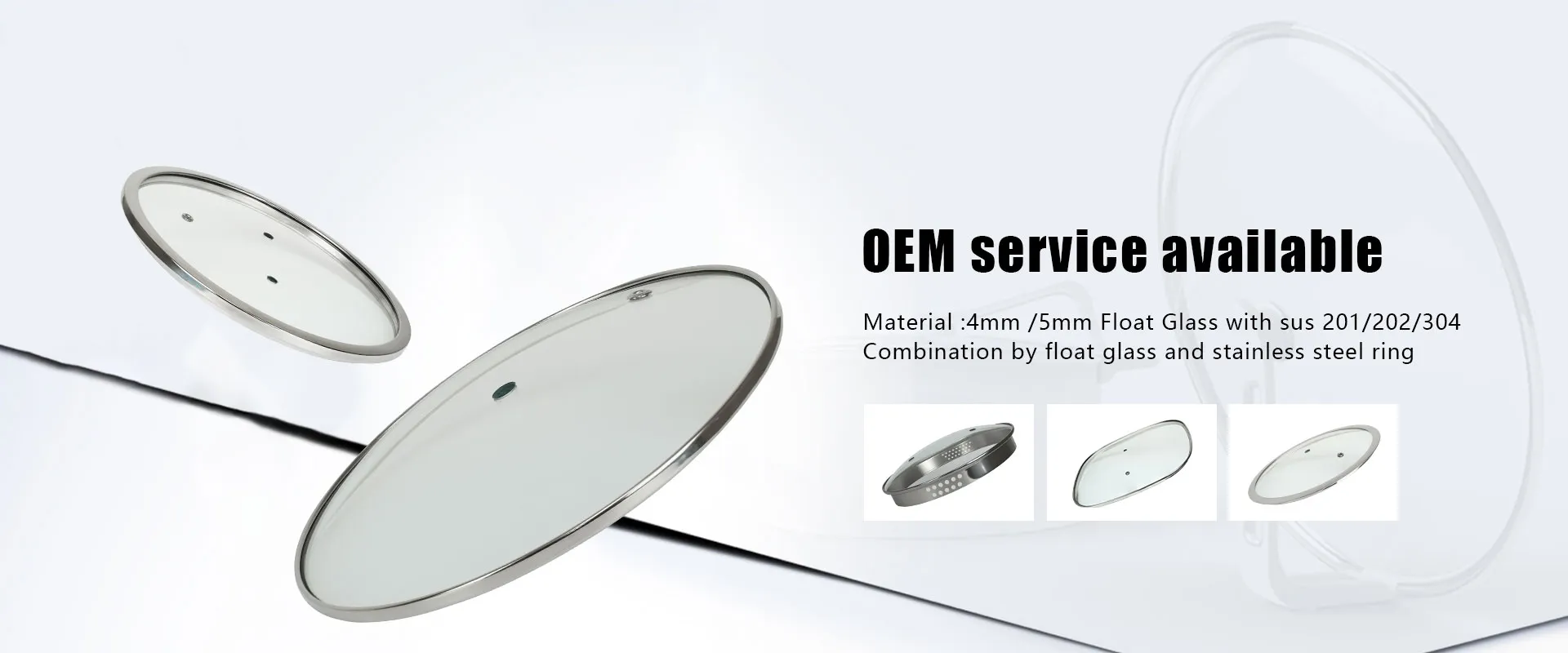
This is where working with a specialized factory matters. A company like EUR-ASIA COOKWARE CO.,LTD. (you can find their portfolio at glass-lid.com) gets this. They're not just banging out millions of generic lids. For a proper Lodge fit, they need the exact CAD specs or a physical sample from Lodge to replicate the curvature and the inner landing diameter. Their product line mentions low to high-level household glass, and this is where the high-level part kicks in—precision engineering for specific branded cookware, not just approximate sizing.
I recall a project years back where we tried to source a batch for a distributor selling Lodge-compatible accessories. We sent a Lodge skillet to the factory. The first sample came back—beautifully tempered glass, smooth-edged, but it rocked on the skillet. The diameter was a mere 2mm off. Useless. That's the precision required. The factory, much like EUR-ASIA with their 15,000㎡ facility and focus on export markets, had to adjust the mold. That's a cost and a delay many importers don't anticipate.
Tempering: The Real Mark of Quality (And Where It Can Go Wrong)
Tempered glass isn't just a buzzword. For a lid, it's non-negotiable for thermal shock resistance. You're taking it from a cool countertop onto a searing hot cast iron pan. The process involves heating the cut glass to around 700°C and then quenching it rapidly with air. This creates surface compression. A properly tempered lid can handle a temperature differential of over 200°C.
But here's the practical observation: not all tempering is equal. The quality hinges on the oven's uniformity and the quenching process. If the air jets aren't perfectly aligned, you get uneven stress. The lid might pass a basic impact test but shatter unpredictably in real use. I've had batches where a few lids would just pop when placed on a hot, slightly wet pan rim—the localized cool spot created a stress point the tempering didn't account for.
Factories with a strong export focus to places like Germany and Japan, as noted in EUR-ASIA's intro, are typically audited on these processes. Their 15 million piece annual output suggests a high degree of automation, which generally improves consistency. But you still need to specify the standards. For a Lodge lid, I'd want it tested to meet or exceed ASTM C1048 or equivalent European norms for safety glass. Don't just assume.
The Handle & Edge Finish: User Experience Details
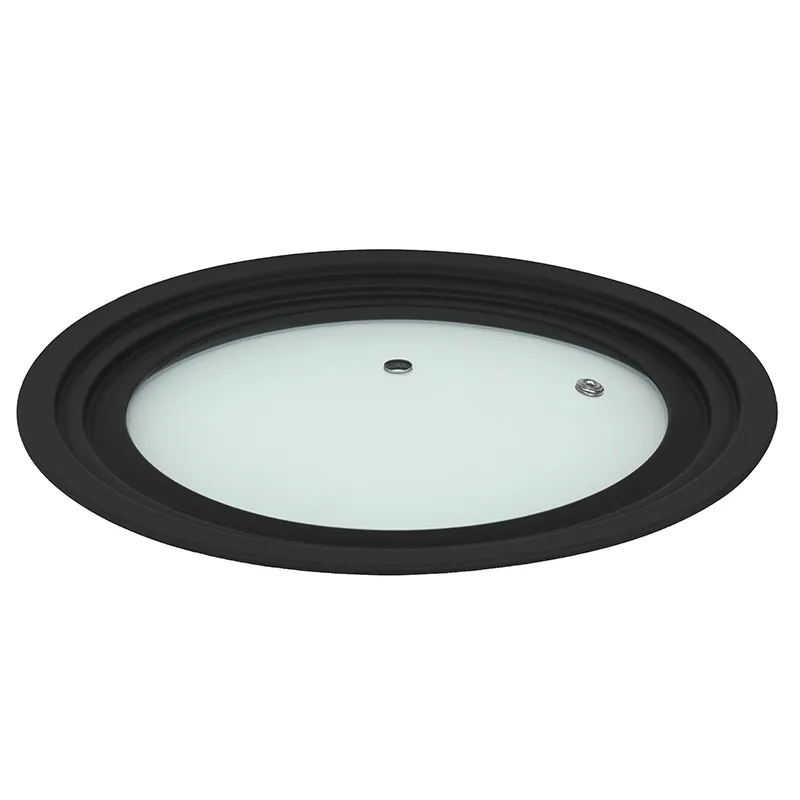
Everyone focuses on the glass, but the handle is the point of contact. For a 10.25-inch lid, a small, low-profile stainless steel or heat-resistant phenolic knob is standard. The fixative is critical. It's usually a high-temperature epoxy or a mechanical fastener with a silicone gasket. I've seen handles loosen over time because the adhesive wasn't rated for repeated dry-heat cycles. The best ones use a bolt-through design with a metal plate on the interior side of the glass, distributing the stress.
The edge finish is another tell. A ground and polished smooth edge feels premium and is safer. A seamed or slightly rough edge feels cheap and can chip. It adds cost because it's an extra step after tempering (you can't work the edge after tempering without risking a break). For a lid destined for European markets, a polished edge is almost a given. It's one of those details that separates a commodity item from a kitchen accessory.
Thinking about EUR-ASIA's export list—Germany, Switzerland, Denmark—these are markets with high expectations for finish and safety. A company supplying there is likely already tooled for these finer details. It's a good indicator when vetting a supplier.
Sourcing and the OEM Reality
When you're looking for a lodge tempered glass lid 10.25 inch, you're likely dealing with an aftermarket accessory maker, not Lodge itself. Lodge may produce their own, but many on the market are OEM products from factories like the one mentioned. The key is whether the seller has invested in the correct tooling for a true fit.
The website glass-lid.com shows a company specialized in this niche. Their being located in a National High-tech Development Zone in Shandong isn't just an address; it often means better infrastructure and adherence to environmental and safety regulations for the tempering process, which is energy-intensive and has emissions controls.
Their 90+ employees and 15 million piece output is substantial. It means they have the scale to handle large orders for big retailers, but also the potential flexibility for smaller, precise runs for a specific model like this. The fact that over 90% is exported tells you their quality control is built for international standards. You wouldn't last long shipping to Italy or Brazil with subpar tempering; the returns would kill you.
Final Thoughts: It's About Fit and Thermal Integrity
So, circling back. The quest for a 10.25 inch glass lid for your Lodge skillet isn't about finding any lid with that measurement. It's about finding one engineered for the specific inner diameter and slope of that pan. The tempering must be flawless to handle the aggressive heat of cast iron. And the ancillary parts—handle, edge—need to withstand years of use.
When evaluating a product or a supplier, dig into these specifics. Ask for the inner fit diameter. Ask about the tempering standard and the handle attachment method. A competent supplier, the kind that serves demanding export markets, will have these answers. They understand that a lid isn't just a cover; it's a functional component that needs to perform under stress, meal after meal. That's the difference between a cheap piece of glass and a proper tempered glass lid.
In the end, the right lid feels seamless—literally. It sits flush, doesn't rock, and you never think about it shattering. That peace of mind is what you're really buying. And that comes from precision, not just a nominal size on a box.
Related Products
Related Products