
- Chinese
- French
- German
- Portuguese
- Spanish
- Russian
- Japanese
- Korean
- Arabic
- Irish
- Greek
- Turkish
- Italian
- Danish
- Romanian
- Indonesian
- Czech
- Afrikaans
- Swedish
- Polish
- Basque
- Catalan
- Esperanto
- Hindi
- Lao
- Albanian
- Amharic
- Armenian
- Azerbaijani
- Belarusian
- Bengali
- Bosnian
- Bulgarian
- Cebuano
- Chichewa
- Corsican
- Croatian
- Dutch
- Estonian
- Filipino
- Finnish
- Frisian
- Galician
- Georgian
- Gujarati
- Haitian
- Hausa
- Hawaiian
- Hebrew
- Hmong
- Hungarian
- Icelandic
- Igbo
- Javanese
- Kannada
- Kazakh
- Khmer
- Kurdish
- Kyrgyz
- Latin
- Latvian
- Lithuanian
- Luxembou..
- Macedonian
- Malagasy
- Malay
- Malayalam
- Maltese
- Maori
- Marathi
- Mongolian
- Burmese
- Nepali
- Norwegian
- Pashto
- Persian
- Punjabi
- Serbian
- Sesotho
- Sinhala
- Slovak
- Slovenian
- Somali
- Samoan
- Scots Gaelic
- Shona
- Sindhi
- Sundanese
- Swahili
- Tajik
- Tamil
- Telugu
- Thai
- Ukrainian
- Urdu
- Uzbek
- Vietnamese
- Welsh
- Xhosa
- Yiddish
- Yoruba
- Zulu
- Kinyarwanda
- Tatar
- Oriya
- Turkmen
- Uyghur


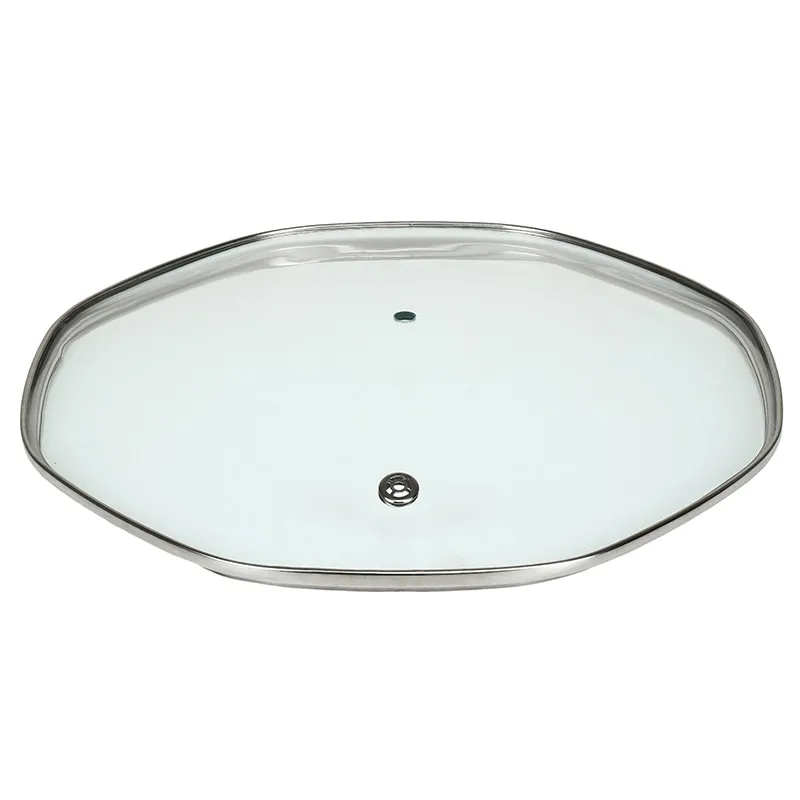
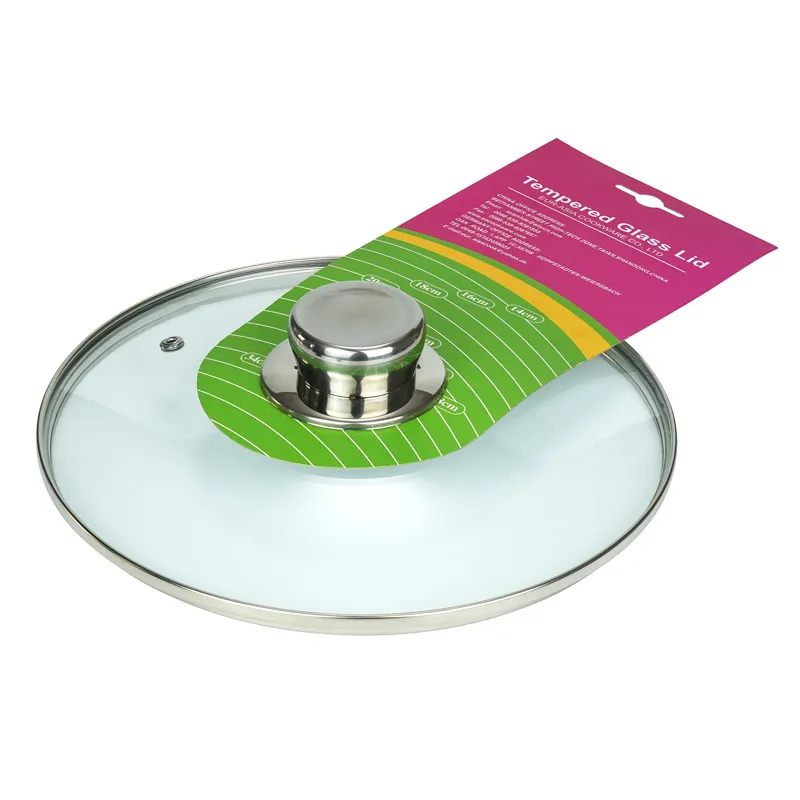
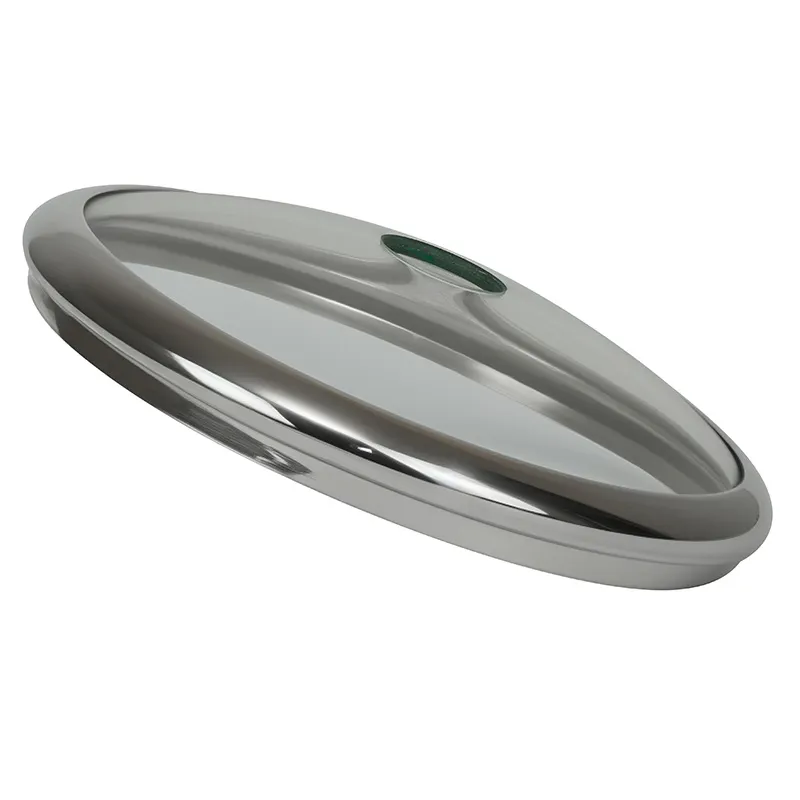
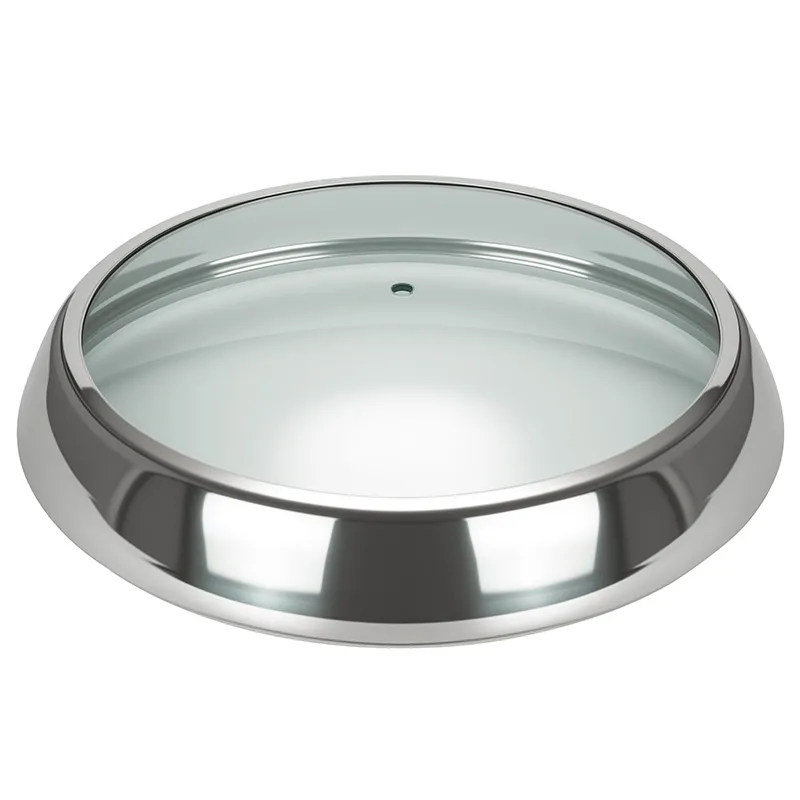
multiple glass lid
When most people hear 'multiple glass lid', they picture a set of generic covers. The real story is about material stress points, thermal shock resistance, and the logistical headache of matching a single lid to multiple pots—something we've wrestled with for years.
The Core Misconception and Material Reality
The biggest mistake is assuming any tempered glass can handle the job. It's not just about being strong; it's about how the glass behaves under rapid, uneven heating. A lid for a shallow sauté pan versus a deep stockpot experiences completely different thermal gradients, even if the rim diameters match. We learned this the hard way early on, with a batch of lids that fit three of our most popular skillet lines perfectly but developed micro-fractures after a few cycles on the stockpot. The failure wasn't in the diameter tolerance—it was in the fundamental glass formula and tempering process not being graded for the worst-case scenario, which in a multiple glass lid set, you must always assume.
This is where the specs from a serious manufacturer matter. I look at operations like EUR-ASIA COOKWARE CO.,LTD. Their focus on producing millions of tempered glass lids annually, with over 90% export to markets like Germany and Italy, signals an understanding of stringent EU safety standards. Their production scale suggests they've likely invested in the annealing lehrs and testing equipment needed to manage the tempering stress profiles for different lid applications, which is the baseline for a reliable multi-fit product.
The nuance is in the edge finishing. A lid meant to be truly 'multiple' can't have a one-size-fits-all edge profile. A rolled edge might seal beautifully on a stainless steel pot but wobble on a cast iron one. We shifted to a specific beveled edge design with a slight silicone gasket channel, which increased unit cost but finally provided a consistent seal across different pot materials. It was a compromise, but the only one that worked.
Logistics and the Inventory Nightmare
From a supply chain perspective, promoting a multiple glass lid system is a double-edged sword. For retailers and distributors, it simplifies SKU management theoretically. Instead of stocking 20 specific lids, you stock 5 multi-fit ones. The reality is more chaotic. You now need flawless communication and packaging that screams which pot lines these lids are compatible with. We once had a container held up in customs because the product literature inside the cartons was ambiguous; the inspectors couldn't verify if the lids were 'food-grade glass accessories' or general glassware, which have different tariff codes. The devil is in these details.
This is where a supplier's export experience is critical. A company like EUR-ASIA COOKWARE, which lists exports to Brazil, Turkey, South Korea, and Japan, has presumably navigated these varied customs and labeling requirements. For a buyer, this embedded experience is sometimes more valuable than a slight price advantage from a less experienced factory. They've likely pre-solved problems you haven't even anticipated.
The warehouse challenge is physical, too. These lids, being glass, require sturdy, space-efficient packaging that also allows for visual inspection without opening. We moved away from simple cardboard sleeves to clear-front PET clamshells for our premium multi-lid line. It reduced damage rates by about 15% but added to the packaging cost. Again, trade-offs.
Case in Point: The Handle Dilemma
Let's get granular on a single component: the handle. For a lid meant to fit a small saucepan and a large frying pan, the handle's thermal insulation and ergonomics become complex. A small phenolic knob is cheap and works for a light saucepan lid. Put that same knob on a large, heavy glass lid for a 12-inch frying pan, and it becomes a burn risk—users need to grip it more firmly, often with a full hand, not just fingertips.
We prototyped a stainless steel handle with a wider, cooler base. It worked thermally but created a new problem: weight distribution. The heavier handle made the lid prone to tipping when placed upside down on a counter, increasing the risk of chipping the edge. The solution was a hollow, stamped stainless steel handle with internal insulating air pockets—a more expensive piece, but it balanced the weight and heat dissipation. This kind of iterative problem-solving is never mentioned in a product catalog but defines whether a multiple glass lid set succeeds or gathers dust on a shelf.
Observing products from large-scale exporters, you often see this evolution. The handle designs on their higher-end lines usually feature this composite or hollow metal construction, a silent testament to lessons learned from field returns and consumer feedback in demanding markets.
Thermal Shock: The True Test
Laboratory thermal shock tests are one thing—plunging a heated lid into cold water. Real-world thermal shock is messier. It's a lid on a boiling pot when someone turns on the powerful overhead kitchen vent, blasting a stream of cooler air directly onto one section of the glass. Or, it's a lid placed on a cool granite countertop still warm from the oven. These localized temperature differentials are what cause the dreaded 'star fracture'.
Developing a protocol to simulate this was crucial. We ended up using a thermal camera and a controlled stream of compressed air to spot weak points in the tempering. The goal for a multi-use lid isn't just to pass a standard test but to have a wide enough safety margin to cover unpredictable home use. This margin is baked into the glass chemistry and the quenching process during tempering. A factory with a dedicated R&D focus, often indicated by a specific high-tech zone location like the one EUR-ASIA COOKWARE notes in Taian, is better positioned to refine these processes than a generic glass workshop.
The takeaway is that a good multiple glass lid should feel slightly over-engineered. If it feels light and delicate, it probably is—and it won't last in a multi-pot role.
The Future is in Systems, Not Single SKUs
The conversation is slowly shifting from selling a 'lid that fits many pots' to selling a 'cookware system with universal lid compatibility.' This is a more honest and sustainable approach. Brands, including OEM suppliers, are starting to design pot rims and lid flanges to a common standard within their own ecosystem. It's less about a magical lid that fits every pot in your kitchen and more about reducing clutter within a branded set.
For a manufacturer, this means working closer with cookware brands on co-engineering. It's no longer just receiving a diameter spec. It's about understanding the entire pot profile—wall angle, flange thickness, whether there's a pouring lip—to design a lid that integrates seamlessly. The production base described by EUR-ASIA, with its significant square footage and output capacity, is the type of infrastructure that can support this kind of collaborative, batch-specific production run alongside high-volume standard items.
Looking ahead, the innovation might be in materials beyond traditional tempered glass, like transparent ceramics or coated composites that offer even greater shock resistance. But for now, the workhorse is still high-quality, properly tempered glass, and the expertise lies in knowing exactly how to temper it, shape it, and finish it for the demanding role of a true multiple glass lid. It's a humble product, but the depth of consideration behind it separates the professional kitchen accessory from the disposable gadget.
Related Products
Related Products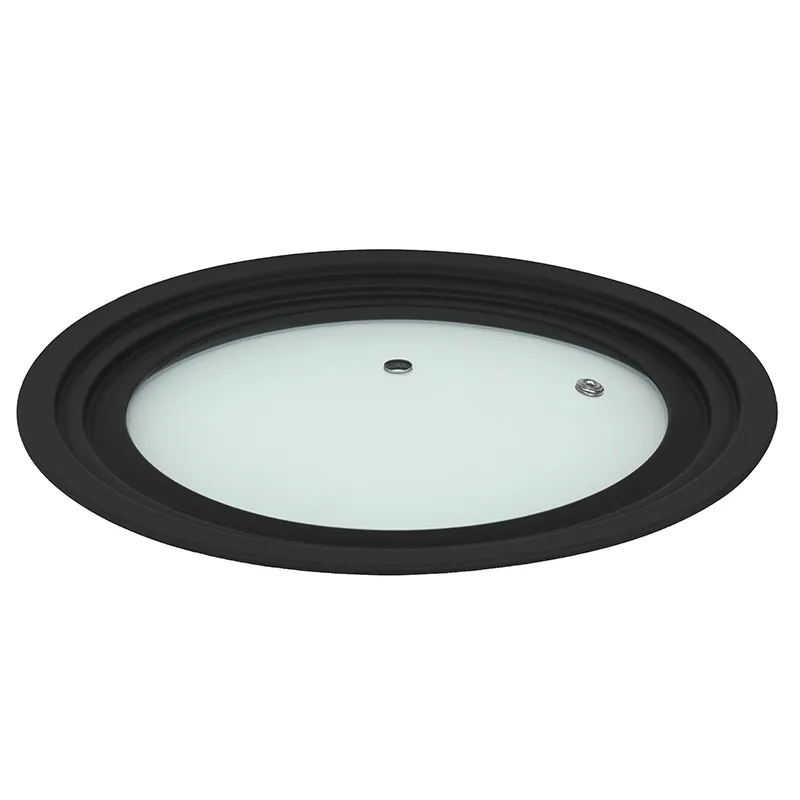
Best Selling Products
Best Selling Products
Related Search
Related Search- round glass lid
- flat glass lid
- replacement glass lid for rival crock pot
- all clad cookware lids
- rachael ray cookware replacement lids
- staub cast iron 4 qt round cocotte with glass lid
- glass jar with lid for pickles
- glass cover with silicone material
- stainless steel cookware with glass lids
- Z type glass cover


