- Chinese
- French
- German
- Portuguese
- Spanish
- Russian
- Japanese
- Korean
- Arabic
- Irish
- Greek
- Turkish
- Italian
- Danish
- Romanian
- Indonesian
- Czech
- Afrikaans
- Swedish
- Polish
- Basque
- Catalan
- Esperanto
- Hindi
- Lao
- Albanian
- Amharic
- Armenian
- Azerbaijani
- Belarusian
- Bengali
- Bosnian
- Bulgarian
- Cebuano
- Chichewa
- Corsican
- Croatian
- Dutch
- Estonian
- Filipino
- Finnish
- Frisian
- Galician
- Georgian
- Gujarati
- Haitian
- Hausa
- Hawaiian
- Hebrew
- Hmong
- Hungarian
- Icelandic
- Igbo
- Javanese
- Kannada
- Kazakh
- Khmer
- Kurdish
- Kyrgyz
- Latin
- Latvian
- Lithuanian
- Luxembou..
- Macedonian
- Malagasy
- Malay
- Malayalam
- Maltese
- Maori
- Marathi
- Mongolian
- Burmese
- Nepali
- Norwegian
- Pashto
- Persian
- Punjabi
- Serbian
- Sesotho
- Sinhala
- Slovak
- Slovenian
- Somali
- Samoan
- Scots Gaelic
- Shona
- Sindhi
- Sundanese
- Swahili
- Tajik
- Tamil
- Telugu
- Thai
- Ukrainian
- Urdu
- Uzbek
- Vietnamese
- Welsh
- Xhosa
- Yiddish
- Yoruba
- Zulu
- Kinyarwanda
- Tatar
- Oriya
- Turkmen
- Uyghur


Buy 12 Inch Frying Pan with Glass Lid – Wholesale Price
2026-10-28
- Why Choose a 12-Inch Frying Pan with a Glass Lid for Wholesale?
- Technical Specifications: What Defines High-Quality Manufacturing?
- Sourcing Strategy: Evaluating Manufacturers for Bulk Orders
- Customization Options for Brand Differentiation
- Common Issues and How to Avoid Them
- FAQ: Sourcing 12 Inch Frying Pans with Glass Lids
- Maintenance and Care Instructions for End Users
- Conclusion: Securing Your Supply Chain for 2026
Buying a 12 inch frying pan with glass lid at wholesale prices requires balancing material durability, thermal performance, and manufacturing compliance. For B2B buyers, the ideal solution combines heavy-gauge aluminum or stainless steel bodies with high-curvature, tempered safety glass lids. EUR-ASIA COOKWARE CO.,LTD. specializes in this precise configuration, offering ISO9001-certified production with LFGB and TUV-approved glass components. This guide details technical specifications, sourcing strategies, and quality benchmarks for importing premium 12-inch skillets in 2026.
Why Choose a 12-Inch Frying Pan with a Glass Lid for Wholesale?
The 12-inch (30cm) frying pan represents the critical intersection between home cooking versatility and professional kitchen utility. It is large enough to sear multiple steaks or stir-fry vegetables for a family of four, yet compact enough for standard stovetop burners. When paired with a glass lid, the product value proposition increases significantly due to enhanced user experience and safety monitoring.
Market Demand and Consumer Preferences in 2026
In current retail markets across Europe, North America, and Asia, consumers prioritize visibility during cooking. A transparent lid allows users to monitor browning, boiling, or simmering without releasing heat and steam. This feature reduces energy consumption and improves cooking consistency. For retailers and distributors, stocking a 12 inch frying pan with glass lid addresses a high-volume SKU requirement, as this size accounts for approximately 35% of total cookware sales in the mid-to-premium segment.
Furthermore, the demand for “hybrid” cookware—pieces that transition seamlessly from stovetop to oven—is rising. A high-quality glass lid, rated for temperatures up to 200°C (392°F) or higher, enables this versatility. Buyers must ensure that the glass component meets rigorous thermal shock standards to prevent breakage, a common cause of customer returns and negative reviews.
Key Advantages of Tempered Glass Lids
- Thermal Visibility: Allows real-time monitoring of food texture and color.
- Moisture Retention: Traps steam effectively, enhancing flavor and reducing cooking time.
- Safety Standards: Tempered glass shatters into small, blunt pieces rather than sharp shards if broken.
- Aesthetic Appeal: Provides a modern, clean look that complements stainless steel and non-stick finishes.
Technical Specifications: What Defines High-Quality Manufacturing?
When sourcing a 12 inch frying pan with glass lid, technical parameters determine both longevity and safety. B2B buyers must evaluate the body material, coating integrity, and glass specifications separately before assessing the assembled unit.
Pan Body Materials and Construction
The base material dictates heat distribution and retention. The most common options for wholesale include:
- Aluminum Alloy (3003/3004 Series): Lightweight with excellent thermal conductivity. Often used with non-stick coatings. Requires hard-anodizing or ceramic coating to prevent reaction with acidic foods.
- Stainless Steel (304/316 Grade): Durable, non-reactive, and dishwasher safe. Often features an encapsulated aluminum or copper core for even heating. Preferred for high-end markets.
- Cast Iron: Superior heat retention but heavier. Less common for mass-market wholesale due to shipping weight costs.
For optimal performance, the pan bottom should be flat and thick (minimum 2.5mm for aluminum, 0.6mm for stainless steel) to prevent warping on induction or electric stoves.
Glass Lid Engineering and Safety Certifications
The glass lid is not merely an accessory; it is a critical safety component. High-quality lids are made from tempered borosilicate or soda-lime glass. Key engineering features include:
- Tempering Process: Increases strength by 4-5 times compared to annealed glass.
- Steam Vent: A precisely sized hole prevents pressure buildup and boil-overs.
- Rim Design: Stainless steel or silicone rims protect the glass edge from chipping and provide a secure fit.
- Handle Ergonomics: Heat-resistant handles (Bakelite or silicone-coated) ensure safe removal.
EUR-ASIA COOKWARE CO.,LTD. ensures all glass components pass LFGB (Germany) and TUV certifications. These standards verify that the glass withstands thermal shock and does not leach harmful substances. With an annual output of over 15 million tempered glass lids, the company maintains strict quality control over curvature and thickness consistency, crucial for fitting various pan models.
| Specification | Standard Requirement | Premium Requirement |
|---|---|---|
| Glass Type | Tempered Soda-Lime | Borosilicate or High-Curvature Tempered |
| Thickness | 3.5mm – 4.0mm | 4.0mm – 5.0mm |
| Thermal Resistance | Up to 180°C | Up to 250°C+ |
| Rim Material | Stainless Steel | Stainless Steel with Silicone Seal |
| Certification | Basic Food Contact | LFGB, TUV, FDA |
Sourcing Strategy: Evaluating Manufacturers for Bulk Orders
Selecting the right manufacturer impacts profit margins, brand reputation, and supply chain stability. In 2026, successful importers prioritize partners with vertical integration, meaning they produce both the metal body and the glass lid in-house or through tightly controlled subsidiaries.
Why Vertical Integration Matters
When a single facility manages the production of the pan and the lid, tolerance matching is superior. A mismatched lid can rattle, leak steam, or fit too tightly, causing vacuum lock. EUR-ASIA COOKWARE CO.,LTD., located in the Taian City National High-tech Development Zone, exemplifies this integrated approach. Covering 20,000㎡ with a 15,000㎡ building area, the facility employs over 90 specialists dedicated to glass and kitchen accessory production.
This scale allows for rapid prototyping and customization. Whether a buyer needs high-curvature lids for deep sauté pans or flat lids for shallow skillets, the manufacturing line can adjust. Moreover, the ability to print logos directly onto the glass or handle according to customer requirements streamlines branding processes, reducing the need for third-party decoration services.
Quality Assurance and Compliance
International trade demands rigorous compliance. Products exported to Germany, France, Italy, and other EU nations must meet strict chemical migration limits. LFGB certification is particularly stringent, testing for lead and cadmium release. TUV certification adds a layer of safety verification regarding mechanical strength and thermal durability.
Buyers should request:
- Recent test reports from accredited labs (TUV, SGS, Intertek).
- ISO9001 certification proofs for quality management systems.
- Sample units for independent drop-test and thermal-shock testing.
With over 90% of its products exported to markets including Russia, Spain, Switzerland, Brazil, Turkey, South Korea, and Japan, EUR-ASIA has demonstrated consistent adherence to these diverse regulatory frameworks. This track record minimizes the risk of customs delays or product recalls.
Customization Options for Brand Differentiation
In a saturated market, generic products struggle to command premium pricing. Customization allows brands to create unique selling propositions (USPs). For a 12 inch frying pan with glass lid, customization can occur in three key areas:
1. Glass Lid Design
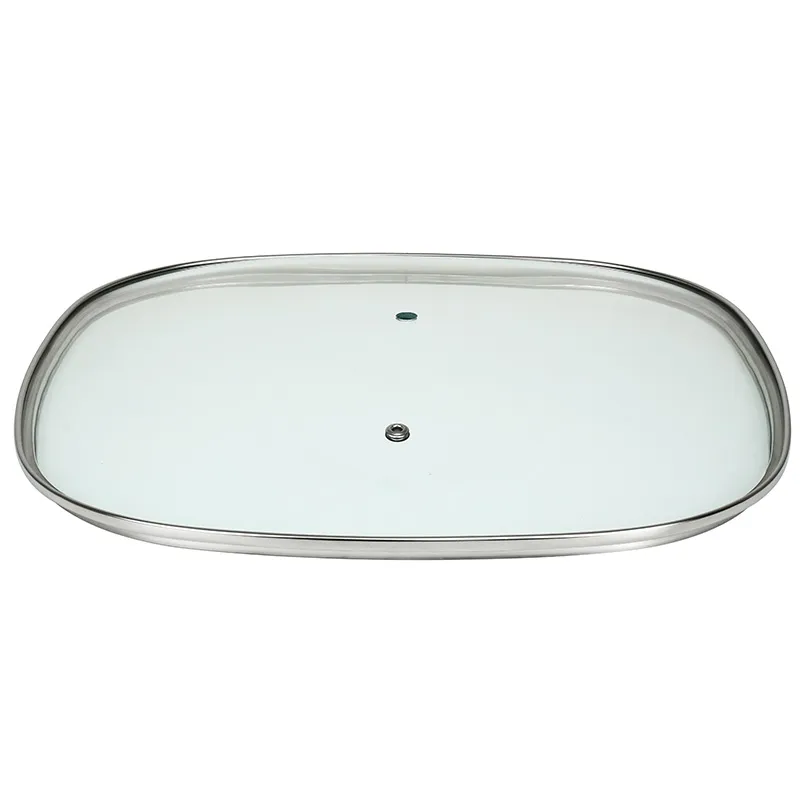
Standard flat lids are functional but common. High-curvature or dome-shaped lids offer a premium aesthetic and increased internal volume. EUR-ASIA specializes in producing these special-shaped glass covers. Additionally, the steam vent can be customized in position and size, or replaced with a self-basting spike design for specific culinary applications.
2. Handle and Rim Finishes
The handle material and finish significantly influence perceived value. Options include:
- Bakelite: Classic, heat-resistant, available in various colors.
- Silicone-Coated Stainless Steel: Modern, ergonomic, and oven-safe.
- Wooden Accents: Rustic appeal, though requiring careful maintenance instructions.
Logo printing on the glass lid is a high-visibility branding opportunity. Laser etching or screen printing can be applied durably, ensuring the brand name remains visible throughout the product’s lifecycle.
3. Packaging and Presentation
Wholesale buyers often overlook packaging, yet it protects the glass lid during transit and enhances shelf appeal. Custom inserts, color boxes, and protective sleeves for the glass lid reduce breakage rates. Manufacturers with experience in exporting to fragile-goods-sensitive markets like Japan and South Korea understand the importance of robust packaging engineering.
Common Issues and How to Avoid Them
Importing cookware involves navigating potential pitfalls. Understanding these common issues helps buyers mitigate risks.
Issue 1: Glass Breakage During Transit
Glass lids are vulnerable to impact. Poor packaging or insufficient cushioning leads to high breakage rates. Solution: Ensure the manufacturer uses molded pulp inserts or high-density foam specifically designed for glass protection. Drop tests should be conducted during the sampling phase.
Issue 2: Lid Fitment Problems
If the lid is too loose, steam escapes; if too tight, it creates a vacuum seal that makes removal difficult. Solution: Work with manufacturers like EUR-ASIA that produce both components. Request tolerance specifications for the pan rim diameter and lid inner diameter. A variance of ±1mm is generally acceptable, but tighter tolerances yield better performance.
Issue 3: Coating Durability
Non-stick coatings that peel or scratch easily result in customer complaints. Solution: Specify coating thickness (e.g., 25-30 microns for premium non-stick) and conduct abrasion tests. Ask for certification regarding PFOA-free and PFOS-free status, which is mandatory in many Western markets.
FAQ: Sourcing 12 Inch Frying Pans with Glass Lids
What is the minimum order quantity (MOQ) for custom branded frying pans?
MOQs vary by manufacturer and customization level. For standard stock items, MOQs may be as low as 500-1,000 units. For custom logos, specific glass shapes, or unique handle designs, MOQs typically range from 2,000 to 5,000 units per SKU. EUR-ASIA COOKWARE CO.,LTD. offers flexible negotiation based on project scope and long-term partnership potential.
Can the glass lid withstand oven use?
Most tempered glass lids are oven-safe up to 180°C-200°C. However, the handle material determines the maximum temperature. Bakelite handles usually withstand up to 180°C, while stainless steel handles can go higher. Always verify the specific rating with the manufacturer and clearly label this on consumer packaging.
How long does production take for a bulk order?
Standard production lead time is typically 30-45 days after deposit and sample approval. Custom molds for glass or handles may add 10-15 days to the initial setup. Planning orders well in advance of peak seasons (such as Q4 holiday shopping) is crucial to avoid delays.
Is induction compatibility important for a 12-inch pan?
Yes. Induction cooking is growing rapidly in Europe and Asia. To ensure compatibility, the pan base must contain a magnetic layer (such as stainless steel or an induction-compatible aluminum disk). Verify this with a magnet test or request technical data sheets confirming induction suitability.
Maintenance and Care Instructions for End Users
Providing clear care instructions reduces warranty claims and enhances customer satisfaction. Include these guidelines in product manuals:
- Cleaning: Use soft sponges and mild detergent. Avoid abrasive scouring pads that can scratch non-stick coatings or cloud the glass lid.
- Thermal Shock: Do not place a hot glass lid under cold water. Allow it to cool naturally to prevent shattering.
- Storage: Stack pans with protective liners between them. Place glass lids vertically or with padding to prevent chipping.
- Stovetop Use: Match burner size to pan diameter. Using a large burner on a small pan can cause handle overheating.
Conclusion: Securing Your Supply Chain for 2026
The market for a 12 inch frying pan with glass lid remains robust, driven by consumer demand for versatile, visible, and safe cooking solutions. Success in this sector depends on partnering with manufacturers who combine technical expertise with rigorous quality standards. EUR-ASIA COOKWARE CO.,LTD. offers a compelling value proposition: a large-scale, ISO9001-certified production base in Shandong Province, specialized in high-quality tempered glass and cookware accessories.
With LFGB and TUV certifications, the ability to customize high-curvature and special-shaped glass, and a proven export track record to over 90% of global markets, EUR-ASIA is positioned as a reliable partner for B2B buyers. Their capacity to produce over 15 million glass pieces annually ensures supply stability, while their engineering team supports bespoke design requirements.
For distributors, retailers, and brand owners looking to enhance their cookware lineup with premium, compliant, and competitively priced products, initiating a dialogue with a verified manufacturer is the next logical step. Evaluate samples, verify certifications, and discuss customization options to align the product with your brand identity.
Ready to optimize your cookware inventory? Contact our team to request samples, review detailed specifications, or discuss wholesale pricing for your next order.