- Chinese
- French
- German
- Portuguese
- Spanish
- Russian
- Japanese
- Korean
- Arabic
- Irish
- Greek
- Turkish
- Italian
- Danish
- Romanian
- Indonesian
- Czech
- Afrikaans
- Swedish
- Polish
- Basque
- Catalan
- Esperanto
- Hindi
- Lao
- Albanian
- Amharic
- Armenian
- Azerbaijani
- Belarusian
- Bengali
- Bosnian
- Bulgarian
- Cebuano
- Chichewa
- Corsican
- Croatian
- Dutch
- Estonian
- Filipino
- Finnish
- Frisian
- Galician
- Georgian
- Gujarati
- Haitian
- Hausa
- Hawaiian
- Hebrew
- Hmong
- Hungarian
- Icelandic
- Igbo
- Javanese
- Kannada
- Kazakh
- Khmer
- Kurdish
- Kyrgyz
- Latin
- Latvian
- Lithuanian
- Luxembou..
- Macedonian
- Malagasy
- Malay
- Malayalam
- Maltese
- Maori
- Marathi
- Mongolian
- Burmese
- Nepali
- Norwegian
- Pashto
- Persian
- Punjabi
- Serbian
- Sesotho
- Sinhala
- Slovak
- Slovenian
- Somali
- Samoan
- Scots Gaelic
- Shona
- Sindhi
- Sundanese
- Swahili
- Tajik
- Tamil
- Telugu
- Thai
- Ukrainian
- Urdu
- Uzbek
- Vietnamese
- Welsh
- Xhosa
- Yiddish
- Yoruba
- Zulu
- Kinyarwanda
- Tatar
- Oriya
- Turkmen
- Uyghur


How to Choose a Glass Lid with a Knob: Materials, Fit, and Customization
2026-10-28
If you are a cookware brand manager, procurement specialist, product designer, or OEM importer, picking the right glass lid with a knob directly impacts product quality, customer complaints, and long-term order stability. Many quality failures, such as cracked glass around mounting holes, loose knobs after repeated heating, and poor fit between lid and cookware, stem from poor selection of knob structure and mismatched dimensions, rather than defective tempered glass itself. This guide focuses strictly on the matching relationship between the knob and the glass lid body. It walks you through material selection, ergonomic design, anti-cracking assembly structure, dimensional matching, OEM customization, sample inspection, and pre-order documentation. You can use this framework to qualify suppliers and lock down technical specifications before bulk production of tempered glass lid with handle.
1. Structure Breakdown & Core Selection Criteria for a Glass Lid with a Knob
1.1 Main Components of Tempered Glass Lid with Knob
A complete glass lid with knob consists of five core parts: tempered glass body, knob, fastening screw, silicone or rubber washer, and metal backing plate. The highest failure risk concentrates on the connection point between the knob and the central mounting hole. Direct metal-to-glass contact and over-tightened screws will create local stress, leading to micro-cracks around the hole after repeated thermal expansion and contraction.
This section only covers parts related to knob assembly, without expanding into the full production process of tempered glass sheets.
1.2 Core Evaluation Items for Bulk Procurement
Before placing bulk orders for glass lid for cookware, you need to lock down seven key evaluation criteria:
- Heat resistance and food safety grade of knob materials
- Ergonomic shape for dry and wet hand gripping
- Anti-stress assembly structure to avoid glass cracking
- Dimensional tolerance of the central mounting hole
- Outer diameter and curvature matching with the cookware rim
- Surface finish and color consistency for brand OEM lines
- Assembly stability and batch quality consistency
2. Knob Material Selection: Heat Resistance & Food Contact Safety
2.1 Common Knob Materials & Application Scenarios
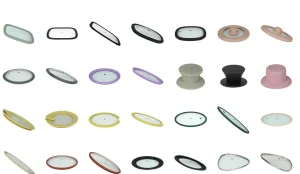
Four material options are widely used for cookware lids, each with different temperature limits and usage scenarios:
- Stainless steel knob: High heat resistance, suitable for oven and high-temperature stovetop cooking; ideal for tempered glass lid with stainless steel full cookware sets.
- Bakelite (phenolic resin) knob: Good heat insulation, stays cool during stovetop simmering. Its suitability for oven use depends on the material grade and rated temperature.
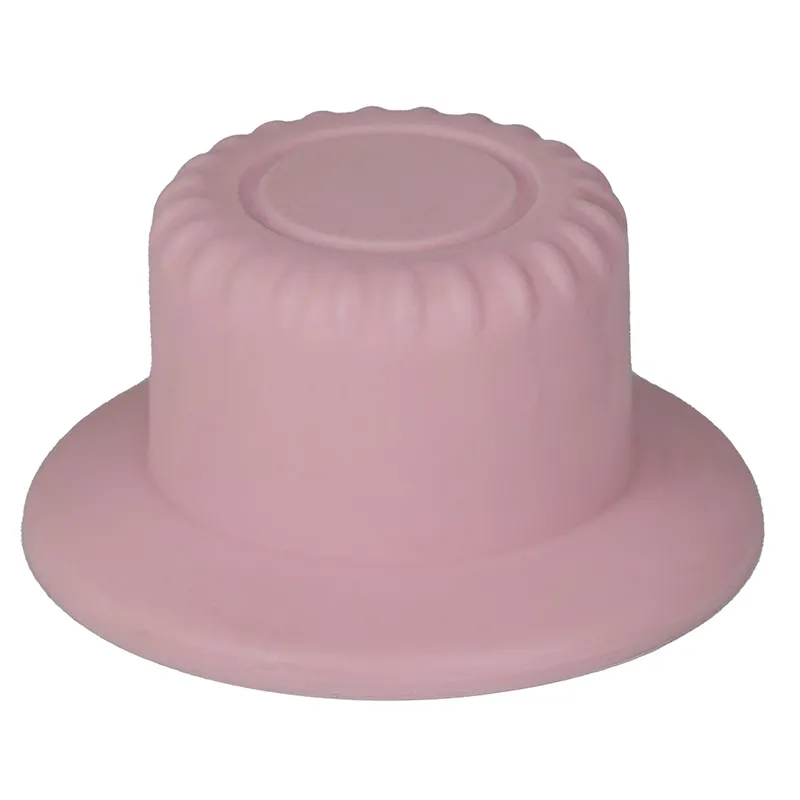
- Silicone knob: Soft grip, dishwasher safe; perfect for soup pots and low-to-medium heat daily cooking.
- General plastic knob: Low cost, but low temperature resistance; only for cold-use storage lids, not for stovetop cookware.
2.2 Key Performance Indicators to Verify
Two non-negotiable checks must be confirmed with supplier documents before order confirmation:
- Food contact compliance: All knob materials and metal hardware need to meet FDA or LFGB food safety standards to avoid chemical leaching when exposed to acidic food.
- Heat resistance and load capacity: The maximum operating temperature and pull resistance of the knob must be tested; overheating will cause deformation or aging of plastic and silicone knobs.
Fact pending verification: Exact temperature thresholds and pull load values require official material test reports.
2.3 Material Matching for Different Cookware Types
- Oven-safe cookware: Prioritize stainless steel knobs; bakelite may be considered only after reviewing its official temperature rating.
- Induction stovetop soup pots: Silicone or bakelite knobs deliver better heat insulation for comfortable gripping.
- Heavy-duty commercial cookware: Choose solid stainless steel knobs with reinforced screw structures to prevent loosening.
3. Knob Shape & Ergonomic Grip Design
3.1 Ergonomic Requirements for Dry & Wet Hand Gripping
Buyers often overlook grip comfort for wet hands. The knob must have enough height and anti-slip curved surface so users can lift the lid firmly without slipping when hands are wet with steam or oil. Low-profile flat knobs tend to slip easily and bring negative user experience.
3.2 Standard vs Custom Knob Shapes
Standard mass-produced shapes include round dome, oval and mushroom style. For OEM brand lines, you can customize special contours such as square, teardrop or streamlined shapes to differentiate your products from generic competitors.
3.3 Appearance Coordination with Cookware Product Lines
The knob’s surface finish must match the overall style of the whole cookware set:
- Matte brushed stainless steel knobs match minimalist matte metal cookware.
- Polished bright metal knobs fit glossy stainless steel pot bodies.
- Colored silicone knobs coordinate with colorful enamel cookware for visual unity.
4. Knob-to-Glass Connection Structure (Prevent Glass Cracking)
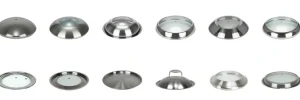
4.1 Two Main Assembly Structures for Knob Installation
The industry uses two mainstream assembly methods for glass lid knobs:
- Single screw through-hole assembly: Screw runs upward from the glass bottom, with a silicone washer between the screw head and glass surface. This is a simple, cost-effective option for lighter lids.
- Washer + backing plate combination: Add a metal plate on the glass top under the knob to spread tightening pressure evenly across the glass surface. This design is preferred for thicker, heavier glass lids.
4.2 How to Avoid Stress Cracks Around Mounting Holes
Most glass breakage occurs during assembly. Follow these two rules strictly:
- Never allow direct metal-to-glass contact. Always place elastic silicone or rubber gaskets between the screw, backing plate and glass to buffer thermal expansion differences between metal and glass.
- Tighten only until snug. Excessive screw torque creates concentrated stress, which will slowly develop into invisible micro-cracks after repeated heating and cooling cycles.
4.3 Tolerance Standards for Hole Size & Screw Length
The central mounting hole must maintain strict dimensional tolerance. If the hole is too small, drilling will leave chipping and micro-fractures; if the hole is too large, the knob will wobble after assembly.
Fact pending verification: Exact hole position deviation and screw length tolerance need to be confirmed against technical drawings.
5. Glass Lid Body & Cookware Matching Dimensions
5.1 Diameter, Curvature & Rim Profile Matching
The core fit requirement for glass lid for cookware is contour consistency:
- The outer diameter of the lid must match the inner rim size of the pot without gaps or overly tight clamping.
- Curved dome lids must align with the pot’s curved rim; flat lids only fit flat-top pot openings.
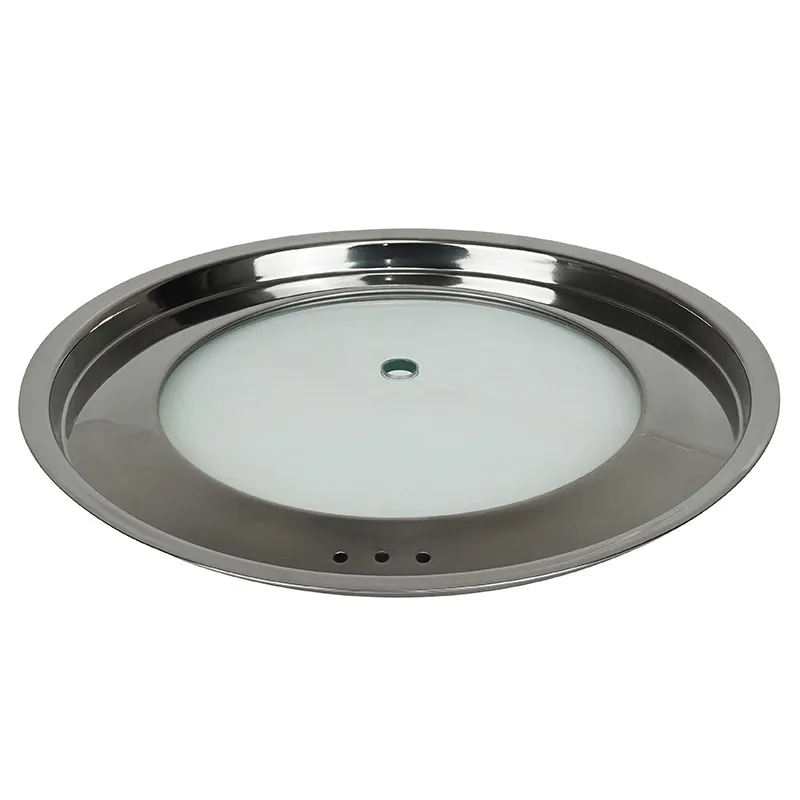
If you add a stainless steel rim to the glass lid, you must also check the rim’s inner diameter to avoid size mismatch.
5.2 Position Tolerance of the Central Knob Hole
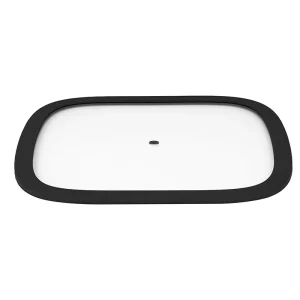
The center hole for knob installation must be precisely positioned on the geometric center of the glass lid. Any offset will cause the lid to tilt unevenly when placed on the pot, resulting in poor sealing and unstable knob lifting.
5.3 Flat Lid vs Curved Lid Selection Rules
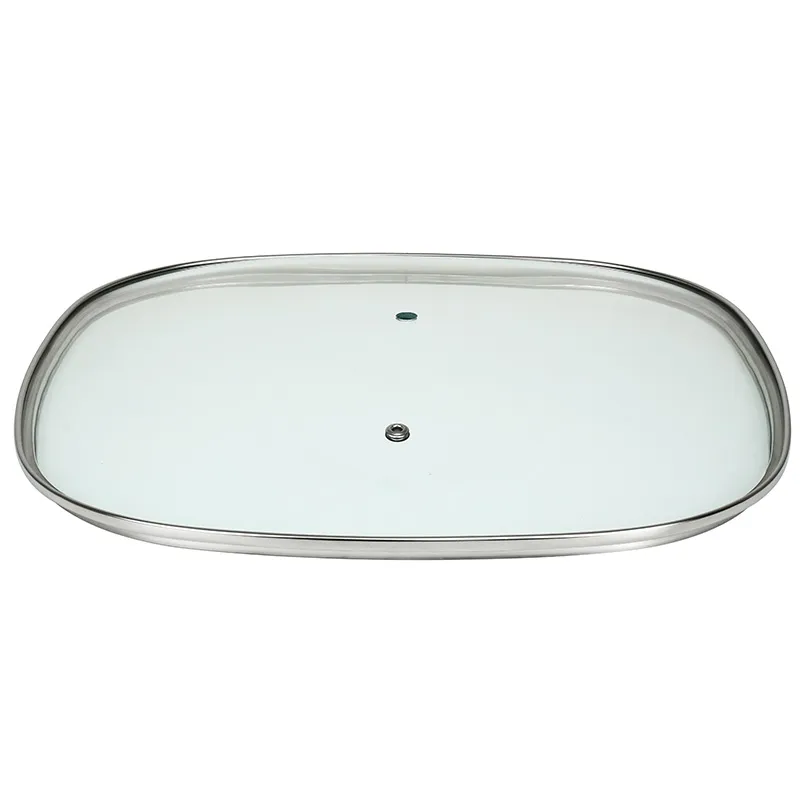
- Flat glass lids: Simple structure, low production cost; suitable for square pots, rectangular cookware and storage containers.
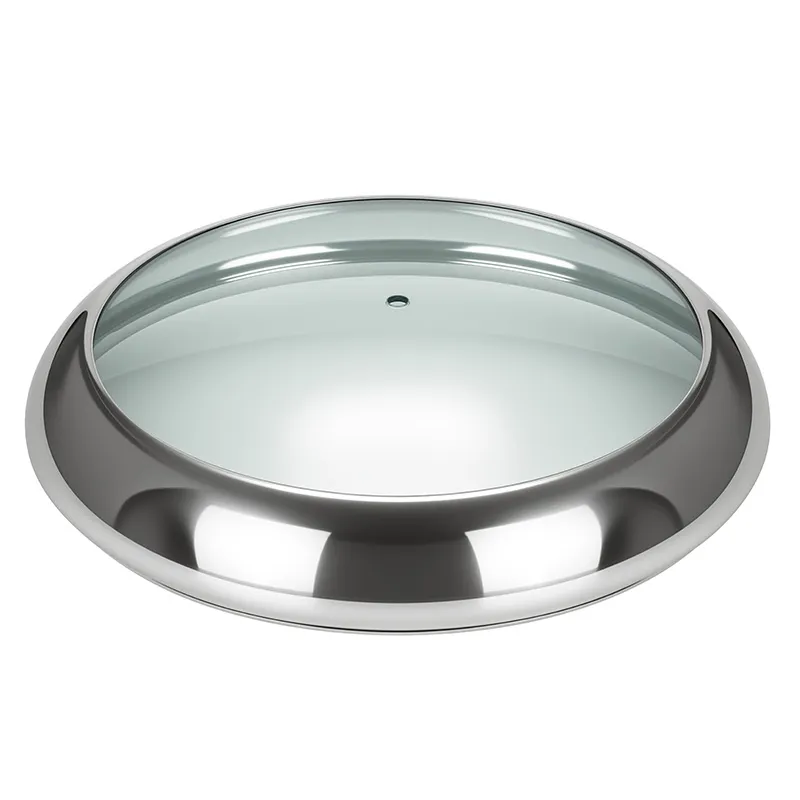
- Curved dome lids: Leave extra internal space for food expansion during boiling; widely used for round soup pots and frying pans.
6. Appearance Design & Brand Consistency for OEM
6.1 Surface Finishing Options for Knobs & Glass Lids
You can select surface treatments to match brand positioning:
- Knob finishes: Polished mirror, brushed matte, sandblasted and colored electroplating.
- Glass lid finishes: Clear transparent, frosted matte, and solid color coating.
6.2 Color Matching for Brand OEM Customization
For OEM orders, you can lock in unified color schemes: colored silicone knobs paired with tinted glass lids, or black metal knobs matched with dark coated glass for high-end product lines.
6.3 Coordinated Design for Full Cookware Sets
When you source a full set of pots and pans, unify the knob style, metal finish and glass lid color across the whole product series, so the whole cookware line maintains consistent visual branding.
7. OEM & ODM Customization Items to Confirm Before Ordering
7.1 Custom Knob Size, Shape & Surface Treatment
Customization is available from many suppliers subject to capability review. For ODM projects, you can adjust nearly all knob parameters: overall height, diameter, curve shape, surface texture and color. Before confirming samples, provide 2D drawings with exact dimensions to avoid inconsistent bulk production.
7.2 Custom Glass Lid Contour & Hole Position
You can customize round, square, rectangular, octagonal and irregular lid outlines, plus adjust the central hole’s position and aperture size to fit your exclusive knob design.
7.3 Custom Hardware Accessories (Screws, Washers, Gaskets)
Do not ignore small hardware parts. Customize the screw length, washer thickness and gasket material to match your glass thickness and prevent assembly stress cracks.
Fact pending verification: All customized craft options are subject to the factory’s actual production capacity; no unconfirmed processing technology will be promised.
8. Pre-Production Sample Inspection & Batch Consistency Control
8.1 Key Inspection Items for Pre-Production Samples
Sample verification is the most critical step before mass production. Focus inspection strictly on knob assembly instead of only checking glass appearance:
- Check for chipping and tiny cracks around the central mounting hole.
- Test knob tightness by manual twisting; no wobble or looseness is allowed.
- Verify no new stress cracks appear after full assembly.
8.2 Check for Knob Looseness & Glass Stress Cracks
Cycle the assembled sample through repeated heating and cooling to simulate real stovetop conditions. If the knob becomes loose after thermal cycling, the washer material or screw pre-tightening standard needs revision. Use a magnifier to inspect the hole perimeter for invisible micro-fractures caused by over-tightening.
8.3 Measures to Keep Consistent Quality in Mass Production
Require the factory to set a controlled tightening standard on the assembly line; hand tightening is generally preferred over power tools to avoid over-tightening damage. Randomly pull semi-finished products from the production line for spot checks, instead of only inspecting pre-selected finished samples.
9. Pre-Order Buyer Checklist: Information to Prepare
9.1 Technical Drawings & Dimensional Tolerance Specifications
Prepare complete 2D technical drawings with clear marked parameters: lid outer diameter, curvature, central hole size and position deviation, glass thickness, and knob overall dimensions. Write down all tolerance limits in writing to avoid disputes during mass production.
9.2 Food Contact Material Certification Requirements
List all required material certifications clearly in the purchase contract: FDA or LFGB test reports for knob plastic, silicone and metal hardware. Require the supplier to provide original test documents instead of only verbal commitments.
9.3 Test Items Agreed Before Mass Production
Confirm all pre-production test items in advance: thermal shock testing, knob pull resistance testing, and assembly looseness cycling testing. Set AQL sampling standards for finished goods inspection, and divide defects into critical, major and minor grades.
Fact pending verification: Specific AQL defect classification and test conditions need to be aligned with third-party testing standards.
Conclusion
When you source a glass lid with a knob, do not only focus on the appearance of finished samples. Stable long-term quality depends on four core control points: selecting heat-resistant and food-safe knob materials, adopting a washer buffer assembly structure to prevent glass stress cracking, strictly locking down dimensional matching between lid and cookware, and implementing strict pre-production sample inspection.
Always verify original assembly records and randomly select batch samples, rather than only checking pre-prepared perfect products. If you follow this full procurement checklist, you can effectively avoid hidden quality risks and select a reliable tempered glass lid with stainless steel supplier for your long-term OEM and ODM cookware projects.
FAQ (B2B Buyer Frequently Asked Questions)
1. What is the most durable knob material for a tempered glass lid with handle?
Stainless steel knobs deliver the best durability and high-temperature resistance for oven and heavy cooking use. Bakelite is the best cost-effective option for regular stovetop simmering, while silicone works best for low-heat soup cookware.
2. How to prevent glass cracking when tightening the knob screw?
Always add silicone gaskets between metal hardware and glass to disperse pressure. Tighten the screw only by hand until snug, and never use electric drills which can easily create over-tightening stress cracks.
3. Can we customize the knob shape and hole position for a glass lid for cookware?
Yes. Many suppliers support ODM adjustments to knob contour, size, surface finish, plus the central hole’s position and aperture, provided you share precise technical drawings before sample making.
4. What tolerance should be set for the mounting hole of tempered glass lid with stainless steel knob?
The central hole must be aligned to the lid’s geometric center. Acceptable tolerance values vary by manufacturer and design; confirm exact allowable deviation against the supplier’s technical drawing.