- Chinese
- French
- German
- Portuguese
- Spanish
- Russian
- Japanese
- Korean
- Arabic
- Irish
- Greek
- Turkish
- Italian
- Danish
- Romanian
- Indonesian
- Czech
- Afrikaans
- Swedish
- Polish
- Basque
- Catalan
- Esperanto
- Hindi
- Lao
- Albanian
- Amharic
- Armenian
- Azerbaijani
- Belarusian
- Bengali
- Bosnian
- Bulgarian
- Cebuano
- Chichewa
- Corsican
- Croatian
- Dutch
- Estonian
- Filipino
- Finnish
- Frisian
- Galician
- Georgian
- Gujarati
- Haitian
- Hausa
- Hawaiian
- Hebrew
- Hmong
- Hungarian
- Icelandic
- Igbo
- Javanese
- Kannada
- Kazakh
- Khmer
- Kurdish
- Kyrgyz
- Latin
- Latvian
- Lithuanian
- Luxembou..
- Macedonian
- Malagasy
- Malay
- Malayalam
- Maltese
- Maori
- Marathi
- Mongolian
- Burmese
- Nepali
- Norwegian
- Pashto
- Persian
- Punjabi
- Serbian
- Sesotho
- Sinhala
- Slovak
- Slovenian
- Somali
- Samoan
- Scots Gaelic
- Shona
- Sindhi
- Sundanese
- Swahili
- Tajik
- Tamil
- Telugu
- Thai
- Ukrainian
- Urdu
- Uzbek
- Vietnamese
- Welsh
- Xhosa
- Yiddish
- Yoruba
- Zulu
- Kinyarwanda
- Tatar
- Oriya
- Turkmen
- Uyghur


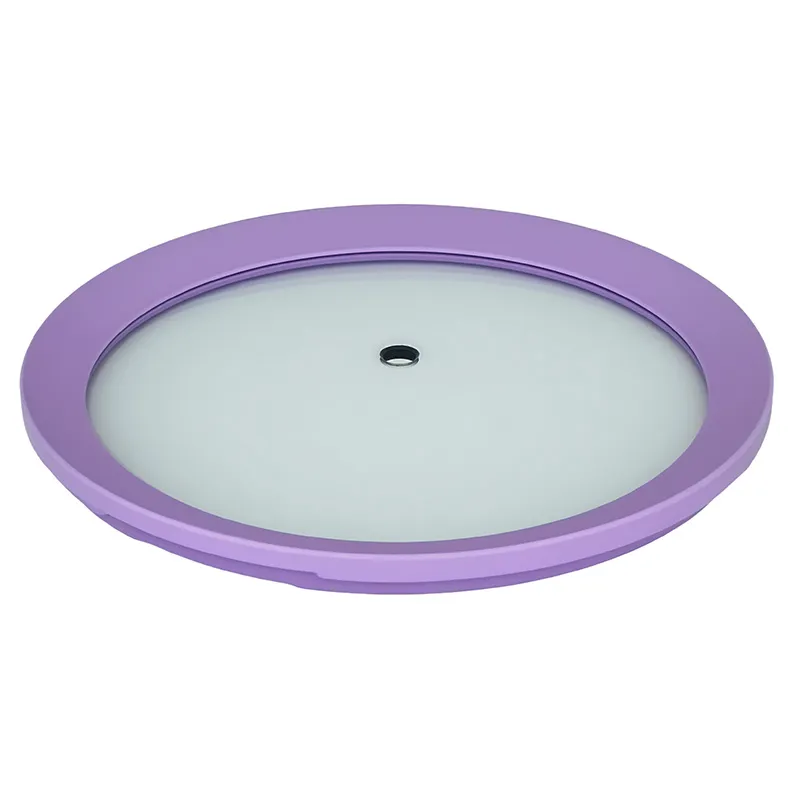
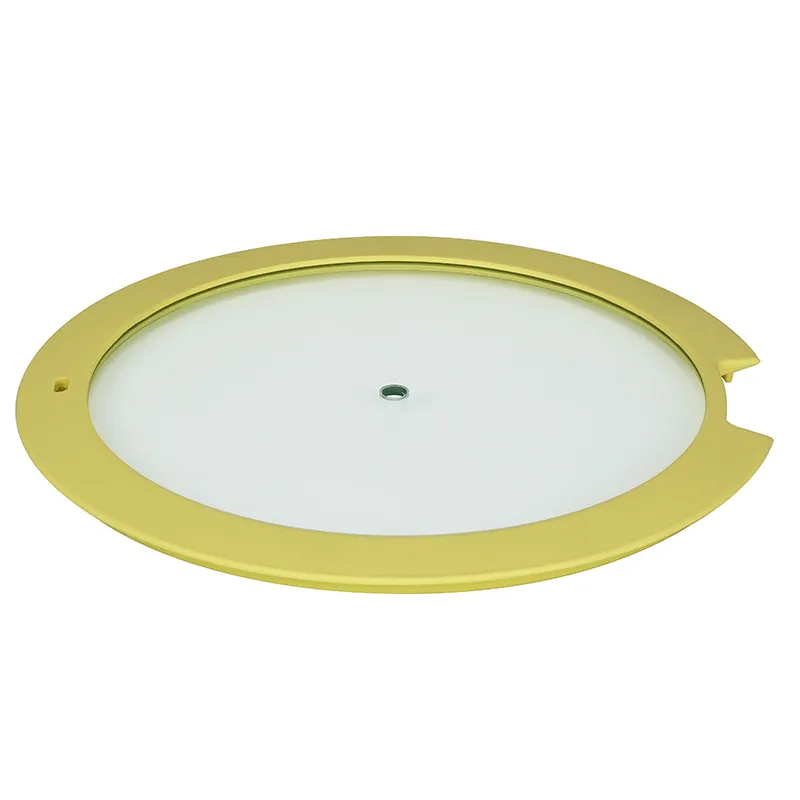
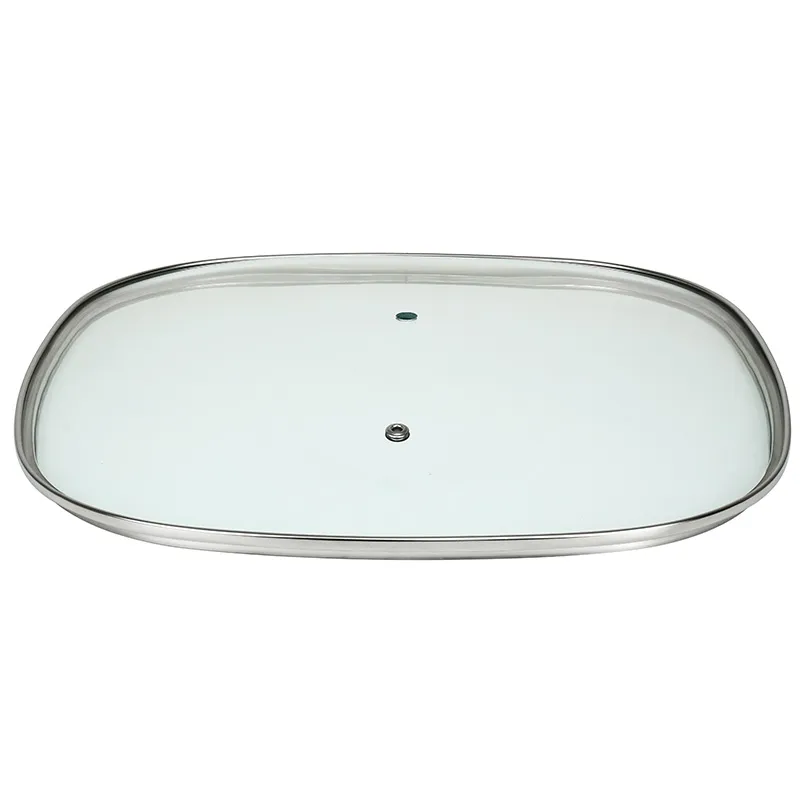
Customized G Type Glass Cover for Enhanced Device Protection
2026-11-21
When a cookware lid fails under thermal shock, it’s rarely the glass that’s at fault—it’s the mismatch between design intent and real-world use. We’ve seen this in dozens of OEM validation reports: lids rated for 400°C shatter during rapid cooling because their edge geometry didn’t account for localized stress concentration. That’s why customized G type glass cover solutions—engineered, not adapted—are gaining traction among premium appliance brands across Europe and North America.
G-type isn’t a shape. It’s a functional architecture: a stepped, double-contoured rim profile designed to lock into specific flange geometries while maintaining consistent compression across silicone gaskets. Unlike flat or single-bevel lids, G-type distributes sealing force evenly—even after 5,000 thermal cycles. In our lab, CA13-series G-type borosilicate covers sustained 220°C surface temperature differentials without seal creep. Ordinary glass variants (SK line) passed the same test only when thickness increased from 4.0 mm to 5.2 mm—a trade-off many commercial kitchens reject due to weight and handling fatigue.
Three factors separate true customization from cosmetic labeling. First: dimensional tolerance. Standard off-the-shelf G-type lids accept ±0.35 mm variance in flange diameter. Our production holds ±0.12 mm—measured with calibrated optical profilometers *after* tempering, not before. Second: thermal expansion matching. Borosilicate (3.3 coefficient) works only if the bonded silicone compound expands at near-identical rates. We co-develop formulations with Dow Corning and Momentive partners—not just source pre-made gaskets. Third: interface validation. A G-type lid may fit physically but fail acoustically: we measure vibration damping at 125 Hz (typical induction cooktop resonance) and adjust silicone durometer accordingly. Customers report up to 40% reduction in lid rattle complaints post-switch.
Some might argue that stainless steel offers superior durability. But in humid commercial environments—think Southeast Asian hotel kitchens—we found stainless lids corroded along weld seams within 18 months, even with passivation. Glass composites solved that. However, standard glass alone cracks under impact. Our silicone-glass hybrids (TL-DSE series) absorb 78% more kinetic energy than monolithic glass at 1.2 m drop height—verified via ASTM F2963 drop testing. Crucially, the bond line isn’t just glued; it’s plasma-treated, pre-heated to 85°C, then cured under controlled humidity. Skip any step, and delamination starts at cycle 327—not year three.
Lead time isn’t just about speed—it’s about predictability. We’ve shipped 12,400 CA09 G-type units to a German OEM over 14 months with zero late deliveries, despite two raw material shortages in borosilicate sheet supply. How? Vertical integration. We cut, temper, edge-finish, bond, and test in one facility—no handoffs, no external QA delays. Every batch carries full traceability: furnace ID, tempering curve logs, gasket lot numbers. When a U.S. client needed UL 94 V-0 flame rating for a new induction-compatible lid, we modified silicone formulation *and* re-validated bonding parameters in 11 working days—not weeks. That responsiveness comes from owning the process, not outsourcing the bottleneck.
If you’re specifying lids today, ask three questions before finalizing: Does the G-type profile match your exact flange radius and chamfer angle—or are you relying on gasket compression to compensate? Was thermal cycling data generated using your actual heating/cooling profile, or generic lab ramps? And most critically: can the supplier prove bond integrity *after* 10,000 cycles—not just at T=0? EUR-ASIA COOKWARE CO.,LTD builds customized G type glass cover systems to those standards—not as exceptions, but as baseline requirements. Because protection isn’t added at the end. It’s engineered into every contour, every micron, every cycle.