- Chinese
- French
- German
- Portuguese
- Spanish
- Russian
- Japanese
- Korean
- Arabic
- Irish
- Greek
- Turkish
- Italian
- Danish
- Romanian
- Indonesian
- Czech
- Afrikaans
- Swedish
- Polish
- Basque
- Catalan
- Esperanto
- Hindi
- Lao
- Albanian
- Amharic
- Armenian
- Azerbaijani
- Belarusian
- Bengali
- Bosnian
- Bulgarian
- Cebuano
- Chichewa
- Corsican
- Croatian
- Dutch
- Estonian
- Filipino
- Finnish
- Frisian
- Galician
- Georgian
- Gujarati
- Haitian
- Hausa
- Hawaiian
- Hebrew
- Hmong
- Hungarian
- Icelandic
- Igbo
- Javanese
- Kannada
- Kazakh
- Khmer
- Kurdish
- Kyrgyz
- Latin
- Latvian
- Lithuanian
- Luxembou..
- Macedonian
- Malagasy
- Malay
- Malayalam
- Maltese
- Maori
- Marathi
- Mongolian
- Burmese
- Nepali
- Norwegian
- Pashto
- Persian
- Punjabi
- Serbian
- Sesotho
- Sinhala
- Slovak
- Slovenian
- Somali
- Samoan
- Scots Gaelic
- Shona
- Sindhi
- Sundanese
- Swahili
- Tajik
- Tamil
- Telugu
- Thai
- Ukrainian
- Urdu
- Uzbek
- Vietnamese
- Welsh
- Xhosa
- Yiddish
- Yoruba
- Zulu
- Kinyarwanda
- Tatar
- Oriya
- Turkmen
- Uyghur


Customized Glass Lid: Complete OEM Guide for Cookware Brands
2026-10-27
Summary: Learn how to customize glass lids for cookware, including design options, OEM development, tooling, MOQ, sampling, lead times, and quality inspection.
A customized glass lid allows cookware brands to match a lid to their product dimensions, design requirements, brand identity, and target market.
Depending on the project, customization may involve the glass shape and thickness, rim material, handle configuration, steam vent, logo, surface finish, and retail packaging.
For OEM buyers, successful customization involves more than selecting a product from a catalog and requesting a different size.
The glass specifications, component dimensions, manufacturing process, and quality requirements must work together.
Unclear drawings or unapproved design changes can lead to fitting problems, additional sampling rounds, production delays, or inconsistent finished products.
This guide explains the main customization options for cookware glass lids, how the OEM development process works, what buyers should prepare before requesting a quotation, and how to evaluate tooling costs, minimum order quantities, lead times, and quality requirements.
What Can Be Customized on a Glass Lid?
Available customization options depend on the existing product design, manufacturing capabilities, order quantity, and technical requirements.
Some projects can use an established design with minor modifications, while others require new tooling and additional development.
Before requesting a quotation, buyers should identify which features must be customized and which can remain standard.
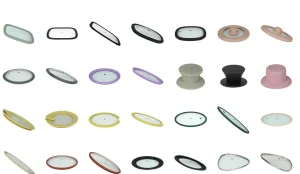
Glass Shape, Diameter, and Thickness
The glass panel determines the lid’s basic dimensions and appearance.
Buyers should specify the required diameter or overall dimensions, glass profile, nominal thickness, and dimensional tolerances.
Common design considerations include:
- Diameter and dimensions: The lid must fit the intended cookware and meet the required seating or overlap dimensions.
- Glass profile: Flat, domed, or other profiles may be available depending on the product design and manufacturing process.
- Glass thickness: The selected thickness should be evaluated against the product’s mechanical, thermal, weight, and cost requirements.
- Edge processing: The edge finish and geometry should be defined according to the approved design and manufacturing requirements.
- Glass appearance: Buyers may specify clarity, tint, or other visual characteristics where these options are available.
The finished lid’s dimensions should not be confused with the glass panel’s dimensions.
A metal or silicone rim can affect the external diameter, seating geometry, and compatibility with the cookware body.
For this reason, the specification should distinguish between the glass dimensions and the dimensions of the complete assembled lid.
Rim Material and Construction
The rim influences the lid’s appearance, fit, edge protection, and overall construction.
The most suitable option depends on the cookware design, intended use, target price, and desired product style.
Common options include stainless steel rims and silicone rims.
| Customization factor | Stainless steel rim | Silicone rim |
|---|---|---|
| Appearance | Metallic finish that can coordinate with different cookware finishes | May be available in different colors |
| Design considerations | Rim profile, width, material grade, finish, and fit | Rim profile, dimensions, color, material properties, and fit |
| Branding opportunities | Certain surfaces may support specified decorative finishes | Color coordination may support product differentiation |
| Main specification concern | Fit, edge coverage, finish consistency, and assembly quality | Fit, edge coverage, material suitability, and consistency |
These are general design considerations, not a guarantee that every manufacturer offers every option.
Buyers should confirm the available materials, finishes, and production methods before finalizing the design.
The rim should also be evaluated as part of the complete lid assembly.
A visually attractive rim is not sufficient if its dimensions or fit are unsuitable for the glass panel or cookware body.
Handle, Knob, and Steam Vent
The handle or knob affects how the user grips and lifts the lid.
Depending on the design and available components, buyers may be able to specify the shape, material, color, dimensions, and attachment arrangement.
Customization may include:
- Knob shape and height.
- Handle material and surface finish.
- Handle color or decorative details.
- Attachment hardware and assembly configuration.
- Steam vent presence, position, and dimensions.
- Compatibility with the glass hole and other components.
These features should be coordinated with the glass and rim design rather than specified independently.
For example, the position and size of a center hole must match the selected handle attachment.
If the design requires a special hole location or geometry, the manufacturer should confirm feasibility before production begins.
Buyers should also define relevant performance requirements for the handle, attachment, and vent.
These requirements should be assessed against the finished assembly rather than assumed from the individual component specifications.
Logo, Color, and Surface Finish
Branding can help distinguish a private-label cookware line from standard catalog products.
Depending on the design and available production methods, a customized glass lid may include a logo, decorative finish, colored rim, or branded packaging.
Possible options include:
- Logo printing on an approved surface.
- Decoration on suitable metal components.
- Custom colors for compatible components.
- Selected decorative finishes for the rim.
- Branded labels, inserts, or retail packaging.
Buyers should provide the logo artwork and specify its location, size, color, and appearance requirements.
The manufacturer can then confirm which production method is suitable and whether additional setup, tooling, or testing is required.
If the product will be exposed to repeated heating, washing, or other demanding conditions, the durability and suitability of the decorative materials should be evaluated for the intended use.
Packaging and Retail Presentation
Packaging is another customization area for cookware brands, wholesalers, and retailers.
The appropriate configuration depends on how the lids will be transported, stored, displayed, and sold.
Potential options include:
- Bulk packaging for wholesale shipments.
- Individual protective packaging.
- Branded product labels or inserts.
- Retail-ready boxes or hanging cards.
- Carton markings and shipping labels.
- Protective packaging designed around the product’s shape.
Packaging specifications should define the quantity per carton, protective materials, labeling requirements, and any special handling instructions.
Because glass products can be damaged during transportation, buyers should evaluate packaging as part of the overall supply arrangement.
A product that passes factory inspection can still arrive damaged if the packaging does not adequately protect the glass and assembled components.
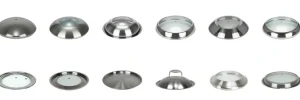
Customized G Type Glass Cover vs. Customized C Type Glass Cover
G type and C type are product designations used for particular glass cover designs.
Their exact meaning, profile, rim construction, and component arrangement should be confirmed through the supplier’s product information and technical drawings.
Buyers should not rely on a type name alone to define a product.
The final specification should identify the actual design, dimensions, materials, and fit requirements.
When Should Buyers Consider a G Type Glass Cover?
A customized G type glass cover may be relevant when the cookware design calls for the corresponding product profile or construction.
Before selecting this option, buyers should confirm:
- The exact profile and external dimensions.
- Glass thickness and required tolerances.
- Rim shape, material, and finish.
- The position and dimensions of holes or vents.
- Handle or knob attachment requirements.
- Whether an existing design or mold can be used.
If an existing G type design meets the requirements, adapting that configuration may reduce development work compared with creating a new design.
The actual cost and schedule implications depend on the required changes and the supplier’s manufacturing process.
When Should Buyers Consider a C Type Glass Cover?
A customized C type glass cover may be appropriate when the supplier’s corresponding design meets the cookware’s dimensional, functional, and appearance requirements.
Before proceeding, buyers should confirm:
- The complete product outline and critical dimensions.
- The actual glass profile and edge geometry.
- Rim fit and support around the glass.
- Handle, attachment, and vent positions.
- Material and finish requirements.
- Whether existing tooling can accommodate the design.
If the project involves a special profile or substantial dimensional changes, the manufacturer may need additional engineering review and sample validation.
Buyers should confirm tooling requirements before assuming that an existing mold can be reused.
How to Choose Between Different Lid Designs
The choice should be based on the cookware design and product requirements, not on the type name alone.
| Decision factor | Questions to confirm |
|---|---|
| Cookware compatibility | Does the lid fit the intended cookware body and opening? |
| Design requirements | Does the profile match the approved drawing and appearance target? |
| Manufacturing feasibility | Can the supplier produce the required geometry and edge finish? |
| Existing tooling | Can an established design or mold be adapted? |
| Component compatibility | Do the rim, handle, vent, and glass dimensions work together? |
| Commercial requirements | Are the proposed MOQ, tooling costs, and lead time acceptable? |
Buyers developing a new cookware range should ask the manufacturer to review the complete design before committing to a particular configuration.
How Does the OEM Custom Glass Lid Process Work?
A structured OEM process helps both parties confirm technical requirements before investing in tooling or starting mass production.
The main stages typically include requirement collection, design review, quotation, drawing approval, tooling development when required, sampling, validation, and production approval.
The exact workflow depends on the product and the scope of customization.
Step 1: Define the Product Requirements
Start by preparing a clear product brief.
It should explain what the lid needs to fit, how it should look, and which technical and commercial requirements the manufacturer must meet.
Include the following information where applicable:
- Intended cookware type and opening dimensions.
- Glass shape, thickness, and material requirements.
- Rim material, profile, and finish.
- Handle or knob design and attachment method.
- Steam vent requirements.
- Logo and decorative details.
- Packaging and labeling requirements.
- Expected order quantity and target market.
- Applicable performance, inspection, and documentation requirements.
If the project is based on an existing lid, provide its dimensions and reference photographs.
A physical sample can also help the manufacturer understand the intended construction.
Step 2: Request a Feasibility Review and Quotation
Ask the manufacturer to review the design and identify technical or commercial issues before the project proceeds.
The review should establish:
- Whether an existing design can be used.
- Which dimensions or components need modification.
- Whether new tooling or a mold is required.
- Whether the requested materials and finishes are available.
- What additional drawings or information are needed.
- What sampling, testing, and production steps are expected.
The quotation should distinguish between the cost of the finished lid and any additional charges for tooling, samples, packaging, testing, or shipping.
Comparing quotations is more meaningful when each supplier is pricing the same specification and commercial scope.
Step 3: Finalize Drawings and Technical Specifications
Before sample production, the buyer and manufacturer should agree on the drawing and specification that will control the project.
The documentation should define critical dimensions, tolerances, materials, component interfaces, visual requirements, and relevant performance criteria.
Special features should be shown clearly rather than left to verbal interpretation.
For example, a drawing should identify the location and dimensions of a handle hole, the profile of a special-shaped lid, and the required rim geometry where these features affect fit or assembly.
The parties should also establish how revisions will be controlled.
If the design changes after approval, document the revision and determine whether it affects tooling, samples, testing, cost, or delivery.
Step 4: Develop Tooling or Confirm Existing Molds
Not every customized glass lid requires a new mold.
A manufacturer may already have suitable tooling for a standard size or profile, and some projects may only need changes to components, decoration, or packaging.
New tooling may be required when the requested shape, profile, or manufacturing feature cannot be produced with existing equipment and molds.
Before approving a tooling charge, buyers should ask:
- What part of the product requires new tooling?
- Is the quoted tooling cost a one-time charge?
- What design information is needed before tooling begins?
- Who owns the tooling, and where will it be stored?
- What happens if the design changes after tooling approval?
- Are maintenance and future modifications included?
- Can the tooling be used for repeat orders, and under what conditions?
Ownership, storage, maintenance, and future-use arrangements should be agreed in writing.
Paying a mold fee does not automatically establish unrestricted ownership or transfer rights.
Step 5: Review Samples and Complete Validation
A pre-production sample gives the buyer an opportunity to check the actual product against the approved design.
Depending on the specification, the review may include:
- Overall dimensions and fit with the cookware body.
- Glass thickness and edge condition.
- Shape and profile consistency.
- Rim material, fit, and finish.
- Handle or knob attachment.
- Steam vent location and dimensions.
- Logo position, color, and appearance.
- Packaging and product presentation.
Required performance tests should be completed according to the agreed quality plan.
A sample that looks correct does not automatically demonstrate that the product meets every mechanical, thermal, or other performance requirement.
If the sample does not meet the specification, record the deviations and agree on corrective action before proceeding.
Step 6: Approve the Sample and Release Production
Mass production should begin only after the required approvals have been completed.
The buyer and manufacturer should retain the approved drawing, specification, sample reference, inspection criteria, and relevant test results.
These documents provide a common reference for production and future reorders.
If the supplier proposes a change to the material, dimensions, components, process, or packaging, the change should be reviewed and authorized before implementation.
Step 7: Inspect, Package, and Prepare the Shipment
The final stage includes production inspection, packaging verification, and preparation for shipment.
The inspection plan should identify which characteristics will be checked, how samples will be selected, what constitutes a defect, and how nonconforming products will be handled.
Buyers should also confirm carton quantities, shipping marks, packaging protection, delivery terms, and any required export or product documentation.
What Are the MOQ, Mold Cost, and Lead Time for Custom Glass Lids?
MOQ, tooling costs, and lead time depend on the product design, degree of customization, order quantity, manufacturing process, and supplier’s current production schedule.
There is no single MOQ or lead time that applies to every customized glass lid.
Buyers should request project-specific terms after the manufacturer has reviewed the specification.
What Determines the Minimum Order Quantity?
The minimum order quantity may differ depending on whether the project uses an existing design or requires more extensive customization.
Factors that can affect MOQ include:
- Whether the glass lid uses existing tooling.
- Whether a new mold or special production setup is required.
- The number of sizes, colors, or product variants.
- The selected rim, handle, and decorative components.
- Production setup and material purchasing requirements.
- Packaging and labeling arrangements.
When negotiating MOQ, clarify whether the minimum applies per order, model, size, color, or individual specification.
This is especially important when ordering several variations for one cookware collection.
If the requested MOQ is higher than the initial demand, ask whether the supplier can offer a trial quantity, phased order, or production plan for several approved variants.
Availability depends on the supplier’s policies and manufacturing constraints.
What Affects Mold Cost?
Mold cost depends on the work required to produce the requested design and the tooling involved.
A design based on an established product may require little or no new mold development, while a new profile or special-shaped lid may require additional tooling and engineering work.
Before accepting a tooling quotation, confirm:
- Which tooling components are included.
- Whether engineering or drawing preparation is charged separately.
- Whether sample production is included.
- Whether sample revisions incur additional charges.
- Whether tooling maintenance is included.
- The ownership and storage arrangements.
- Whether future modifications will incur additional charges.
The supplier should explain the relationship between the proposed design and the quoted tooling work.
This helps buyers assess whether an alternative design could meet the product requirements with lower initial investment.
How Long Does Customization Take?
The project schedule depends on the development and production work involved.
A project using an established design may avoid some of the work associated with new tooling.
A project requiring new molds, special dimensions, multiple sample revisions, additional testing, or customized packaging may take longer.
Ask the supplier to separate the major milestones:
| Project milestone | What to confirm |
|---|---|
| Drawing and specification approval | What information is required before development begins? |
| Tooling or mold development | Is new tooling required, and what is the estimated duration? |
| Sample production | When will the first sample be ready? |
| Sample revision and approval | How will changes affect the schedule? |
| Testing and validation | Which tests are required before production approval? |
| Mass production | When does the production lead time begin? |
| Packaging and shipment | Are packing, inspection, and shipping preparation included? |
The quoted lead time should specify its starting point.
For example, it may begin after deposit payment, final drawing approval, sample approval, or another agreed milestone.
Buyers should also confirm whether the estimate includes tooling, testing, packaging, and shipment preparation.
A production-only estimate may not represent the complete time required to launch a customized product.
What Should Buyers Prepare Before Requesting a Customized Glass Lid?
A clear RFQ (request for quotation) helps the manufacturer assess feasibility, prepare a comparable quotation, and identify missing information before development begins.
The amount of detail required depends on the project.
An existing product with minor changes may need less documentation than a new shape or a fully customized assembly.
Drawings, Dimensions, and Reference Samples
Provide a technical drawing whenever possible.
It should show the critical dimensions and component interfaces needed to manufacture and inspect the product.
Useful information includes:
- Overall lid dimensions and glass dimensions.
- Glass thickness and tolerance.
- Profile, curvature, or special shape.
- Hole locations and dimensions.
- Rim dimensions and attachment details.
- Handle or knob specifications.
- Critical fit requirements.
- Required edge finish and appearance criteria.
If a formal drawing is not available, a dimensioned sketch and clear reference photographs can help start the discussion.
However, the final design should be documented and approved before production.
A physical sample can also help the supplier understand the intended profile, fit, and appearance.
Any differences between the sample and the new design should be explained so the manufacturer does not treat the reference item as a complete specification.
Material and Performance Requirements
The RFQ should identify the required glass material, thickness, and processing requirements, together with the specifications for the rim, handle, vent, and other components.
Buyers should explain the intended application and any relevant operating conditions.
These details help the manufacturer determine which technical questions, material checks, and tests need to be addressed.
Avoid relying on broad descriptions such as “high quality” or “heat resistant” without defining what they mean for the particular product.
Where performance is important, specify the test method, sample condition, and acceptance criteria agreed with the manufacturer.
If requirements depend on the target market, identify the applicable requirements for review rather than assuming that one generic test covers every market.
Branding and Packaging Files
If the lid includes a logo or decorative treatment, provide the relevant artwork and placement requirements.
The RFQ may include:
- Logo artwork in an agreed file format.
- Logo dimensions and position.
- Color references and appearance requirements.
- Preferred packaging style.
- Retail label or insert requirements.
- Carton markings and shipping labels.
Buyers should confirm that the artwork is suitable for the selected production method.
The manufacturer may need to review the design before confirming feasibility and cost.
Packaging requirements should also be included early because changes to retail presentation or protective materials can affect quotations, sample approval, and the production schedule.
Quantity, Target Market, and Commercial Requirements
The RFQ should state the estimated order quantity and expected number of product variants.
If the project includes multiple sizes, colors, or rim configurations, list each version separately.
This helps the supplier assess the tooling, setup, and production requirements for each specification.
Also clarify the destination market, intended sales channel, target launch date, and any required documentation.
Before sending the RFQ, check that it contains the core information needed for an initial review:
- Product drawing or reference sample.
- Required glass and component specifications.
- Dimensions and critical tolerances.
- Logo and packaging requirements.
- Estimated order quantity and product variants.
- Destination market and applicable requirements.
- Requested delivery schedule.
The purpose is to give the manufacturer enough information to identify key requirements, ask focused follow-up questions, and prepare a quotation based on a clear scope.
How to Inspect a Customized Glass Lid Before Mass Production
Sample approval and production inspection help confirm that the finished product matches the approved design.
The inspection plan should be agreed before mass production and should reflect the product’s intended use and purchasing requirements.
Check Dimensions and Assembly
Dimensional inspection should focus on characteristics that affect fit and function.
Depending on the design, these may include:
- Overall diameter or external dimensions.
- Glass thickness.
- Hole location and dimensions.
- Rim profile and seating dimensions.
- Handle or knob position.
- Assembly fit and visible gaps.
- Consistency with the approved drawing.
The buyer and supplier should identify the critical dimensions and acceptable tolerances in advance.
Without agreed limits, it may be difficult to determine whether a measured difference is acceptable.
Inspect Glass Appearance and Edge Quality
The inspection criteria should define the acceptable appearance of the glass surface and edges.
Items to consider include visible scratches, chips, edge damage, unacceptable surface defects, and inconsistencies in shape or clarity.
The acceptance standard should specify how defects are classified and whether any limits apply to their size, location, or visibility.
For special-shaped lids, inspection should also confirm that the profile matches the approved drawing and that the finished edge follows the required geometry.
Verify Components and Branding
Inspect the rim, handle, vent, and other components against the approved specification.
Check that the selected materials, finishes, dimensions, and attachment arrangements match the agreed requirements.
For branded products, verify logo position, size, color, readability, and consistency with the approved artwork.
If the product includes customized packaging, inspect the labels, inserts, carton markings, and protective materials as well.
Agree on Performance Testing and Acceptance Criteria
Visual and dimensional checks cannot establish every aspect of product performance.
Where required, the quality plan should include suitable mechanical, thermal, or assembly tests for the finished lid.
The test method and acceptance criteria should be agreed before production.
The manufacturer should also clarify whether testing applies to the glass panel, individual components, or the complete assembly.
Buyers should request relevant inspection records or test reports and confirm that they relate to the product and specification being purchased.
The goal is to establish a consistent process for deciding whether a sample or production batch meets the requirements, rather than assuming that all glass lids need an identical test program.
How to Evaluate a Customized Glass Lid Manufacturer
Choosing a manufacturer involves more than comparing unit prices.
The supplier must be able to understand the design, communicate technical limitations, produce the approved configuration, and maintain consistency across production batches.
Assess Technical and Customization Capabilities
Ask whether the supplier can manufacture the required glass shape, dimensions, thickness, rim configuration, handle arrangement, and decorative features.
If the design is unusual, request a feasibility review before committing to tooling.
A supplier should be able to identify which requirements can be met with existing designs and which may require engineering work, new tooling, or additional validation.
Review Quality Control and Documentation
Ask how the supplier controls incoming materials, processing, assembly, and finished-product inspection.
Relevant questions include:
- How are glass dimensions and thickness checked?
- How are glass edges inspected?
- How are components and assemblies verified?
- What testing can be performed for the proposed design?
- How are nonconforming products recorded and handled?
- How are approved drawings and samples controlled?
- How are changes to materials or production processes authorized?
Request documentation appropriate to the product and market.
Any certificates or test reports should be reviewed for scope, validity, and relevance to the product being purchased.
Compare Quotations on the Same Basis
When comparing suppliers, make sure the quotations cover the same product configuration and commercial scope.
Review the glass specifications, rim and handle requirements, branding, packaging, tooling charges, MOQ, inspection requirements, delivery terms, and payment conditions.
A lower initial quotation may not represent a lower total project cost if it excludes tooling, sample revisions, packaging, or required testing.
Buyers should also consider the cost and time associated with future reorders.
A well-documented approved specification can make it easier to maintain consistency when the product is ordered again.
Final Thoughts: How to Start a Customized Glass Lid Project
A successful customized glass lid project starts with a clearly defined product requirement.
Buyers should specify the glass dimensions and thickness, rim construction, handle configuration, branding, packaging, and relevant performance criteria before committing to production.
The next step is to determine whether an existing design can meet those requirements or whether new tooling and development are necessary.
Drawings, samples, and technical reviews help the manufacturer evaluate feasibility, while agreed inspection criteria help ensure that the finished product matches the approved design.
MOQ, mold costs, and lead times should be confirmed for the specific project rather than assumed from general estimates.
The same applies to technical performance: requirements should be defined for the intended product and verified through appropriate inspection and testing.
For cookware brands, wholesalers, and OEM purchasing teams, the most practical approach is to prepare a clear RFQ, compare supplier proposals on the same technical basis, approve a representative sample, and document the final specification before mass production.
If you are planning a customized glass lid for a new cookware line, prepare the intended dimensions, reference design, component requirements, target quantity, and packaging needs.
These details give a manufacturer a clearer basis for assessing feasibility and preparing a project-specific quotation.