- Chinese
- French
- German
- Portuguese
- Spanish
- Russian
- Japanese
- Korean
- Arabic
- Irish
- Greek
- Turkish
- Italian
- Danish
- Romanian
- Indonesian
- Czech
- Afrikaans
- Swedish
- Polish
- Basque
- Catalan
- Esperanto
- Hindi
- Lao
- Albanian
- Amharic
- Armenian
- Azerbaijani
- Belarusian
- Bengali
- Bosnian
- Bulgarian
- Cebuano
- Chichewa
- Corsican
- Croatian
- Dutch
- Estonian
- Filipino
- Finnish
- Frisian
- Galician
- Georgian
- Gujarati
- Haitian
- Hausa
- Hawaiian
- Hebrew
- Hmong
- Hungarian
- Icelandic
- Igbo
- Javanese
- Kannada
- Kazakh
- Khmer
- Kurdish
- Kyrgyz
- Latin
- Latvian
- Lithuanian
- Luxembou..
- Macedonian
- Malagasy
- Malay
- Malayalam
- Maltese
- Maori
- Marathi
- Mongolian
- Burmese
- Nepali
- Norwegian
- Pashto
- Persian
- Punjabi
- Serbian
- Sesotho
- Sinhala
- Slovak
- Slovenian
- Somali
- Samoan
- Scots Gaelic
- Shona
- Sindhi
- Sundanese
- Swahili
- Tajik
- Tamil
- Telugu
- Thai
- Ukrainian
- Urdu
- Uzbek
- Vietnamese
- Welsh
- Xhosa
- Yiddish
- Yoruba
- Zulu
- Kinyarwanda
- Tatar
- Oriya
- Turkmen
- Uyghur


4mm Tempered Glass Lid: Thickness Guide for Cookware Sourcing
2026-10-27
Summary: Learn how to evaluate 4mm tempered glass lids for cookware, including strength, weight, heat resistance, cost, and OEM specifications.
A 4mm tempered glass lid can be a practical option for cookware when its thickness, glass quality, edge design, and supporting rim are matched to the intended application. However, glass thickness alone does not determine the finished lid’s strength, thermal shock resistance, or service life.
For cookware brands, wholesalers, and OEM purchasing teams, selecting a 4mm glass lid requires more than confirming a nominal thickness. Buyers should consider the complete lid construction, expected cooking conditions, handling requirements, and quality inspection criteria before approving a production specification.
This guide explains how to evaluate 4mm tempered glass lids, when this thickness may be suitable, and what to confirm with a manufacturer before placing a bulk order.
What Is a 4mm Tempered Glass Lid?
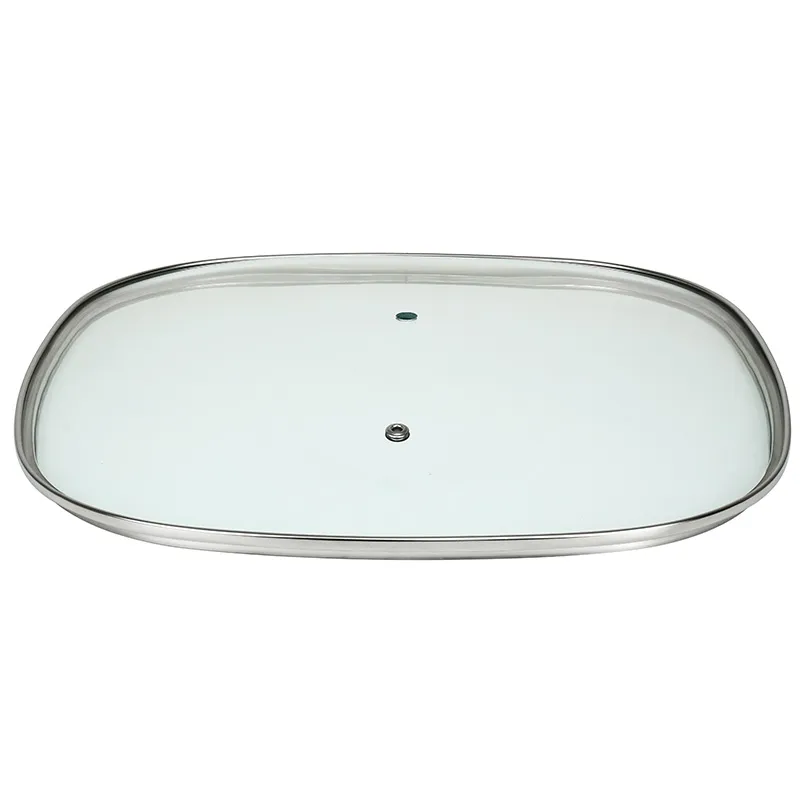
A 4mm tempered glass lid is a cookware cover made with glass that has a nominal thickness of 4 millimeters and has undergone a controlled heat-treatment process to improve its mechanical performance compared with ordinary annealed glass of comparable composition and dimensions.
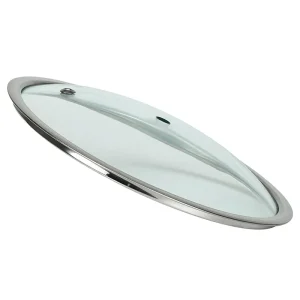
Tempering creates a characteristic stress distribution within the glass. The resulting properties depend on the glass composition, heating and cooling process, and the quality of the finished product.
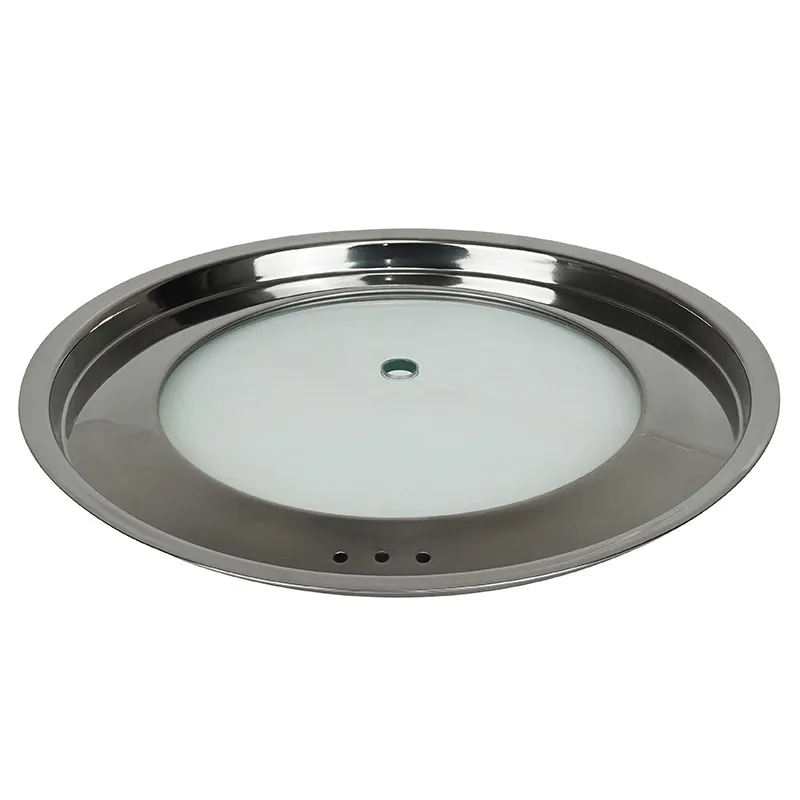
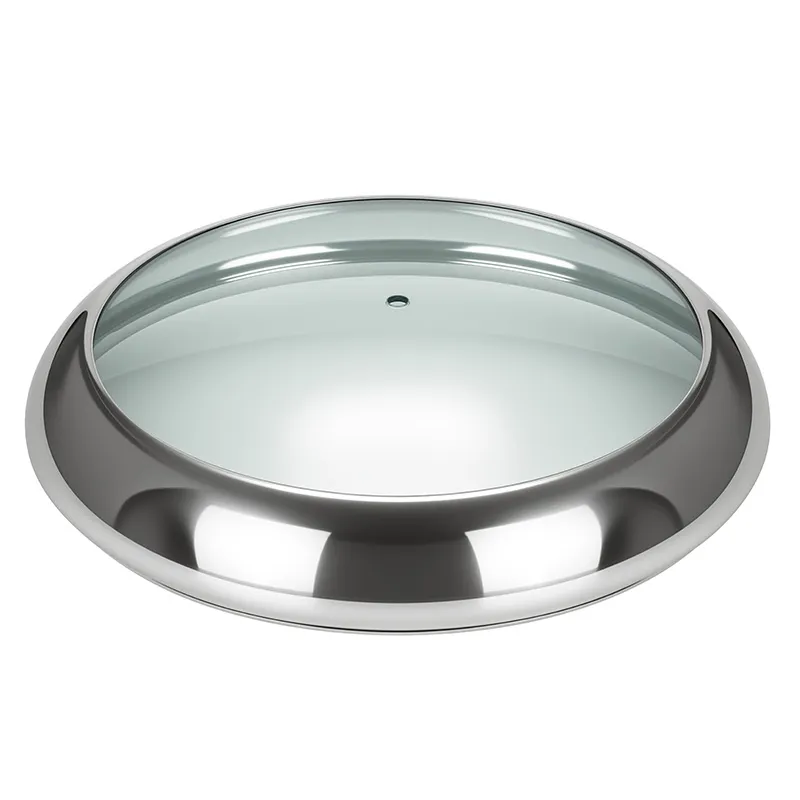
For cookware applications, the glass is only one part of the assembly. A finished lid may also include a metal rim, a handle, a vent, or other components specified by the cookware brand.
What Does 4mm Glass Thickness Mean?
The 4mm specification refers to the thickness of the glass itself, not the overall diameter or external dimensions of the finished lid.
This distinction matters when preparing an OEM specification. Glass thickness, overall lid dimensions, rim width, handle design, and other construction details should be recorded as separate requirements.
A purchasing specification should identify at least:
- Glass thickness: The nominal thickness and acceptable production tolerance.
- Glass material: The specified glass type and any relevant material requirements.
- Glass shape: Flat, domed, or another approved profile.
- Edge condition: The required edge finishing and inspection criteria.
- Rim construction: The specified metal or silicone rim design, where applicable.
- Handle and vent: The required configuration, materials, and attachment method.
- Performance requirements: The agreed tests and acceptance criteria for the intended cookware application.
These details help prevent a common sourcing problem: receiving a product that meets the nominal thickness requirement but does not match the complete design or performance expectations.
How Is Tempered Glass Different From Ordinary Glass?
Tempered glass is heat-treated to develop surface compression and corresponding internal stresses. This process generally improves resistance to mechanical loading compared with annealed glass of similar composition and geometry.
However, tempered glass is not unbreakable. Edge damage, localized impacts, manufacturing defects, and stresses introduced during assembly can still cause failure.
When fully tempered glass breaks, it typically fragments into numerous smaller pieces rather than the larger, sharp-edged shards associated with ordinary annealed glass. The actual breakage pattern depends on the glass and its processing.
For cookware buyers, the key point is that tempering and thickness are separate specification factors. Both should be considered when evaluating a finished glass lid.
What Performance Can a 4mm Tempered Glass Lid Provide?
The performance of a 4mm tempered glass lid depends on its material quality, dimensions, shape, edge condition, rim support, and manufacturing consistency.
The following considerations are particularly important when evaluating the thickness for a cookware program.
Mechanical Strength and Impact Resistance
Glass thickness affects how a glass component responds to loading, but it does not independently establish a universal strength rating.
Mechanical performance also depends on the glass’s surface and edge condition, residual stress distribution, geometry, and how loads are applied. A lid that is adequately supported around its perimeter may behave differently from one with an unsuitable rim fit or concentrated loading.
For OEM sourcing, buyers should consider:
- Whether the lid will be handled frequently during cooking.
- Whether it may be exposed to accidental impacts during use or cleaning.
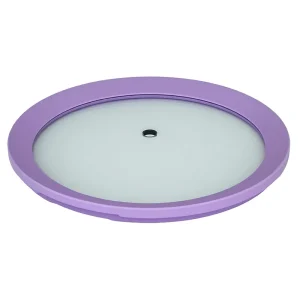
- How the rim supports and protects the glass edge.
- Whether the handle attachment introduces concentrated forces.
- Whether the finished assembly meets the agreed mechanical performance requirements.
A 4mm specification should therefore be supported by appropriate product-level testing when impact resistance is an important purchasing requirement.
Thermal Shock Resistance
Thermal shock occurs when temperature differences create stresses within a material. For glass, the risk depends on factors such as temperature distribution, material properties, geometry, edge condition, and the rate of temperature change.
Tempering can improve resistance to thermal shock, but it does not make a glass lid immune to sudden temperature changes.
For cookware applications, relevant conditions may include:
- Placing a cold lid over a hot pan.
- Exposing a hot lid to cold water.
- Contact with localized heat sources.
- Uneven heating across the glass surface.
- Differences between the temperature of the glass and its rim or handle assembly.
A 4mm tempered glass lid should be evaluated under conditions that reflect its intended use. Buyers should not assume that every 4mm lid can tolerate the same temperature difference simply because the glass has been tempered.
The required thermal shock performance should be established with the manufacturer and verified using an agreed test procedure and acceptance criteria.
Visibility and Everyday Usability
Glass lids allow users to observe food during cooking without repeatedly removing the cover. This can help reduce unnecessary opening and make it easier to monitor the cooking process.
A 4mm glass panel can provide the visibility expected from a transparent cookware lid, provided the glass quality, surface condition, and finished construction meet the required appearance standards.
For private-label and OEM programs, buyers should also consider optical clarity, visible defects, surface scratches, and consistency across production batches.
How Does 4mm Glass Affect Lid Weight and Cost?
Glass thickness influences material usage, but the final weight and unit cost of a cookware lid depend on the complete assembly.
A useful starting point for purchasing calculations is the approximate mass of the glass per unit area.
For ordinary soda-lime glass with an assumed density of approximately 2,500 kg/m³, a 4mm sheet has a theoretical glass mass of about 10 kg per square meter. This is a calculation based on the assumed density and nominal thickness, not a measured weight for a finished cookware lid.
The finished product also includes the rim, handle, fasteners, and any additional components. Its actual weight must be confirmed using the approved design or a production sample.
Weight Considerations for Cookware Brands
Glass thickness is only one factor affecting lid weight. Overall glass area, curvature, rim material, handle design, and additional fittings also contribute.
When evaluating a 4mm glass lid, buyers should consider:
- The desired balance between perceived sturdiness and ease of handling.
- The weight of the complete lid rather than the glass alone.
- Compatibility with the cookware body and its intended use.
- Packaging requirements and the risk of damage during transportation.
- Whether the proposed design meets the brand’s product weight targets.
A lighter glass panel does not automatically produce a better product. The complete assembly must remain suitable for the intended application.
Cost Trade-Offs Between Glass Thicknesses
A thicker glass panel generally uses more glass material for the same area. However, the final price of a tempered glass lid is not determined by thickness alone.
Manufacturing yield, glass processing, shape, edge finishing, rim construction, handle assembly, quality requirements, packaging, and order volume may also affect the quotation.
For this reason, buyers should avoid comparing two suppliers solely on nominal thickness or unit price.
A more meaningful comparison evaluates whether each proposal meets the same technical requirements, including:
| Evaluation factor | What buyers should confirm |
|---|---|
| Glass thickness | Nominal thickness and agreed tolerance |
| Material and processing | Glass type and tempering requirements |
| Finished construction | Shape, edge condition, rim, and handle configuration |
| Performance | Applicable mechanical and thermal tests |
| Quality control | Inspection procedures and acceptance criteria |
| Commercial terms | Quotation scope, packaging, order quantity, and delivery terms |
The objective is to select a specification that meets the product’s performance and commercial requirements, rather than simply choosing the thinnest or least expensive option.
When Should Buyers Choose a 4mm Tempered Glass Lid?
A 4mm tempered glass lid may be worth evaluating when its mechanical and thermal performance can meet the requirements of the intended cookware design.
The correct choice depends on the complete product specification rather than a universal rule that 4mm is suitable for every lid.
Applications That May Suit a 4mm Glass Lid
A 4mm glass panel may be appropriate for a cookware program when:
- The intended lid design has been validated for the proposed glass thickness.
- The rim provides suitable support and protection for the glass edge.
- The handle and attachment system are compatible with the assembly.
- The lid meets the required thermal and mechanical performance criteria.
- The finished weight and cost align with the product’s design objectives.
These conditions should be confirmed for the actual product rather than assumed from thickness alone.
For OEM buyers developing a new cookware line, a 4mm option can serve as a candidate specification for sample evaluation and performance testing.
When Should Buyers Consider Thicker Glass?
A thicker glass panel may be worth evaluating when the existing design does not meet its performance targets or when changes to the product introduce different mechanical requirements.
Examples include:
- A larger glass area that changes the panel’s response to loading.
- A design with different support conditions or rim geometry.
- A product requirement for greater resistance to a particular type of mechanical loading.
- A revised handle or assembly design that changes how forces are transferred to the glass.
- A specification that cannot be satisfied consistently with the proposed 4mm construction.
These situations do not automatically require thicker glass. The appropriate solution may instead involve revising the geometry, improving edge protection, changing the support design, or modifying the assembly.
Where a thicker panel is being considered, buyers should compare prototypes under equivalent conditions and assess the complete lid rather than relying on thickness as a substitute for testing.
Why Thicker Glass Is Not Always the Better Choice
Increasing thickness can affect weight, material consumption, handling characteristics, and cost. It may also require changes to the rim or other components.
A thicker panel should therefore be selected when it provides a demonstrated benefit that justifies the additional material and any resulting design changes.
The most effective specification is the one that satisfies the intended performance requirements with an appropriate balance of weight, durability, manufacturability, and cost.
What Safety Limits Should Buyers Consider for High-Heat Cookware?
Thermal performance is a critical consideration when selecting a tempered glass lid, particularly for cookware exposed to repeated heating and cooling.
No single temperature limit or thermal shock value should be assumed to apply to every 4mm tempered glass lid. Acceptable operating conditions depend on the glass composition, tempering quality, product geometry, edge condition, assembly materials, and intended use.
Why Temperature Difference Matters
The temperature of a glass lid may not be uniform during use. One region can heat or cool faster than another, creating temperature gradients and associated stresses.
Sudden cooling, localized heating, or uneven thermal exposure can increase the risk of breakage. Damage to the glass edge can further reduce its tolerance for stress.
For this reason, a lid’s thermal performance should be evaluated under a defined test procedure rather than inferred from its nominal thickness.
Why Rim and Handle Materials Also Matter
A cookware lid is an assembly of multiple components, and these components may respond differently to heat.
The rim, handle, fasteners, and any seals or fittings should be compatible with the intended temperature range and operating conditions.
Buyers should verify that the complete assembly meets its requirements, including the security of the handle attachment, the stability of the rim, and the suitability of any additional components.
A glass panel that performs adequately in isolation does not automatically establish the thermal or mechanical performance of the finished lid.
How to Establish Appropriate Safety Requirements
Before approving a 4mm tempered glass lid for a high-heat application, buyers should define:
- The intended cookware type and heating conditions.
- The expected temperature range and relevant temperature-change scenarios.
- The applicable thermal shock and mechanical performance requirements.
- The test methods, sample conditions, and acceptance criteria.
- The inspection requirements for glass edges, visible damage, and assembly defects.
- The required user instructions and handling precautions.
The manufacturer and buyer should agree on these requirements before mass production.
Any stated operating limit should be supported by relevant product documentation or test evidence. A generic statement such as “heat resistant” is not a substitute for a defined performance requirement.
What Should OEM Buyers Include in a 4mm Glass Lid Specification?
A clear specification helps purchasing teams communicate requirements consistently and evaluate supplier proposals on the same basis.
For a 4mm tempered glass lid, the specification should cover both the glass panel and the finished assembly.
Confirm the Glass Requirements
Document the nominal glass thickness, acceptable tolerance, material requirements, shape, edge processing, and appearance criteria.
If the product requires a particular surface finish, coating, tint, or other treatment, include it in the approved specification.
The buyer and manufacturer should also establish how thickness will be measured, how many samples will be inspected, and how deviations will be handled.
Confirm the Complete Lid Construction
Record the requirements for the rim, handle, vent, and any other components.
For example, the specification should identify the required rim material and profile, handle material and attachment method, and any relevant dimensional or fit requirements.
The assembly should be reviewed as a complete product because component compatibility can influence durability and safety.
Agree on Testing and Quality Acceptance
Before approving production, the buyer and manufacturer should agree on the tests that are appropriate for the product and target market.
Depending on the application, these may include:
- Glass thickness and dimensional inspection.
- Visual inspection of the glass surface and edges.
- Verification of the rim and handle assembly.
- Mechanical performance testing.
- Thermal shock testing.
- Packaging and transportation validation.
Not every product requires the same test program. The scope should reflect the product’s intended use, applicable requirements, and agreed purchasing specification.
ASTM C1048-25 covers specified types of heat-strengthened and fully tempered flat glass produced on a horizontal heat-treating system for general building construction and other applications. Its scope does not make it a complete qualification standard for every cookware lid. Buyers should confirm whether the standard is relevant to the particular glass component and separately establish the tests and acceptance criteria required for the finished product.
Approve Samples Before Bulk Production
A pre-production sample allows the buyer to review the actual product against the approved drawings and specification.
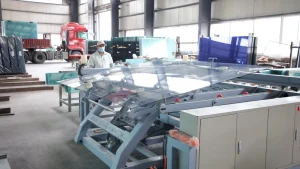
The sample review should cover the glass thickness, appearance, edge quality, rim fit, handle attachment, and other critical characteristics. Required performance tests should also be completed according to the agreed quality plan.
Once the sample is approved, the manufacturer and buyer should maintain a clear record of the accepted specification and any authorized changes.
This helps reduce the risk of differences between the approved sample and subsequent production batches.
How to Evaluate a Supplier for 4mm Tempered Glass Lids
A suitable supplier should be able to explain how the proposed product meets the buyer’s specification and what evidence is available to support its performance claims.
For OEM and wholesale orders, buyers should focus on technical consistency, quality documentation, and the ability to manufacture the approved design.
Useful questions include:
- Can the supplier document the glass material, nominal thickness, and agreed tolerance?
- Can the supplier explain its edge-processing and tempering requirements?
- What inspection procedures are used for incoming materials and finished lids?
- Which mechanical and thermal tests are available for the proposed product?
- How are nonconforming products identified and handled?
- How are approved samples, drawings, and production changes controlled?
- Can the supplier confirm the required packaging and order specifications?
The answers should be evaluated against the requirements of the particular cookware program.
A supplier’s general claim of manufacturing capability is less useful than clear documentation showing how the specified product will be produced, inspected, and approved.
Final Thoughts: Is a 4mm Tempered Glass Lid the Right Choice?
A 4mm tempered glass lid can be a suitable option when the glass panel, edge design, rim, handle, and intended operating conditions are compatible with the product’s performance requirements.
Thickness alone cannot establish mechanical strength, thermal shock resistance, or long-term reliability. Buyers should evaluate the finished assembly, define measurable acceptance criteria, and confirm critical performance requirements before approving bulk production.
For cookware brands and OEM purchasing teams, the most reliable approach is to compare complete specifications, review pre-production samples, and use agreed testing and inspection procedures.
If you are developing a customized cookware glass lid, begin by defining the required glass thickness, lid construction, intended application, and quality criteria. These details provide a more useful starting point for supplier evaluation than thickness alone.