- Chinese
- French
- German
- Portuguese
- Spanish
- Russian
- Japanese
- Korean
- Arabic
- Irish
- Greek
- Turkish
- Italian
- Danish
- Romanian
- Indonesian
- Czech
- Afrikaans
- Swedish
- Polish
- Basque
- Catalan
- Esperanto
- Hindi
- Lao
- Albanian
- Amharic
- Armenian
- Azerbaijani
- Belarusian
- Bengali
- Bosnian
- Bulgarian
- Cebuano
- Chichewa
- Corsican
- Croatian
- Dutch
- Estonian
- Filipino
- Finnish
- Frisian
- Galician
- Georgian
- Gujarati
- Haitian
- Hausa
- Hawaiian
- Hebrew
- Hmong
- Hungarian
- Icelandic
- Igbo
- Javanese
- Kannada
- Kazakh
- Khmer
- Kurdish
- Kyrgyz
- Latin
- Latvian
- Lithuanian
- Luxembou..
- Macedonian
- Malagasy
- Malay
- Malayalam
- Maltese
- Maori
- Marathi
- Mongolian
- Burmese
- Nepali
- Norwegian
- Pashto
- Persian
- Punjabi
- Serbian
- Sesotho
- Sinhala
- Slovak
- Slovenian
- Somali
- Samoan
- Scots Gaelic
- Shona
- Sindhi
- Sundanese
- Swahili
- Tajik
- Tamil
- Telugu
- Thai
- Ukrainian
- Urdu
- Uzbek
- Vietnamese
- Welsh
- Xhosa
- Yiddish
- Yoruba
- Zulu
- Kinyarwanda
- Tatar
- Oriya
- Turkmen
- Uyghur


Dome Tempered Glass Lid Buying Guide for Cookware
2026-11-10
If you source cookware components or develop new cookware lines, picking the right dome tempered glass lid directly reduces common downstream issues such as poor sealing, boil-over complaints and glass breakage. Unlike flat glass lids, dome tempered glass lids feature an arched profile that creates extra internal space inside cookware. This guide covers core benefits, side-by-side comparisons, fit matching rules, custom options and quality inspection points. It helps you make stable sourcing decisions whether you buy for wholesale, OEM projects or finished cookware assembly.
1. What Is a Dome Tempered Glass Lid & Why Choose It for Cookware
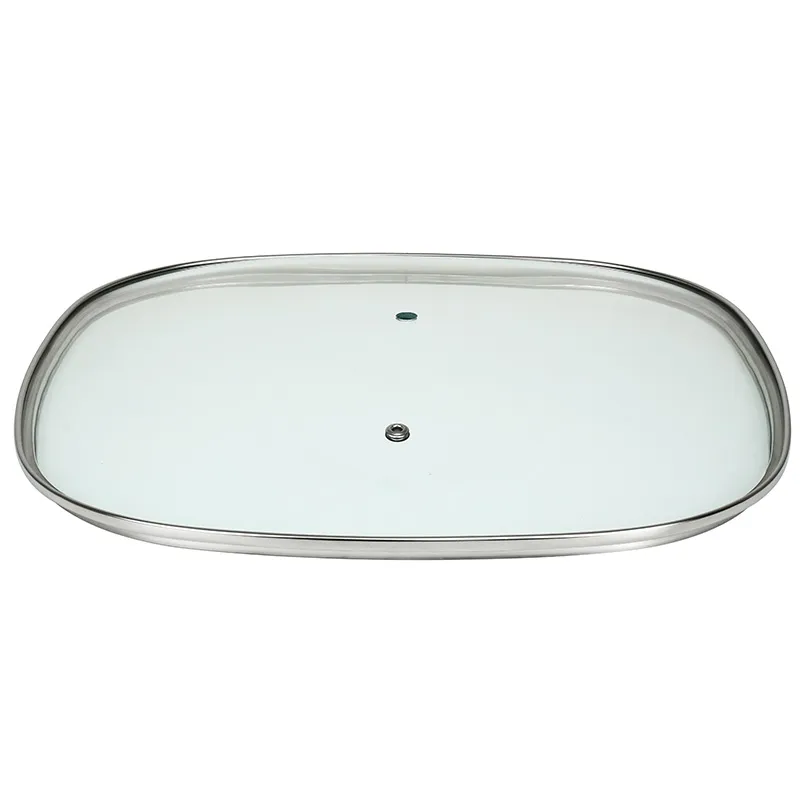
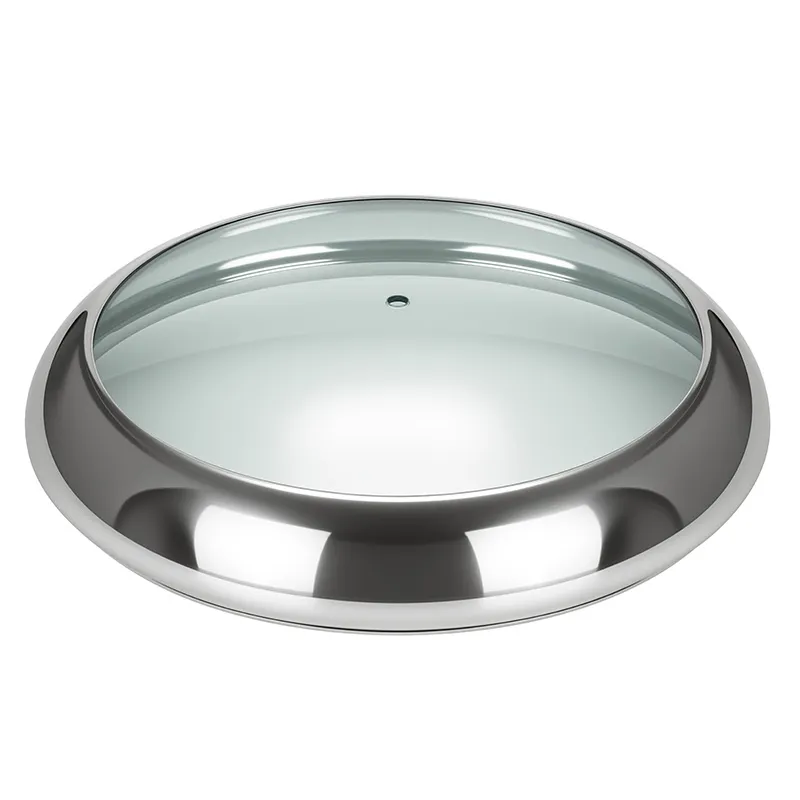
A dome tempered glass lid is a cookware cover made of safety-tempered glass with a curved, raised dome shape. The arched structure lifts the glass surface higher than standard flat lids while retaining full transparency for monitoring food inside. This extra overhead clearance is its defining feature, making it widely matched with deep stock pots, soup pots and stew pots.
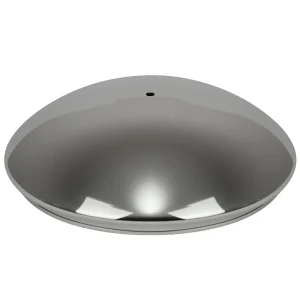
For product designers and cookware buyers, the dome profile solves well-known pain points during boiling and simmering. Flat lids sit close to the food surface, while dome tempered glass lids reserve room for rising liquids and foam. The tempered glass base delivers the heat resistance and safety required for cookware accessories.
2. Key Advantages of Dome Tempered Glass Lids
- Reduced boil-over risk: The elevated dome creates additional internal volume for bubbling broths, pasta water and stews, lowering overflow chances during vigorous cooking.
- Improved steam circulation: Extra space above food allows steam to circulate evenly, supporting consistent heating and stable simmer performance.
- Clear visibility: Transparent tempered glass lets end users check cooking progress without repeatedly lifting the lid and losing heat.
- Reliable safety performance: Properly tempered glass handles sudden temperature shifts better than ordinary annealed glass, cutting breakage risks under normal cooking conditions.
- Stack-friendly form factor: Most dome tempered glass lid designs support neat stacking for warehouse storage and retail shelf display.
3. Dome Tempered Glass Lid vs Flat Tempered Glass Lid
| Item | Dome Tempered Glass Lid | Flat Tempered Glass Lid |
|---|---|---|
| Internal space | Extra overhead clearance for rising liquid and foam | Minimal clearance directly above food |
| Best fit & use case | Deep soup pots, stock pots and large stew pots; frequent high-liquid simmer and boiling | Shallow pans, skillets and low-profile cookware; dry-heat or small-batch cooking |
| Boil-over resistance | Strong | Limited |
| Visual style | Rounded, traditional cookware aesthetic | Sleek, minimalist look |
| Cost profile | Usually slightly higher due to curved forming process | Generally more cost-effective |
Flat tempered glass lids work well for low-volume cooking tasks where overflow is not a major concern. Choose dome tempered glass lids when your target cookware is deep and designed for frequent liquid-heavy cooking.
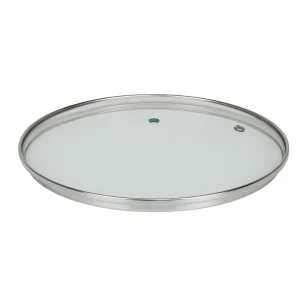
4. How to Match Dome Tempered Glass Lid to Your Cookware
Correct sizing is the foundation of a reliable seal. Follow these key points when matching a dome tempered glass lid to your pot or pan:
- Confirm measurement standards: Clarify whether the quoted size refers to inner rim diameter or outer rim diameter. Mixed measurement definitions are one of the most frequent sourcing mistakes.
- Check the pot rim style: Rolled rims and straight cut rims require different sealing tolerance. A lid that fits a rolled-rim pot may not seal tightly on a straight-rim vessel.
- Evaluate pot depth: Dome lids deliver the most value on deep cookware; they bring limited functional gain for shallow pans.
- Verify gasket compatibility: If your design uses a silicone sealing ring, confirm the groove dimension on the glass lid matches the selected gasket.
5. Available Custom Options for Dome Tempered Glass Lids
5.1 Handle Types & Mounting Options
Handles affect heat resistance, grip feel and product market positioning. Common options include:
- Bakelite handles: Cost-effective, good heat insulation, widely adopted for standard wholesale cookware.
- Stainless steel handles: Premium visual effect, easy to clean; note they conduct heat faster.
- Silicone wrapped handles: Soft grip and excellent heat protection, popular for consumer-focused retail lines.
Mounting structures fall into single-hole and double-hole designs. Double-hole mounting provides stronger mechanical stability for heavier lids.
5.2 Steam Vent Hole Design
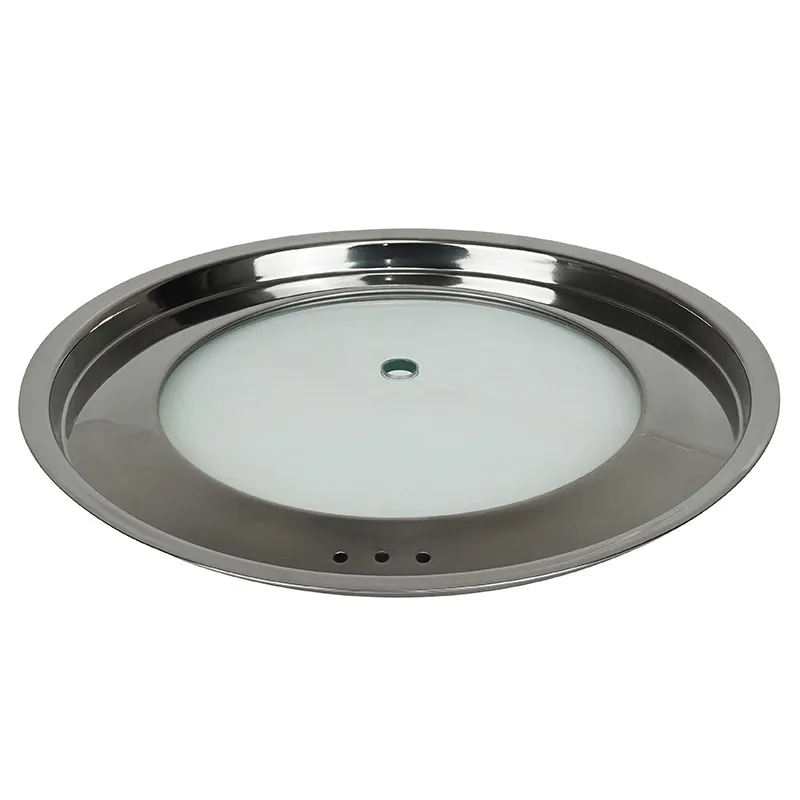
Steam vents regulate internal pressure and prevent negative pressure suction that can lock lids firmly onto pots.
- No vent hole: Suitable for gentle simmering where pressure build-up stays low.
- Single vent hole: The most common choice for general soup and stew cookware.
- Dual vent holes: Selected for large-capacity pots or recipes releasing large volumes of steam.
Too small a vent restricts pressure release; oversized vents accelerate heat loss. Balance vent size according to your cookware’s intended application.
5.3 OEM & Wholesale Customization Support
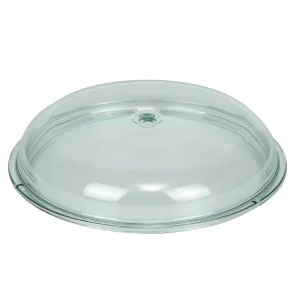
When you cooperate with a dome tempered glass lid manufacturer for OEM orders, typical customizations include:
- Custom logo printing on the glass surface
- Adjusted dome height to achieve target internal volume
- Selection of glass thickness
- Mixed handle combinations
- Matching packaging for finished cookware sets
Wholesale bulk orders usually qualify for better unit pricing. Confirm MOQ terms with your dome tempered glass lid supplier before approving custom artwork or modified tooling.
6. Quality Checklist When Buying High Quality Dome Tempered Glass Lids
Use this checklist during sampling and bulk inspection for high quality dome tempered glass lid orders:
- Tempering marking: Check for valid tempering identification on the glass.
- Edge finishing: Smooth, polished edges with no sharp chips or micro-cracks.
- Glass surface: Free of bubbles, scratches, optical distortion or uneven tint.
- Handle assembly: Handles fastened firmly with no wobble or loose hardware.
- Thermal stability: Sample testing for rapid temperature change resistance is recommended for high-end lines.
- Consistent dome shape: Uniform arch height across the batch to guarantee consistent fit.
7. Tips for Sourcing: Manufacturer, Supplier & Price Factors
If you plan to source from China dome tempered glass lid factories, understand the main factors shaping final pricing:
- Glass thickness: Thicker glass raises material cost and improves durability.
- Dome forming complexity: Non-standard dome heights often require custom tooling.
- Handle and accessory selection: Premium silicone or stainless hardware increases cost versus standard bakelite parts.
- Order quantity: Large wholesale runs reduce unit cost, while small trial orders carry higher per-piece pricing.
- Custom work: Logo printing, custom tooling and special packaging add extra charges and extended lead time.
One critical sourcing reminder: Some low-cost suppliers supply semi-tempered glass instead of fully tempered glass, which carries much higher breakage risk. Decide whether you need a direct dome tempered glass lid factory or a trading supplier based on your order size, customization level and quality control requirements. Direct manufacturers are usually preferred for stable, repeat OEM cookware programs.
8. Frequently Asked Questions about Dome Tempered Glass Lids
Q: Are dome tempered glass lids oven safe?
A: The tempered glass itself can withstand high heat, but the overall oven safety limit depends heavily on the handle material. Bakelite and many silicone handles cannot endure prolonged oven exposure. Always list handle temperature limits clearly on product specifications for your customers.
Q: Can I replace a flat glass lid with a dome tempered glass lid on an existing pot?
A: It works only if the rim diameter and rim style match perfectly. The dome curve does not change the sealing diameter, so size compatibility remains the primary rule.
Q: Do dome tempered glass lids explode easily?
A: Properly tempered glass follows safety norms and resists thermal shock. Breakage risk rises sharply with untempered or semi-tempered glass, surface damage or exposure to extreme uneven temperature swings.
Q: How should dome tempered glass lids be packed for sea shipment?
A: Individual protective wrapping and compartment cartons are standard to avoid scratches and breakage during transit. Stacking limits should be marked clearly on outer cartons.

9. Final Buying Recommendations
Start your selection by confirming the exact pot rim diameter and rim type. Next, match the dome profile to your cooking scenario: prioritize dome tempered glass lids for deep soup and stock pots where boil-over control matters. Then select handles, steam vent layout and custom features aligned with your target market and price tier. Always sample and run quality checks before bulk production. Work closely with your dome tempered glass lid supplier to confirm drawings, tolerances and sample approval standards.Contact us to request samples and technical datasheets for your cookware project.