- Chinese
- French
- German
- Portuguese
- Spanish
- Russian
- Japanese
- Korean
- Arabic
- Irish
- Greek
- Turkish
- Italian
- Danish
- Romanian
- Indonesian
- Czech
- Afrikaans
- Swedish
- Polish
- Basque
- Catalan
- Esperanto
- Hindi
- Lao
- Albanian
- Amharic
- Armenian
- Azerbaijani
- Belarusian
- Bengali
- Bosnian
- Bulgarian
- Cebuano
- Chichewa
- Corsican
- Croatian
- Dutch
- Estonian
- Filipino
- Finnish
- Frisian
- Galician
- Georgian
- Gujarati
- Haitian
- Hausa
- Hawaiian
- Hebrew
- Hmong
- Hungarian
- Icelandic
- Igbo
- Javanese
- Kannada
- Kazakh
- Khmer
- Kurdish
- Kyrgyz
- Latin
- Latvian
- Lithuanian
- Luxembou..
- Macedonian
- Malagasy
- Malay
- Malayalam
- Maltese
- Maori
- Marathi
- Mongolian
- Burmese
- Nepali
- Norwegian
- Pashto
- Persian
- Punjabi
- Serbian
- Sesotho
- Sinhala
- Slovak
- Slovenian
- Somali
- Samoan
- Scots Gaelic
- Shona
- Sindhi
- Sundanese
- Swahili
- Tajik
- Tamil
- Telugu
- Thai
- Ukrainian
- Urdu
- Uzbek
- Vietnamese
- Welsh
- Xhosa
- Yiddish
- Yoruba
- Zulu
- Kinyarwanda
- Tatar
- Oriya
- Turkmen
- Uyghur


Stainless Steel Ring Glass Lid for Cookware: What OEM Buyers Should Check
2026-10-26
Summary: This sourcing guide for glass lids with stainless steel ring covers grade selection, surface treatment, QC tests and common assembly failure risks for OEM cookware buyers.
Why Add a Stainless Steel Ring to Tempered Glass Lids?
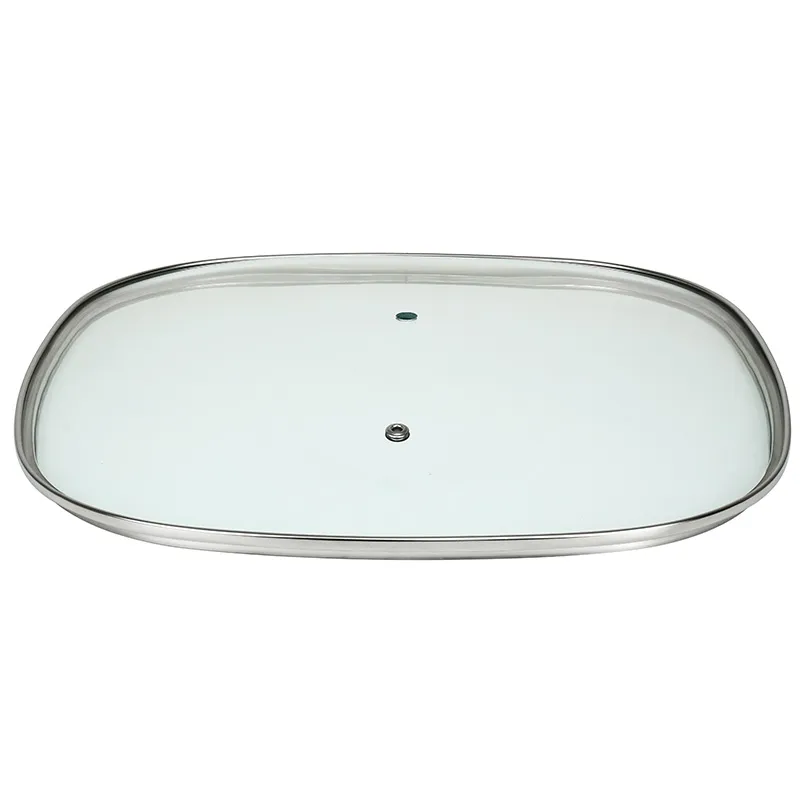
Tempered glass alone delivers reliable performance for cookware lids, but exposed glass edges remain vulnerable during manufacturing, packing and daily kitchen use.
A stainless steel ring addresses many common pain points for OEM cookware product lines.
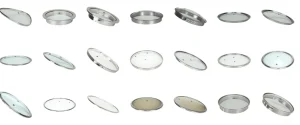
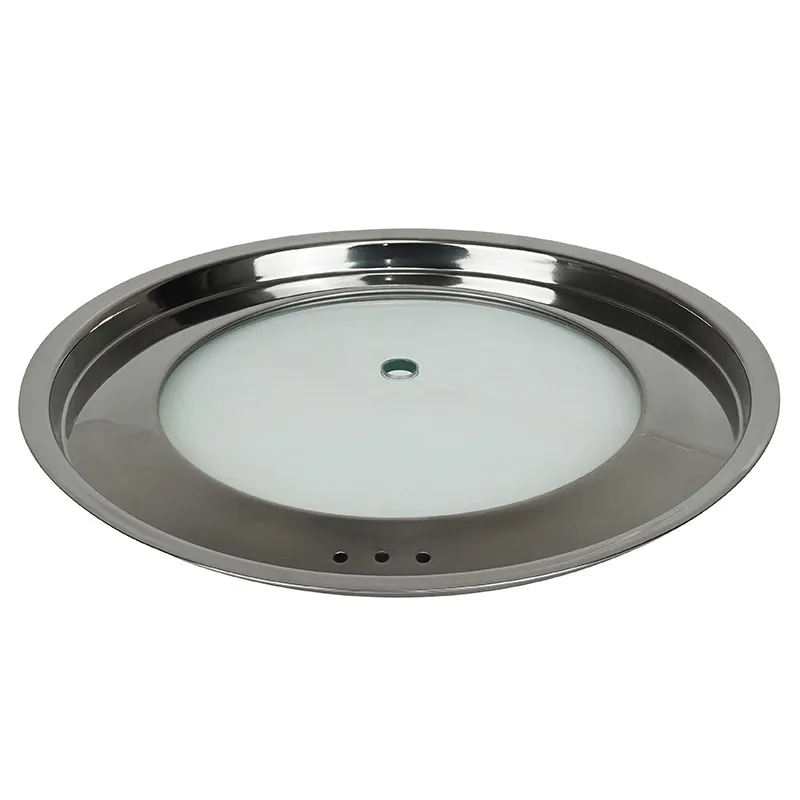
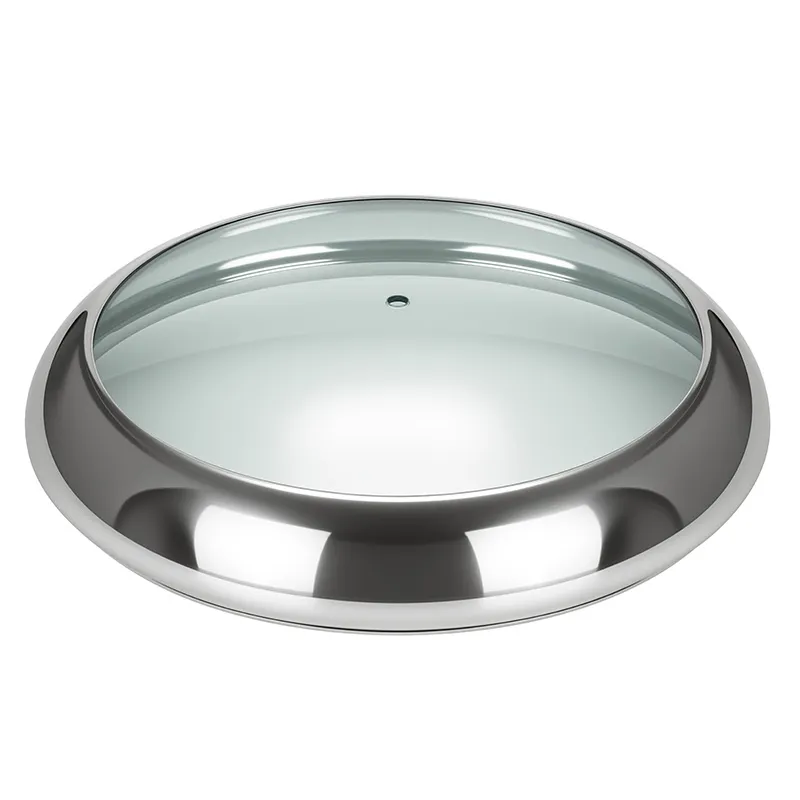
First, the stainless steel ring provides physical edge protection. It prevents chipping, micro-cracks and edge fracture when the glass lid is stacked, transported or knocked against cookware.
Even minor edge damage on tempered glass can weaken the whole lid and create safety hazards for end users.
Second, the steel ring improves seating stability. It creates a consistent contact zone between the lid and pot rim, reducing wobble and improving steam retention during cooking.
Uniform fitting is especially critical for OEM cookware sets where lids must match multiple pot sizes.
The ring also brings aesthetic and cleaning benefits. A smooth metal edge is easier to wipe clean than raw cut glass, and polished or coated finishes create a premium look that aligns with mid-to-high cookware branding.
Silicone rim alternatives exist for specific heat insulation and soft sealing use cases, though those designs follow separate specification and inspection rules.
Stainless Steel Grade Selection for the Ring: 201 vs 304
Material grade is one of the highest-impact decisions when specifying tempered glass lid assemblies.
Choosing the wrong grade leads to field rust complaints and costly product returns. Buyers should lock this requirement into technical drawings and purchase orders.
Performance difference between 201 and 304 stainless steel ring
| Grade | Corrosion Resistance | Nickel Content | Cost Level | Typical Application |
|---|---|---|---|---|
| 201 Stainless Steel | Moderate; prone to surface rust under humid, salty or frequent dishwasher exposure | Lower nickel percentage, limited corrosion resistance | Budget | Dry kitchen use, low-cost cookware lines, minimal dishwasher expectation |
| 304 Stainless Steel | Excellent; better resistance to moisture, food acids and repeated washing | Higher nickel percentage for stable anti-corrosion performance | Premium | Mid & premium cookware, frequent dishwasher use, export markets with strict food-contact expectations |
201 stainless can work for controlled scenarios, but it is not interchangeable with 304.
Kitchen environments include tomato acid, salt, dish soap and hot cycles that accelerate surface oxidation on lower-nickel alloys.
How to verify material certification from your supplier
Verbal confirmation from a factory is not enough for OEM quality control.
Buyers should require material test certificates for each batch of stainless steel coil used for the rings.
Third-party lab verification is recommended for premium lines or markets with strict food-contact regulations.
A common supplier risk is material substitution: ordering 304 but receiving 201.
Including periodic random material spot checks in your incoming control plan reduces this risk.
Surface Treatment Options for Stainless Steel Rings
Even the correct stainless grade can fail quickly if the surface finish is poor.
Treatment choice balances rust resistance, scratch resistance, visual requirements and project budget.
Polished stainless steel ring (mirror / satin brush finish)
Mirror polish creates a bright, reflective surface popular for classic cookware styling.
Satin brushed finishes hide minor fingerprints and fine scratches better than mirror polish.
The downside of bare polished stainless is limited corrosion protection.
Without coating, fingerprints, mineral deposits from hard water and food residue can leave permanent stains.
Regular cleaning is required for end users. Polished rings are suitable for buyers targeting simple, low-maintenance styling with lower corrosion risk expectations.
PVD coated stainless steel ring
Physical Vapor Deposition, or PVD, applies a thin, hard ceramic coating onto the stainless steel substrate.
PVD finishes offer two major advantages: improved scratch resistance and stronger anti-corrosion performance compared with uncoated polished steel.
PVD also unlocks custom colors such as gold, champagne, black and gunmetal, which are widely used for modern cookware branding.
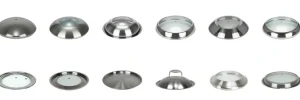
It is important to note that PVD is not a thick paint layer. The coating adheres tightly, but improper pre-treatment of the steel surface will lead to pinholes, flaking or uneven coverage.
Note: Exact coating thickness and abrasion cycle benchmarks depend on the supplier’s process and should be confirmed during sample approval.
If you are evaluating coated options for your line, review our PVD glass lid product page for reference.
Common surface defects to watch out for
During visual inspection, train your QC team to flag these recurring defects:
- sharp burrs on cut edges
- dents
- uneven polishing
- orange peel texture
- coating pinholes
- discoloration
- inconsistent brushing direction
Even small burrs create safety complaints, as they can cut end-user hands during cleaning.
Critical Quality Checklist for Glass Lid with Stainless Steel Ring
This is the core incoming inspection checklist OEM sourcing and QC teams can use for batch validation of tempered glass lid with stainless steel ring.
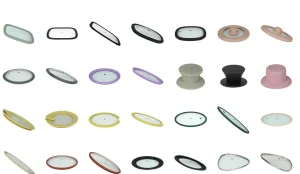
Visual inspection standards
- Tempered glass: No bubbles, embedded dirt, deep scratches, visible cracks or chipped edges. Permanent tempered safety marking must be present and legible.
- Stainless steel ring: No deformation, burrs, scratches, discoloration or coating defects. The ring should sit flush and evenly around the glass perimeter.
- Assembly seam: No excess adhesive squeeze-out, gaps or misalignment visible around the full circle.
Salt spray & rust resistance testing standard
Salt spray testing validates corrosion performance before mass shipment.
Standard kitchen cookware testing cycles vary by market and brand specification.
Buyers should define pass/fail criteria in advance, such as the allowed test duration and acceptable surface change.
A failed salt spray result usually points to one or more issues: wrong stainless grade, poor surface preparation, contaminated raw material or defective PVD coating.
Glass and ring assembly tolerance control
Tolerance directly controls fit, stability and long-term failure risk.
Too tight, and thermal expansion differences between glass and steel can stress the glass.
Too loose, and the ring may shift or separate after repeated heating and washing.
Quality assembly design accounts for this gap to compensate for differential expansion.
Acceptable radial gap and concentricity values are application-specific and should be agreed upon with your supplier at the sample stage.
Pull & torsion test for assembly firmness
A pull and torsion test checks bonding or crimp strength.
The test simulates end-user forces during gripping, cleaning and lid lifting.
The stainless steel ring should not separate or shift from the glass under defined test load.
This test is critical to avoid field failures where rings fall off lids.
Safety compliance for cookware accessories
All materials must meet food-contact requirements for your target market.
Confirm compliance declarations for glass, stainless steel, coating materials and any adhesive used to join the ring and glass.
Common Assembly Failure Risks & Root Causes
Many quality complaints for glass lid with stainless steel ring stem from assembly design and process gaps rather than defective raw glass.
Out-of-spec tolerance is the top cause. If the steel ring inner diameter and glass outer diameter are mismatched, the assembly will either be over-stressed or loose from day one.
Defective crimping or adhesive application is another frequent failure point.
Uneven adhesive distribution, insufficient curing time or contaminated bonding surfaces reduce bond strength.
Thermal expansion mismatch also creates long-term risk. Glass and stainless steel expand at different rates when heated on stovetops.
A well-engineered assembly design accommodates this difference without building destructive internal stress.
Improper packing and shipping can also damage good assemblies.
Stack pressure, vibration and temperature swings in transit may create hidden micro-stress that leads to failure after delivery.
Custom Specification Tips for OEM Orders
Clear written specifications prevent miscommunication between your brand and your glass lid manufacturer.
When drafting specs for your PO or technical drawing, include these items:
- Stainless steel grade (201 or 304)
- Required surface finish: mirror polish, satin brush or PVD coating, plus target color if applicable
- Drawing-controlled dimensional tolerances for glass, ring and concentricity
- Required test protocols: salt spray, pull-torsion test and visual acceptance criteria
- Food contact compliance requirements for your destination market
Avoid vague language such as “good quality” or “rust-proof”.
These terms are open to interpretation and often lead to rework or disputes. Reference approved pre-production samples as the master standard.
You can review our standard offering on tempered glass lid with stainless steel ring for reference.
FAQ
Is 304 stainless steel ring always better than 201 for glass lids?
304 delivers stronger corrosion resistance, but it is not always the right commercial choice.
201 may be acceptable for low-budget lines sold for dry, infrequent use where buyers accept higher staining risk.
The selection depends on brand positioning, target market and end-user washing habits.
Can PVD coating peel off from stainless steel ring after long use?
PVD adhesion failure is possible if surface preparation is poor or the coating process is unstable.
Approved pre-production samples and batch salt spray / abrasion testing help filter unreliable suppliers.
What is the acceptable gap between tempered glass and stainless steel ring?
There is no universal fixed value. Acceptable gap depends on lid diameter, assembly method and thermal design.
It must be agreed and documented with your supplier at the sample validation phase.
Does a stainless steel ring impact dishwasher certification testing for tempered glass lids?
A properly specified stainless steel ring itself does not invalidate dishwasher suitability.
When submitting products for certification, you should confirm the full assembly (glass + ring + bonding material) is included in testing, not only the glass component alone.