- Chinese
- French
- German
- Portuguese
- Spanish
- Russian
- Japanese
- Korean
- Arabic
- Irish
- Greek
- Turkish
- Italian
- Danish
- Romanian
- Indonesian
- Czech
- Afrikaans
- Swedish
- Polish
- Basque
- Catalan
- Esperanto
- Hindi
- Lao
- Albanian
- Amharic
- Armenian
- Azerbaijani
- Belarusian
- Bengali
- Bosnian
- Bulgarian
- Cebuano
- Chichewa
- Corsican
- Croatian
- Dutch
- Estonian
- Filipino
- Finnish
- Frisian
- Galician
- Georgian
- Gujarati
- Haitian
- Hausa
- Hawaiian
- Hebrew
- Hmong
- Hungarian
- Icelandic
- Igbo
- Javanese
- Kannada
- Kazakh
- Khmer
- Kurdish
- Kyrgyz
- Latin
- Latvian
- Lithuanian
- Luxembou..
- Macedonian
- Malagasy
- Malay
- Malayalam
- Maltese
- Maori
- Marathi
- Mongolian
- Burmese
- Nepali
- Norwegian
- Pashto
- Persian
- Punjabi
- Serbian
- Sesotho
- Sinhala
- Slovak
- Slovenian
- Somali
- Samoan
- Scots Gaelic
- Shona
- Sindhi
- Sundanese
- Swahili
- Tajik
- Tamil
- Telugu
- Thai
- Ukrainian
- Urdu
- Uzbek
- Vietnamese
- Welsh
- Xhosa
- Yiddish
- Yoruba
- Zulu
- Kinyarwanda
- Tatar
- Oriya
- Turkmen
- Uyghur


Glass Lid with Silicone Rim: Sealing Advantages & Care Instructions
2026-10-24
Summary: Learn how glass lids with silicone rims work, their sealing benefits, common failure points, OEM QC checks and proper care guidelines for cookware sourcing teams.
A glass lid with silicone rim relies on elastic food-grade silicone to build a flexible seal between tempered glass and cookware pot rims.
This guide breaks down its sealing mechanism, key benefits, common failure modes, service-life drivers and maintenance guidance, tailored for OEM cookware developers and sourcing teams.
What Is a Glass Lid with Silicone Rim?
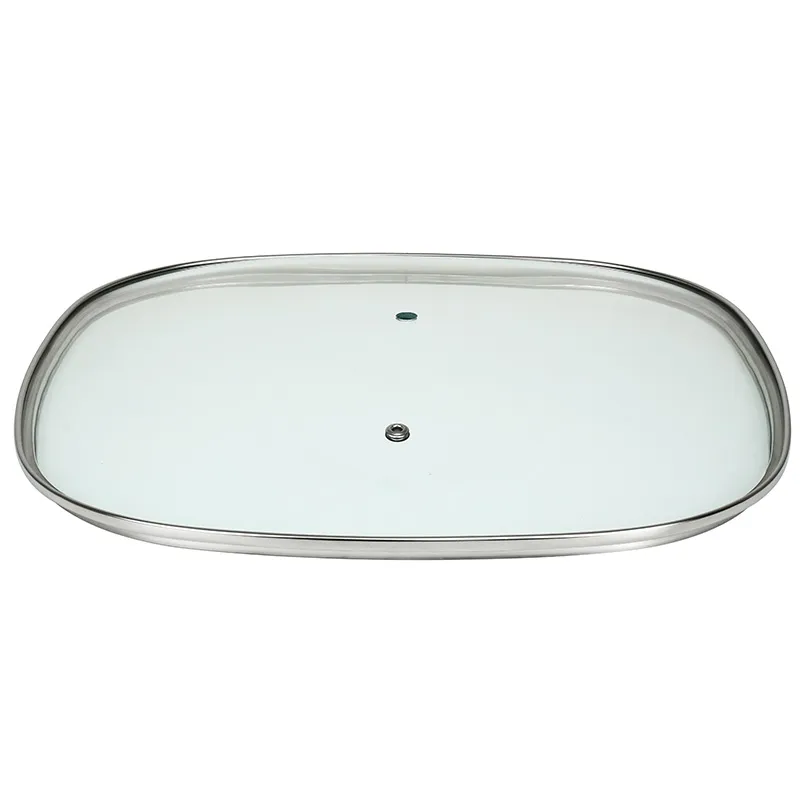
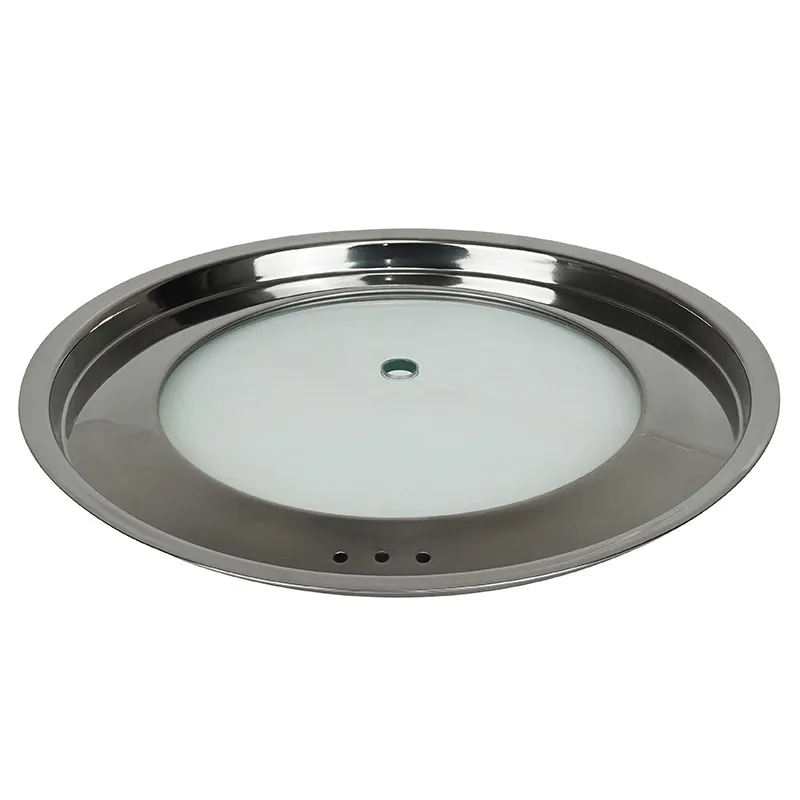
A glass lid with silicone rim is a tempered glass cookware cover fitted with integrated silicone components along its edge.
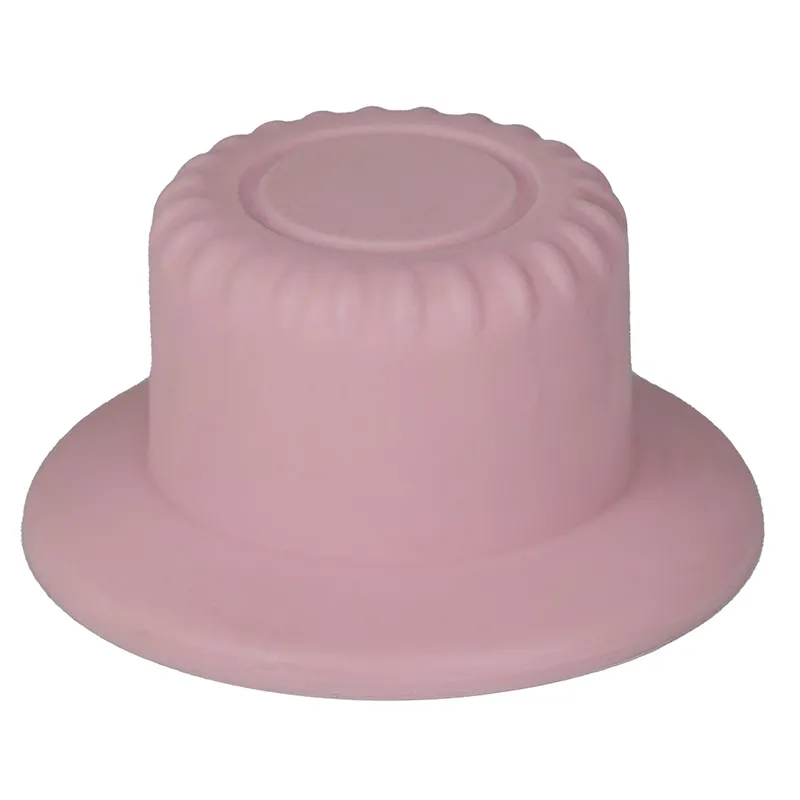
Two mainstream structural versions are widely adopted in OEM cookware manufacturing: silicone-wrapped edges, where silicone fully encases the glass perimeter, and removable silicone sealing gaskets installed between the glass panel and pot opening.
Unlike cookware lids built with rigid hard rims, this design uses soft silicone as the contact interface with the pot.
It is commonly matched with stock pots, frying pans and casserole dishes for finished cookware sets.
Internal link suggestion: Anchor text “glass lid with silicone rim” links to the tempered glass lid with silicone rim product page.
How Does the Silicone Rim Improve Sealing Performance
Flexible Sealing Mechanism of Elastic Silicone
Silicone is an elastic material that deforms under light compression to fill small gaps and uneven spots across pot rim surfaces.
Rigid rim designs demand extremely tight dimensional consistency for every pot to form a reliable seal.
The silicone rim absorbs minor dimensional tolerances, so the lid can still seal properly even if cookware rim dimensions have small allowable deviations.
Note: Recommended compression ratio for sealing silicone remains to be confirmed with industry test standards.
Heat & Steam Retention Effect During Cooking
When the silicone rim forms a continuous contact seal, it slows steam escape and retains heat inside the vessel.
This stable humid cooking environment works well for gentle simmering and slow braising.
It is critical for OEM teams to clarify one limitation upfront: this sealing design cannot build internal pressure.
It is not a replacement for pressure cooker lids, and marketing materials should never describe it as pressure-capable.
Core Advantages of Glass Lid with Silicone Rim
Tolerance Compensation for Cookware Rim Variations
For OEM cookware programs that combine multiple pot sizes in one set, dimensional variation across batches is a common manufacturing headache.
A glass lid with silicone rim relaxes the precision requirement for pot rim machining.
It reduces the rate of mismatched lids and pots, simplifies inventory planning and lowers assembly reject rates for mass production.
Edge Shock Protection for Tempered Glass
Tempered glass is resistant to thermal shock but its exposed edges chip easily during transit, stacking and daily handling.
The silicone outer layer acts as a buffer against impact.
This feature cuts breakage rates for bulk ocean shipments and helps importers reduce costly retail returns caused by damaged glass lids.
Food-Safe & Corrosion-Free Contact Surface
High-quality silicone rims for cookware use platinum-cured food-grade silicone.
This material will not rust like metal rims and carries no risk of peeling surface coatings shedding into food.
Peroxide-cured silicone is lower in cost, but it often holds onto persistent chemical odors and presents higher substance migration risk after repeated heating cycles.
It is not the preferred option for premium food-contact applications, though it is not universally banned for all cookware projects.
Easy Clean & Dishwasher Compatibility
Fully cured, non-porous food-grade silicone resists baked-on food buildup when formulated correctly.
Most qualified tempered glass lid models with silicone rims are dishwasher-safe, provided the supplier confirms this rating on product documentation.
Lifespan & Common Failure Points of Silicone Rim
Main Factors Affecting Silicone Rim Service Life
The usable life of a silicone rim depends on four core variables: silicone raw material grade, continuous operating temperature, frequency of heating-cooling cycles, and long-term exposure to oils or pigmented sauces.
Note: Standard thermal cycling aging test benchmarks for cookware silicone rim require further verification.
Typical Silicone Rim Failure Modes
Even premium silicone will degrade over repeated use. The most frequent failure conditions sourcing teams should watch for include:
- Loss of elasticity: The silicone hardens and develops microcracks, which breaks the airtight seal.
- Oil absorption and staining: Pigments and cooking oils penetrate the silicone surface, leaving permanent discoloration.
- Staining alone does not automatically mean the material is unsafe, but it leads to consumer complaints.
- Debonding: For integrated silicone-wrapped lids, poor bonding between silicone and glass can create gaps or partial peeling.
- Permanent deformation: Removable silicone gaskets may warp after long heat exposure and fail to sit flat on pot rims.
Conditions That Accelerate Degradation
Three common scenarios speed up silicone rim breakdown and should be communicated clearly in end-user instructions.
Direct open-flame contact on silicone sections will rapidly melt or degrade the polymer.
Continuous operation above the silicone’s rated temperature limit accelerates thermal aging.
If the lid is stored while silicone remains damp, moisture gets trapped and creates mold growth risk between silicone and glass.
Maintenance & Care Instructions
Daily Cleaning Guidelines
For regular cleaning, warm soapy water and soft sponges are suitable for both glass and silicone parts.
Abrasive scrub pads, metal scrapers and harsh abrasive cleaners should be avoided, as they scratch the silicone surface and create tiny pores that trap grease.
Dishwasher washing is acceptable only if the lid carries an official dishwasher-safe marking.
Proper Storage to Prevent Mold & Deformation
After cleaning, separate the lid from the pot and leave all components to air dry completely before stacking or storage.
Sealing wet lids inside closed cabinets locks in moisture and raises mold risk.
Avoid heavy stacking pressure on silicone rims, which can cause permanent compression deformation.
Usage Warnings for End Users
End users must be instructed not to place silicone rim sections directly over gas or electric burners.
All temperature ratings come from the silicone formulation and tempered glass specification, so the maximum working temperature should be printed clearly on packaging and user manuals.
Once a silicone rim loses flexibility or cracks, replace the whole lid or removable gasket.
OEM Sourcing QC Checklist for Silicone Rim Glass Lids
This checklist supports sourcing and QC teams to standardize inspection before mass production of tempered glass lids with silicone rims.
Material QC Checks for Silicone Rim
- Confirm the silicone is virgin, platinum-cured food-grade silicone.
- Verify available test reports covering target market standards such as FDA 21 CFR and LFGB.
- Inspect surface quality: no oily bloom, sticky residue, embedded particles, pores or cracks.
- Run simple odor checks after heating; reject batches with strong chemical or rubber smells.
- Request official material datasheets listing temperature resistance range.
Assembly & Sealing Inspection Items
- Check bonding lines between silicone and glass for gaps, overflow glue or weak adhesion.
- Perform fit and sealing testing using sample pot rims matching the OEM cookware design.
- Check for sharp flashes, burrs or uneven silicone thickness around the perimeter.
Aging & Thermal Cycle Validation Requirement
Batch sampling for thermal cycle aging testing is recommended rather than relying solely on static certificates.
After cycling, inspect for elasticity loss, cracking, debonding or permanent deformation, and recheck sealing performance.
Internal link suggestion: Anchor text “food-grade platinum silicone” links to the silicone glass lids for cookware sourcing guide.
Frequently Asked Questions
Can a glass lid with silicone rim go into the oven?
Oven safety of a glass lid with silicone rim depends on both the silicone formulation and the thermal shock rating of the tempered glass panel.
It may be oven-safe only within the maximum temperature limit documented by the supplier.
Rapid temperature swings can shatter the glass even if the silicone remains intact.
Confirm oven suitability before listing this feature on product packaging.
Can stained silicone rim be restored?
Light surface stains can be reduced with baking soda paste and gentle rubbing, but deep oil and pigment absorption cannot be reversed.
Heavily stained silicone rims should be replaced for cosmetic reasons, even if the material is still food-safe.
Is the silicone rim replaceable on tempered glass lids?
This depends on construction. Removable gasket-style silicone rims can be replaced independently.
Integrated, permanently wrapped silicone edges cannot be separated or replaced; the full glass lid must be replaced once the rim fails.
What temperature range should silicone rim glass lids withstand?
Standard platinum food-grade silicone for cookware lids typically supports continuous use between -40°C and 200°C, with short peak exposure near 230°C.
Always refer to the supplier’s material datasheet for exact rated values.