
- Chinese
- French
- German
- Portuguese
- Spanish
- Russian
- Japanese
- Korean
- Arabic
- Irish
- Greek
- Turkish
- Italian
- Danish
- Romanian
- Indonesian
- Czech
- Afrikaans
- Swedish
- Polish
- Basque
- Catalan
- Esperanto
- Hindi
- Lao
- Albanian
- Amharic
- Armenian
- Azerbaijani
- Belarusian
- Bengali
- Bosnian
- Bulgarian
- Cebuano
- Chichewa
- Corsican
- Croatian
- Dutch
- Estonian
- Filipino
- Finnish
- Frisian
- Galician
- Georgian
- Gujarati
- Haitian
- Hausa
- Hawaiian
- Hebrew
- Hmong
- Hungarian
- Icelandic
- Igbo
- Javanese
- Kannada
- Kazakh
- Khmer
- Kurdish
- Kyrgyz
- Latin
- Latvian
- Lithuanian
- Luxembou..
- Macedonian
- Malagasy
- Malay
- Malayalam
- Maltese
- Maori
- Marathi
- Mongolian
- Burmese
- Nepali
- Norwegian
- Pashto
- Persian
- Punjabi
- Serbian
- Sesotho
- Sinhala
- Slovak
- Slovenian
- Somali
- Samoan
- Scots Gaelic
- Shona
- Sindhi
- Sundanese
- Swahili
- Tajik
- Tamil
- Telugu
- Thai
- Ukrainian
- Urdu
- Uzbek
- Vietnamese
- Welsh
- Xhosa
- Yiddish
- Yoruba
- Zulu
- Kinyarwanda
- Tatar
- Oriya
- Turkmen
- Uyghur


ninja glass lid
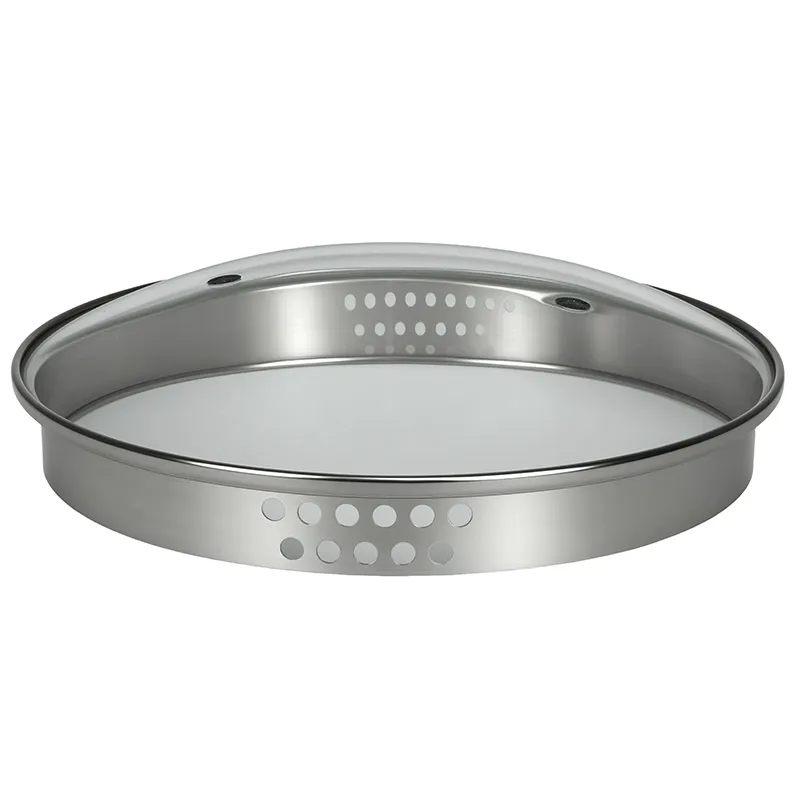
When you hear 'ninja glass lid', the immediate image might be some ultra-modern, indestructible cover for high-end cookware. The term gets thrown around a lot, often conflated with any tempered glass lid, which is a real industry pet peeve. In reality, it’s not a universal standard but more of a descriptor for a specific performance tier—think enhanced thermal shock resistance and a fit designed for intense, often high-heat cooking processes. The misconception is that all glass lids are created equal, which is far from true, and that’s where the real discussion begins.
The Core of the Matter: What Actually Defines It?
It boils down to the glass composition and the tempering process. Standard tempered lids are great for general use, but a true performance-oriented lid—what some suppliers internally call a 'ninja' grade—uses a different alumina-silicate mix. The goal is to handle the sudden temperature plunge when a searing hot lid meets a cool, wet countertop or sink. I’ve seen standard lids shatter from that alone, which is a nightmare for inventory and customer returns.
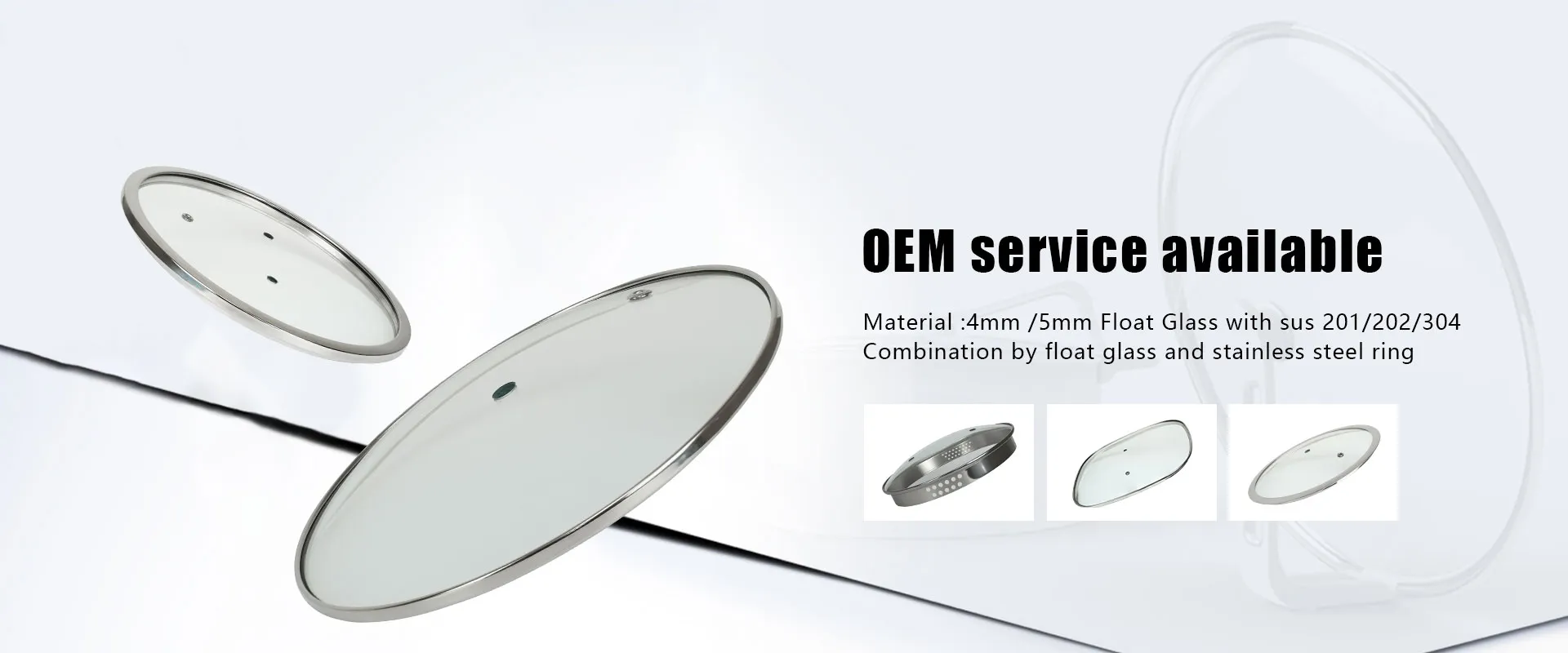
The shape and sealing are another part. It’s not just a flat pane. There’s a calculated curvature and a beveled edge thickness that affects how it sits on the pot, manages condensation drip, and withstands pressure from vigorous boiling or steaming. A company that gets this right, like EUR-ASIA COOKWARE CO.,LTD, isn't just molding glass; they're engineering a component. Their production base in Taian has the scale—15,000 ㎡ of building area—to run the precise, controlled annealing ovens needed for this consistency.
Where many fail is in the hinge or knob integration. The glass might be tough, but if the metal bracket attached to it has a different thermal expansion rate, you get stress fractures over time. It’s a common failure point I’ve had to troubleshoot with buyers. The fix often lies in the alloy of the bracket and the design of the attachment point, something that becomes clear only after testing through hundreds of cycles.
On the Ground: Sourcing and Manufacturing Realities
Sourcing these isn't about finding the cheapest supplier. It’s about finding one with control over their entire line, from raw material inspection to final packaging. The glass lid output at EUR-ASIA’s facility—over 15 million pieces annually—tells you they’re built for volume, but volume with consistency is the hard part. Their export footprint, with over 90% going to markets like Germany, Italy, and Japan, is a silent testimonial. Those markets have brutal quality standards; they won’t accept warped rims or inconsistent tint.
I remember a sourcing trip a few years back, evaluating a potential new vendor. Their samples were perfect. But on the factory floor, I noticed they were manually loading sheets into the tempering furnace. Inconsistent dwell time. That batch might pass, but the next could be brittle. It’s these details that separate a catalog product from a reliable kitchen workhorse. Automation in key stages, which a sizable operation like EUR-ASIA would necessitate, reduces that variability.
Another practical detail is the packaging. A ninja glass lid can survive a pot of boiling water but can snap in transit if packed poorly. The foam mold design, the corrugated box strength—it all matters. Damage in shipping is a massive hidden cost, and it often traces back to how the lid is suspended and protected within its individual carton.
Application and the End-User Experience
So where does this type of lid make the most sense? It’s not for every pot. For a slow-cooker or a stockpot where you’re mostly simmering, a standard lid is fine. The value shines in braising, high-heat steaming, or with Dutch ovens going from oven to stovetop. The user needs to see the cooking process without losing heat or risking thermal breakage. That’s the niche.
I’ve had chefs complain about lids fogging up completely, defeating the purpose of glass. The anti-fog coating is a whole other science. Some cheap silicone-based coatings wash off. The better ones are baked-in, almost ceramic-like layers. It’s a feature you can’t judge from a photo on a website like https://www.glass-lid.com; you have to test it. Does it last after 50 dishwasher cycles? That’s the question.
Then there’s the cleaning. The best lids have a smooth, highly polished edge that doesn’t trap grease or food particles at the rim. It seems minor, but for a home cook, a lid that’s difficult to clean gets relegated to the back of the cabinet. The manufacturing process needs to polish the cut edge after tempering, which adds a step but is non-negotiable for a premium feel.
Cost Considerations and Market Positioning
This performance comes at a cost. The raw material is more expensive, the energy for the specialized tempering is higher, and the quality control is more rigorous. You can’t produce a true high-performance tempered glass lid at a rock-bottom price. When a buyer comes asking for a “ninja-style lid” at a budget price, it’s often a red flag. They’re likely looking for the aesthetic without the engineering, which leads to problems down the line.
Companies like EUR-ASIA COOKWARE CO.,LTD. position themselves across low, medium, and high levels because they understand this market stratification. Their ability to produce millions of pieces means they can offer different tiers. The high-level products for the European and Japanese markets will have tighter tolerances and more advanced features than a basic lid for a different region. It’s not about being better or worse; it’s about fit-for-purpose.
For a brand, the decision is about matching the lid to the cookware’s promised performance. Putting a basic lid on a high-end, oven-safe casserole dish is a mismatch that consumers will notice immediately. The lid becomes the weak link. It’s smarter to source from a specialist who can provide the correct grade across your product line, ensuring consistency and reducing supplier management overhead.
Looking Forward: Material Innovations and Sustainability
The next frontier isn’t just about strength; it’s about weight and environmental impact. Can we get the same performance from a thinner, lighter piece of glass? It involves new tempering techniques and even more precise chemistry. Reducing weight cuts shipping costs and improves the user experience—a heavy glass lid is cumbersome.
Recyclability is a growing ask. Tempered glass is recyclable, but the process of crushing it and remelting it is energy-intensive. The industry is looking at the entire lifecycle. Furthermore, the packaging—all that foam and cardboard—is under scrutiny. Forward-thinking manufacturers are already experimenting with molded pulp from recycled paper for cushioning.
Ultimately, the ninja glass lid is a case study in applied materials science for the kitchen. It’s a humble component that, when done right, disappears into the cooking process. When done wrong, it’s a glaring point of failure. The difference lies in the details of the factory floor, the rigor of testing, and an understanding that it’s not just a cover—it’s part of the cooking system. And that’s something you only learn from getting your hands on the samples, walking the production lines, and seeing what holds up after the hundredth time in the dishwasher.
Related Products
Related Products
Best Selling Products
Best Selling Products
Related Search
Related Search- sipper glass with lid
- glass jar with bamboo lid wholesale
- pop jar with glass lid
- tempered glass lid for instant pot
- glass lid distributior
- gotham steel clear tempered glass vented lid
- tempered glass lid export
- glass jar with rose gold lid
- silicone glass lid exporter in China
- lodge tempered glass lid 10.25 inch


