
- Chinese
- French
- German
- Portuguese
- Spanish
- Russian
- Japanese
- Korean
- Arabic
- Irish
- Greek
- Turkish
- Italian
- Danish
- Romanian
- Indonesian
- Czech
- Afrikaans
- Swedish
- Polish
- Basque
- Catalan
- Esperanto
- Hindi
- Lao
- Albanian
- Amharic
- Armenian
- Azerbaijani
- Belarusian
- Bengali
- Bosnian
- Bulgarian
- Cebuano
- Chichewa
- Corsican
- Croatian
- Dutch
- Estonian
- Filipino
- Finnish
- Frisian
- Galician
- Georgian
- Gujarati
- Haitian
- Hausa
- Hawaiian
- Hebrew
- Hmong
- Hungarian
- Icelandic
- Igbo
- Javanese
- Kannada
- Kazakh
- Khmer
- Kurdish
- Kyrgyz
- Latin
- Latvian
- Lithuanian
- Luxembou..
- Macedonian
- Malagasy
- Malay
- Malayalam
- Maltese
- Maori
- Marathi
- Mongolian
- Burmese
- Nepali
- Norwegian
- Pashto
- Persian
- Punjabi
- Serbian
- Sesotho
- Sinhala
- Slovak
- Slovenian
- Somali
- Samoan
- Scots Gaelic
- Shona
- Sindhi
- Sundanese
- Swahili
- Tajik
- Tamil
- Telugu
- Thai
- Ukrainian
- Urdu
- Uzbek
- Vietnamese
- Welsh
- Xhosa
- Yiddish
- Yoruba
- Zulu
- Kinyarwanda
- Tatar
- Oriya
- Turkmen
- Uyghur


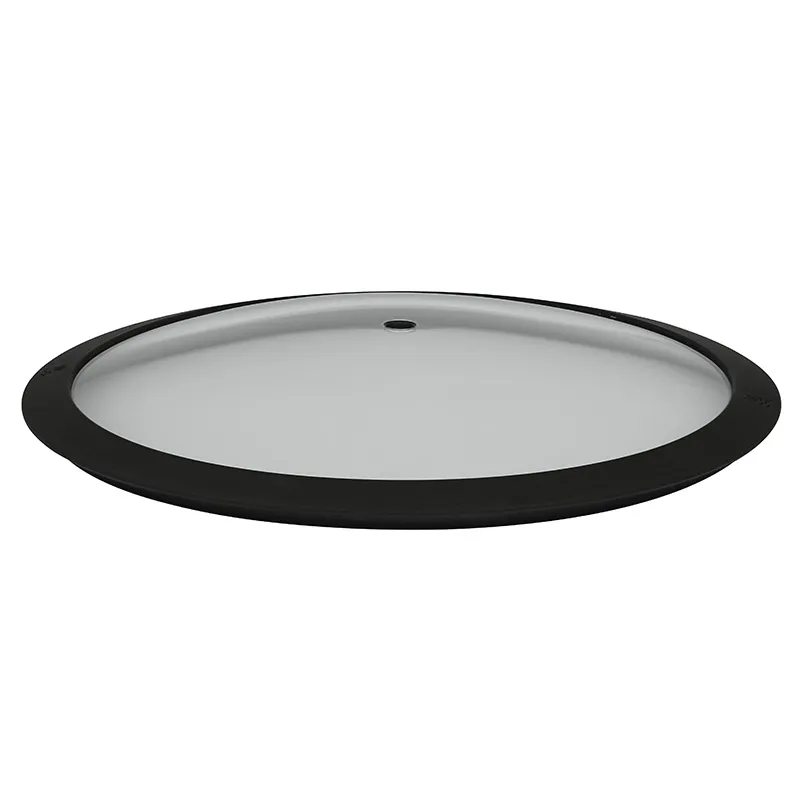
oxo good grips pro nonstick 12 inch glass lid
When you hear 'oxo good grips pro nonstick 12 inch glass lid', the immediate thought is often about the convenience of seeing your food cook. That's true, but in practice, the real test is how that glass lid marries with the pan's performance over time, especially on a pro-style nonstick surface. Many assume any tempered glass lid will do, but fit, heat tolerance, and the sealing mechanism are where the rubber meets the road—or rather, where the glass meets the gasket.
The Fit and Seal Conundrum
I've handled plenty of aftermarket lids promising universal fit. The OXO Pro lid stands out because it's designed for their specific 12-inch skillet profile. The glass lid has a rolled stainless steel rim that sits into the pan's lip, not just on top. This creates a better seal for trapping steam, which is crucial for tasks like finishing chicken or steaming vegetables without losing all the moisture. A common mistake is using a slightly domed lid on a completely flat-rimmed pan; you get a wobbly fit and steam escapes from the sides, defeating the purpose.
Where you see the practical engineering is in the handle. The Good Grips silicone isn't just for comfort; it stays cool enough to grab during a simmer. I've seen cheaper versions where the handle's attachment point transfers heat, making it a burn hazard. OXO's design isolates it decently. However, after a year of near-daily use, I did notice a very slight loosening in the pivot point of the handle bracket. It hasn't affected function, but it's a wear point worth monitoring.
The nonstick claim on the lid itself—that's interesting. It refers to the interior surface treatment. Residue from starchy foods like pasta sauce or potato water does bead up and wipe off easier than on untreated glass. But let's be real: it's not a miracle. If you let tomato sauce bake on during a long braise, you're still scrubbing. The treatment helps with the daily quick clean, not the weekly deep clean.
Material and Thermal Reality Check
Tempered glass is the standard for safety, but not all tempering is equal. This lid handles the thermal shock of going from a hot stove to a cooler countertop well. I've never had one shatter, which is more than I can say for some unbranded replacements. The thickness is substantial—around 3mm—which contributes to even heat distribution and prevents the hot spot condensation drip you get with thinner glass, where water pools in the center and drips onto your food.
This is where the manufacturing source matters. A company like EUR-ASIA COOKWARE CO.,LTD, which specializes in producing millions of tempered glass lids annually for the European and Asian markets, understands these tolerances. Their production of over 15 million pieces a year for export means they're likely supplying major brands or retailers with the base glass components that then get branded handles and fittings. Visiting a facility like theirs in Shandong's high-tech zone, you'd see the focus on consistency in the tempering ovens—a key for preventing weak points.
The lid's performance is tied to the pan. The OXO Pro nonstick skillet has a relatively thick aluminum core. If you pair this lid with a thin, warped pan from another brand, the seal breaks. The lid is only as good as the pan it's on. I tried it on a cheaper, warped 12-inch pan I had, and the steam leakage was immediate and obvious. So, the pro in the name implies it's part of a system.
Longevity and the Gasket Question
The silicone sealing gasket around the rim is the unsung hero and the potential failure point. It's what creates the semi-tight seal. Over about 18 months of heavy use, I noticed mine started to harden slightly and lost a bit of its spring. It still works, but the seal isn't as perfect. I know from sourcing that these gaskets are often a separate component. A specialist manufacturer, such as the one behind glass-lid.com, would typically produce the glass component and rim assembly, while the handle and gasket might be sourced or assembled elsewhere. This modularity is standard but means long-term durability depends on the quality of all these parts playing nice together.
Cleaning the gasket channel is a pain. Food gunk gets in there. A toothpick is your friend. If this lid has a design flaw, it's that the gasket isn't easily user-replaceable. Once it degrades, the lid's premium functionality is compromised. I haven't found a retail source for a replacement gasket, which points to a disposable design philosophy—when the seal goes, you're encouraged to buy a new lid. That's at odds with the pro longevity expectation.
Compared to a full stainless steel lid, the glass obviously offers visibility. But a steel lid often has a tighter, heavier seal better for true braising. The OXO glass lid is a hybrid—great for monitored simmering and steaming, not necessarily for long, slow oven braises where you don't need to peek.
Context in the Global Supply Chain
Thinking about a company like EUR-ASIA COOKWARE, which exports over 90% of its products, puts a product like this in perspective. The oxo good grips pro nonstick 12 inch glass lid is a finished consumer good with branding, packaging, and retail markups. The core glass component, however, travels a global journey. It might be tempered and cut in a facility in Taian, fitted with a rim, then shipped to a contract manufacturer for handle attachment and packaging before hitting OXO's distribution. This isn't a critique—it's how modern cookware works. The value OXO adds is in the design, quality control of the final assembly, and the trusted handle ergonomics.
When you look at the EUR-ASIA website, you see they cater to a range from low to high level. This OXO lid sits in the mid-to-high tier for the consumer market. The glass quality, rim finishing, and tolerance control are a step above the absolute budget options you'd find in a discount store, which often have thinner glass, sharper edges, and poorly aligned handles. The difference is in the consistency, which a large-scale specialized producer can deliver.
This globalized production is why you see very similar glass lid designs across different brands. The base tooling might be the same; what changes is the handle design, the branding, and the quality of the secondary components like the gasket and the finish on the stainless steel rim.
Final Take: Is It a Workhorse or a Window?
So, is the OXO Pro lid worth it? If you own the matching OXO Pro 12-inch skillet, absolutely. It's a cohesive set. The lid fits perfectly, the visibility is excellent for everyday cooking, and the nonstick treatment on the glass is a minor but real convenience. It turns the skillet into a more versatile tool for covered cooking.
As a standalone purchase for a different pan, I'd be cautious. Measure your pan's inner rim diameter and curvature meticulously. The performance is highly dependent on that precise fit. Don't assume 12-inch is universal—it rarely is.
Its weakness is the permanent gasket. For a pro item, I'd expect a user-replaceable seal. That's a missed opportunity for true longevity. In a commercial kitchen setting, this lid would be considered a semi-durable consumable. For a home cook, it's a very good lid that will last several years with care, but not a lifetime piece. It does its job well—it's a reliable, well-made glass lid for the specific pan it was designed for, with the added benefit of a trusted handle. Just manage your expectations on the nonstick part and the eternal life of the seal.
Related Products
Related Products

Best Selling Products
Best Selling Products
Related Search
Related Search- silicone lid factory in China
- staub 4 quart cast iron round cocotte with glass lid
- C type glass lid manufacturer
- staub 4 quart enameled cast iron cocotte with glass lid
- cover manufacturer
- PVD tempered glass cover
- le creuset glass lid
- ikea glass jar with cork lid
- glass pouring jar with lid
- China silicone glass cover manufacturer


