- Chinese
- French
- German
- Portuguese
- Spanish
- Russian
- Japanese
- Korean
- Arabic
- Irish
- Greek
- Turkish
- Italian
- Danish
- Romanian
- Indonesian
- Czech
- Afrikaans
- Swedish
- Polish
- Basque
- Catalan
- Esperanto
- Hindi
- Lao
- Albanian
- Amharic
- Armenian
- Azerbaijani
- Belarusian
- Bengali
- Bosnian
- Bulgarian
- Cebuano
- Chichewa
- Corsican
- Croatian
- Dutch
- Estonian
- Filipino
- Finnish
- Frisian
- Galician
- Georgian
- Gujarati
- Haitian
- Hausa
- Hawaiian
- Hebrew
- Hmong
- Hungarian
- Icelandic
- Igbo
- Javanese
- Kannada
- Kazakh
- Khmer
- Kurdish
- Kyrgyz
- Latin
- Latvian
- Lithuanian
- Luxembou..
- Macedonian
- Malagasy
- Malay
- Malayalam
- Maltese
- Maori
- Marathi
- Mongolian
- Burmese
- Nepali
- Norwegian
- Pashto
- Persian
- Punjabi
- Serbian
- Sesotho
- Sinhala
- Slovak
- Slovenian
- Somali
- Samoan
- Scots Gaelic
- Shona
- Sindhi
- Sundanese
- Swahili
- Tajik
- Tamil
- Telugu
- Thai
- Ukrainian
- Urdu
- Uzbek
- Vietnamese
- Welsh
- Xhosa
- Yiddish
- Yoruba
- Zulu
- Kinyarwanda
- Tatar
- Oriya
- Turkmen
- Uyghur


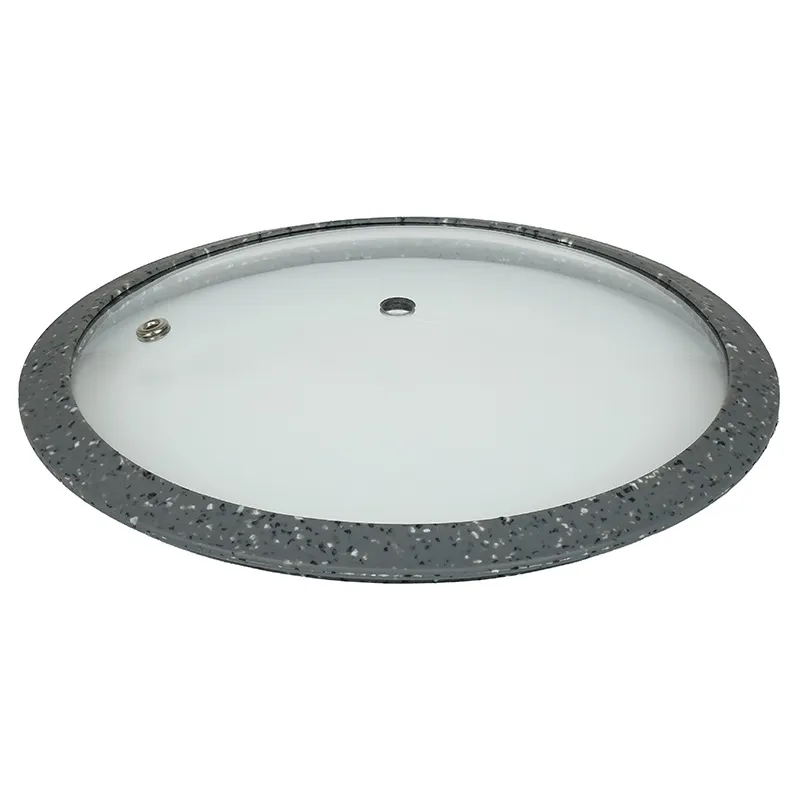
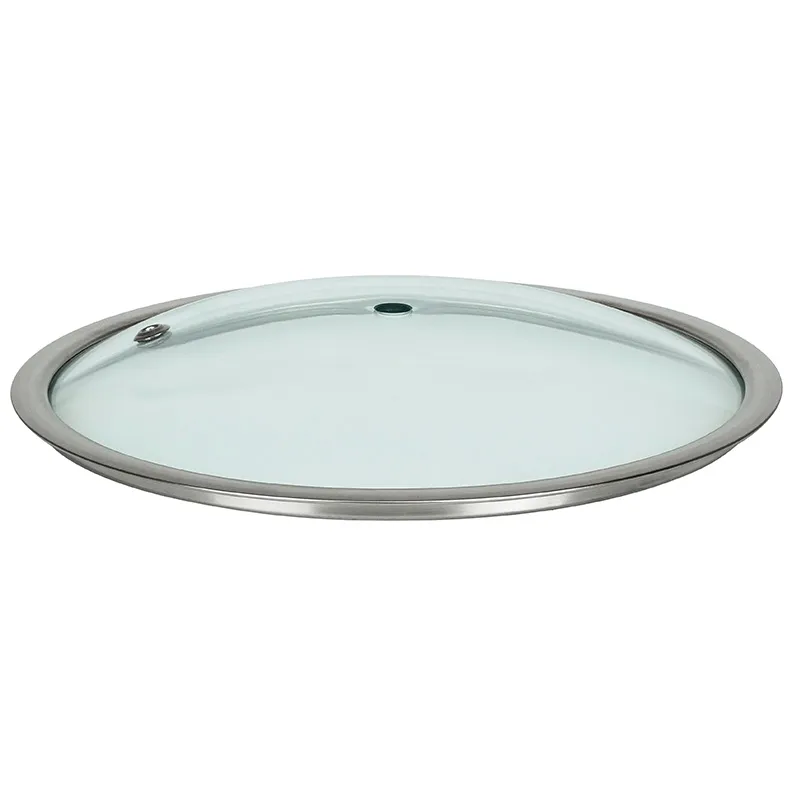
pan glass lid
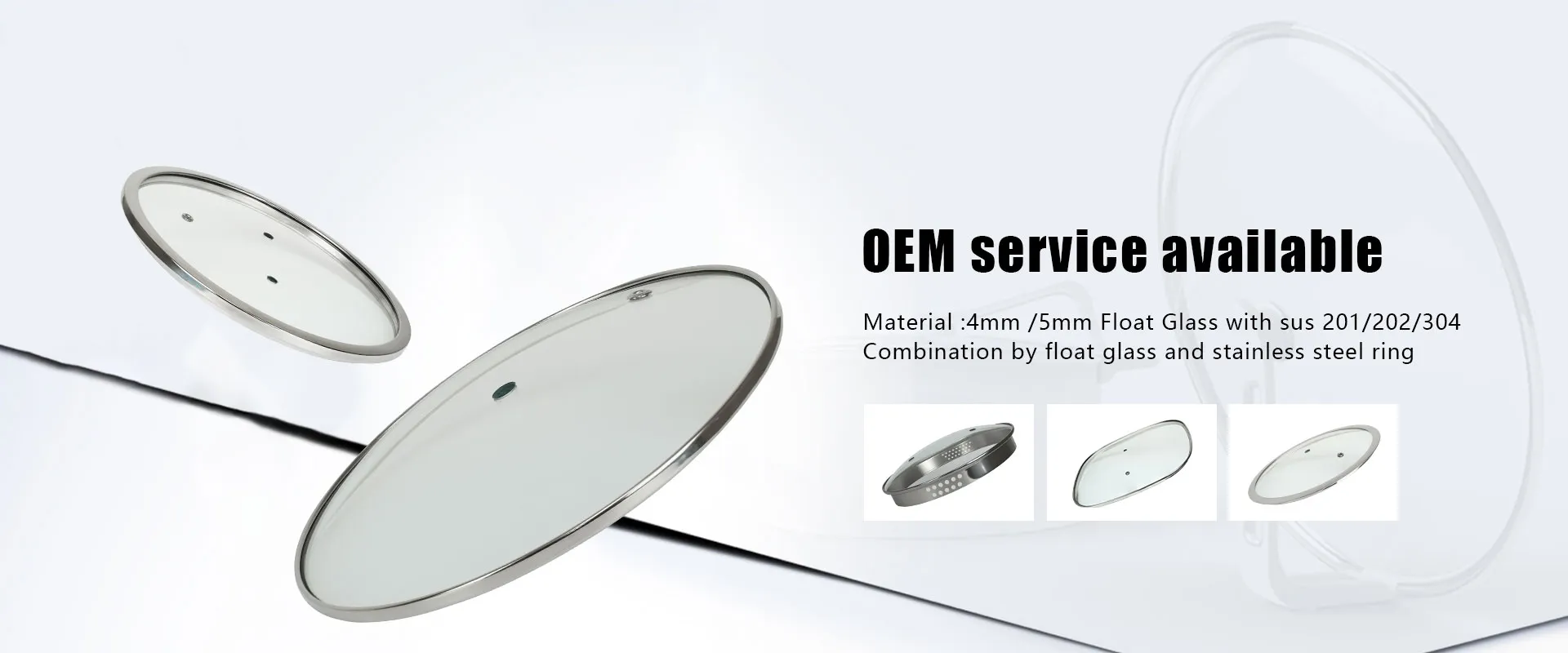
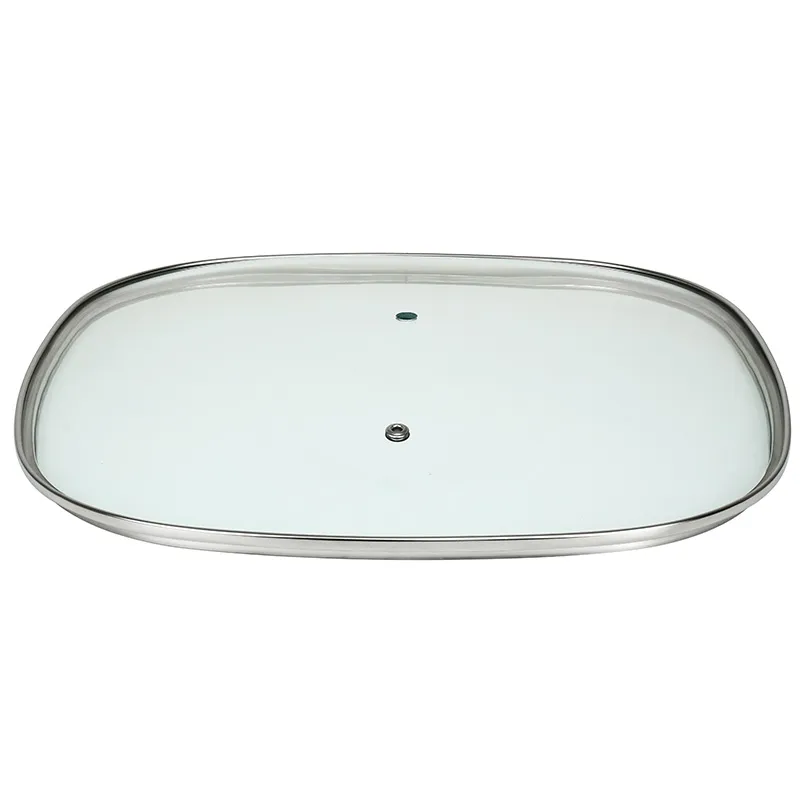
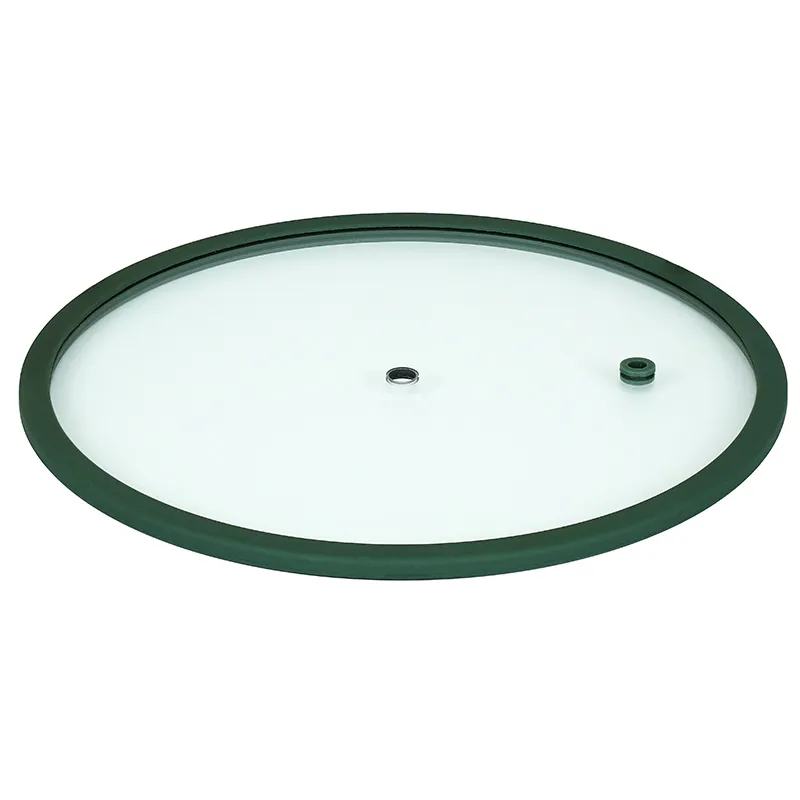
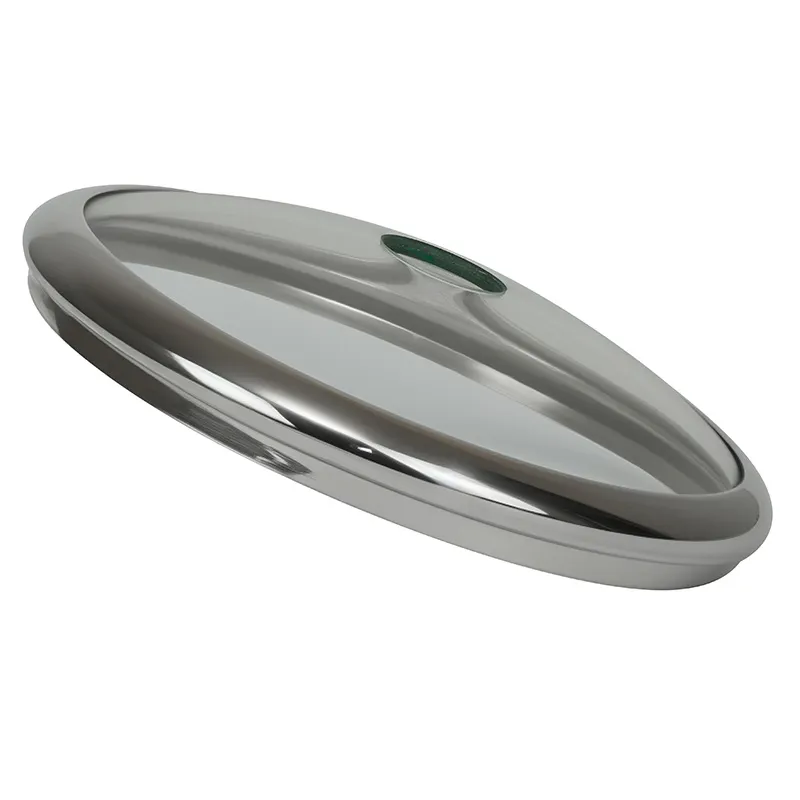
When most people hear 'pan glass lid', they think it's just a clear top for a pot. That's the biggest misconception in the business. It's not about being see-through; it's about managing heat, steam, and pressure in a way that plastic or metal often can't. I've seen too many buyers focus solely on clarity and handle design, completely overlooking the tempering process and the rim seal—which are everything. A poorly tempered lid isn't just a breakage risk; it creates a microclimate in your pan that ruins cooking control. Let's get into the weeds.
The Core: Tempering and Thermal Shock Resistance
The magic word is tempered glass, not just any glass. You can't just cut a circle from a flat sheet. The glass must be heated to around 620°C and then rapidly cooled with high-pressure air. This creates surface compression. I remember a batch from a new supplier years ago—they'd cut corners on the quenching time. The lids looked perfect, passed a basic visual inspection. But the first time we did a thermal shock test, moving them from a 200°C oven to a 20°C water bath, about 30% developed hairline cracks. Not immediate shatters, but a failure waiting to happen in a consumer's kitchen. That's when you learn that the certificate of conformity for tempering is non-negotiable.
This is where companies with serious infrastructure matter. A place like EUR-ASIA COOKWARE CO.,LTD, with their dedicated production base and annual output in the millions, typically has the quenching tunnels and process control to maintain consistency. Their focus on export markets like Germany and Japan is a tell—those regions have brutal standards for thermal shock cycles. A lid that survives there will handle a home cook's mistake of placing a hot lid on a cold granite countertop.
The thickness is another judgement call. 3mm is standard for mid-range, but for heavy-duty use or larger diameters (think 30cm+ sauté pans), you push to 4mm or even 5mm. Thicker isn't always better for heat distribution, though. It's a balance. The weight of a thicker glass lid can be substantial, which affects the hinge design on stockpots. We once had a client complain about lids sinking into a simmering liquid on lightweight aluminum pots—the issue was the rim design not creating enough buoyancy, exacerbated by the lid weight.
The Devil in the Details: Rim and Seal Geometry
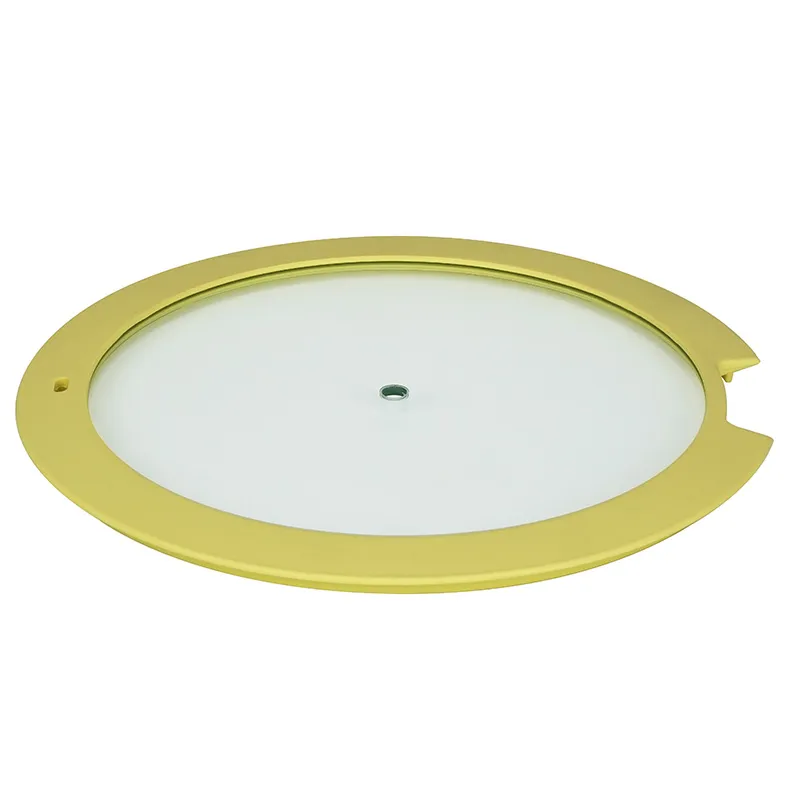
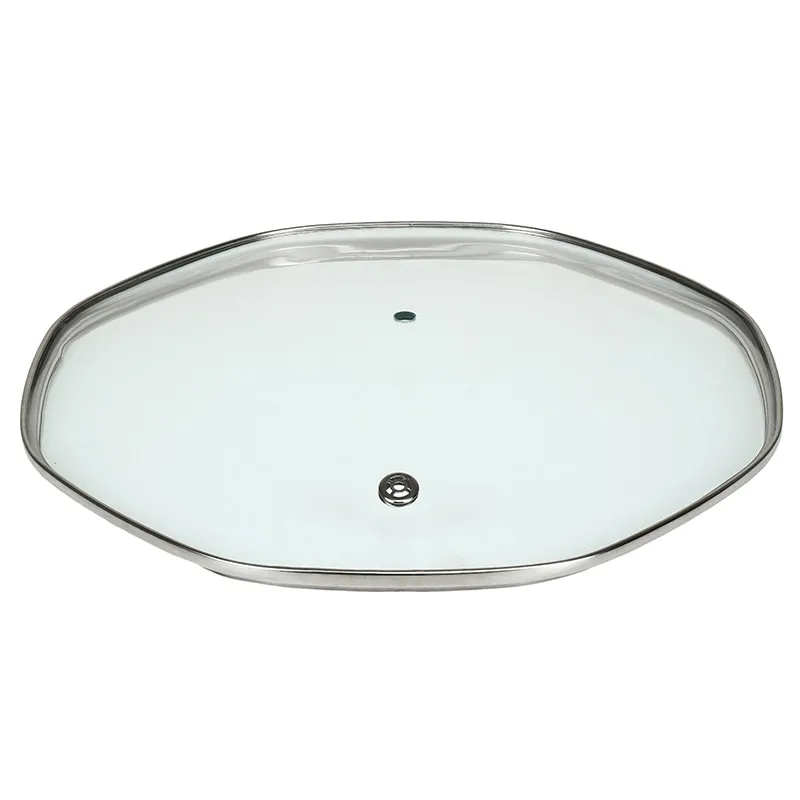
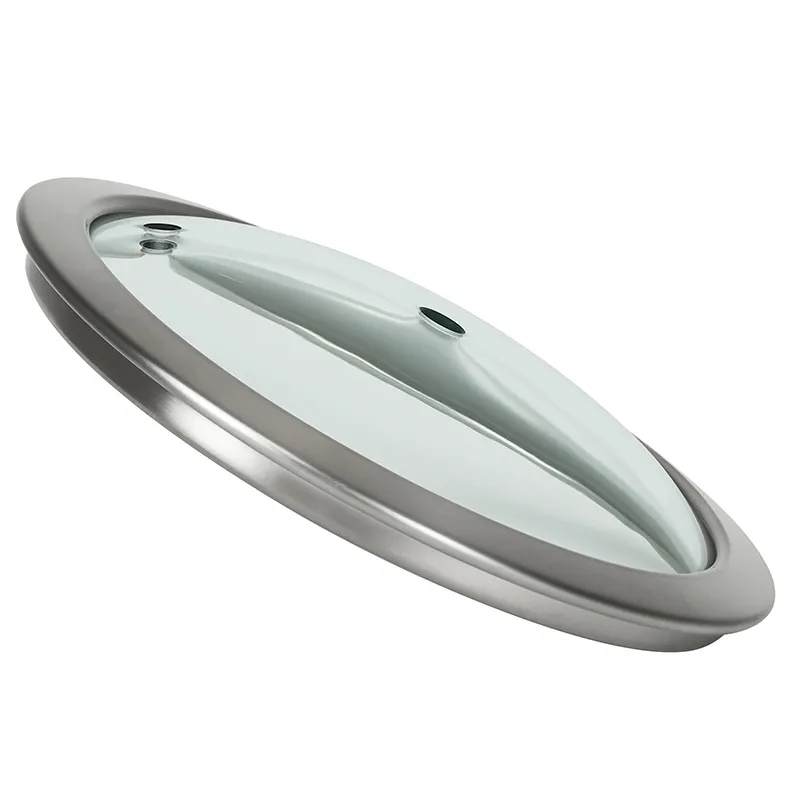
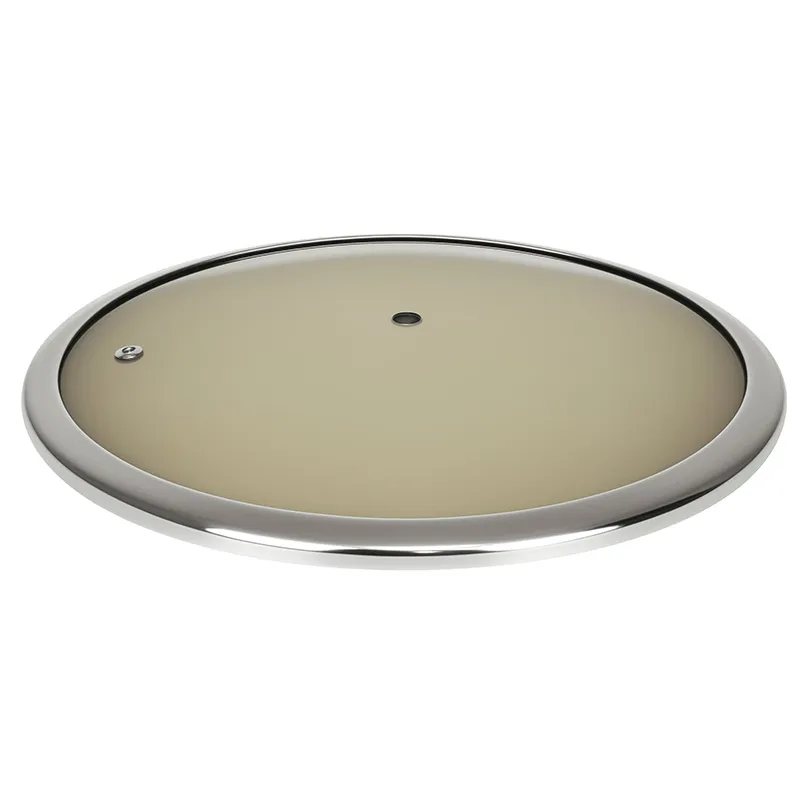
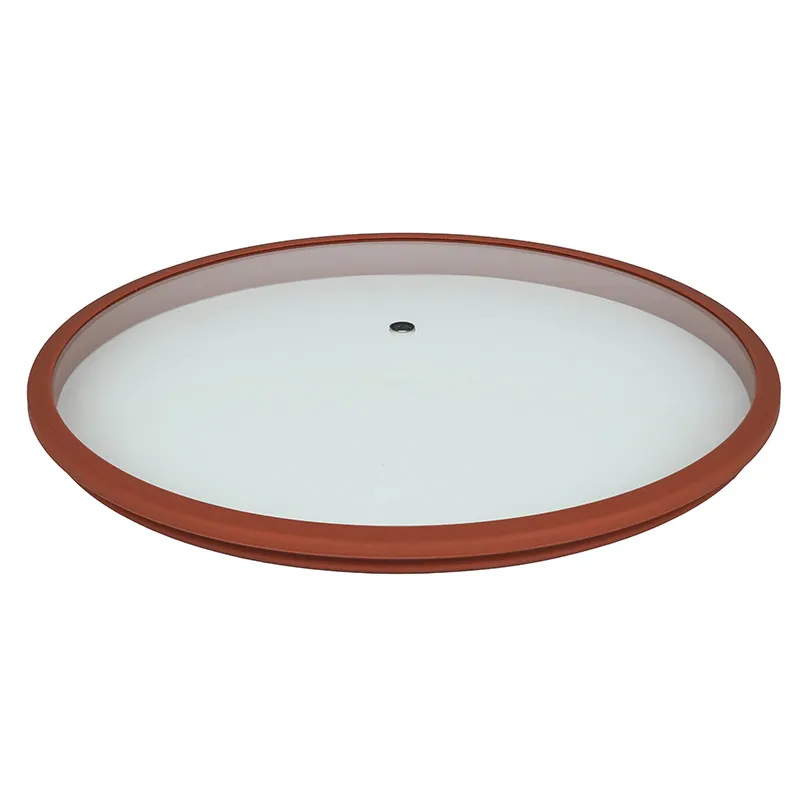
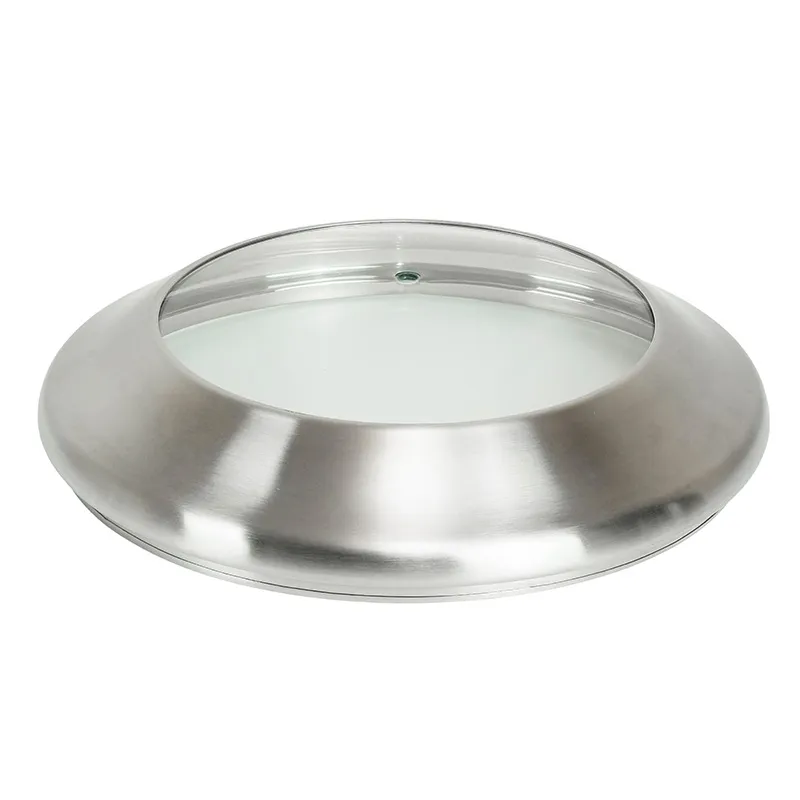
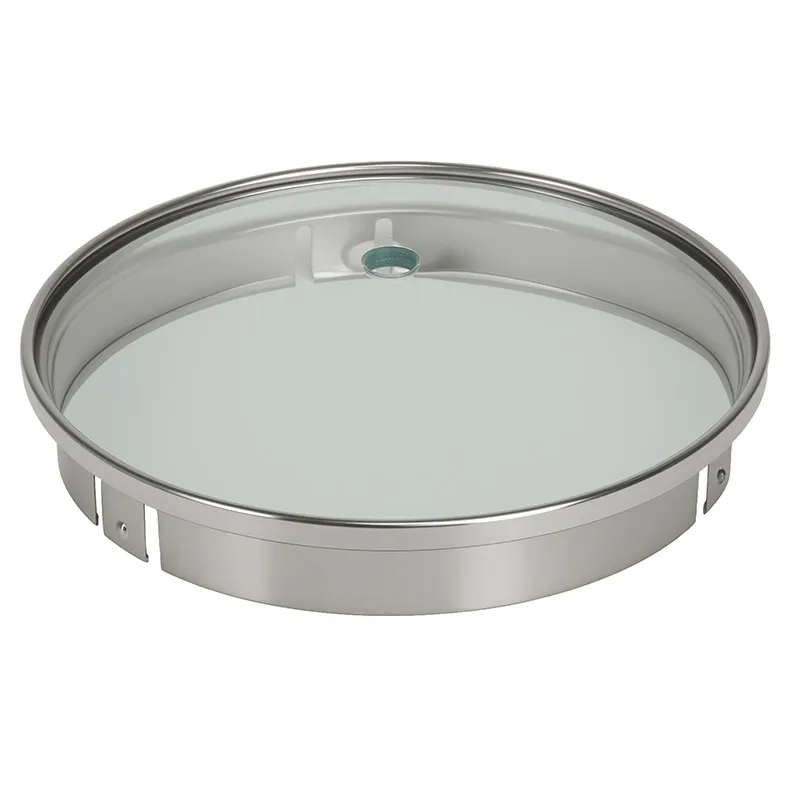
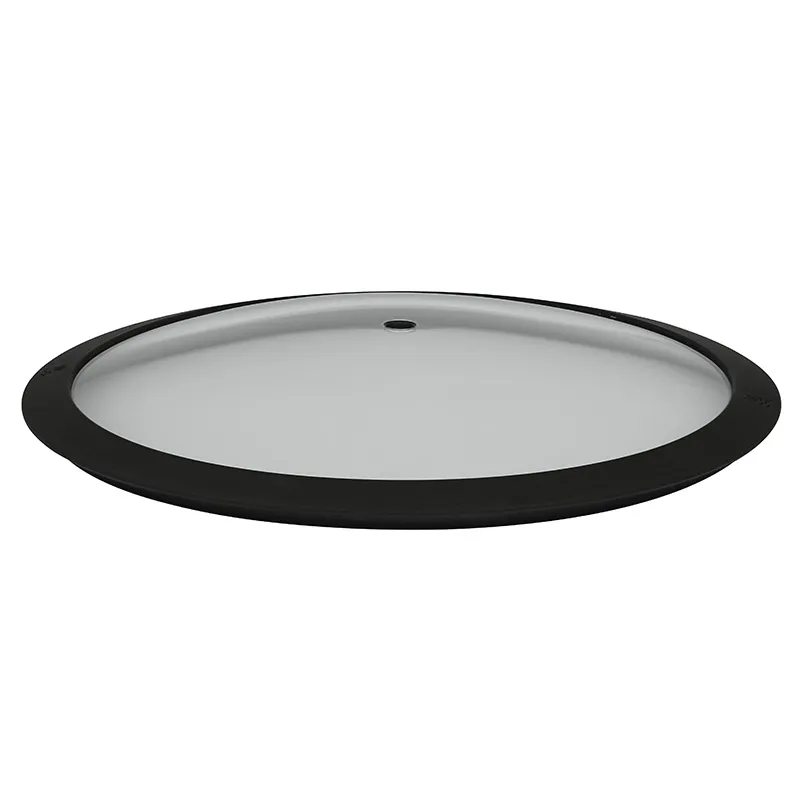
If tempering is the heart, the rim is the brain. A flat, polished rim is cheap to produce but terrible for function. It creates a gap for steam to escape uncontrollably. The goal is a consistent, minute gap that allows a slight vapor release to prevent pressure build-up while retaining most moisture. The best lids have a subtle, ground-in bevel or a tiny groove on the underside of the rim. This creates a more predictable steam channel.
I recall evaluating samples from a dozen factories. The ones from EUR-ASIA COOKWARE stood out because of this detail. The rim wasn't just polished; it had a consistent, frosted-looking band from precision grinding. When placed on a calibrated flat pan, it rocked less than 0.5mm. That level of flatness is what prevents the chatter or rattle during a rolling boil. It's a small thing you notice when you've handled thousands of them.
Then there's the knob. Silicone is the norm now, but its bonding is critical. The stainless steel stud must be fused to the glass during the tempering process. A post-production glued knob will fail in a dishwasher or under repeated heat. We learned this through a nasty recall. The glue degraded, knobs fell off, and lids shattered when pulled from the oven. Now, we physically torque-test every sample batch. A proper bonded knob should withstand over 5Nm of rotational force.
Material Sourcing and Clarity Trade-offs
Not all clear glass is equal. Low-iron glass, often called crystal clear glass, is superior but costs about 40% more. It has reduced greenish tint. For a high-end line, it's worth it. The visual appeal of seeing your braise perfectly is a selling point. However, for most commercial pan glass lid applications, standard soda-lime glass is fine. The iron content can actually slightly improve thermal properties, though that's debatable.
The real sourcing headache is consistency. Variations in the raw glass sheet's composition affect the tempering curve. A new batch of raw material might have different trace elements, requiring an adjustment of the oven temperature or conveyor speed. A factory without a dedicated QC lab for raw materials will ship lids with varying stress patterns. You might not see it, but under a polariscope, the stress patterns should be uniform and symmetrical. Asymmetry is a precursor to spontaneous breakage.
EUR-ASIA COOKWARE's scale, producing over 15 million pieces annually, gives them leverage with raw material suppliers. They can demand consistency and run their own batch testing. For a smaller operation, you're at the mercy of your glass supplier's quality control. I've had to reject entire containers because the polariscope check showed chaotic, rainbow-like patterns in over 15% of the lids—a sure sign of uneven tempering due to poor base glass.
Real-World Failure Points and Testing
Lab tests are one thing; kitchen reality is another. The most common failure we see isn't from thermal shock, but from impact on the rim. Someone drops the lid sideways into a ceramic sink. A chip on the rim's edge compromises the entire tempered structure. It might not break then, but the next heating cycle could cause a crack to propagate. There's no fix for this. It's about educating the end-user, which is why packaging inserts often show how to place a lid down safely.
Another subtle point is condensation management. A good glass lid will have droplets form evenly and roll back into the pan, not drip off the rim onto the stovetop. The interior surface's slight curvature and smoothness affect this. We did a drip test with dyed water, boiling it and observing the condensation pattern. Lids with a perfectly flat interior surface performed worse—water pooled and then cascaded over the edge. A very slight dome shape performed best.
Dishwasher safety is a given now, but it's not just about the glass. It's about the metal rim (if present) and the knob assembly. Stainless steel rims can corrode if the grade isn't right (316 is better than 304 for harsh detergents). And the cavity under the knob must drain completely. I've seen lids come out of a dishwasher test with milky residue trapped under a poorly designed knob, a breeding ground for bacteria.
The Export Game and Final Thoughts
Selling to the EU, North America, and Japan is a different beast. Each has its own heavy metal release standards (like EU's LFGB), and the glass is part of that. The paints used for edge banding or logos must be lead- and cadmium-free and withstand the heat. A lid might pass thermal tests but fail because the blue decorative ring on the rim leaches cobalt under acidic steam conditions. Compliance documentation from the factory is key.
Looking at a manufacturer's export list tells a story. When I see a company like EUR-ASIA COOKWARE CO.,LTD listing Germany, Switzerland, Japan, and Brazil, it signals they're navigating diverse regulatory landscapes. Brazil's INMETRO standards are different from Germany's GS mark. Managing that complexity requires a robust quality management system in the factory, not just a final inspection before shipping.
So, what makes a great pan glass lid? It's the sum of unsexy details: consistent tempering seen under a polariscope, a precision-ground rim that sits flush, a knob bonded at the molecular level during tempering, and the right material choice for the target market. It's a component that seems passive but actively influences cooking results. The next time you lift one, look at the rim. That's where the real engineering is. The clarity is just a bonus.
Related Products
Related Products