- Chinese
- French
- German
- Portuguese
- Spanish
- Russian
- Japanese
- Korean
- Arabic
- Irish
- Greek
- Turkish
- Italian
- Danish
- Romanian
- Indonesian
- Czech
- Afrikaans
- Swedish
- Polish
- Basque
- Catalan
- Esperanto
- Hindi
- Lao
- Albanian
- Amharic
- Armenian
- Azerbaijani
- Belarusian
- Bengali
- Bosnian
- Bulgarian
- Cebuano
- Chichewa
- Corsican
- Croatian
- Dutch
- Estonian
- Filipino
- Finnish
- Frisian
- Galician
- Georgian
- Gujarati
- Haitian
- Hausa
- Hawaiian
- Hebrew
- Hmong
- Hungarian
- Icelandic
- Igbo
- Javanese
- Kannada
- Kazakh
- Khmer
- Kurdish
- Kyrgyz
- Latin
- Latvian
- Lithuanian
- Luxembou..
- Macedonian
- Malagasy
- Malay
- Malayalam
- Maltese
- Maori
- Marathi
- Mongolian
- Burmese
- Nepali
- Norwegian
- Pashto
- Persian
- Punjabi
- Serbian
- Sesotho
- Sinhala
- Slovak
- Slovenian
- Somali
- Samoan
- Scots Gaelic
- Shona
- Sindhi
- Sundanese
- Swahili
- Tajik
- Tamil
- Telugu
- Thai
- Ukrainian
- Urdu
- Uzbek
- Vietnamese
- Welsh
- Xhosa
- Yiddish
- Yoruba
- Zulu
- Kinyarwanda
- Tatar
- Oriya
- Turkmen
- Uyghur


pink glass jar with lid
When you hear 'pink glass jar with lid', the immediate image is often something decorative, maybe for a boutique candle or a cosmetic sample. But in the sourcing and manufacturing world, that phrase triggers a different set of considerations—material stability, color consistency, and the surprisingly complex marriage between jar and lid. There's a common misconception that colored glass, especially in lighter shades like pink, is just clear glass with a dye added. It's more nuanced than that; the hue can shift dramatically between batches if the mineral oxides aren't perfectly measured, and that pink can turn murky if the annealing process isn't spot-on. I've seen buyers get fixated on Pantone matches without realizing that glass, by its nature, has a depth and variation that flat color swatches don't account for.
Color Isn't Just Cosmetic
The choice of pink isn't merely aesthetic; it often serves a functional purpose, like light protection for photosensitive contents. But achieving a consistent, food-safe pink requires specific compounds, typically manganese or selenium-based, which react differently under varying furnace temperatures. A supplier might promise a blush pink, but without a physical sample from the exact production run, you're dealing with approximations. I recall a project where we needed a pale rose quartz shade for a high-end skincare line. The first batch came back too salmon, the second too lavender—the issue traced back to slight impurities in the silica sand batch, something the factory hadn't flagged because it didn't affect clarity in clear glass. It's these material-level variables that separate a generic product from a reliably sourced one.
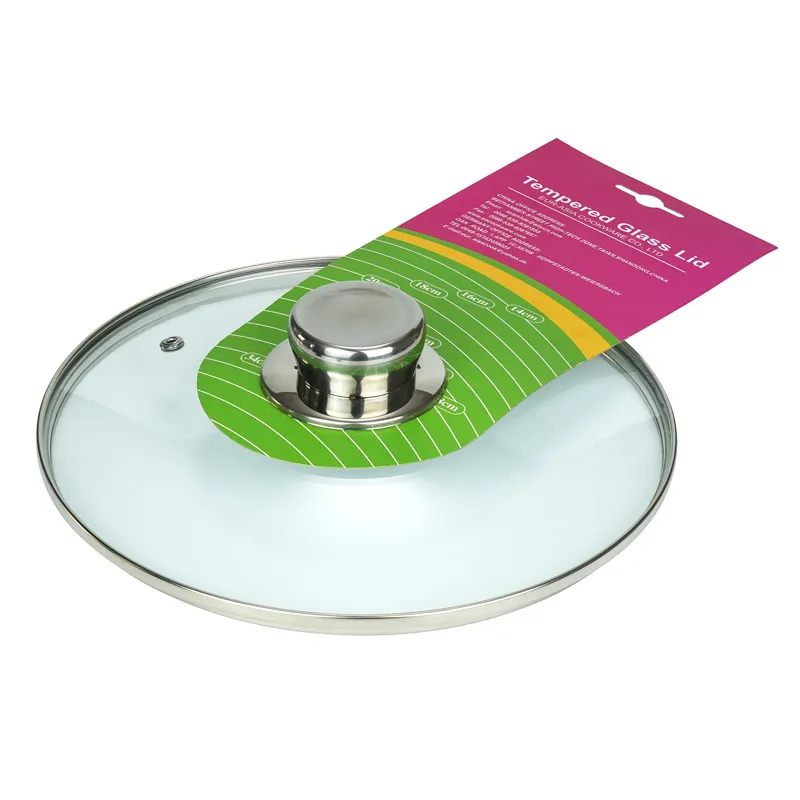
This is where working with a specialized producer makes a tangible difference. Take a company like EUR-ASIA COOKWARE CO.,LTD, for instance. Their focus on household glass products, from low to high tier, means they're set up to handle these colorant integrations systematically. Their production base in Shandong's National High-tech Development Zone isn't just an address; it implies access to better-grade raw materials and more controlled manufacturing environments. For a pink glass jar, that control over the melting and forming process is half the battle won for color fidelity.
The lid, however, is the other half—and often the point of failure. A perfect jar is useless if the lid doesn't seal correctly or if the color of the plastic or metal cap clashes. The thermal expansion rates of glass and the lid material must be compatible, especially if the jar is meant for hot-fill applications. A pink jar destined for gourmet jam needs a lid that can withstand the thermal shock of filling and cooling without warping, all while maintaining a color-fast gasket that doesn't stain the rim.
The Lid: Where Engineering Meets Aesthetics
Most discussions about jars fixate on the glass body, but the lid is where the engineering truly gets tested. For a glass jar with lid to be functional, the sealing surface must be flawless. Any micro-imperfections on the jar's finish (the top rim where the lid sits) will compromise the seal. I've inspected thousands of units where the jar was beautiful, but the finish was slightly uneven—a result of the shearing process during formation—leading to a 15% failure rate in leak tests. The fix often involves more precise molding and slower cooling at that specific point, which many high-volume factories skip to save cycle time.
Specialized manufacturers understand this balance. Browsing the portfolio of a site like https://www.glass-lid.com, you notice the emphasis isn't just on glass but on the lid system itself. It makes sense; their name points to it. For a colored jar, they'd likely advise on whether a white, gold, or clear lid complements the pink glass best from a production standpoint—considering factors like UV stability of colored plastics and the bonding of sealing compounds. Their export footprint across Europe and Japan suggests they're accustomed to stringent tolerances that these markets demand for kitchenware and cosmetic packaging.
There's also the question of decoration. Is the lid meant to be printed? Embossed? If it's a plastic lid over a pink glass jar, the color matching between the two materials under different lighting can be a nightmare. We once had a batch where the pink jar and the pink plastic lid matched perfectly under warehouse fluorescent lights but looked completely different in natural sunlight. The lesson was to always approve colors under multiple light sources, a step that seems obvious but is frequently overlooked in the rush to production.
Volume, Consistency, and the Reality of Supply
Sourcing isn't just about finding a supplier; it's about finding a supplier capable of delivering your specific need at your scale, consistently. A common pitfall is approaching a factory that excels at clear tempered glass lids—like the millions of pieces EUR-ASIA COOKWARE CO.,LTD produces annually—and assuming they can seamlessly pivot to a custom-colored jar line. They can, but the lead times and MOQs will be different. Their core competency in tempered glass lids for cookware means their processes for heat resistance and safety are robust, which translates well to producing durable jars, but the color department operates on a different schedule.
Their annual output of over 15 million pieces indicates a focus on volume, which is generally good for consistency. High-volume factories have their recipes and settings finely tuned. However, for a specialty item like a pink glass jar, you need to ensure your order volume justifies a dedicated production run. Otherwise, you risk your jars being part of a switch-over batch, where color remnants from a previous run (say, blue) can subtly contaminate the pink, leading to off-color streaks. It's a technical detail, but it's the kind of detail that separates a smooth project from a problematic one.
Their export data is telling. Shipping to markets like Germany, Switzerland, and Japan means their quality control has to pass some of the most rigorous inspections for household goods. This is reassuring. It suggests that for a pink glass jar with lid intended for the European market, for instance, they'd already be familiar with relevant EN standards for glass thickness, lead/cadmium release, and lid seal integrity. You're not educating your supplier on basics; you're collaborating on specifics.
Application Dictates Specification
You can't specify the jar without knowing its end use intimately. A pink glass jar for storing loose-leaf tea has different requirements than one for a viscous body cream. The tea jar might need a wider mouth and a very tight seal to preserve aroma, possibly favoring a threaded metal lid with a foil liner. The body cream jar likely needs a wider, shallower profile for easy scooping and might use a plastic snap-on lid with a silicone seal. The pink color in the tea jar might be lighter to show off the product, while the cosmetic jar could be a darker, opaque pink for light protection.
I learned this through a failed attempt early on. We sourced a beautiful, light pink jar for a powdered supplement. The specs were right, the lid sealed well. But the powder was slightly abrasive. After a few weeks of shipping and handling, the inside of the jar showed fine scratching, making it look permanently cloudy and used. The glass wasn't hardened for that type of content. Now, we always ask: What's going inside? Is it abrasive, acidic, oily, or volatile? The answer directly influences the type of glass (soda-lime vs. borosilicate), the interior surface treatment, and the lid's sealant material.
This is where a supplier's range matters. A company producing a spectrum from low to high-level products has the flexibility to recommend the appropriate grade. A high-end cosmetic brand might need a heavier, low-iron glass for a brighter pink, while a mid-tier food brand might prioritize cost-effectiveness with a standard soda-lime composition. The ability to navigate that decision tree with the factory is key.
Beyond the Sample: Navigating Production
Approving a sample is one thing. Getting 10,000 units that match that sample is another. The transition from pilot batch to full production run is where most quality deviations occur. For colored glass, the furnace temperature, cooking time, and cooling cycle in the lehr (annealing oven) must be identical. A difference of a few degrees can alter the pink hue. Reliable factories will have strict SOPs for these parameters and will provide batch reports. If they can't or won't, consider it a red flag.
Communication is critical. When working with an export-oriented manufacturer, clear technical drawings are your best friend. The drawing for your pink glass jar with lid must specify not just dimensions, but also the exact location of the finish (for the lid), the weight distribution, and the acceptable tolerance for color variance (usually against a master sample under a D65 light source). It should also specify the lid's torque requirement for application—how much force is needed to screw it on to achieve a proper seal. This level of detail filters out ambiguity.
Finally, think about the secondary operations. Will the jars need silk-screen printing? Laser etching? Are they shipped nested, and if so, how does that affect the lid's placement? I've seen shipments where jars were nested perfectly, but the lids, placed separately in boxes, arrived scratched because the packaging wasn't lined. The devil is in these logistics. A supplier experienced in exporting to diverse markets will have established, tested packaging protocols to prevent such damage, ensuring that the glass jar with lid arrives at its destination as perfect as it left the factory floor.
Related Products
Related Products