- Chinese
- French
- German
- Portuguese
- Spanish
- Russian
- Japanese
- Korean
- Arabic
- Irish
- Greek
- Turkish
- Italian
- Danish
- Romanian
- Indonesian
- Czech
- Afrikaans
- Swedish
- Polish
- Basque
- Catalan
- Esperanto
- Hindi
- Lao
- Albanian
- Amharic
- Armenian
- Azerbaijani
- Belarusian
- Bengali
- Bosnian
- Bulgarian
- Cebuano
- Chichewa
- Corsican
- Croatian
- Dutch
- Estonian
- Filipino
- Finnish
- Frisian
- Galician
- Georgian
- Gujarati
- Haitian
- Hausa
- Hawaiian
- Hebrew
- Hmong
- Hungarian
- Icelandic
- Igbo
- Javanese
- Kannada
- Kazakh
- Khmer
- Kurdish
- Kyrgyz
- Latin
- Latvian
- Lithuanian
- Luxembou..
- Macedonian
- Malagasy
- Malay
- Malayalam
- Maltese
- Maori
- Marathi
- Mongolian
- Burmese
- Nepali
- Norwegian
- Pashto
- Persian
- Punjabi
- Serbian
- Sesotho
- Sinhala
- Slovak
- Slovenian
- Somali
- Samoan
- Scots Gaelic
- Shona
- Sindhi
- Sundanese
- Swahili
- Tajik
- Tamil
- Telugu
- Thai
- Ukrainian
- Urdu
- Uzbek
- Vietnamese
- Welsh
- Xhosa
- Yiddish
- Yoruba
- Zulu
- Kinyarwanda
- Tatar
- Oriya
- Turkmen
- Uyghur


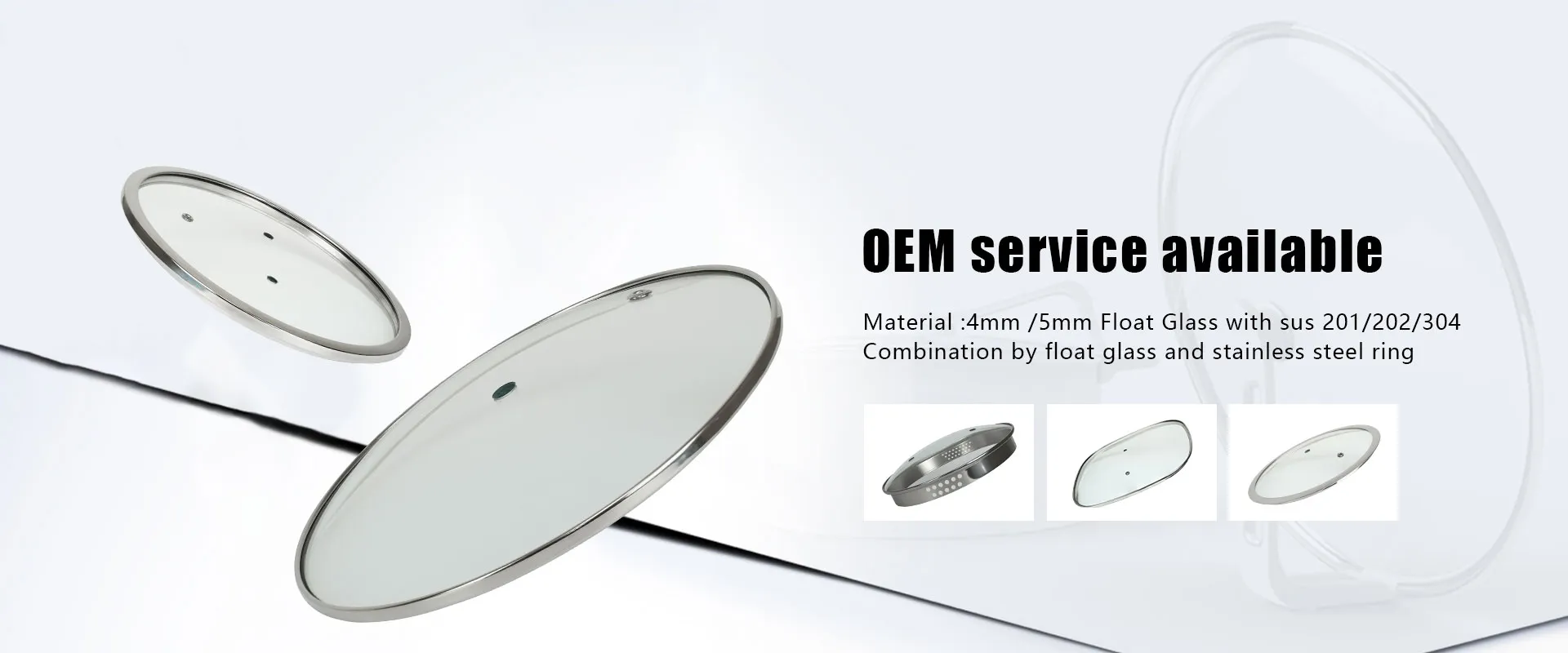
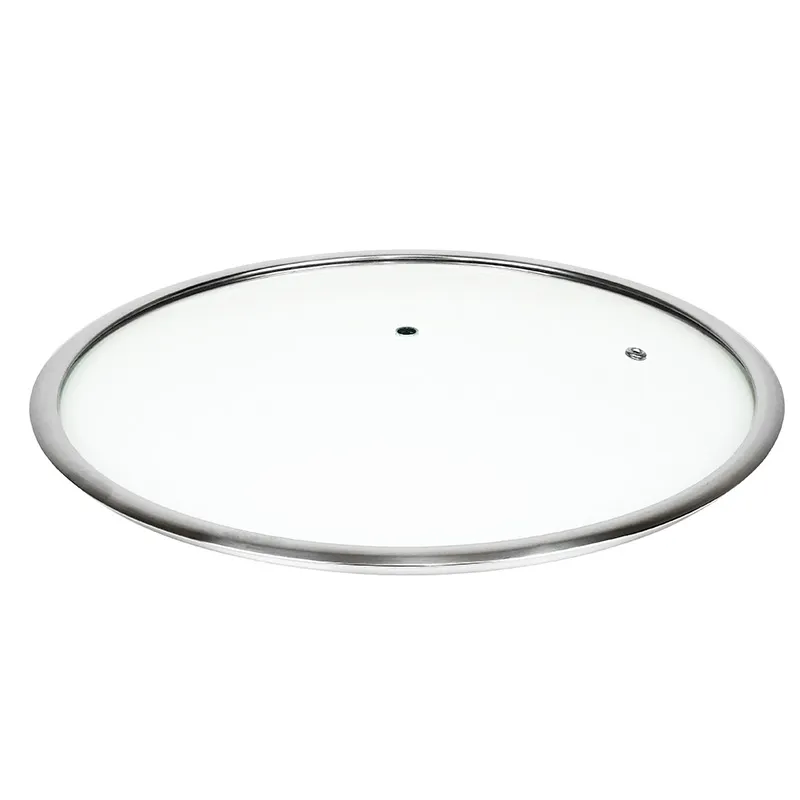
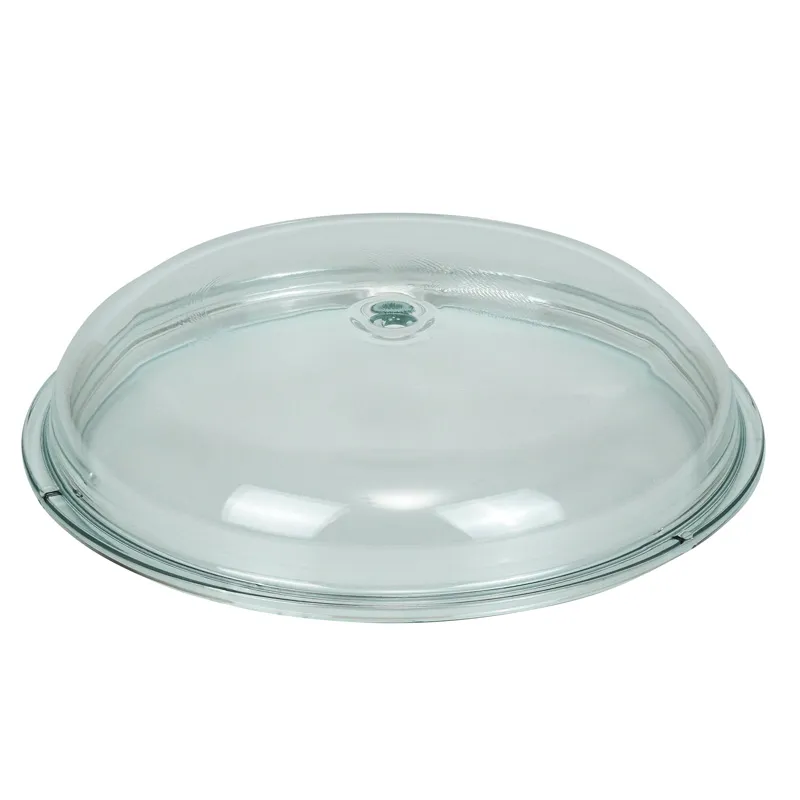
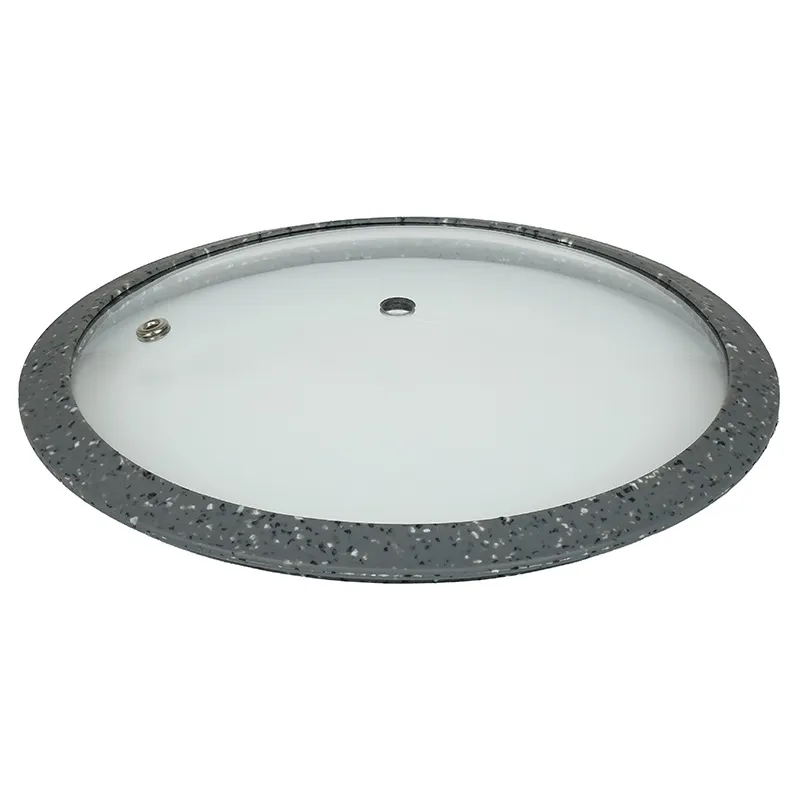
pop jar with glass lid
When you hear 'pop jar with glass lid', most folks picture a trendy, Instagram-ready container for overnight oats or artisanal pickles. That's the consumer view. From where I stand, sourcing and testing these for kitchenware lines, that perception is just the surface. The real conversation is about the junction of function, material science, and frankly, surviving the brutal logistics of global shipping. A glass lid isn't just a cover; it's a pressure-bearing, seal-forming, thermal-shock-enduring component. And the 'pop'? That's the sound of a vacuum seal releasing, which is the whole point, but also the most common point of failure if you get the specs wrong.
The Anatomy of a Reliable Seal
Let's break down the seal mechanism. It's not magic. You have the jar's finish (the threaded top), the rubber or silicone gasket seated in the lid's underside channel, and the glass lid itself acting as a rigid barrier. The 'pop' happens when the concave center of the lid, pulled down by vacuum during processing, snaps back to convex when opened. I've seen countless samples where the failure is in the gasket channel depth. Too shallow, the gasket compresses inadequately, leading to seal failure within weeks. Too deep, and you need Herculean strength to close the jar, risking chipping the glass rim or stripping the threads on cheaper jars.
We ran a batch last year for a European client, a pickling company. They wanted a classic, heavy-gauge glass lid for their 1-liter jars. Our initial samples used a 3mm thick, tempered glass lid from a standard mold. They passed initial seal tests. But in their real-world filling line, where hot brine was introduced, we got a 15% breakage rate from thermal shock. The glass was strong, but the rapid, uneven heating from a hot liquid hitting the center of the lid while the cooler rim was clamped down created stress points. The solution wasn't just thicker glass; it was tweaking the tempering process to increase the surface compression strength. We worked with the engineering team at EUR-ASIA COOKWARE CO.,LTD on this—their facility in Taian is set up for these kinds of iterative tests—and we moved to a lid with a slightly different curvature and a specified thermal shock resistance delta of 120°C. The breakage dropped to under 0.5%.
That's the detail you don't see in a product listing. The lid's curvature isn't just aesthetic; it's a calculated dome that allows for that flex during sealing and opening without transferring undue stress to the center. A perfectly flat glass lid would be more prone to cracking under vacuum pressure.
Material Sourcing and the Tempering Imperative
All glass is not created equal. For a pop jar lid, annealed glass is a non-starter. It must be tempered. The process of heating and rapidly cooling puts the surface into compression and the core into tension, giving it that characteristic strength and safety feature—when it does break, it shatters into small, blunt pieces instead of sharp shards. But even within tempering, there are grades. The soda-lime silica glass used by most reputable manufacturers, like those at EUR-ASIA's plant, needs a consistent composition. Impurities or inconsistent thickness in the raw glass sheets lead to weak spots.
I recall a cost-cutting exercise with a supplier (not EUR-ASIA) early in my career. They offered a semi-tempered lid at a 20% lower cost. The testing seemed okay—it passed a basic impact test. But in a simulated shelf-life test, where we cycled the jars between a warm pantry and a cool fridge, the seals started to fail on about 30% of the units after 3 months. The reason? The glass had microscopic stress patterns that allowed it to flex minutely under temperature changes, just enough to break the seal's integrity over time. A fully, properly tempered lid is dimensionally stable. That failed batch taught me that the lid's structural rigidity is as critical to the long-term seal as the gasket itself.
This is where a specialized producer's volume matters. A facility producing over 15 million pieces annually, like the one behind glass-lid.com, has the process dialed in. Consistency is king. Their export focus to markets like Germany and Japan is telling—those are brutally strict markets for kitchenware standards. A lid that passes muster there has been through the wringer on material specs, dimensional tolerance (we're talking +/- 0.5mm on diameter), and safety testing.
The Gasket: The Unsung Hero (and Common Villain)
If the glass is the bone structure, the gasket is the heart of the pop jar with glass lid system. Food-grade silicone is the gold standard now, replacing older PVC or rubber compounds. It's inert, retains elasticity across a wide temperature range, and doesn't leach odors. But silicone formulation is a science. A hardness that's too high (measured in Shore A) won't conform perfectly to microscopic imperfections in the jar's finish. Too soft, and it can deform permanently under constant pressure, losing its spring back and ruining the seal.
We specify a food-grade silicone with a Shore A hardness between 50 and 60 for most applications. There's also the channel design. The gasket shouldn't just sit in the lid; it should be slightly compressed when the lid is screwed on, creating outward pressure against the channel walls and downward pressure against the jar's sealing surface. I've dissected failed lids where the gasket was simply glued into a flat groove. Under vacuum, it gets pulled inward, breaking the seal. A proper channel has a dovetail or undercut design that mechanically locks the gasket in place, so the vacuum force actually improves the seal by pulling the gasket tighter against the jar.
One nuance often overlooked is the gasket's cross-sectional shape. A simple round cord is cheap. A flattened, slightly squared-off profile provides a broader contact surface with the jar, which can compensate for minor variations in the glass jar's finish. It's a small detail that adds cost, but it drastically improves first-time seal success rates on high-speed filling lines.
Logistics and Packaging: Where Good Lids Go to Die
You can engineer the perfect lid, and then it all falls apart in a shipping container. This is a massive, often hidden, cost center. Glass is heavy and fragile. Packaging for a glass lid isn't just about protecting it from point A to B; it's about surviving stacked pallets, container shifts during ocean transit, and forklift vibrations in a warehouse.
The standard is pulp or molded fiber trays. Each lid sits in its own cell, separated from its neighbors. But the tray density and the interlocking design of the stack are critical. A weak tray allows lids to shift and clink together during transit. Even if they don't break, that edge chipping renders them useless for forming a seal. EUR-ASIA's operation, with its focus on export, has this down to a science. Their standard export pack uses a high-density molded fiber that you can feel the rigidity in. It's more expensive than flimsy alternatives, but it slashes claims for breakage upon arrival. I've had clients try to cheap out on packaging to save a few cents per unit, only to face 8-10% damage rates, wiping out any savings.
Another lesson learned: always specify container pack or palletization specs in your order. How the master cartons are stacked on the pallet, the use of corner boards and stretch wrap—this all needs to be agreed upon. A poorly stacked pallet can collapse, putting immense point pressure on the cartons in the middle. I've seen a whole shipment where the lids in the center of the pallet were fine, but every lid on the outer layers of those cartons had micro-cracks from pressure.
Final Thoughts: It's a System, Not a Component
Ultimately, a successful pop jar with glass lid product depends on viewing the jar, lid, and gasket as a single, integrated system. You can't just source a lid from one supplier, jars from another, and gaskets from a third and expect reliable performance. The threading must match perfectly. The sealing surface of the jar must be smooth and consistent. The lid's diameter and skirt depth (the part that overlaps the jar's thread) must be precise.
The best practice is to work with a supplier who understands this holistically or has established compatibility. When I look at a supplier profile like EUR-ASIA COOKWARE CO.,LTD's, their specialization in glass lids for household products across multiple tiers (low-medium-high) signals they've likely seen it all. They're not just making a generic lid; they're engineering a component meant to interface with a variety of jar specs from different international markets. That requires a deep library of molds and a flexible engineering approach.
So next time you hear that satisfying 'pop', remember it's the sound of a dozen precise specifications aligning—material, tempering, geometry, gasket chemistry, and packaging—all holding under pressure until the moment you decide to break the seal. It's a small marvel of practical engineering, not just a pantry accessory.
Related Products
Related Products