- Chinese
- French
- German
- Portuguese
- Spanish
- Russian
- Japanese
- Korean
- Arabic
- Irish
- Greek
- Turkish
- Italian
- Danish
- Romanian
- Indonesian
- Czech
- Afrikaans
- Swedish
- Polish
- Basque
- Catalan
- Esperanto
- Hindi
- Lao
- Albanian
- Amharic
- Armenian
- Azerbaijani
- Belarusian
- Bengali
- Bosnian
- Bulgarian
- Cebuano
- Chichewa
- Corsican
- Croatian
- Dutch
- Estonian
- Filipino
- Finnish
- Frisian
- Galician
- Georgian
- Gujarati
- Haitian
- Hausa
- Hawaiian
- Hebrew
- Hmong
- Hungarian
- Icelandic
- Igbo
- Javanese
- Kannada
- Kazakh
- Khmer
- Kurdish
- Kyrgyz
- Latin
- Latvian
- Lithuanian
- Luxembou..
- Macedonian
- Malagasy
- Malay
- Malayalam
- Maltese
- Maori
- Marathi
- Mongolian
- Burmese
- Nepali
- Norwegian
- Pashto
- Persian
- Punjabi
- Serbian
- Sesotho
- Sinhala
- Slovak
- Slovenian
- Somali
- Samoan
- Scots Gaelic
- Shona
- Sindhi
- Sundanese
- Swahili
- Tajik
- Tamil
- Telugu
- Thai
- Ukrainian
- Urdu
- Uzbek
- Vietnamese
- Welsh
- Xhosa
- Yiddish
- Yoruba
- Zulu
- Kinyarwanda
- Tatar
- Oriya
- Turkmen
- Uyghur


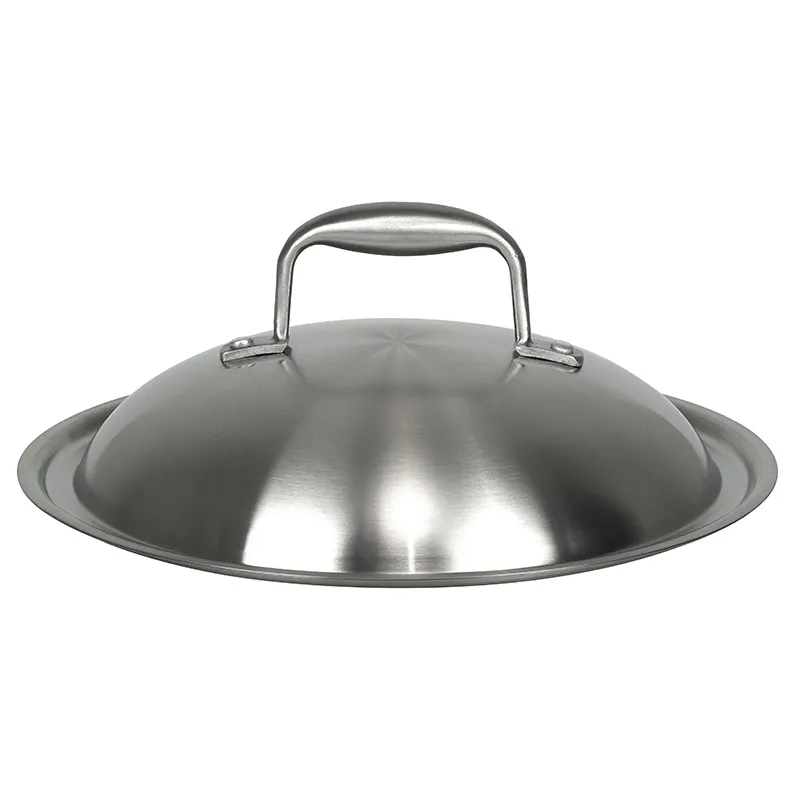
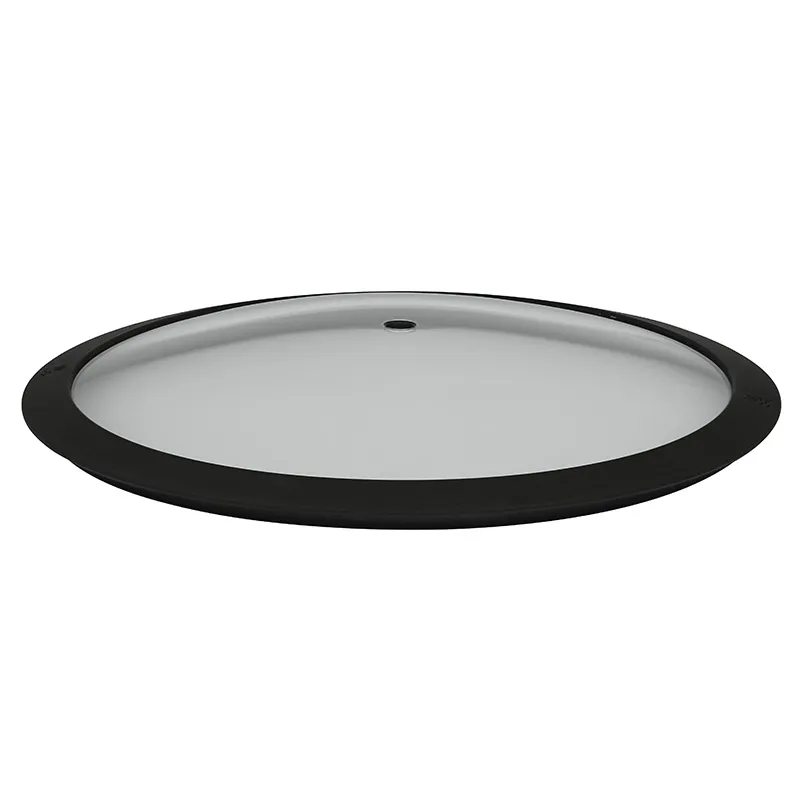
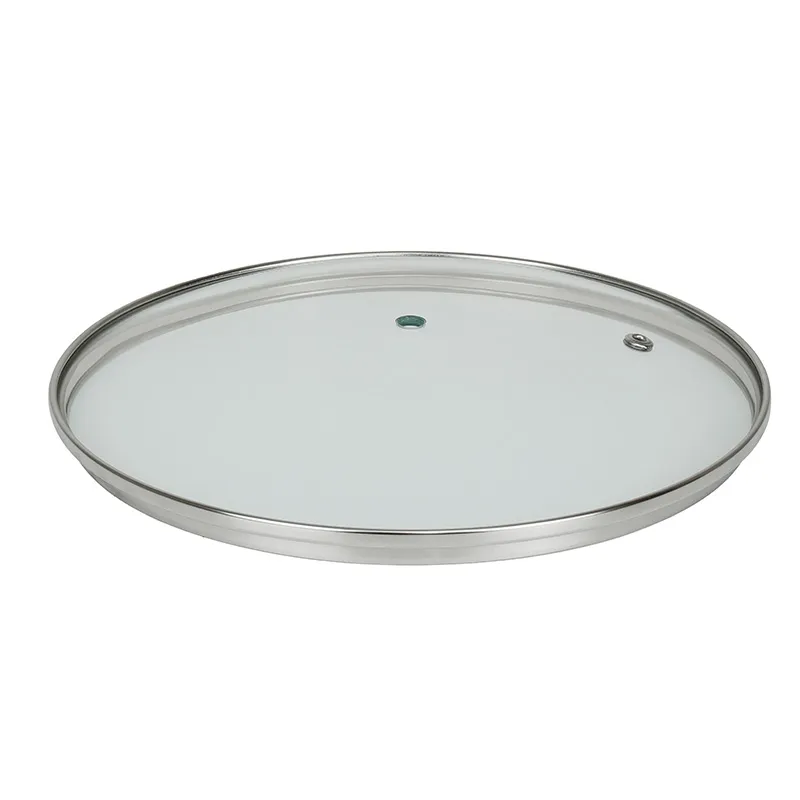
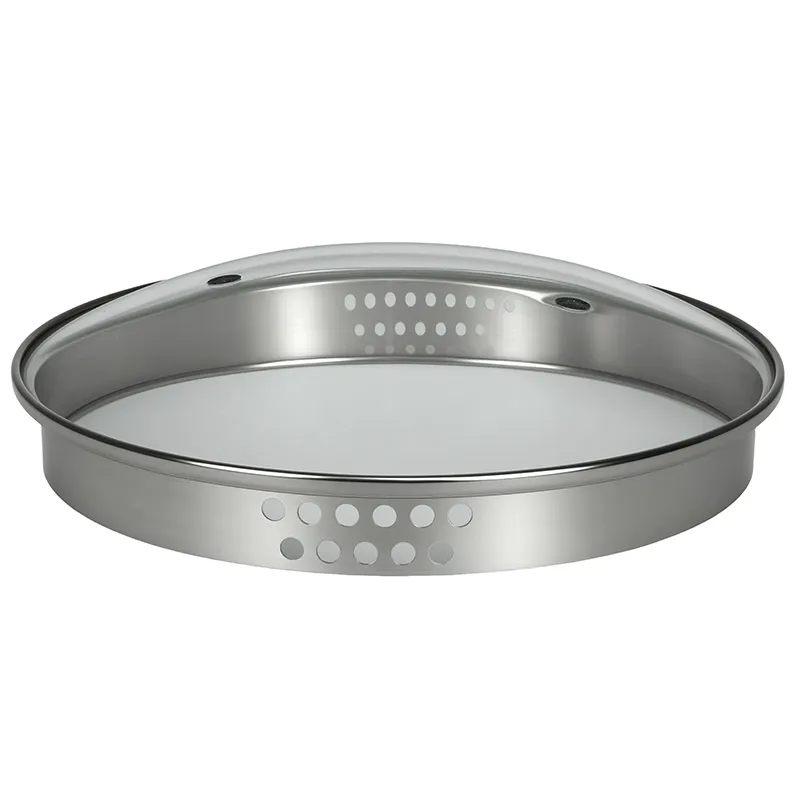
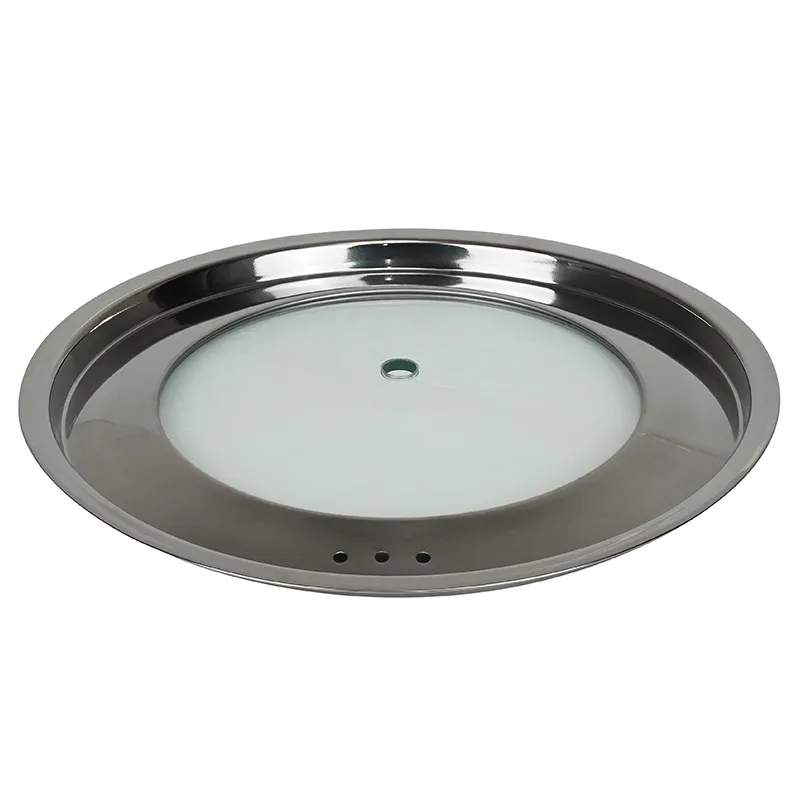
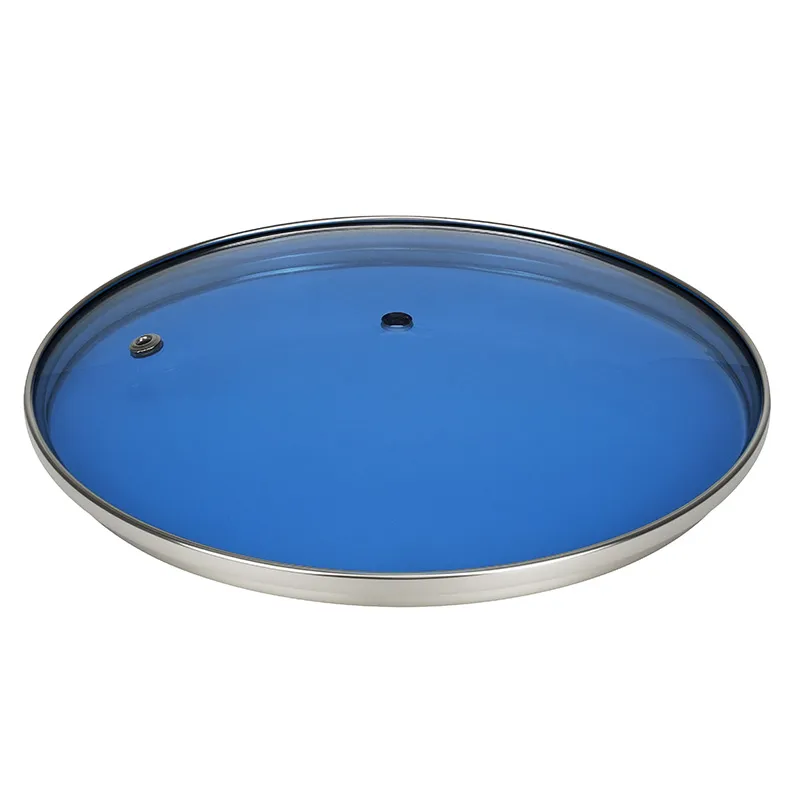
prestige glass lid
When you hear 'prestige glass lid', the immediate image is often a flawless, heavy piece of glass on a high-end pot, symbolizing a certain kitchen status. But that's where the common misconception starts. The 'prestige' isn't just in the look; it's a specific, often problematic, set of expectations around thermal performance, structural integrity, and that elusive 'feel' in the hand. Many assume thicker glass is always better, or that any tempered glass lid from a reputable factory will perform the same. Having sourced and tested these for years, I can tell you the devil is in the details most catalogs never show.
The Weight and Balance Fallacy
A lot of buyers, especially those for European brands, come in demanding a certain heft. They equate weight with quality, with prestige glass lid. We've made that mistake ourselves, approving samples that felt substantial and premium. But then the complaints trickle in: the lid is too heavy for the pot's hinges, it's cumbersome for daily use, and worse, it affects the pot's center of gravity when tilted. The 'prestige' turned into a usability flaw.
I recall a project for a German client who wanted a massive, 30cm lid for a casserole dish. The first prototype was nearly 1.8kg of beautiful, thick, low-iron glass. Looked stunning. Failed miserably in their ergonomic tests. The female testers, who were the primary users, found it dangerously awkward to handle with one hand when full of condensation. We had to go back, not to cheapen it, but to re-engineer it. We worked with the engineering team at EUR-ASIA COOKWARE CO.,LTD (you can see their scope at glass-lid.com) to tweak the curvature and the thickness distribution. The final version was 400 grams lighter, just as strong due to a better tempering curve, and actually felt more premium because it was balanced. That was a lesson: prestige is about intelligent design, not just mass.
This is where a manufacturer's experience shows. A company like EUR-ASIA, with an annual output in the millions, has seen these scenarios. Their production base in Taian's high-tech zone isn't just about scale; it's about accumulating data on failure points. They know, for instance, that the rim thickness and the handle anchor points are more critical for perceived sturdiness than the center panel thickness. That's the kind of practical knowledge you only get from making over 15 million pieces a year for markets like Germany and Japan, where tolerance for error is zero.
The True Cost of Clarity and Strength
Let's talk about the glass itself. 'Tempered' is a given for safety, but the journey to a clear, strong, and thermally resilient lid is full of compromises. Low-iron glass is the standard for that crystal-clear, 'prestige' look, eliminating the greenish tint. But not all low-iron glass is equal. The raw material sourcing and the melting process directly impact its resistance to thermal shock. We once had a batch where the lids looked perfect but developed micro-cracks after about 50 cycles of going from a cold rinse to a hot oven (around 200°C). The failure was subtle, not a dramatic shatter, but enough to be a total recall.
The root cause? An inconsistency in the annealing phase during tempering. It's a highly controlled process, and even a slight deviation in the cooling rate can set up internal stresses that become weak points. This is a major focus at a specialized facility. From their company intro, EUR-ASIA's specialization in low-to-high level household glass means they have to master this gradient. A lid for a high-end German brand and one for a mid-market retailer might both be tempered, but the parameters—the temperature, the duration, the quench pressure—are dialed in differently. The 'prestige' version isn't just a label; it should represent a more rigorous and consistent segment of the production line.
Another hidden cost is the edge work. A ground and polished edge feels smooth, looks finished, and is safer. But it adds cost. Some factories will just fire-polish the edges, which is faster. The difference is tangible. Run your finger along the rim. A properly ground edge has a consistent, cool, satin feel. A fire-polished edge can have slight ripples or a sharper transition. In a true prestige glass lid, that detail is non-negotiable. It's one of the first things I check in a sample.
The Handle: Where Engineering Meets Touch
This might be the most underrated component. The handle isn't just an afterthought; it's the primary interface between the user and the prestige glass lid. Material choice is a minefield. Stainless steel is common, but the grade and finish matter. 304 vs. 201 stainless, brushed vs. mirror polish, the thickness of the gauge—all affect cost, corrosion resistance, and feel. Then there's the attachment.
The worst failure I've seen was a handle that detached. Not completely, but it developed a slight wobble after repeated heating and cooling. The cause was a mismatch in the thermal expansion coefficient between the metal bracket and the glass, combined with an inadequate adhesive or mechanical fixing. The solution often involves a combination of a high-temperature silicone adhesive and a mechanical lock, like a rivet or a clever bracket design that allows for a tiny bit of flex.
We've moved towards designs where the stainless steel handle is attached with a large, broad baseplate, distributing the stress over a wider area of the glass. It's less elegant from an engineering drawing perspective, but it's far more reliable. Some high-end Italian brands even use a cast iron handle, which is a whole different challenge in terms of weight and attachment, but provides an unmistakable heft and heat resistance. It's a clear prestige signal, but it pushes the cost and logistics up significantly. For a global exporter like EUR-ASIA, whose products end up in Brazil, Turkey, and South Korea, they have to be proficient in all these attachment methods to meet different market price points and aesthetic tastes.
The Silent Battle: Heat and Steam Management
A lid's primary job is to contain heat and moisture. But a solid glass lid does it passively. Where's the steam release? Most prestige lids forgo a dedicated vent, relying on the imperfect seal between the lid and the pot rim. This is actually fine for slow braising or simmering. The problem arises with rapid boiling. Without a vent, pressure can build, causing the lid to rattle and dance, or worse, create a seal that makes it suction-locked to the pot.
The industry's quiet fix is often in the knob. A large, heat-resistant phenolic or stainless steel knob acts as a partial thermal insulator and, if designed with a small gap between its base and the glass, can allow a minimal steam escape. It's not advertised, but it's a critical design nuance. I've tested lids where the knob was bonded flush to the glass; they were much more prone to locking under pressure.
Another aspect is condensation management. A well-designed lid will have a slight inward curve or a condensation ridge on the underside to channel droplets back into the pot, not off the edge and onto the stovetop. This is a small feature that speaks volumes about the R&D behind a product. When reviewing a manufacturer's portfolio, like the one you'd find at glass-lid.com, I look for these subtle design variations across their product range. It shows they're thinking beyond just cutting and tempering a circle of glass.
Export Realities and the Prestige Spectrum
Finally, let's ground this in the reality of global supply. A company producing over 15 million pieces annually, like EUR-ASIA COOKWARE CO.,LTD., isn't making one type of prestige glass lid. They're managing a spectrum. The lid for a French brand might have a specific optical clarity requirement and a custom bronze-tinted handle. The one for a Polish supermarket chain might use a slightly less expensive glass formula but must meet the same safety impact standards. The 'prestige' tier is defined by tighter specifications, more finishing steps, and often, more involved quality control sampling.
The export focus to Europe (Germany, Italy, Denmark, etc.) and East Asia (Japan, South Korea) is telling. These are markets with high standards and specific aesthetic sensibilities. A lid for the Japanese market might prioritize a lighter weight and a softer, more organic handle shape. The German market might prioritize a stark, minimalist design with flawless machining. A single factory catering to these needs has to have remarkable flexibility within its production lines.
So, when you're evaluating a prestige glass lid, either as a buyer or a product developer, look past the surface shine. Check the edge finish. Feel the balance. Ask about the thermal cycling tests. Inquire about the handle attachment method. The real prestige lies in the convergence of material science, mechanical engineering, and ergonomic design that happens long before the lid ever sits on a pot in a showroom. It's a manufactured object that has to be both a visual icon and a silent, reliable workhorse. Getting that balance right is what separates a truly premium product from one that's just heavy and clear.
Related Products
Related Products