
- Chinese
- French
- German
- Portuguese
- Spanish
- Russian
- Japanese
- Korean
- Arabic
- Irish
- Greek
- Turkish
- Italian
- Danish
- Romanian
- Indonesian
- Czech
- Afrikaans
- Swedish
- Polish
- Basque
- Catalan
- Esperanto
- Hindi
- Lao
- Albanian
- Amharic
- Armenian
- Azerbaijani
- Belarusian
- Bengali
- Bosnian
- Bulgarian
- Cebuano
- Chichewa
- Corsican
- Croatian
- Dutch
- Estonian
- Filipino
- Finnish
- Frisian
- Galician
- Georgian
- Gujarati
- Haitian
- Hausa
- Hawaiian
- Hebrew
- Hmong
- Hungarian
- Icelandic
- Igbo
- Javanese
- Kannada
- Kazakh
- Khmer
- Kurdish
- Kyrgyz
- Latin
- Latvian
- Lithuanian
- Luxembou..
- Macedonian
- Malagasy
- Malay
- Malayalam
- Maltese
- Maori
- Marathi
- Mongolian
- Burmese
- Nepali
- Norwegian
- Pashto
- Persian
- Punjabi
- Serbian
- Sesotho
- Sinhala
- Slovak
- Slovenian
- Somali
- Samoan
- Scots Gaelic
- Shona
- Sindhi
- Sundanese
- Swahili
- Tajik
- Tamil
- Telugu
- Thai
- Ukrainian
- Urdu
- Uzbek
- Vietnamese
- Welsh
- Xhosa
- Yiddish
- Yoruba
- Zulu
- Kinyarwanda
- Tatar
- Oriya
- Turkmen
- Uyghur


pumpkin glass jar with lid
When you hear 'pumpkin glass jar with lid', most people picture a seasonal decor piece, maybe for candy or a candle. That's the common pitfall—thinking it's purely decorative. In practice, especially when sourcing or specifying for retail, it's a product category where material integrity, thermal shock resistance, and sealing efficacy are non-negotiable. The 'pumpkin' shape itself introduces manufacturing complexities many overlook, like consistent wall thickness in the curved sections and ensuring the glass jar body mates perfectly with a flat, tempered lid. I've seen batches where the lid sits unevenly, not because of the lid, but due to subtle variations in the jar's rim from the molding process. That's where you separate a novelty item from a functional kitchenware product.
The Core Challenge: Tempering for Shape and Function
Not all glass is suitable. For a pumpkin jar meant to handle anything from dry goods to potentially hot preserves (if designed for it), the glass must be tempered. The issue is the shape. Tempering flat lids is standard; tempering a complex, hollow shape like a pumpkin requires precise control of the quenching process. If the cooling jets aren't calibrated for the contours, you get stress points. I recall a project with a factory—not our usual partner—where the failure rate on the first sample run was nearly 30%. Jars would spontaneously crack days after production, a classic sign of uneven internal stress. We had to go back to the drawing board on the annealing cycle.
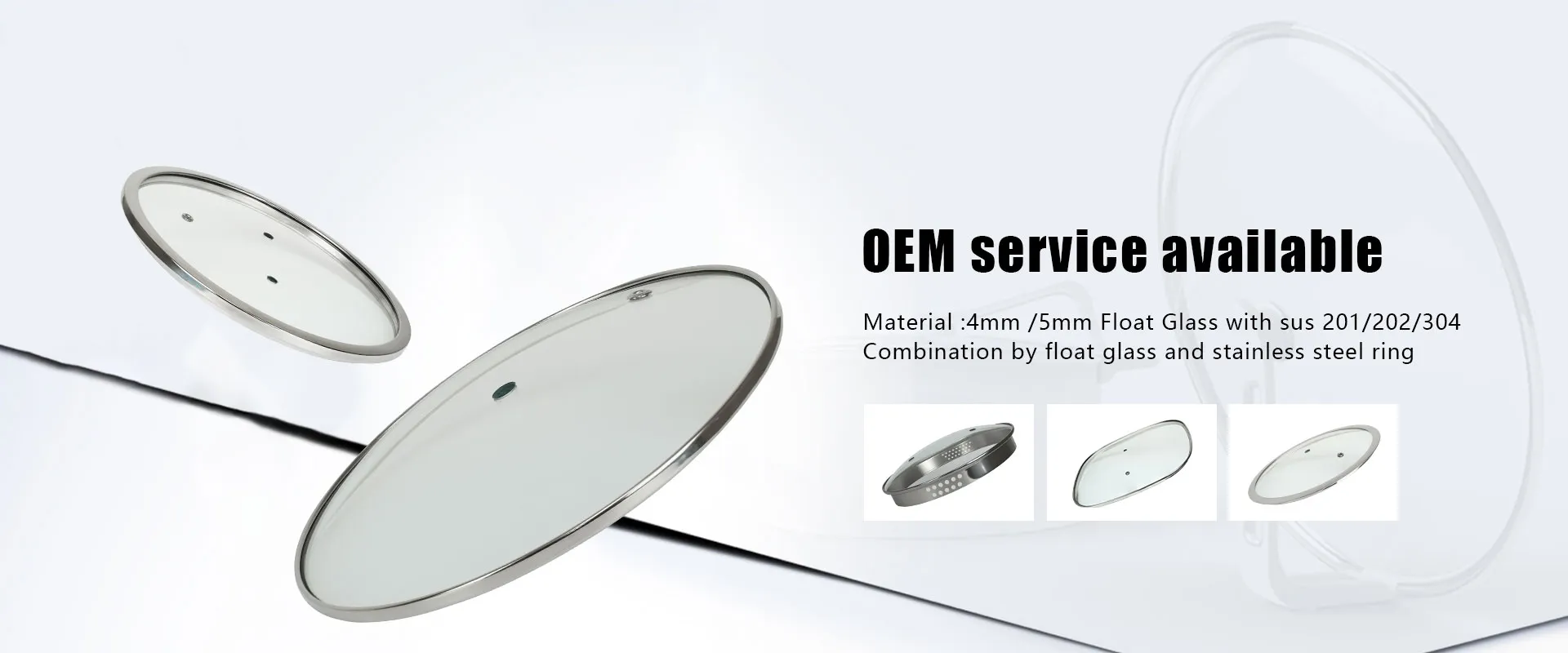
This is where expertise in production matters. A company like EUR-ASIA COOKWARE CO.,LTD, with a stated annual output of over 15 million tempered glass lids and related products, has the scale and presumably the process refinement to manage this. Their specialization in low to high-level household glass isn't just marketing speak. It implies a range of quality tiers, meaning they likely have the capability to produce a simple, annealed (non-tempered) decorative pumpkin jar, but also a fully tempered, kitchen-grade version. The difference in cost and performance is significant.
The lid is its own saga. For a proper seal, you need a complementary sealing surface. A simple, loose-fitting glass lid is fine for dry storage. But if the product brief calls for an airtight seal—say, for coffee beans or baking supplies—you're looking at a lid with a silicone or EVA gasket. The challenge is engineering the lid's inner diameter and the jar's outer rim to compress that gasket uniformly. A common failure is a lid that's too tight or too loose, forcing the user to wrestle with it, which increases the risk of breakage.
Material Sourcing and Clarity Standards
Let's talk about the glass itself. 'Pumpkin' often implies an amber or orange tint. Achieving a consistent, food-safe color throughout the jar's variable thickness is harder than it looks. Pigment dispersion in the molten glass must be perfect; otherwise, you get streaks or lighter patches, which buyers for major markets in Europe will reject. I've inspected containers where the color density in the stem (a thicker section) was visibly darker than the body. It's a cosmetic flaw, but in this business, cosmetics are part of the function.
Clarity is another point. Even tinted glass should have excellent clarity, free from bubbles, seeds (small crystalline inclusions), or haze. This isn't just about looks. Inclusions are weak points. During our own quality audits, we use backlighting to check for these defects. A supplier's ability to control this speaks volumes about their raw material quality and furnace management. From the description of EUR-ASIA COOKWARE CO.,LTD's operations in Shandong's High-tech Development Zone, with substantial facility square footage, it suggests integrated production control, which is a positive indicator for material consistency.
Then there's the weight and feel. A cheap jar feels light and tinny. A quality one has a substantial, solid feel—the result of proper density and thickness. This 'heft' is a key selling point at the medium to high level. It conveys durability. When you pick up a well-made pumpkin glass jar with lid, the lid should make a satisfying, low-pitched 'clink', not a sharp 'clack'.
Logistics and the Reality of Export
This is where many beautiful prototypes die. A pumpkin shape is inherently less space-efficient for shipping than a cylinder or cube. Nesting is usually impossible. You're shipping a lot of air. This dramatically impacts the landed cost. Efficient packaging is critical—using molded pulp or EPS foam that cradles the irregular shape without adding excessive volume. A supplier experienced in export, like EUR-ASIA which exports over 90% of its products to markets like Germany, Italy, and Japan, will have this down to a science. They understand the palletization requirements and drop-test standards for these fragile, odd-shaped items.
I learned this the hard way early on. We shipped a container of decorative glass jars without sufficient corner protection. The vibration during ocean transit caused the pieces to rub, resulting in a whole layer of jars with 'crizzling'—micro-scratches that made them look used. The loss was substantial. Now, we specify not just the outer carton, but the interlocking pattern inside the master case.
Furthermore, compliance is silent but crucial. For the European and Japanese markets mentioned in their profile, REACH and food contact material regulations are a baseline. The inks used for any painted features (like a pumpkin face), the gasket material in the lid, even the adhesives in the packaging—all need documentation. A professional supplier provides these test reports as a matter of course.
The Lid as the Critical Interface
It's worth zooming in on the lid again. On their website https://www.glass-lid.com, the company's name and focus are telling. A specialist in glass lids understands the physics of fit. For a pumpkin jar, the lid often serves as the flat 'base' of the pumpkin when inverted, so its underside needs to be finished smoothly, without mold marks that could scratch surfaces.
The most common lid types for this application are: 1) plain tempered glass, 2) glass with a metal (usually tin-plated steel) screw band for use with a separate sealing disc, or 3) a one-piece plastic/glass composite with a built-in gasket. Each has trade-offs. The all-glass look is aesthetically pure but offers the least seal. The screw-band option is classic for canning but changes the product's visual profile. The composite lid is great for functionality but requires sourcing and assembling multiple materials.
Durability testing for lids involves torque tests (for screw-on types) and repeated sealing cycles. We simulate a consumer opening and closing the jar hundreds of times. The gasket shouldn't deform, and the lid shouldn't develop hairline cracks around the edge, especially if it's a glass lid fitted into a metal band.
Converging on a Practical Product
So, what does a well-executed pumpkin glass jar with lid look like in the real world? It starts with a clear product definition. Is it for seasonal retail at a mid-tier price point? Then maybe a reliably tempered jar with a simple, loose glass lid from a high-volume producer makes sense. Is it for a premium kitchenware brand? Then you might spec a borosilicate glass body for better thermal shock resistance, a custom silicone-gasketed lid, and a matte-finish paint application for the stem.
The expertise of a manufacturer lies in guiding that decision. They should ask: What's the fill? What's the price target? What are the shipping destinations? Their experience across low, medium, and high levels, as noted in EUR-ASIA's intro, should allow them to present options, not just a single sample. Their production volume suggests they can handle large orders, but the question is whether they maintain quality consistency across those volumes.
In the end, the charm of the pumpkin shape is what gets it off the shelf. But it's the unglamorous details of tempered glass physics, precision molding, sealing technology, and export-ready packaging that determine whether it becomes a one-season wonder or a returning, reliable product line in a catalog. The difference is working with people who think beyond the mold and understand the jar as a system—jar, lid, seal, and package—all having to perform.
Related Products
Related Products
Best Selling Products
Best Selling Products
Related Search
Related Search- 1 gallon glass jar wide mouth with airtight metal lid
- silicone glass lid manufacturing
- lodge tempered glass lid
- glass can with bamboo lid and straw
- jar glass with lid
- silicone glass lid made in China
- silicone lid exporter of China
- glass lid for crock pot express
- tempered glass cover exporter
- tempered glass lid made in China


