- Chinese
- French
- German
- Portuguese
- Spanish
- Russian
- Japanese
- Korean
- Arabic
- Irish
- Greek
- Turkish
- Italian
- Danish
- Romanian
- Indonesian
- Czech
- Afrikaans
- Swedish
- Polish
- Basque
- Catalan
- Esperanto
- Hindi
- Lao
- Albanian
- Amharic
- Armenian
- Azerbaijani
- Belarusian
- Bengali
- Bosnian
- Bulgarian
- Cebuano
- Chichewa
- Corsican
- Croatian
- Dutch
- Estonian
- Filipino
- Finnish
- Frisian
- Galician
- Georgian
- Gujarati
- Haitian
- Hausa
- Hawaiian
- Hebrew
- Hmong
- Hungarian
- Icelandic
- Igbo
- Javanese
- Kannada
- Kazakh
- Khmer
- Kurdish
- Kyrgyz
- Latin
- Latvian
- Lithuanian
- Luxembou..
- Macedonian
- Malagasy
- Malay
- Malayalam
- Maltese
- Maori
- Marathi
- Mongolian
- Burmese
- Nepali
- Norwegian
- Pashto
- Persian
- Punjabi
- Serbian
- Sesotho
- Sinhala
- Slovak
- Slovenian
- Somali
- Samoan
- Scots Gaelic
- Shona
- Sindhi
- Sundanese
- Swahili
- Tajik
- Tamil
- Telugu
- Thai
- Ukrainian
- Urdu
- Uzbek
- Vietnamese
- Welsh
- Xhosa
- Yiddish
- Yoruba
- Zulu
- Kinyarwanda
- Tatar
- Oriya
- Turkmen
- Uyghur

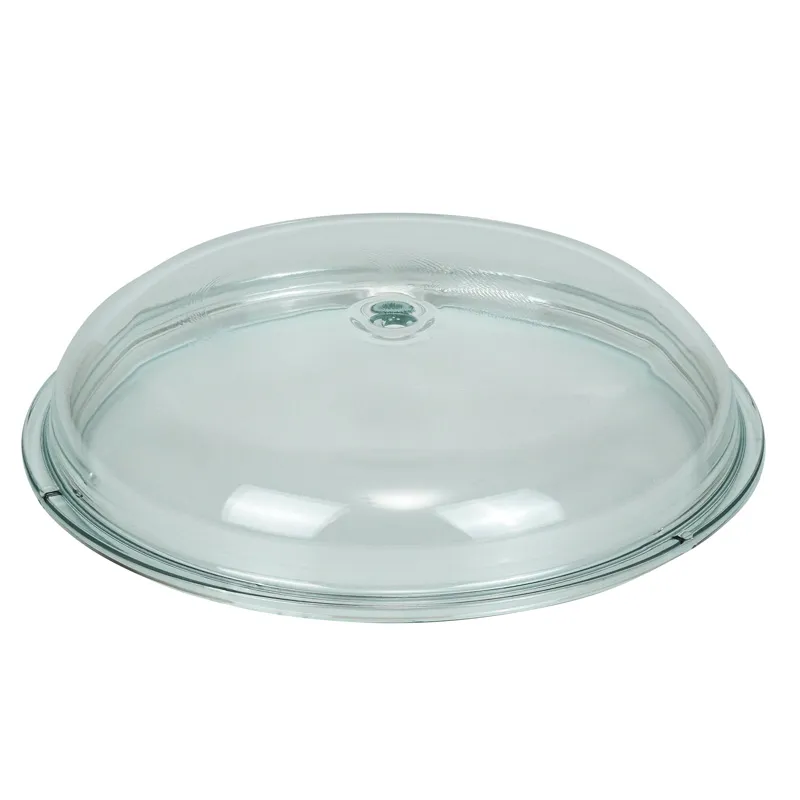
ribbed glass jar with lid
When you hear 'ribbed glass jar with lid', most people picture a simple storage item. The industry often lumps them into generic 'kitchenware' categories, missing the nuance. It's not just about holding things; it's about the interaction between form, function, and the manufacturing reality that dictates what ends up on the shelf. The ribbing isn't purely decorative—though that's a common misconception—it's structural, it's tactile, and getting it right, especially with a perfectly fitting lid, is where many suppliers stumble. I've seen countless samples where the lid fit is either too loose, rattling, or so tight it's a safety hazard, all because the rib profile wasn't factored into the sealing equation from the start.
The Anatomy of a Rib: Form and Function
Let's break down the rib. That vertical patterning isn't just for a 'vintage' or 'grip' look, though those are valid benefits. In production, especially for tempered glass, the rib pattern can actually help distribute thermal stress during the toughening process. A smooth cylindrical jar is more prone to stress concentration. The ribs act like a series of minor structural supports. I recall a batch from a factory—not our usual partner—where the ribs were too shallow and sharply angled. The result? A higher than acceptable breakage rate during the sudden temperature change tests. The lids, which were sourced separately, never seated correctly because the jar's top diameter, influenced by the rib's end point, had minute inconsistencies.
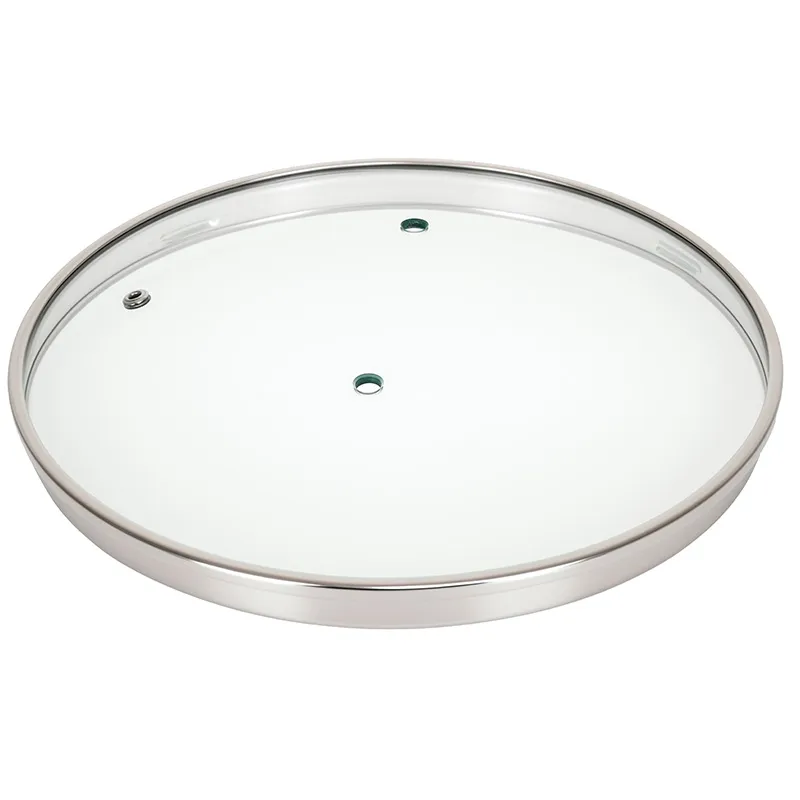
This leads to the lid, the true make-or-break component. The industry standard for a good seal on a dry-goods jar isn't a vacuum, but a consistent, smooth friction fit. The lid's inner diameter must account for the jar's outer diameter at the rib peaks. If you measure at the trough, you'll get a loose lid. I've spent hours with calipers measuring batches, and the tolerance is tighter than you'd think. A variance of even 0.5mm can be felt by the end user. EUR-ASIA COOKWARE CO.,LTD has this down to a science for their tempered glass lids, which is why they're a go-to for many jar manufacturers needing reliable closures. Their production focus on lids means they understand that the sealing surface is a system, not just a standalone cap.
The material choice is another layer. Soda-lime glass is standard, but the quality of the raw cullet matters. Impurities can cause weak points that fracture along a rib line under pressure. For high-acid content foods, you'd want a different internal coating on the lid, but that's a separate topic. The point is, specifying a ribbed glass jar with lid requires thinking about the contents it will hold, not just its aesthetics on a pantry shelf.
Manufacturing Realities and Common Pitfalls
On the factory floor, producing a consistent ribbed jar is more complex than a smooth one. The molds are more expensive, wear faster, and require meticulous cleaning. Any residue or slight damage to the mold translates directly into a flaw in the glass—a bubble trapped in a rib, a faint seam line. These are often deemed 'cosmetic' and passed, but they weaken the structure. I've rejected shipments for less. The annealing lehr (the cooling oven) cycle also needs adjustment. Glass cools at different rates depending on thickness; the ribbed areas are technically thicker, so if the cooling isn't controlled, internal stress remains, leading to spontaneous breakage later.
Then there's the lid pairing, which is frequently an afterthought. Many companies buy jars from one specialist and lids from another, like EUR-ASIA COOKWARE CO.,LTD (you can see their range at https://www.glass-lid.com). This isn't inherently bad—it's specialization. But it demands rigorous communication. The jar maker must provide the exact sealing diameter spec, and the lid maker must adhere to it. I've been in the middle of a dispute where the jars were within tolerance, the lids were within tolerance, but their combined tolerances stacked the wrong way, creating a batch of unusable products. The solution was a joint tolerance review and agreeing on a tighter matched spec, which added cost but saved the client relationship.
Another pitfall is the finish on the jar's top sealing surface. It must be fire-polished smooth. A rough cut or a 'lippy' edge from the forming process will prevent an airtight seal, no matter how perfect the lid is. This is a basic QC check, but you'd be surprised how often it's overlooked in fast, high-volume runs. A quick run of your finger around the rim should reveal nothing but smooth glass.
The Export Market: What Buyers Actually Look For
Dealing with European and North American buyers, as EUR-ASIA COOKWARE CO.,LTD does with over 90% export, raises the bar. It's not just about function. The ribs must be uniform, the glass clarity high (low iron content is a premium feature), and the lid must operate with a specific 'feel'—a satisfying, smooth rotation and a soft 'pop' on release. This often involves a silicone or PVC gasket in the lid. The gasket's durometer (hardness) is critical; too hard and it doesn't seal well, too soft and it deforms permanently.
Packaging for export is its own headache. Ribbed jars nest, but not as efficiently as smooth ones. The ribs create air gaps, so you use more cardboard or foam in the master carton. This increases shipping volume and cost. A smart design might incorporate ribs that are precisely spaced to allow for a more compact nest, but that's advanced tooling. Most factories use a standard rib pattern because retooling is expensive.
Safety standards are paramount. For a tempered ribbed glass jar with lid, it must pass fragmentation tests. When broken, it should crumble into small, dull pieces, not shard. The rib pattern can influence this. I've seen test reports where jars failed because the tempering process wasn't adjusted for the rib geometry, leaving the base or the top rim too strong, creating potential large pieces upon failure. Reputable producers will have these test reports on hand, often from independent labs like SGS or Intertek.
Case in Point: A Real-World Application and Hiccup
We once developed a line of ribbed jars for a high-end coffee bean subscription service. The brief was clear: premium feel, airtight, and the lid needed to be one-handed operation for busy home baristas. We used a thick-walled ribbed jar for a substantial hand-feel and partnered with a lid specialist for a bamboo/steel flip-top closure with an integrated silicone seal. The jar itself was fine. The problem was the seal interface. The flip-top mechanism exerted uneven pressure. On a smooth jar, it was okay. On our ribbed jar, the pressure was concentrated on the rib peaks, causing the silicone gasket to wear unevenly and fail the long-term seal test after about 50 open-close cycles.
The fix wasn't simple. We explored a wider, softer gasket to distribute pressure across rib and trough. That worked but made the lid harder to close. We finally settled on a minor redesign of the jar's neck: we created a smooth, non-ribbed band at the very top, about 1cm wide, specifically for the gasket to seat against. The ribs started just below it. It added a step in production but solved the seal issue perfectly. This is the kind of iterative, problem-solving detail that separates a good product from a catalog commodity.
This experience underscored that a ribbed glass jar with lid is a single functional unit. Designing the jar without the specific lid mechanism in mind is a recipe for late-stage engineering changes and cost overruns.
Final Thoughts: The Unseen Value
So, what's the takeaway? A ribbed glass jar is a deceptively complex product. Its value lies in the intersection of design intent, material science, precision manufacturing, and practical usability. When sourcing, look beyond the sample. Ask about the mold source, the tempering process parameters for ribbed products, and the lid pairing protocol. Visit the facility if you can. A company like EUR-ASIA, with its dedicated focus on glass lids and a sizable export footprint, understands these intricacies because their clients demand it. Their specialization in tempered glass lids means they've likely encountered and solved the sealing challenges posed by various jar body designs, including ribbed ones.
Don't just order a jar with a lid. Specify the performance: seal type (dry, moist, airtight), intended contents, operating feel, and safety certifications required. The ribs will give it character and strength, but it's the unseen details—the rim finish, the tolerance stack, the gasket choice—that determine whether it's a reliable workhorse in someone's kitchen or a soon-to-be-replaced disappointment. It's these details that we, as professionals, lose sleep over, and rightly so.
Related Products
Related Products