
- Chinese
- French
- German
- Portuguese
- Spanish
- Russian
- Japanese
- Korean
- Arabic
- Irish
- Greek
- Turkish
- Italian
- Danish
- Romanian
- Indonesian
- Czech
- Afrikaans
- Swedish
- Polish
- Basque
- Catalan
- Esperanto
- Hindi
- Lao
- Albanian
- Amharic
- Armenian
- Azerbaijani
- Belarusian
- Bengali
- Bosnian
- Bulgarian
- Cebuano
- Chichewa
- Corsican
- Croatian
- Dutch
- Estonian
- Filipino
- Finnish
- Frisian
- Galician
- Georgian
- Gujarati
- Haitian
- Hausa
- Hawaiian
- Hebrew
- Hmong
- Hungarian
- Icelandic
- Igbo
- Javanese
- Kannada
- Kazakh
- Khmer
- Kurdish
- Kyrgyz
- Latin
- Latvian
- Lithuanian
- Luxembou..
- Macedonian
- Malagasy
- Malay
- Malayalam
- Maltese
- Maori
- Marathi
- Mongolian
- Burmese
- Nepali
- Norwegian
- Pashto
- Persian
- Punjabi
- Serbian
- Sesotho
- Sinhala
- Slovak
- Slovenian
- Somali
- Samoan
- Scots Gaelic
- Shona
- Sindhi
- Sundanese
- Swahili
- Tajik
- Tamil
- Telugu
- Thai
- Ukrainian
- Urdu
- Uzbek
- Vietnamese
- Welsh
- Xhosa
- Yiddish
- Yoruba
- Zulu
- Kinyarwanda
- Tatar
- Oriya
- Turkmen
- Uyghur

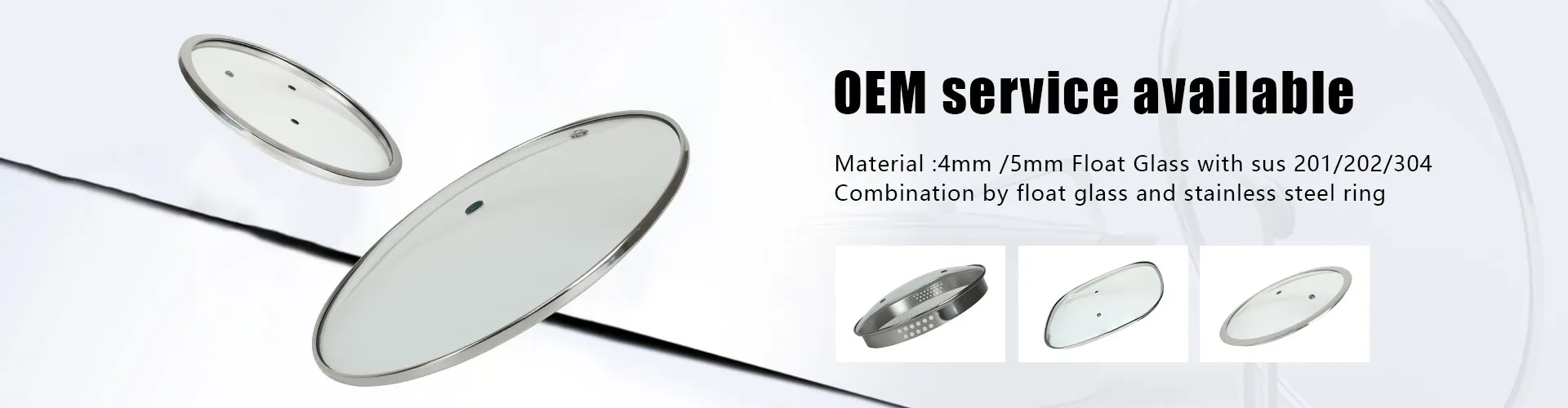
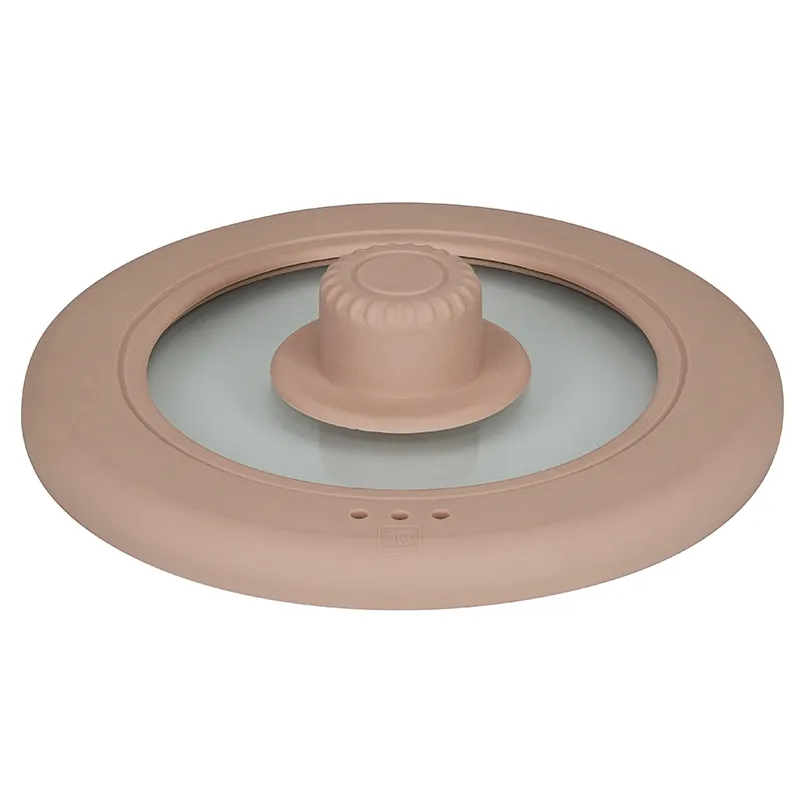
silicone cover
When most people hear 'silicone cover,' they picture a simple stretchy lid for a bowl. In our line of work, that's just the tip of the iceberg, and frankly, where a lot of misconceptions start. The assumption is that it's a commodity item—cheap, simple, interchangeable. But when you're sourcing for a global market, especially for partners who demand durability and precise fit for high-end glassware, the game changes completely. It's not just about sealing food; it's about material integrity, thermal tolerance, and surviving a dishwasher for hundreds of cycles without degrading or losing its shape. I've seen too many projects stall because someone underestimated the spec sheet for a silicone cover.
The Material Isn't Just Rubber
Let's get this straight: food-grade silicone is a specific beast. Early on, we had a batch from a supplier that passed initial feel tests—nice and supple. But after a few weeks in storage, they developed a faint oily film. That's a classic sign of plasticizers leaching out, a surefire way to fail EU food contact material regulations. The client was in Germany, and the entire shipment was rejected. The loss wasn't just financial; it was a huge hit to credibility. That experience drilled into us that the certification documents—the FDA, LFGB, REACH compliance reports—aren't paperwork. They're the story of the material's lifecycle.
You also have to consider the shore hardness. For a silicone cover meant for a glass mixing bowl, you need a balance. Too soft (like 20 Shore A), and it won't provide a secure, airtight seal on a smooth glass rim, especially when the bowl is picked up. Too hard (say, 50 Shore A), and it becomes difficult for the average user to stretch and fit over larger diameters, leading to frustration and product returns. We learned to specify a range, typically between 30-40 Shore A, after testing with actual production samples from our glass lid line. It sounds minor, but it's the difference between a product that's functional and one that's a pleasure to use.
Color is another rabbit hole. Vibrant, opaque colors are easier. But if a client wants a transparent or translucent silicone cover to show the food inside, the purity requirements for the raw silicone compound skyrocket. Any impurities become visible. We once worked with EUR-ASIA COOKWARE CO.,LTD on a line of tempered glass lids for premium salad bowls, and the accompanying silicone seal/cover needed to be crystal-clear. The development cycle was twice as long because we had to audit the supplier's compounding process to ensure zero contamination. The result was great, but the margin on that item was almost negligible—it became more of a brand prestige piece.
Fit and Function: Where Theory Meets a Warped Rim
This is where CAD models hit the reality of manufacturing tolerances. A silicone cover designed for a 26cm glass lid might fit the perfect sample from the factory. But in mass production, glass tempering can introduce minute warping—we're talking less than a millimeter. That's enough for a silicone cover to pop off on one side. We encountered this with a large order for the Polish market. The solution wasn't to tighten the glass tolerance (which would be prohibitively expensive), but to slightly alter the silicone cover's lip design. We added a deeper, more forgiving internal channel that could accommodate that tiny variance. It increased the tooling cost for the silicone mold, but it eliminated field failures.
The function also extends beyond covering. Many of our clients, like EUR-ASIA COOKWARE, which exports over 90% of its glass lids worldwide, now ask for multi-functional designs. A simple flat silicone cover is no longer enough. Can it be flipped and used as a trivet? Does it have a small vent for microwave steaming? We prototyped one with a built-in strainer ridge—the idea was you could rinse berries, cover the bowl, tilt, and drain. It worked in theory, but the water pressure would often dislodge the cover. A failure, but an instructive one. It taught us that any added feature must not compromise the primary sealing function.
Then there's the stacking issue. For retailers, stackable packaging is king. A bulky silicone cover can ruin an efficient packaging plan. We now design covers to be nestable or include a small hole in the center so they can be hung on a retail peg. It seems trivial, but for a company moving 15 million pieces a year like EUR-ASIA, these logistical details directly impact shipping costs and shelf appeal in stores from Brazil to Japan.
The Manufacturing Handshake: Glass and Silicone
Our production base in Taian handles glass and sourcing for accessories like silicone covers. They're two completely different manufacturing worlds under one roof. The glass is about high-temperature physics and precision cutting. The silicone cover is about injection molding, de-molding times, and post-curing. The synergy is in quality control. Having both processes nearby allows for real-time fit testing. We can pull a random batch of glass lids from the tempering line and immediately test them with the current silicone cover production. This integrated approach saved a major order for a French retailer last year when we detected a subtle change in the glass rim finish that would have caused sealing issues.
One persistent challenge is the flash or excess material on a molded silicone cover. It's the thin ridge that forms where the two halves of the mold meet. For a cheap product, it's often torn off by hand, leaving a slight, sometimes sharp, edge. For our level, it requires a secondary trimming process. We invested in cryogenic deflashing systems where the covers are tumbled with dry ice pellets. It freezes the flash, making it brittle, so it breaks off cleanly without damaging the main body. It's a cost, but it gives the product a finished feel that matches the quality of the tempered glass lid it's paired with.
Sustainability questions are rising, especially in European markets. Can a silicone cover be recycled? The technical answer is complicated. While silicone is more durable and longer-lasting than single-use plastics, it's not typically processed in municipal recycling streams. We're now being asked by distributors about end-of-life options. It's pushing us to look at partnerships for take-back programs or even exploring blends with higher bio-based content, though that often trades off some thermal stability. It's an unsolved puzzle we're actively working on.
Cost vs. Value: The Buyer's Blind Spot
Procurement teams often focus on the unit price of a silicone cover. I get it. But the real cost is in the failures. A cover that cracks after 50 dishwasher cycles means a warranty claim, a replacement shipment, and a damaged brand relationship. We calculate a cost of ownership model for our clients. A cover that costs $0.15 but fails 5% of the time is far more expensive than one that costs $0.25 with a 0.5% failure rate. We have the data to back this up from years of export logs and customer feedback.
This is where the value of a specialized manufacturer shows. A company like EUR-ASIA COOKWARE CO.,LTD isn't just selling a lid and a cover. They're selling the engineering that ensures the two work together seamlessly across millions of units. The silicone cover is a critical component of that system. It's why we control the specification and molding process so tightly, even if we don't operate the injection machines ourselves. The alternative is a generic cover from a general-purpose supplier that fits 26cm lids, but doesn't account for the specific curvature, rim thickness, or thermal expansion of our tempered glass.
The trend I see is towards integration. The cover isn't an afterthought anymore. For new product development, we're designing the glass lid and its sealing solution—be it a gasket or a full silicone cover—as a single unit from the first sketch. This holistic view prevents the compatibility headaches we used to routinely face and ultimately delivers a more reliable product to the end-user, whether they're in Switzerland or South Korea.
Looking Ahead: More Than Just a Lid
The future of the silicone cover in kitchenware is smart integration. We're testing embedded sensors for temperature indicators—a color-changing spot that shows when the contents are hot. The challenge is bonding the sensor material to the silicone without affecting its flexibility or food safety. Another avenue is improving non-slip properties. Adding a pattern of micro-suction cups on the underside that grips smooth glass and stainless steel alike. It's a small tweak with a huge usability impact.
Ultimately, the goal is invisibility. The best silicone cover isn't the one the user marvels at; it's the one they use daily without a second thought. It stretches easily, seals perfectly, survives the dishwasher for years, and stays neatly stored. Every decision, from the polymer formula to the lip profile to the trimming method, is in service of that effortless experience. After seeing so many iterations, both successful and flawed, that's the real benchmark. It's not a flashy component, but when it's done right, it completes a kitchen tool in a way that nothing else can. And getting it right is a continuous process of observation, testing, and, yes, learning from the occasional misstep.
Related Products
Related Products
Best Selling Products
Best Selling Products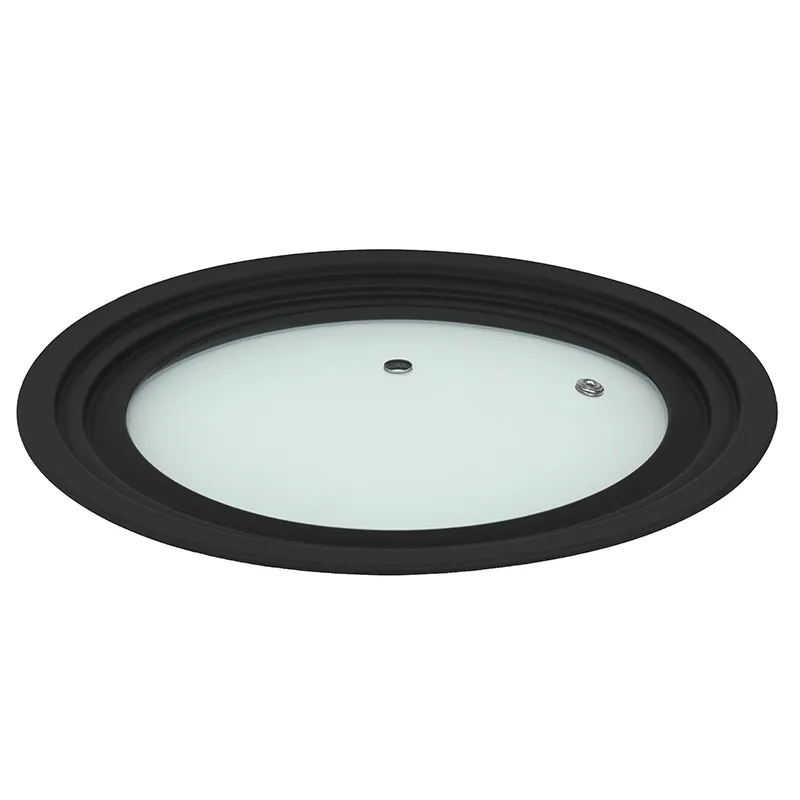
Related Search
Related Search- C type glass lid manufacturing
- glass lid professional manufacturer
- ball ideal jar with glass lid
- glass can with lid
- prestige omega deluxe granite 3 pcs with 1 glass lid
- Z glass lid
- dome silicone lid
- stainless steel glass with lid
- sedona stainless steel 6.5 qt multipurpose pan with glass lid
- staub 4 quart enameled cast iron cocotte with glass lid


