- Chinese
- French
- German
- Portuguese
- Spanish
- Russian
- Japanese
- Korean
- Arabic
- Irish
- Greek
- Turkish
- Italian
- Danish
- Romanian
- Indonesian
- Czech
- Afrikaans
- Swedish
- Polish
- Basque
- Catalan
- Esperanto
- Hindi
- Lao
- Albanian
- Amharic
- Armenian
- Azerbaijani
- Belarusian
- Bengali
- Bosnian
- Bulgarian
- Cebuano
- Chichewa
- Corsican
- Croatian
- Dutch
- Estonian
- Filipino
- Finnish
- Frisian
- Galician
- Georgian
- Gujarati
- Haitian
- Hausa
- Hawaiian
- Hebrew
- Hmong
- Hungarian
- Icelandic
- Igbo
- Javanese
- Kannada
- Kazakh
- Khmer
- Kurdish
- Kyrgyz
- Latin
- Latvian
- Lithuanian
- Luxembou..
- Macedonian
- Malagasy
- Malay
- Malayalam
- Maltese
- Maori
- Marathi
- Mongolian
- Burmese
- Nepali
- Norwegian
- Pashto
- Persian
- Punjabi
- Serbian
- Sesotho
- Sinhala
- Slovak
- Slovenian
- Somali
- Samoan
- Scots Gaelic
- Shona
- Sindhi
- Sundanese
- Swahili
- Tajik
- Tamil
- Telugu
- Thai
- Ukrainian
- Urdu
- Uzbek
- Vietnamese
- Welsh
- Xhosa
- Yiddish
- Yoruba
- Zulu
- Kinyarwanda
- Tatar
- Oriya
- Turkmen
- Uyghur

silicone glass lid factory in China
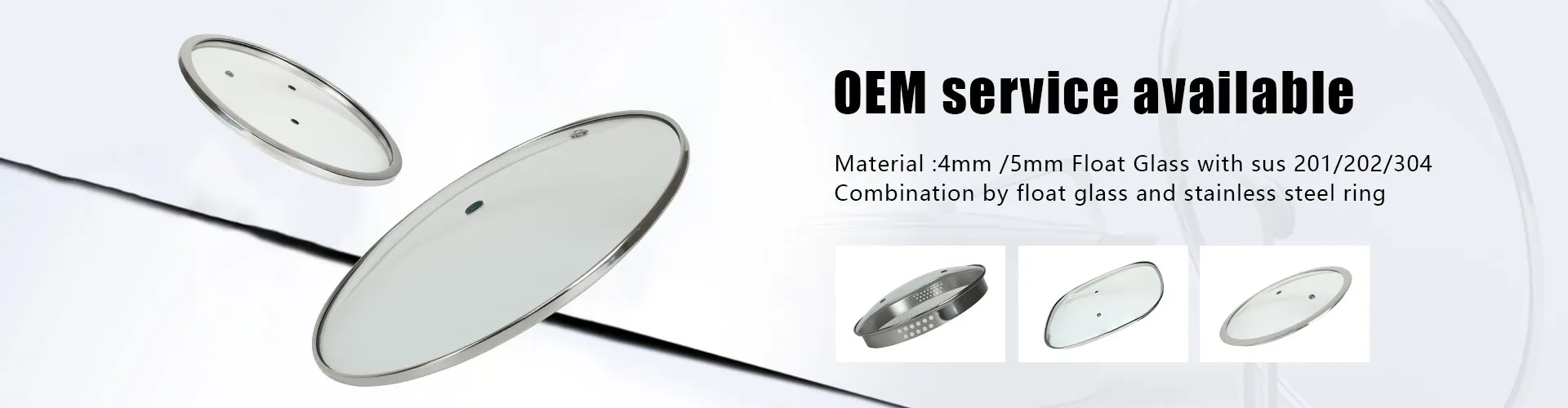
When you hear 'silicone glass lid factory in China', the immediate mental image for most buyers is a massive, automated plant churning out identical units. That's the first misconception. The reality is far more nuanced, often a patchwork of specialized workshops and final assembly lines. The term itself bundles two distinct components—tempered glass and food-grade silicone sealing rings—that frequently come from different specialist suppliers before converging at a final assembly point. Understanding this disconnect is the first step to sourcing effectively.
The Core Production Reality: It's About Assembly, Not Monoliths
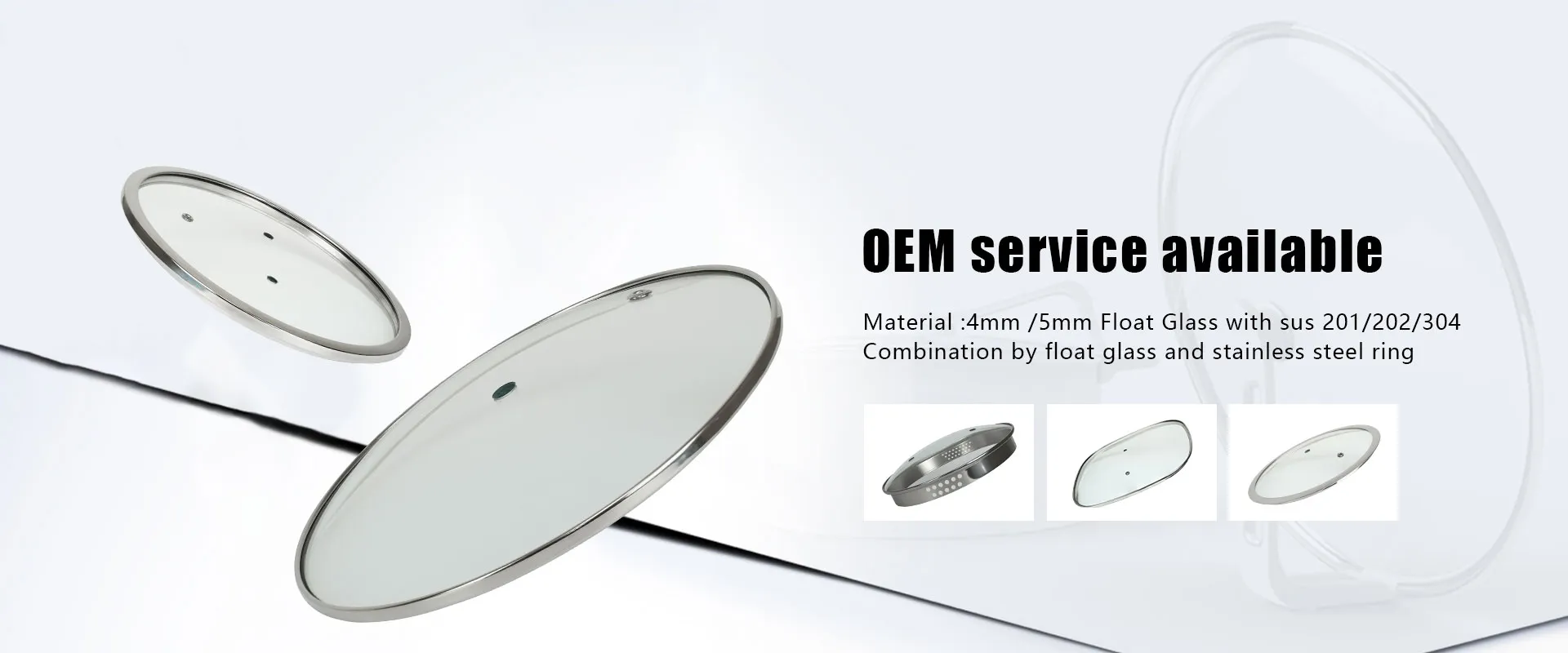
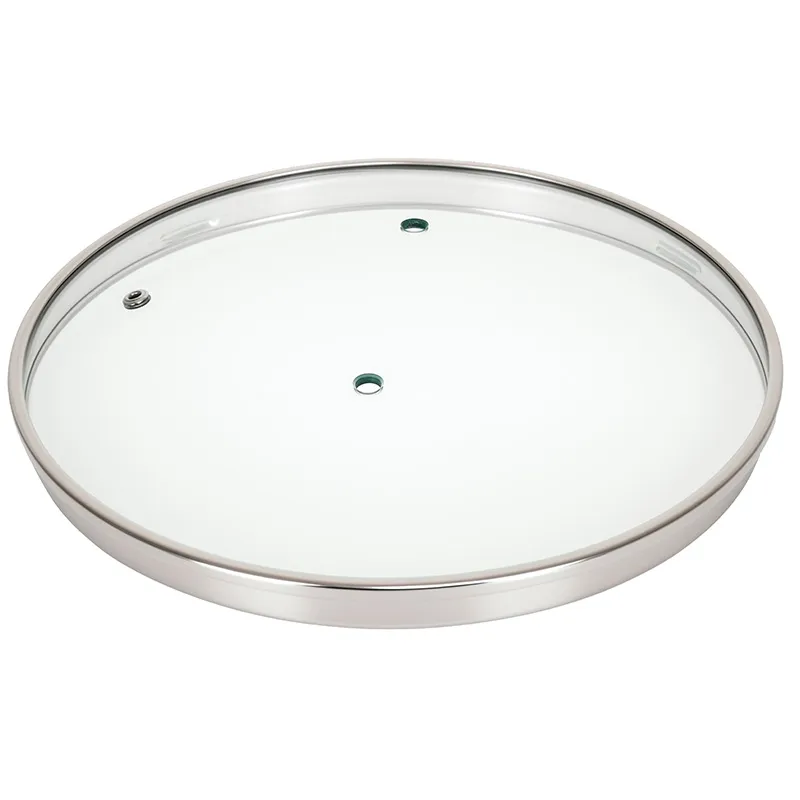
True dedicated factories handling both glass tempering and silicone molding from raw material to finished lid under one roof are rare. More common is the model you see with operations like EUR-ASIA COOKWARE CO.,LTD. Their site, https://www.glass-lid.com, clearly states their specialization in household glass. Their 15 million piece annual output is impressive, but note the focus: tempered glass lid and other glass products. The silicone ring? That's often sourced. Their strength is in the glass—cutting, edging, tempering—and the final assembly. This isn't a shortcoming; it's the industry norm. A factory's real skill lies in qualifying and integrating these component streams reliably.
I've visited facilities in places like Shandong's Taian City, where EUR-ASIA is based. The zone is dense with glass processors. You might see one building housing the tempering furnaces and CNC edging machines, with racks of glass discs everywhere. The silicone seals arrive in bulk from a partner an hour away, each batch accompanied by SGS reports for food contact and heat resistance. The assembly line is deceptively simple: workers fitting rings, sometimes adding a stainless steel knob or clamp, inspection, packing. The critical control points are the glass edge quality (no micro-chips) and the bond between silicone and glass—often using a high-temp adhesive that needs perfect curing. A lapse here means the seal fails after a few dishwasher cycles.
This segmented process creates a key vulnerability: supply chain coordination. A delay in silicone compound delivery, or a batch of glass with inconsistent thickness, can bottleneck the entire silicone glass lid factory output. The best factories don't just manufacture; they orchestrate. They maintain buffer stocks of critical components and have backup suppliers. From EUR-ASIA's description of exporting over 90% of products to stringent markets like Germany and Japan, you can infer they've mastered this logistics ballet. That export percentage is a solid proxy for consistent quality control systems.
Quality Benchmarks and the Feel Test
Beyond specs on paper, there's a tactile professionalism. A well-made lid has a certain heft—the glass is uniformly thick (usually 3-5mm tempered). The silicone ring isn't just slapped on; it sits flush in a precisely machined groove on the glass edge. I recall a sample from a new supplier a few years back. The specs were perfect: 300°C heat resistance, FDA-grade silicone, etc. But the ring had a slight twist in its seating, creating a barely visible gap. In a steam test, it condensed water unevenly. That's the kind of defect a datasheet misses but a seasoned product manager spots instantly. It speaks to mold precision and assembly diligence.
Another critical, often overlooked, detail is the knob or handle attachment. For a silicone glass lid destined for oven use, the knob material must have a similar thermal expansion coefficient to the glass to avoid cracking under repeated heating cycles. I've seen failures where a metal knob bonded with a low-grade epoxy simply detached after a dozen oven runs. The solution? Either use a high-temperature silicone-based adhesive system or opt for a stainless steel clamp-on style handle that avoids direct bonding. Factories with extensive export experience, like the one mentioned earlier with its reach into Europe, typically have this figured out and offer these as standard options.
Dishwasher safety is a whole other arena. It's not just about the silicone resisting detergents. It's about the combined effect of hot water jets and thermal shock on the glass-silicone bond. A reliable factory will have a brutal, accelerated testing protocol—cycling lids through commercial-grade dishwashers dozens of times. You learn to ask for video evidence of this, not just a certificate. The real test is whether the seal remains pliable and fully adhered after the test.
Sourcing Pitfalls and the Communication Gap
One major pitfall is fixating solely on unit price. A quote that's 10% lower often means corners cut in the silicone compound (using filler materials that reduce elasticity) or in the glass tempering process (leading to higher potential for spontaneous breakage). The initial savings evaporate with a 2% higher return rate. I learned this the hard way on an early order, opting for a competitive supplier. The lids passed initial inspection, but field reports came in about seals hardening and cracking within six months. The root cause was inferior silicone. The cost of replacements and lost goodwill far outweighed the upfront saving.
Communication is another layer. When you discuss a silicone glass lid factory, you must be hyper-specific. Don't just say silicone ring. Specify durometer (shore hardness, typically around 50A for a good balance of seal and flexibility), color fastness requirements (will it stain with turmeric?), and any certifications like LFGB or FDA. For the glass, clarify the edge finish: fully polished, seamed, or flat polish? Each has different cost and feel. A professional factory will ask these questions. If they don't, it's a red flag. The company profile of EUR-ASIA COOKWARE, for instance, explicitly categorizes low, medium, and high-level products. This honest stratification is useful—it signals they understand market tiers and can guide you to the appropriate specification for your target segment.
Lead times are frequently optimistic. A factory might quote 30 days for a new mold and production run. In practice, mold debugging for the silicone component alone can take two weeks. Then there's sample approval. Building in a 20-30% time buffer is standard practice for anyone who's been burned before. The high-output factories with established lines for export, like the one with 90+ employees in Taian, tend to be more realistic because they run on tighter schedules for their European clients.
The Export-Oriented Advantage
There's a tangible difference between a factory that primarily serves the domestic market and one built for export. The latter's entire system is geared toward documentation, compliance, and batch traceability. Visiting https://www.glass-lid.com, the emphasis on export destinations like Germany, Switzerland, and Japan is telling. These markets have some of the world's most rigorous standards for food-contact materials. A factory consistently serving them has likely internalized protocols for material segregation, production cleanliness, and lab testing that surpass generic ISO standards. Their packing will be robust for ocean freight, not just domestic trucking.
This export focus also shapes product development. They're more likely to have experience with different regional preferences—the heavier, knob-style lids preferred in Southern Europe versus the minimalist, low-profile clamps popular in Scandinavia. They might even stock molds for less common diameters. This isn't just about manufacturing; it's about product library depth. For a buyer, this means shorter development cycles and lower mold costs if a standard design can be adapted.
However, this specialization can sometimes make them less flexible on very small, experimental orders. Their efficiency is in volume runs. It's a trade-off. For a startup, working with a large export-focused factory in China might mean higher MOQs. The workaround is often to tap into their existing catalog for a stock item before commissioning a fully custom design.
Final Thoughts: Evaluating the Real Deal
So, how do you cut through the noise? First, move beyond Alibaba storefronts. Request a virtual tour focusing on the glass tempering line and the assembly station. Ask for audit reports (not just certificates) from recognized third parties. Second, request physical samples from their standard range—not just one, but a few. Test them destructively at home: freeze them, bake them, run them through the dishwasher relentlessly. The failure point tells you everything.
Finally, judge by the questions they ask you. A competent factory manager will probe about your market, your distribution channel (retail vs. professional kitchen), and your price point to recommend the right material grade. They'll be transparent about their limitations—if the silicone color you want affects curing time, they should tell you. It's this collaborative, problem-solving approach, rather than a mere yes-we-can attitude, that marks a true professional partner in the silicone glass lid manufacturing space.
The landscape is complex, but not opaque. It rewards hands-on engagement and a willingness to understand the process behind the product. The goal isn't to find the cheapest source, but the most predictably reliable one. And often, that reliability is baked into the operational rhythm of an export-oriented, integrated facility that has learned its lessons across thousands of containers shipped worldwide.
Related Products
Related Products