- Chinese
- French
- German
- Portuguese
- Spanish
- Russian
- Japanese
- Korean
- Arabic
- Irish
- Greek
- Turkish
- Italian
- Danish
- Romanian
- Indonesian
- Czech
- Afrikaans
- Swedish
- Polish
- Basque
- Catalan
- Esperanto
- Hindi
- Lao
- Albanian
- Amharic
- Armenian
- Azerbaijani
- Belarusian
- Bengali
- Bosnian
- Bulgarian
- Cebuano
- Chichewa
- Corsican
- Croatian
- Dutch
- Estonian
- Filipino
- Finnish
- Frisian
- Galician
- Georgian
- Gujarati
- Haitian
- Hausa
- Hawaiian
- Hebrew
- Hmong
- Hungarian
- Icelandic
- Igbo
- Javanese
- Kannada
- Kazakh
- Khmer
- Kurdish
- Kyrgyz
- Latin
- Latvian
- Lithuanian
- Luxembou..
- Macedonian
- Malagasy
- Malay
- Malayalam
- Maltese
- Maori
- Marathi
- Mongolian
- Burmese
- Nepali
- Norwegian
- Pashto
- Persian
- Punjabi
- Serbian
- Sesotho
- Sinhala
- Slovak
- Slovenian
- Somali
- Samoan
- Scots Gaelic
- Shona
- Sindhi
- Sundanese
- Swahili
- Tajik
- Tamil
- Telugu
- Thai
- Ukrainian
- Urdu
- Uzbek
- Vietnamese
- Welsh
- Xhosa
- Yiddish
- Yoruba
- Zulu
- Kinyarwanda
- Tatar
- Oriya
- Turkmen
- Uyghur


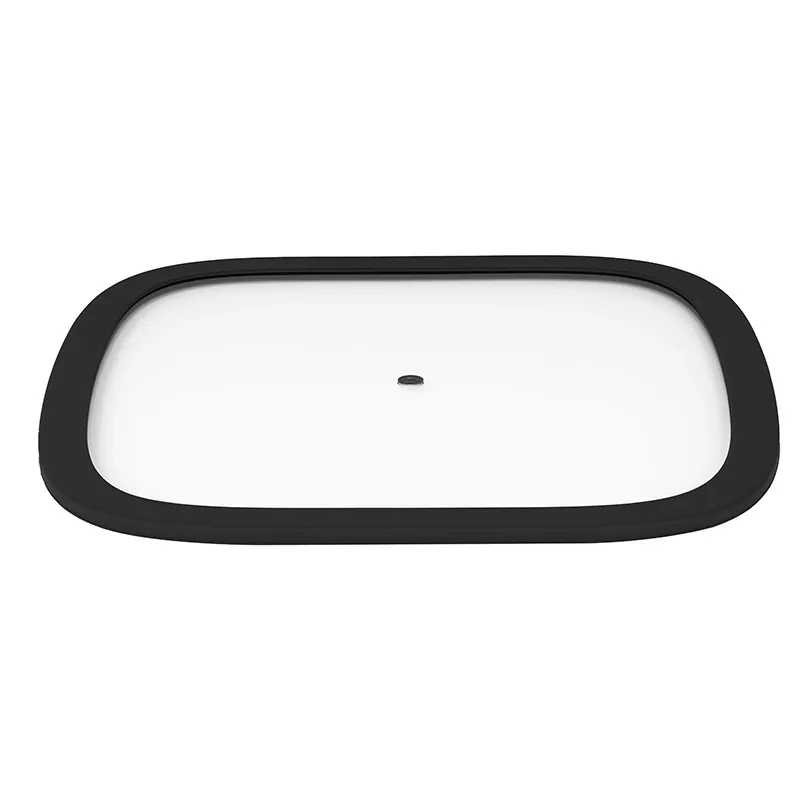
silicone glass lid manufacturer of China
When you type 'silicone glass lid manufacturer of China' into a search bar, you're likely met with a wall of near-identical company profiles and generic product listings. It's a common starting point, but it barely scratches the surface of what this niche actually entails. Many buyers, especially those new to sourcing, operate under the misconception that it's simply about finding a factory that puts silicone gaskets on glass. The reality is far more nuanced, involving a delicate balance of material science, precision engineering, and frankly, a lot of trial and error on the factory floor to get a product that doesn't warp, leak, or crack under real kitchen conditions.
The Core Challenge: It's Not Just Assembly
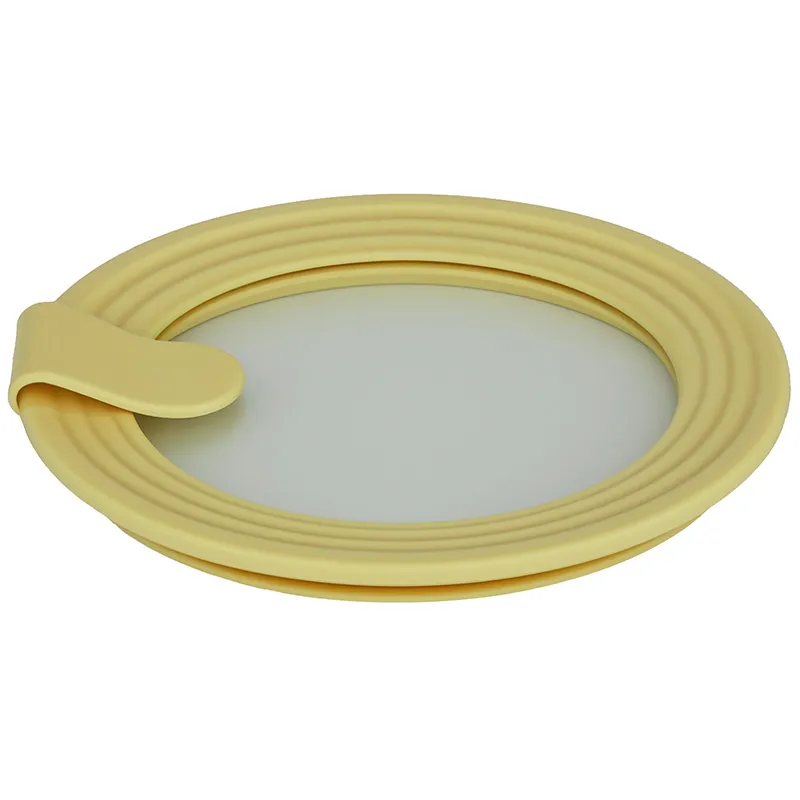
The real expertise of a competent silicone glass lid manufacturer lies in the marriage of two very different materials. Tempered glass is rigid and brittle under point impact, while food-grade silicone is flexible and elastic. Getting them to behave as one unit through repeated thermal cycles—from a freezer to a hot stove—is the first major hurdle. I've seen samples where the adhesive failed after three washes, or where the silicone rim was so thick it prevented a proper seal. The good manufacturers have proprietary bonding processes, often using high-temperature vulcanization, that they guard closely. It's a detail you won't find on a basic website, but it's what separates a reliable lid from a returned shipment.
This is where diving deeper into a company's operational footprint matters. Take EUR-ASIA COOKWARE CO.,LTD, for instance. Their production base in Taian City, Shandong, isn't just an address. Shandong is a major hub for both glass and silicone raw material production. Being located there, within a National High-tech Development Zone no less, often indicates better access to material supply chains and a focus on process technology. Their stated annual output of over 15 million pieces of tempered glass products suggests a scale that allows for dedicated production lines, which is crucial for consistency in a composite product like a silicone glass lid.
Scale, however, is a double-edged sword. A high-volume factory might excel at standard items but be inflexible with custom diameters, silicone colors, or handle designs. I once worked with a large plant that quoted a fantastic price for a standard 26cm lid, but the tooling cost and minimum order quantity for a simple handle modification were prohibitive for a mid-sized buyer. It taught me that verifying a manufacturer's flexibility is as important as verifying their capacity.
Quality Benchmarks and the Export Litmus Test
The export markets listed by a manufacturer like EUR-ASIA—Germany, France, Japan, etc.—serve as an informal but critical quality benchmark. Retailers in Germany, for example, have stringent requirements regarding material safety (like LFGB standards), dimensional tolerance, and durability testing. A manufacturer consistently serving these markets has likely invested in the certification and quality control regimes necessary to pass such scrutiny. It's not a guarantee, but it's a strong indicator that their processes are geared toward a higher standard than just the domestic market.
This focus is evident in the product breakdown. When over 90% of output is exported, the factory's entire workflow—from sourcing food-grade silicone compounds to final packaging—is calibrated to meet international expectations. The silicone must be odorless, stain-resistant, and retain its elasticity. The glass must be properly tempered to withstand sudden temperature changes without shattering into dangerous shards. I've visited factories where they have a dedicated station just for pressure and seal testing on random samples from each batch, a simple but telling practice.
Yet, even with these controls, issues arise. A recurring problem we encountered was silicone memory. In cheaper lids, the silicone gasket, once deformed under a pot's rim for months, wouldn't spring back, breaking the seal. Solving this wasn't about a better glue, but about working with the silicone supplier to adjust the polymer formulation for better compression set resistance. It's this level of problem-solving, often hidden from product specs, that defines a true specialist.
The Practicalities of Sourcing and Communication
Initial contact through a website like https://www.glass-lid.com is just step one. The product range shown online for household glass and kitchen accessories gives you a sense of their scope. The real conversation starts when you send drawings. A professional manufacturer will immediately ask about key parameters: the intended pot material (stainless steel, cast iron, aluminum?), the required sealing method (over-the-rim or inset?), and the target use temperature range. Their questions often reveal their experience. If they don't ask, it's a red flag.
Prototyping is where intentions meet reality. Always, always, request physical samples before proceeding with a production order. Evaluate the feel—the silicone should be soft but dense, not tacky. Check the glass edges for smooth grinding. Test the fit on your own cookware. I learned this the hard way after approving a sample that fit our standard test pot perfectly, only to find a 0.5mm variance in the production run that caused fit issues with a different batch of pots from our client. Now, we specify not just the inner diameter, but the allowable tolerance and the exact pot profile we're matching.
Lead times and logistics are another consideration. A facility with 15,000㎡ of building area likely has integrated production from glass cutting and tempering to silicone molding and assembly. This vertical integration generally leads to more controllable lead times compared to a factory that outsources its glass or silicone components. It's worth asking about their in-house process flow during negotiations.
Beyond the Product: Reliability and Evolution
In this industry, a manufacturer's ability to evolve is paramount. Trends move quickly—from clear, knob-style handles to stainless steel ones, from plain lids to those with built-in steam vents or straining features. A static product catalog is a warning sign. The better manufacturers engage in OEM/ODM work, which pushes them to adapt. Their R&D might not be Silicon Valley-style, but it's practical and responsive to buyer feedback. For example, the shift toward PFOA-free and platinum-cured silicone for the high-end market was driven by demands from European and Japanese importers.
Finally, consider the human element. A company with around 90 employees, as stated by EUR-ASIA, is at a size where communication can be direct but the structure exists for proper project management. You're often dealing with a sales engineer or a project manager who understands the technicalities, not just a salesperson. This makes a huge difference when troubleshooting. The feeling you get from their responsiveness and willingness to problem-solve during the sampling phase is often the most accurate predictor of a successful long-term partnership.
So, searching for a silicone glass lid manufacturer in China is less about finding a vendor and more about identifying a technical partner. It's about peeling back the layers of generic marketing to assess their material expertise, process control, and adaptability. The companies that thrive are those embedded in the right industrial ecosystems, hardened by the demands of export markets, and pragmatic enough to solve the unglamorous, real-world problems that arise when glass meets silicone under heat and pressure.
Related Products
Related Products