- Chinese
- French
- German
- Portuguese
- Spanish
- Russian
- Japanese
- Korean
- Arabic
- Irish
- Greek
- Turkish
- Italian
- Danish
- Romanian
- Indonesian
- Czech
- Afrikaans
- Swedish
- Polish
- Basque
- Catalan
- Esperanto
- Hindi
- Lao
- Albanian
- Amharic
- Armenian
- Azerbaijani
- Belarusian
- Bengali
- Bosnian
- Bulgarian
- Cebuano
- Chichewa
- Corsican
- Croatian
- Dutch
- Estonian
- Filipino
- Finnish
- Frisian
- Galician
- Georgian
- Gujarati
- Haitian
- Hausa
- Hawaiian
- Hebrew
- Hmong
- Hungarian
- Icelandic
- Igbo
- Javanese
- Kannada
- Kazakh
- Khmer
- Kurdish
- Kyrgyz
- Latin
- Latvian
- Lithuanian
- Luxembou..
- Macedonian
- Malagasy
- Malay
- Malayalam
- Maltese
- Maori
- Marathi
- Mongolian
- Burmese
- Nepali
- Norwegian
- Pashto
- Persian
- Punjabi
- Serbian
- Sesotho
- Sinhala
- Slovak
- Slovenian
- Somali
- Samoan
- Scots Gaelic
- Shona
- Sindhi
- Sundanese
- Swahili
- Tajik
- Tamil
- Telugu
- Thai
- Ukrainian
- Urdu
- Uzbek
- Vietnamese
- Welsh
- Xhosa
- Yiddish
- Yoruba
- Zulu
- Kinyarwanda
- Tatar
- Oriya
- Turkmen
- Uyghur


silicone glass lids maker
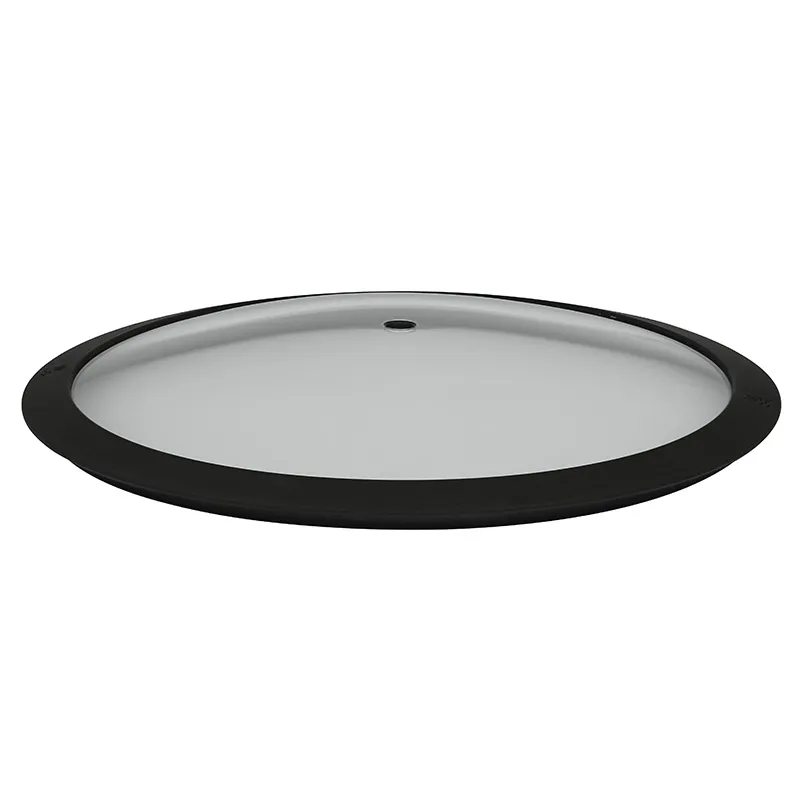
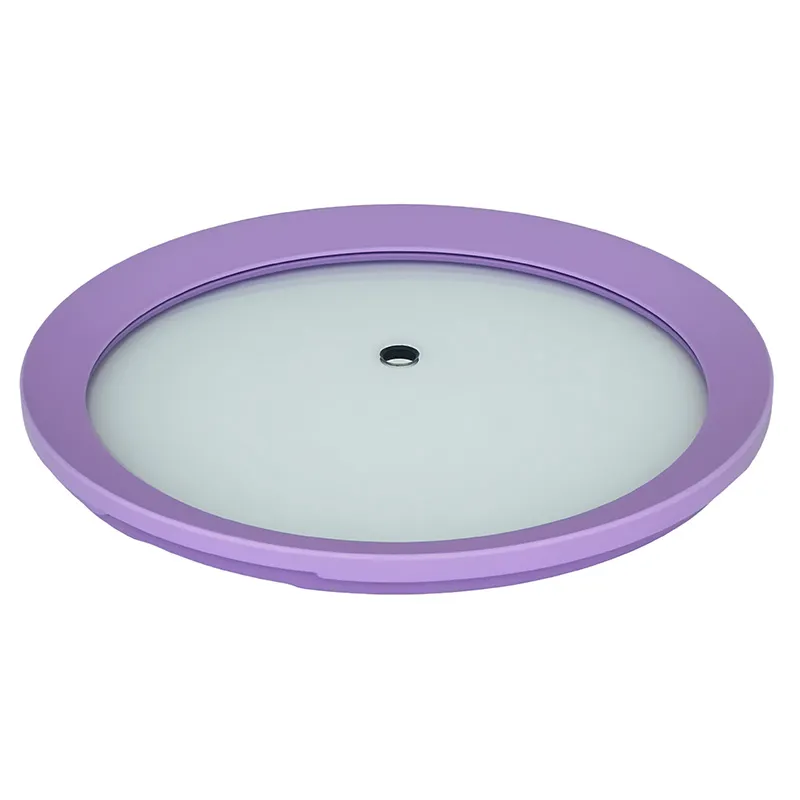
When you hear 'silicone glass lids maker', most people picture a factory stamping out identical parts. That's the first misconception. It's not just about molding silicone and cutting glass; it's about marrying two materials with completely different personalities—the rigid, unforgiving nature of tempered glass and the flexible, temperature-sensitive character of food-grade silicone. The real expertise lies in the interface, that bonded seam. I've seen too many startups fail because they sourced a great glass lid and a great silicone gasket separately, assuming they'd just fit together. They don't.
The Core Challenge: It's a Bonding Issue, Literally
The primary technical hurdle isn't the molding or the tempering, though those have their own complexities. It's the adhesive and the application process. You need an adhesive that can withstand dishwasher cycles, oven temperatures (for those lids rated for such use), and freezer conditions without degrading, yellowing, or losing its bond. More importantly, it must be absolutely food-safe after curing. We went through about seven different adhesive formulations with a chemical supplier before landing on one that passed our accelerated aging tests and EU food contact regulations. The failure mode was usually the silicone peeling back from the glass edge after 200+ dishwasher cycles, leaving a gap where water and grime would collect.
Application is another beast. It's not a simple bead of glue. The adhesive needs to be applied to the silicone channel in a specific pattern—often a continuous serpentine or double-bead—before the glass is pressed in. Any break in the bead, any air bubble, creates a weak point. Early on, we tried manual application. Inconsistent results, wasted materials. Automated dispensing systems solved the consistency but introduced new headaches: nozzle clogging, viscosity changes with room temperature, and the need for perfect fixture alignment. A visit to a proficient manufacturer like EUR-ASIA COOKWARE CO.,LTD. (you can see their operation overview at glass-lid.com) is instructive. Their scale—an annual output of over 15 million pieces—means they've likely ironed out these process kinks. Their specialization in tempered glass lids for a global export market suggests they've had to meet stringent durability standards demanded by European buyers, which directly speaks to this bonding challenge.
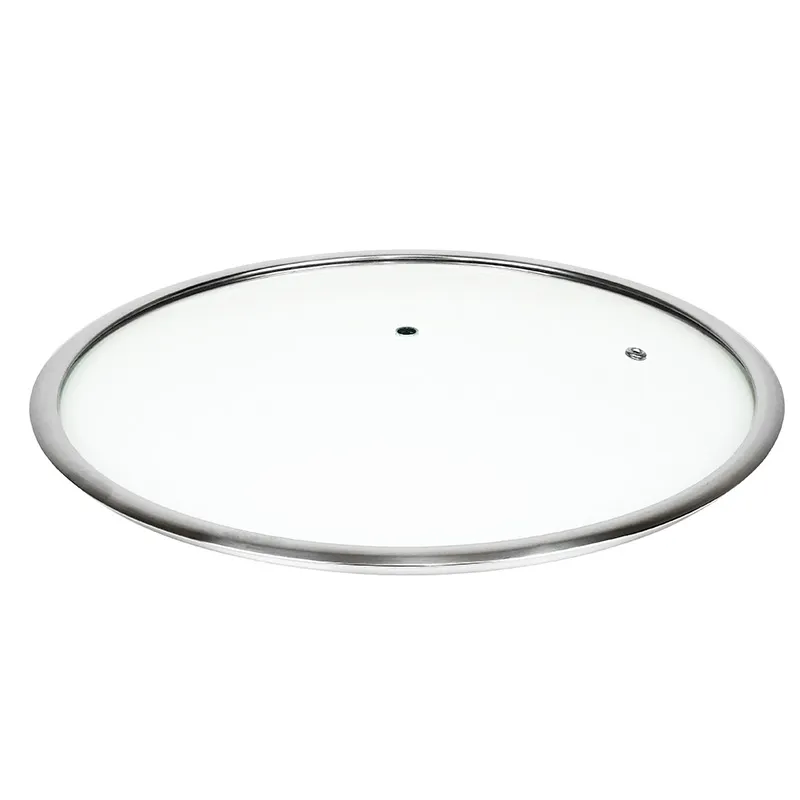
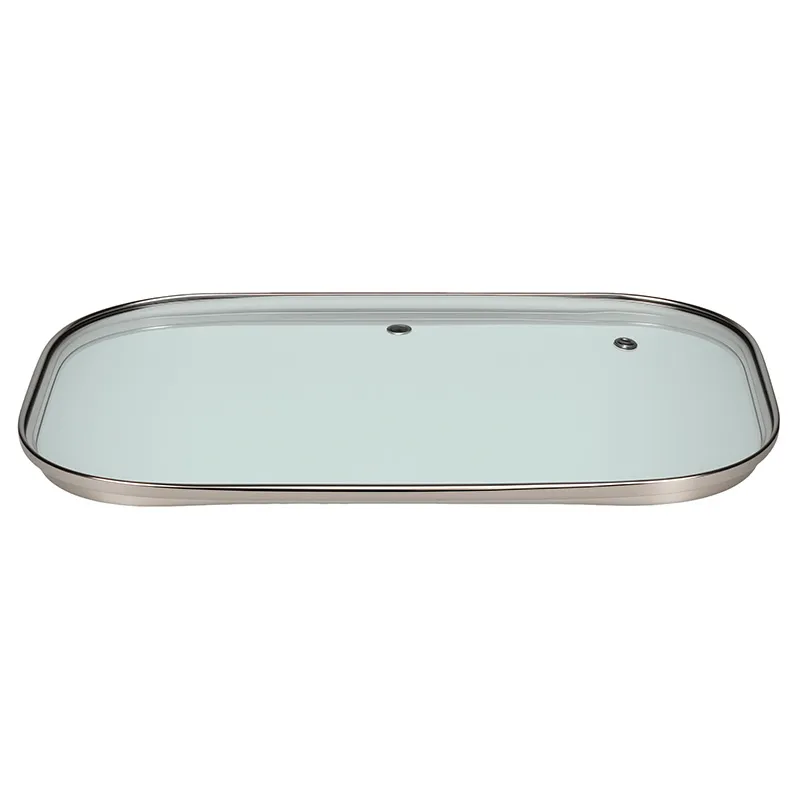
And the glass itself? It's not just any glass. It's usually clear, tempered soda-lime glass, often 3-4mm thick. The edge grinding is critical. It can't be sharp, but a too-rounded edge can affect the bonding surface area. The tempering process must be even to prevent spontaneous breakage from thermal shock. I recall a batch from a secondary supplier where the glass lids would inexplicably shatter when placed on a cool granite countertop straight from a warm dishwasher. The culprit was uneven tempering creating internal stress points. The silicone glass lids maker is ultimately responsible for the entire assembly's performance, so vetting the glass source is as important as controlling the silicone molding.
Silicone Isn't Just a Rubber Ring
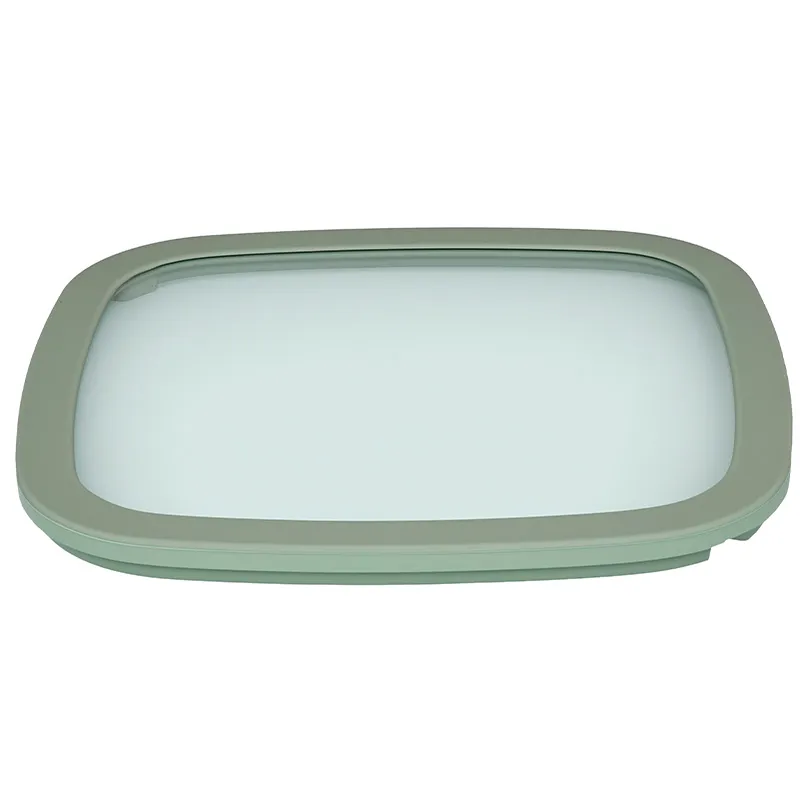
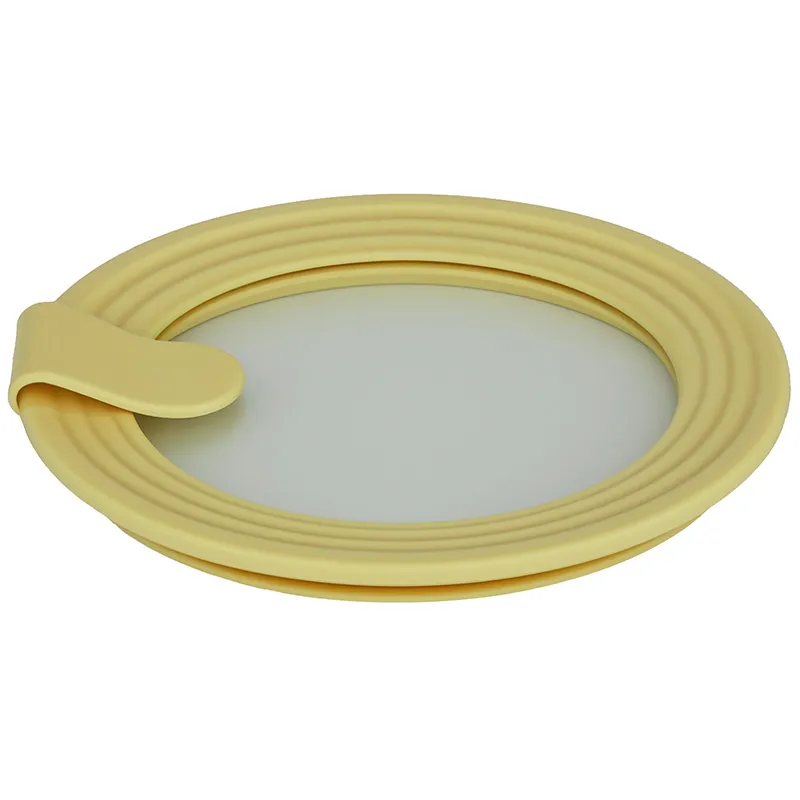
The silicone component is deceptively simple. Food-grade platinum-cure silicone is the standard for high-end products because it's more stable and odorless compared to peroxide-cure. But the durometer (hardness) matters immensely. Too soft, and the lid won't seat firmly on the pot, losing its seal. Too hard, and it becomes difficult to put on or take off, and may not conform to slight imperfections in the cookware rim. We settled on a Shore A scale range between 50-60 for most applications after some frustrating field tests with prototypes that were either too floppy or too stiff.
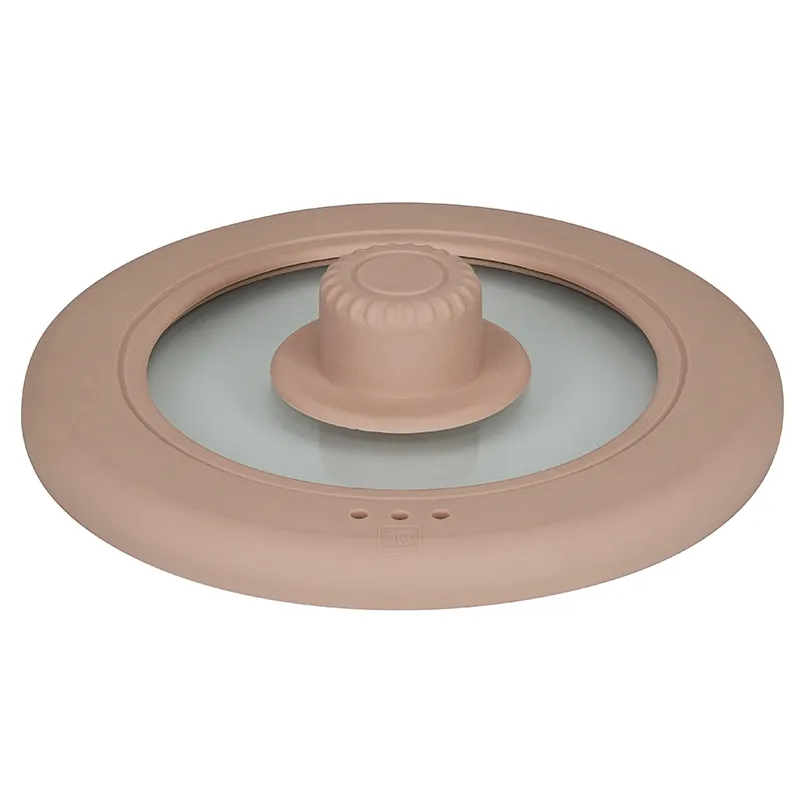
Color and aesthetics are a whole other dimension. Pigments must be heat-stable and non-migrating. A vibrant red lid that stains a white pot after a few uses is a disaster. And then there's the design of the grip or handle. It's often over-molded onto the main silicone seal. This requires a two-shot molding process, which is more expensive but creates a seamless, hygienic handle. Cheaper versions might glue a separate plastic knob onto the silicone, which is a point of failure and a cleaning nightmare. Looking at the product range of a specialized exporter, you can often infer their manufacturing capability from these details. A company like EUR-ASIA COOKWARE, with its focus on medium to high-level household products and exports to markets like Germany and Japan, is almost certainly using integrated, multi-material molding for a superior finish.
Durability testing is brutal. It's not just does it fit. It's thermal cycling (freezer to oven, if applicable), dishwasher detergent resistance, staining tests with turmeric and tomato sauce, and mechanical fatigue tests—simulating putting on and taking off the lid thousands of times. The silicone can degrade, become less elastic, or the surface can become tacky. A reliable silicone glass lids maker will have a lab, or at least a rigorous partnership with one, running these tests continuously. It's the only way to catch a bad batch of raw silicone compound before it becomes 10,000 faulty lids.
The Reality of Sourcing and Scale
Going from a prototype to a container-load order exposes all the weak links. Silicone raw material prices fluctuate with the silicon metal market. Lead times for custom molds can be 8-12 weeks. And quality control at scale is a different game. You move from inspecting every piece to statistical process control. You're looking for defects per million, not per hundred. This is where the infrastructure of an established maker becomes critical. Their production base in Taian's High-tech Development Zone, with 15,000㎡ of building space, isn't just about capacity; it's about having integrated processes under one roof—glass cutting/tempering, silicone compounding and molding, adhesive application, assembly, and packaging. This control reduces variables.
Export compliance is a maze. REACH, FDA, LFGB... each market has its own food contact material regulations. The documentation—certificates of analysis, material safety data sheets, compliance declarations—is as important as the product. A maker whose business is 90% export, as stated in EUR-ASIA COOKWARE's intro, has this bureaucracy down to a science. They have to. You can't ship to Switzerland or Brazil without the right paperwork. This backend capability is a huge, often overlooked, part of what you're buying from a professional silicone glass lids maker.
Then there's the customization for clients. A retailer might want their logo embossed on the silicone handle, or a specific glass shape to match their proprietary cookware line. This requires flexibility in the molding and glass-cutting stages. Not every factory can or will do small custom runs efficiently. It's a balance between standardized processes for cost and the agility to accommodate client-specific designs. The fact that they segment low, medium, and high-level products suggests a range of capabilities to handle different market segments and customization requests.
Common Pitfalls and Unseen Details
One pitfall is ignoring the end-user's environment. A lid designed for a European induction hob (which can get very hot, very fast) might need a slightly different glass thickness or silicone formulation than one for a North American gas range. The thermal mass and heat distribution are different. We learned this after a batch of lids developed tiny micro-cracks around the edge after repeated high-heat induction use, even though they passed standard oven tests.
Another detail is the resting position design. When you flip the lid over, does it sit flat or does the silicone handle cause it to wobble? A wobbly lid is annoying when you're using it as a spoon rest or a small plate. Good design accounts for this. Sometimes it means a slight flat spot on the handle, or a specific contour to the silicone rim.
Packaging is the final, critical step. These lids need to be packed to prevent scratching the glass surface during transit. Individual pulp paper sleeves or PE foam protectors are common. But they also add cost. A maker focused on high-volume export will have optimized this—using just enough protection to ensure the product arrives intact without wasting material. It's a small thing, but getting a container of scratched lids is a massive, costly problem. Their annual output volume of 15 million pieces implies a highly refined and automated packaging line to handle that flow without damage.
Final Take: What Makes a Maker Credible
So, when evaluating a silicone glass lids maker, don't just ask for a price and a sample. Ask about their bonding process and adhesive certification. Ask for their standard testing protocol and failure rate data. Inquire about their mold maintenance schedule—worn molds produce flash (excess silicone) and dimensional inconsistencies. See if they have in-house tempering or if it's subcontracted (control is better in-house).
Companies that have weathered the demands of picky European and Asian markets, like the one referenced here exporting to Germany, Japan, and South Korea, have typically been forced to solve these problems. Their website, glass-lid.com, positions them squarely in this space of specialized, export-oriented glass kitchenware production. That specialization is key. It's different from a general housewares factory that makes a bit of everything.
Ultimately, a good lid feels seamless—literally and in use. The glass is clear and strong, the silicone is supple yet secure, the bond is invisible and permanent, and the whole unit performs quietly for years. That's the mark of a maker who understands the marriage of materials, not just the assembly of parts. It's a niche expertise, and it's what separates a commodity product from a reliable kitchen tool.
Related Products
Related Products