- Chinese
- French
- German
- Portuguese
- Spanish
- Russian
- Japanese
- Korean
- Arabic
- Irish
- Greek
- Turkish
- Italian
- Danish
- Romanian
- Indonesian
- Czech
- Afrikaans
- Swedish
- Polish
- Basque
- Catalan
- Esperanto
- Hindi
- Lao
- Albanian
- Amharic
- Armenian
- Azerbaijani
- Belarusian
- Bengali
- Bosnian
- Bulgarian
- Cebuano
- Chichewa
- Corsican
- Croatian
- Dutch
- Estonian
- Filipino
- Finnish
- Frisian
- Galician
- Georgian
- Gujarati
- Haitian
- Hausa
- Hawaiian
- Hebrew
- Hmong
- Hungarian
- Icelandic
- Igbo
- Javanese
- Kannada
- Kazakh
- Khmer
- Kurdish
- Kyrgyz
- Latin
- Latvian
- Lithuanian
- Luxembou..
- Macedonian
- Malagasy
- Malay
- Malayalam
- Maltese
- Maori
- Marathi
- Mongolian
- Burmese
- Nepali
- Norwegian
- Pashto
- Persian
- Punjabi
- Serbian
- Sesotho
- Sinhala
- Slovak
- Slovenian
- Somali
- Samoan
- Scots Gaelic
- Shona
- Sindhi
- Sundanese
- Swahili
- Tajik
- Tamil
- Telugu
- Thai
- Ukrainian
- Urdu
- Uzbek
- Vietnamese
- Welsh
- Xhosa
- Yiddish
- Yoruba
- Zulu
- Kinyarwanda
- Tatar
- Oriya
- Turkmen
- Uyghur

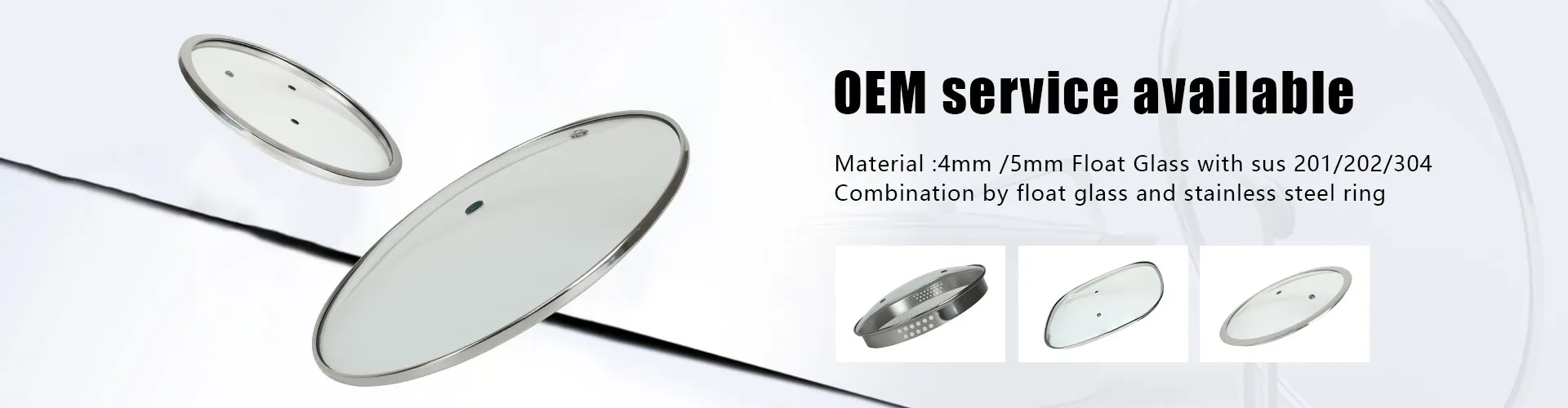
silicone lid exporter of China
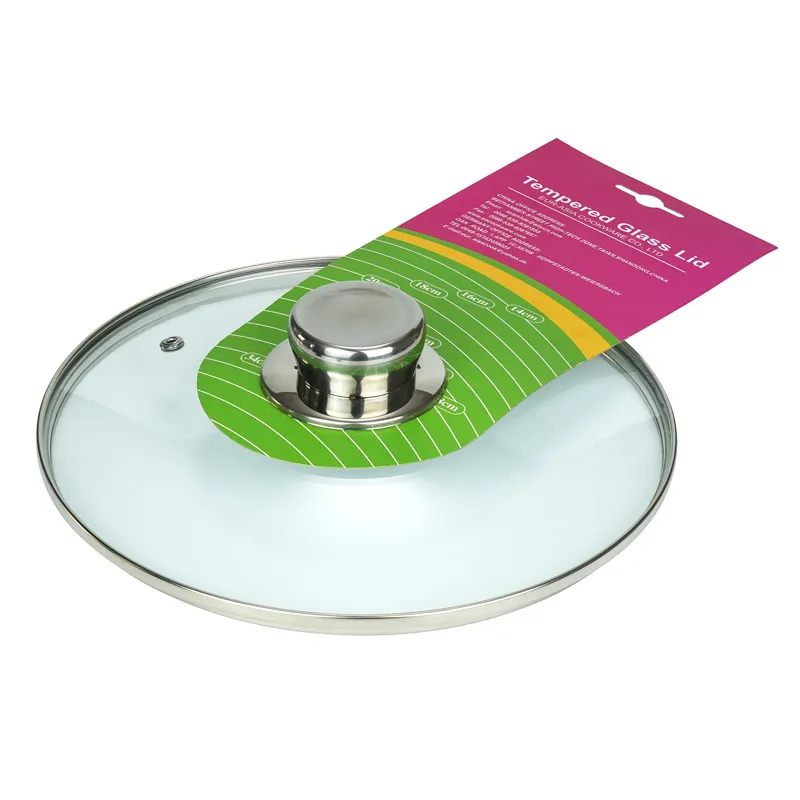
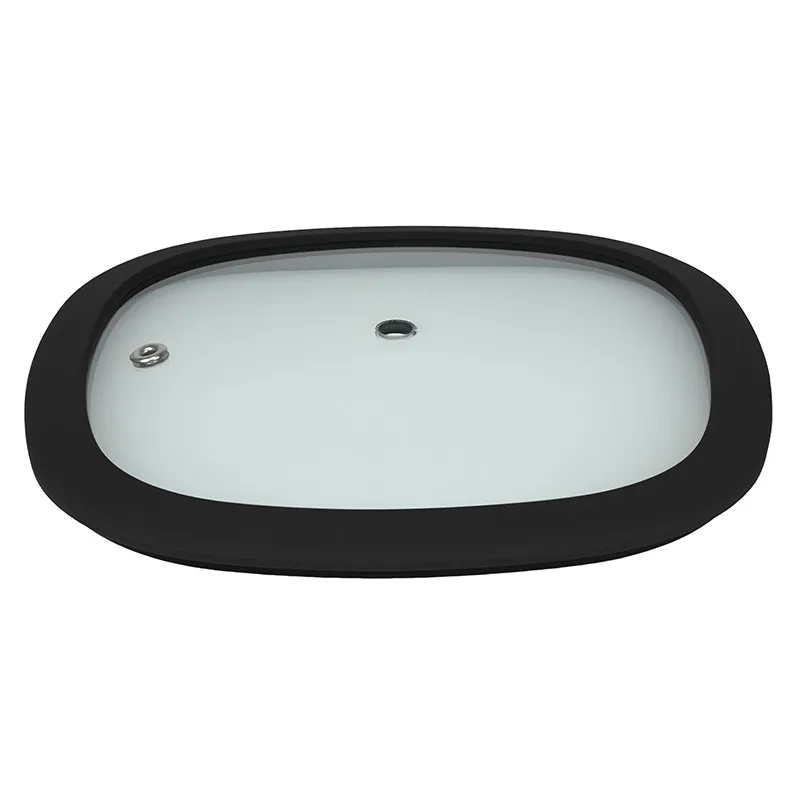
When you hear 'silicone lid exporter of China,' the immediate image is often a vast, homogenous manufacturing machine. That's the first misconception. In reality, it's a fragmented field where specialization is key, and the term 'exporter' itself can be misleading. Many so-called exporters are just trading companies with no real grip on production quality or lead times. The real players, the ones who survive repeated order cycles, are usually manufacturers who export directly, like EUR-ASIA COOKWARE CO.,LTD. They might be known for glass, but their foray into silicone accessories, including lids, comes from a deep understanding of kitchenware compliance and OEM/ODM workflows. It's not just about molding silicone; it's about knowing which grade resists tomato sauce stains, what durometer feels secure yet easy to peel, and how the lid's flange interacts with a glass container's rim—details that separate a sample that gets approved from one that gets rejected.
The Core Product: More Than Just a Lid
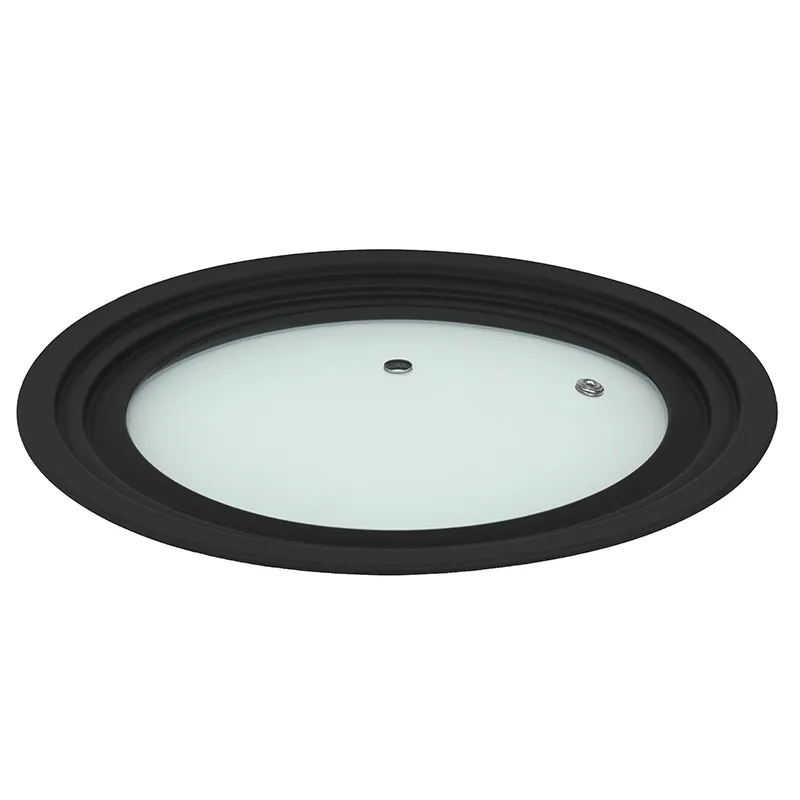
Let's talk about the product itself. A silicone lid isn't revolutionary, but its execution is everything. We're past the era of simple stretch lids. The demand now is for sets—multi-size lids that nest neatly, often paired with specific container lines from European retailers. The material sourcing is the first battleground. Food-grade platinum-cured silicone is the bare minimum for serious markets like Germany or France. I've seen buyers reject entire shipments because the supplier, trying to cut costs, used a peroxide-cured blend that left a faint odor. The testing reports, the FDA, LFGB, EU compliance documents—you need them ready, not as an afterthought. A company like EUR-ASIA, with its established export channel to Europe, gets this. Their infrastructure for producing high-volume, compliant glass products translates directly into a disciplined approach for silicone accessories.
The manufacturing nuance is in the molding and trimming. A clean, uniform seal ridge is critical. Inconsistent trimming leaves micro-burrs that compromise the seal and feel cheap. It's a detail often overlooked by new entrants. Furthermore, the color consistency across batches is a headache. Pantone codes are one thing, but achieving the same matte or semi-gloss finish in mint green across 50,000 units, and then again six months later, requires pigment mastery and process control. This is where a production base with real scale, like their 15,000㎡ facility, has an advantage. They have the volume to justify investing in better molds and color-mixing protocols.
Then there's the product ecosystem. A silicone lid exporter rarely sells just lids. It's usually part of a range: lids, spatulas, trivets, baking mats. The synergy is crucial. A buyer sourcing glass lids from EUR-ASIA's main site, https://www.glass-lid.com, will naturally inquire about silicone accessories for the same line. The ability to offer coordinated solutions—a glass container with a matching silicone lid—creates stickiness. It turns a transaction into a partnership.
The Export Reality: Compliance, Logistics, and Trust
Exporting isn't about shipping boxes; it's about navigating a maze of standards. For silicone, EU Regulation (EC) No 1935/2004 and the German LFGB are the gold standards. The migration tests are brutal. I recall a batch failing because the silicone absorbed colors from the printed cardboard packaging during long-term storage—a failure of the packaging supplier, not the lid itself, but the liability fell on us. This is why integrated manufacturers are safer. They control more of the chain. EUR-ASIA's experience, with over 90% of products exported to stringent markets, means their quality control system is already attuned to these pitfalls. They've likely built relationships with certified raw material suppliers, which is half the battle won.
Logistics for silicone products are deceptively simple. They're lightweight, but bulky. Air freight is prohibitively expensive for their value, so it's almost always sea freight. This means long lead times and container optimization. You can't just fill a container with lids; you mix them with other kitchenware to maximize cube utilization. This is another reason why being a multi-category supplier matters. You can consolidate a container with glass lids, silicone lids, and other accessories, offering the buyer better freight rates. The company's annual output of over 15 million pieces of glass products suggests they have this container-filling and logistics rhythm down pat.
Building trust is the intangible. It comes from consistent on-time delivery and transparent communication when problems arise. For instance, during the port congestion crisis a while back, the easy route was to blame the shipping line and go silent. The better approach was what experienced exporters did: provide daily updates, offer alternative routing even if it cost a bit more, and share the vessel tracking data proactively. This kind of response builds long-term relationships. When I see a company has sustained exports to over a dozen countries, including Japan and South Korea which have their own meticulous standards, it signals a foundational level of operational reliability.
Pitfalls and the Learning Curve
Not every venture is smooth. A common pitfall is underestimating the importance of tooling. A cheap mold might save $5,000 upfront, but it leads to flashing issues, slower cycle times, and inconsistent products that generate endless customer complaints. The investment in high-precision, multi-cavity molds is non-negotiable for volume orders. Another mistake is over-promising on customization. A buyer wants a unique embossed logo. It seems simple, but if it's a complex design, it can weaken the lid's structure or be impossible to de-mold cleanly. You need an in-house engineering team to assess feasibility, not just a salesperson saying yes.
Communication gaps are another killer. Food-grade silicone means different things to a supplier in Shandong and a buyer in Copenhagen. The former might think a generic certificate suffices; the latter demands specific test reports for nitrosamine content. The role of a competent exporter of China is to bridge this gap, to educate their own production team on these foreign requirements. It's a continuous process. I've had to mediate disputes where the product was physically perfect but failed documentation, causing the entire shipment to be held at customs. The loss was immense.
Finally, the market is shifting. Sustainability is no longer a buzzword. Buyers are asking about recycled silicone content, recyclability, and minimalist, plastic-free packaging. The forward-thinking manufacturers are already R&D-ing these areas. It's not just about being a supplier anymore; it's about being a development partner who can anticipate these trends.
Case in Point: The Integrated Manufacturer Advantage
This brings me back to the example of a company like EUR-ASIA COOKWARE CO.,LTD. Their profile is instructive. They are not a generic silicone lid factory. They are a kitchenware manufacturer with a specialization in glass, operating from a sizable base in a national high-tech zone. This matters. It suggests a certain level of operational sophistication and government recognition. Their move into silicone lids is a logical extension of their core business—providing complete kitchen storage solutions.
Their established export network, spanning Europe, Asia, and South America, is their biggest asset. It means they understand regional preferences. A lid for the Brazilian market might prioritize vibrant colors and cost-effectiveness, while one for Switzerland demands understated elegance and the highest eco-certifications. An exporter with a broad market view can tailor products and advice accordingly. Their website, glass-lid.com, clearly positions them as a producer and seller, not just a middleman. This vertical integration is what buyers increasingly seek for supply chain security.
So, when evaluating a silicone lid exporter of China, look beyond the Alibaba storefront. Look for evidence of real manufacturing depth, a history of dealing with your target market's compliance, and the ability to offer complementary products. The ones who last are those who see the lid not as a commodity, but as a component in a larger system of food preservation and kitchen organization. That's the level of thinking that turns a simple export order into a sustainable business stream. It's messy, detail-oriented work, but that's where the real opportunity lies.
Related Products
Related Products