
- Chinese
- French
- German
- Portuguese
- Spanish
- Russian
- Japanese
- Korean
- Arabic
- Irish
- Greek
- Turkish
- Italian
- Danish
- Romanian
- Indonesian
- Czech
- Afrikaans
- Swedish
- Polish
- Basque
- Catalan
- Esperanto
- Hindi
- Lao
- Albanian
- Amharic
- Armenian
- Azerbaijani
- Belarusian
- Bengali
- Bosnian
- Bulgarian
- Cebuano
- Chichewa
- Corsican
- Croatian
- Dutch
- Estonian
- Filipino
- Finnish
- Frisian
- Galician
- Georgian
- Gujarati
- Haitian
- Hausa
- Hawaiian
- Hebrew
- Hmong
- Hungarian
- Icelandic
- Igbo
- Javanese
- Kannada
- Kazakh
- Khmer
- Kurdish
- Kyrgyz
- Latin
- Latvian
- Lithuanian
- Luxembou..
- Macedonian
- Malagasy
- Malay
- Malayalam
- Maltese
- Maori
- Marathi
- Mongolian
- Burmese
- Nepali
- Norwegian
- Pashto
- Persian
- Punjabi
- Serbian
- Sesotho
- Sinhala
- Slovak
- Slovenian
- Somali
- Samoan
- Scots Gaelic
- Shona
- Sindhi
- Sundanese
- Swahili
- Tajik
- Tamil
- Telugu
- Thai
- Ukrainian
- Urdu
- Uzbek
- Vietnamese
- Welsh
- Xhosa
- Yiddish
- Yoruba
- Zulu
- Kinyarwanda
- Tatar
- Oriya
- Turkmen
- Uyghur

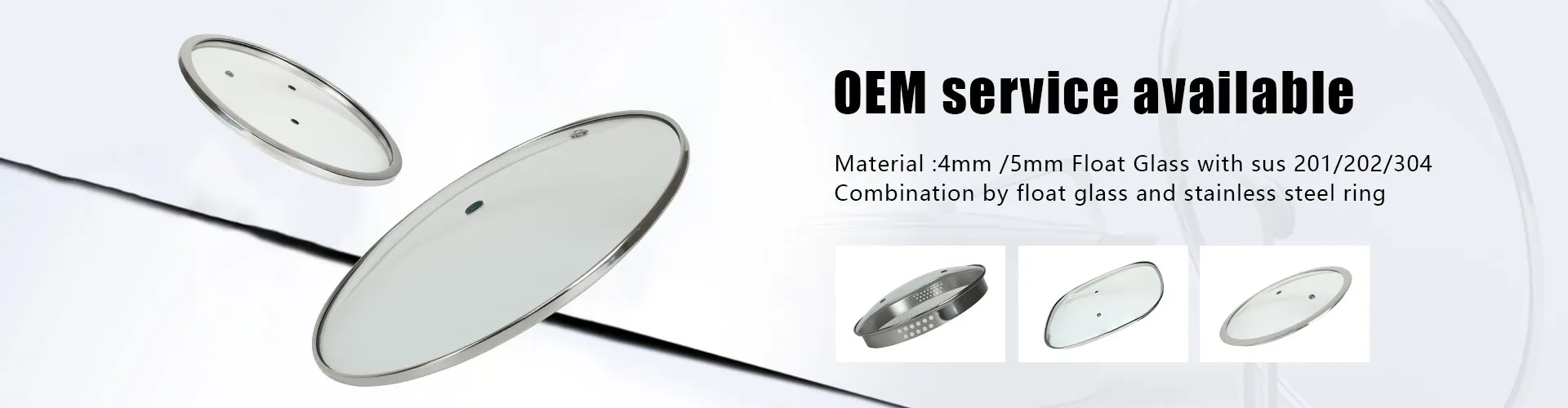
silicone lid manufacturer of China
When you hear 'silicone lid manufacturer of China', the immediate image is often a vast, homogenous industrial complex churning out identical products. That's the first misconception. The reality is far more fragmented and nuanced. It's not just about finding a factory; it's about identifying the specific cluster, the material compound expertise, and the often-overlooked capability for low-volume, high-mix production that many Western buyers desperately need but rarely articulate clearly. Many assume it's a simple commodity play, but the difference between a lid that warps at 220°C and one that remains pliable at -40°C is buried in the formulation and molding precision, details most generic sourcing agents gloss over.
The Core Clusters and Material Realities
You have to go where the expertise is. For food-grade silicone components, the action isn't spread evenly across China. Guangdong, specifically the Dongguan and Shenzhen periphery, and Zhejiang around Ningbo, are the traditional powerhouses. These regions grew up supporting electronics and small appliance industries, so their silicone processing—think seals, gaskets, keyboard pads—is top-notch. But that doesn't automatically make them ideal for silicone lid production. The transition from a small, dense gasket to a large, thin-walled, aesthetically critical lid is a leap. Tooling for lids requires massive plates and extremely precise temperature control to avoid flow marks and achieve consistent wall thickness. I've seen factories with brilliant small-part portfolios completely botch a 30cm lid prototype because their presses weren't sized for it.
The material itself is a minefield. Food-grade silicone is a starting point, not a guarantee. You have grades: generic mixed compound, platinum-cure for higher clarity and odor resistance, and then specialized high-temp or extra-flexible blends. A reliable silicone lid manufacturer will have established relationships with raw material suppliers like Bluestar or Shin-Etsu. The cheap guys? They might be using recycled or off-spec compound, which can leach or fail odor tests. I learned this the hard way early on: a batch of beautifully colored lids for a European client failed the EU's specific migration tests. The factory had swapped to a cheaper stabilizer to save 5 cents per kilo. The cost of re-production and air-freighting replacements erased the entire project's profit.
This is where vertical integration matters. The best operations we work with control, or at least tightly audit, their compounding. They'll have a small lab for basic durometer testing and bake-off odor tests. It's a sign they care about the input, not just the molding output. For instance, a manufacturer we've collaborated with, who also produces high-quality glass lids, EUR-ASIA COOKWARE CO.,LTD (https://www.glass-lid.com), demonstrates this principle in their glass division. While their core is tempered glass, their foray into silicone accessories for these lids forces them to apply the same rigorous material sourcing and process control standards. Their production base in Shandong's High-tech Zone, with its focus on export-grade household products, reflects the infrastructure needed for consistent quality, whether the material is glass or silicone.
Beyond Molding: The Trivialities That Make or Break a Product
Everyone focuses on the mold. But the post-processing is where 70% of quality issues arise. De-flashing, for example. A poorly designed mold or an overworked operator can leave micro-burrs on the sealing edge. It might pass a casual inspection, but it will compromise the seal and collect grime. Good factories use cryogenic deflashing or have meticulous hand-trimming stations. Then there's washing. Silicone is a dust magnet. A clean, controlled packaging environment is non-negotiable. I've walked into workshops where lids were being packed next to open windows on a dusty road—instant rejection.
Printing and adhesion are another rabbit hole. Printing a logo or measurement marks seems simple. Pad printing is standard, but will it survive dishwasher cycles? The ink formulation and a proper post-cure are critical. We once had a batch where the printing faded after 20 washes. The factory hadn't cured the ink at the right temperature, trying to save on oven time. For a product like a silicone lid that's meant for daily kitchen use, this is a fatal flaw. It's these operational details, often invisible in a factory audit report, that separate a vendor from a true partner.
Consider the supply chain of a company like EUR-ASIA COOKWARE. They export over 90% of their glass products to demanding markets like Germany and Japan. This logistical and quality compliance framework is a massive asset when applied to silicone accessories. The mindset for managing orders for Germany is different. It's about documentation, traceability, and accepting that a random third-party lab test might happen on a shipment. A silicone lid manufacturer embedded in or operating alongside such an ecosystem is already conditioned to these pressures, which is a huge advantage over a standalone molding shop.
The Fit with Complementary Products: Glass and Silicone Synergy
This brings me to a key observation. Some of the most competent manufacturers for kitchenware silicone components aren't the pure-play silicone giants. They are companies that have mastered a primary material, like glass or stainless steel, and have expanded into silicone as a complementary accessory. Why? Because they understand the end-use. They know how a lid interacts with a pot, the thermal dynamics, the consumer's handling. EUR-ASIA COOKWARE CO.,LTD., as their name and site (https://www.glass-lid.com) indicate, is specialized in glass lids. Producing a silicone lid that seals one of their glass pots isn't just a sideline; it's a functional necessity. They need the silicone component to meet the same performance standard as their 15 million annual pieces of tempered glass.
This synergy solves a major pain point: compatibility. A generic silicone lid might fit a 24cm pot opening, but the seal quality is hit or miss. A manufacturer designing both the glass pot/container and the silicone lid can engineer the groove, the under-cut, and the lid's sealing bead in tandem. The result is a vacuum seal that actually works. This is a value far beyond simple unit cost. For a buyer, sourcing a glass container from one factory and a lid from another is a recipe for returns and customer complaints.
Their operational scale, as noted in their company intro—20,000㎡ area, 150,000㎡ building, 90+ employees—suggests a capacity for serious volume. But for silicone, the question is about flexibility. Can they run a small color batch for a Nordic client and a large standard batch for a Brazilian retailer simultaneously? The fact that they already manage a high-mix export business across Europe and Asia implies their systems can handle complex order logistics, which is half the battle when dealing with silicone lid orders that often have bespoke colors and packaging requirements.
The Pricing Paradox and Building a Relationship
Price is always the first question, and it's the most dangerous to answer in isolation. The quote from a Shenzhen factory might be 20% lower than one from a Taian-based operation like EUR-ASIA. But does that include reliable material certifications (LFGB, FDA)? Does it include pre-shipment samples for approval? Does it account for the risk of delayed shipment due to quality re-work? The initial cost of working with a more established, export-oriented silicone lid manufacturer is higher. The total cost of ownership, considering reliability, compliance, and communication ease, is almost always lower.
Building the relationship is about transparency and technical dialogue. Don't just send a drawing. Explain the application: This lid will be used on a salad bowl stored in the fridge, so it needs low-temperature flexibility and must not pick up onion smells. A good manufacturer will engage on that level. They might suggest a slightly softer durometer or a different surface finish to improve grip when cold. This collaborative problem-solving is what turns a supplier into an asset. It's what allows you to navigate issues like color matching—silicone color can shift during curing—or designing a stacking feature to save on shipping volume.
In the end, searching for a silicone lid manufacturer of China is less about finding the cheapest source and more about finding a competent technical partner. It's about looking beyond the molding machines to the quality culture, the material science understanding, and the logistical capability. Sometimes, that partner might be a company whose main signboard says glass, but whose competency in precision manufacturing and global supply chain management makes them a surprisingly robust and reliable choice for a critical kitchen component. The landscape is complex, but that's where the real opportunity for quality and value lies.
Related Products
Related Products
Best Selling Products
Best Selling Products
Related Search
Related Search- silicone cover manufacturer of China
- glass sweet jar with lid
- dome glass lid
- glass cover with silicone material
- lodge tempered glass lid 10.25 inch
- giant glass jar with lid
- stainless steel cookware with strainer lids
- anchor hocking glass jar with lid
- lodge 12 inch tempered glass lid
- oxo good grips pro nonstick 12 inch glass lid


