- Chinese
- French
- German
- Portuguese
- Spanish
- Russian
- Japanese
- Korean
- Arabic
- Irish
- Greek
- Turkish
- Italian
- Danish
- Romanian
- Indonesian
- Czech
- Afrikaans
- Swedish
- Polish
- Basque
- Catalan
- Esperanto
- Hindi
- Lao
- Albanian
- Amharic
- Armenian
- Azerbaijani
- Belarusian
- Bengali
- Bosnian
- Bulgarian
- Cebuano
- Chichewa
- Corsican
- Croatian
- Dutch
- Estonian
- Filipino
- Finnish
- Frisian
- Galician
- Georgian
- Gujarati
- Haitian
- Hausa
- Hawaiian
- Hebrew
- Hmong
- Hungarian
- Icelandic
- Igbo
- Javanese
- Kannada
- Kazakh
- Khmer
- Kurdish
- Kyrgyz
- Latin
- Latvian
- Lithuanian
- Luxembou..
- Macedonian
- Malagasy
- Malay
- Malayalam
- Maltese
- Maori
- Marathi
- Mongolian
- Burmese
- Nepali
- Norwegian
- Pashto
- Persian
- Punjabi
- Serbian
- Sesotho
- Sinhala
- Slovak
- Slovenian
- Somali
- Samoan
- Scots Gaelic
- Shona
- Sindhi
- Sundanese
- Swahili
- Tajik
- Tamil
- Telugu
- Thai
- Ukrainian
- Urdu
- Uzbek
- Vietnamese
- Welsh
- Xhosa
- Yiddish
- Yoruba
- Zulu
- Kinyarwanda
- Tatar
- Oriya
- Turkmen
- Uyghur


silicone lid manufacturing
When most people think about silicone lid manufacturing, they picture a simple gasket slapped onto a piece of glass. That's the first misconception. It's not an accessory; it's a functional seal, and the manufacturing nuances determine whether it's a product that lasts for years or warps after a few dishwasher cycles. I've seen too many brands, even some big names, get this wrong by treating the silicone component as an afterthought. The reality is, the lid's performance—its ability to seal, withstand heat, and resist staining—lives and dies with the silicone. This isn't just about molding a ring; it's about material science, precision tooling, and understanding how silicone behaves under pressure and temperature, married to a substrate like glass or stainless steel.
The Core: Material Selection and Compound Formulation
You don't just order food-grade silicone and call it a day. That's a broad category. For lids, especially those meant for cooking, you need a specific grade with high thermal stability. We typically work with platinum-cure liquid silicone rubber (LSR) for its purity and consistency, but the exact formulation—the additives for tear strength, the pigments for color stability—is critical. A common failure point is using a compound that's too soft. It seals beautifully initially but deforms permanently under the sustained heat of a simmering pot. I recall a batch where the silicone, while meeting generic food-grade standards, developed a slight tackiness after repeated exposure to steam and citrus-based cleaners. The compound lacked the right cross-linking agents. It passed lab tests but failed real-world kitchen use.
This is where partnering with a competent compounder is non-negotiable. You have to specify: continuous use temperature (we aim for 230°C+), compression set resistance (how well it springs back), and specific certifications like FDA LFGB. It's a cost driver, but the alternative is returns and a damaged brand reputation. For a company like EUR-ASIA COOKWARE CO.,LTD, which exports over 90% of its tempered glass lids globally, this material integrity is paramount. A lid failing in a German market due to silicone odor or a French customer finding stains is a logistics and trust nightmare.
The color issue is another subtlety. Vibrant, non-fading colors are a market demand, but some inorganic pigments can affect cure stability or even migrate slightly. Achieving a deep, stable red or a consistent translucent hue requires a formulator who understands the interaction between pigments and the LSR base. It's a detail, but it's the kind of detail that separates a premium product from a commodity.
Tooling and Molding: Where Precision Meets Volume
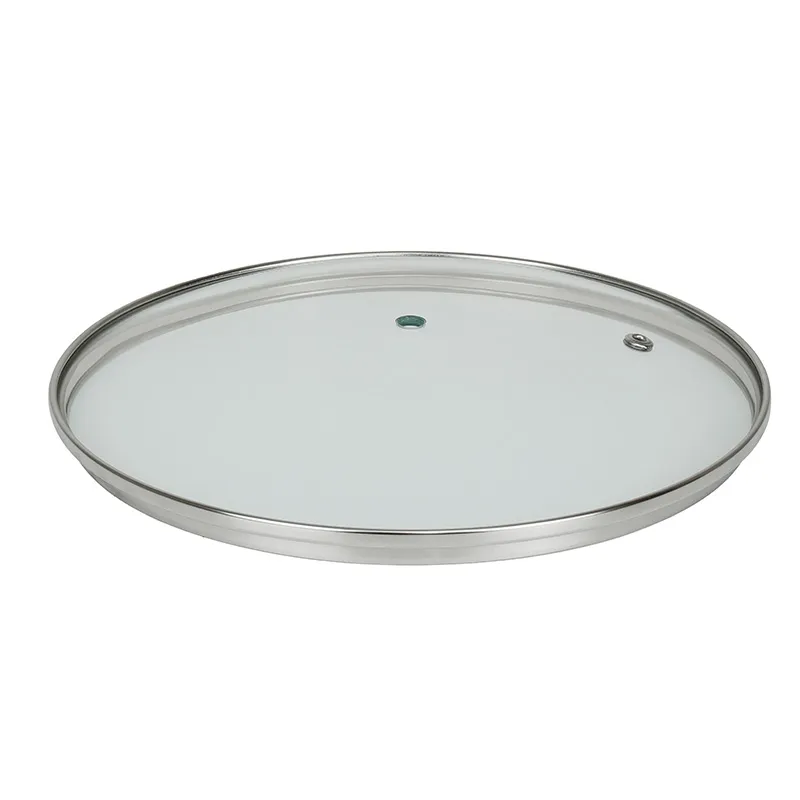
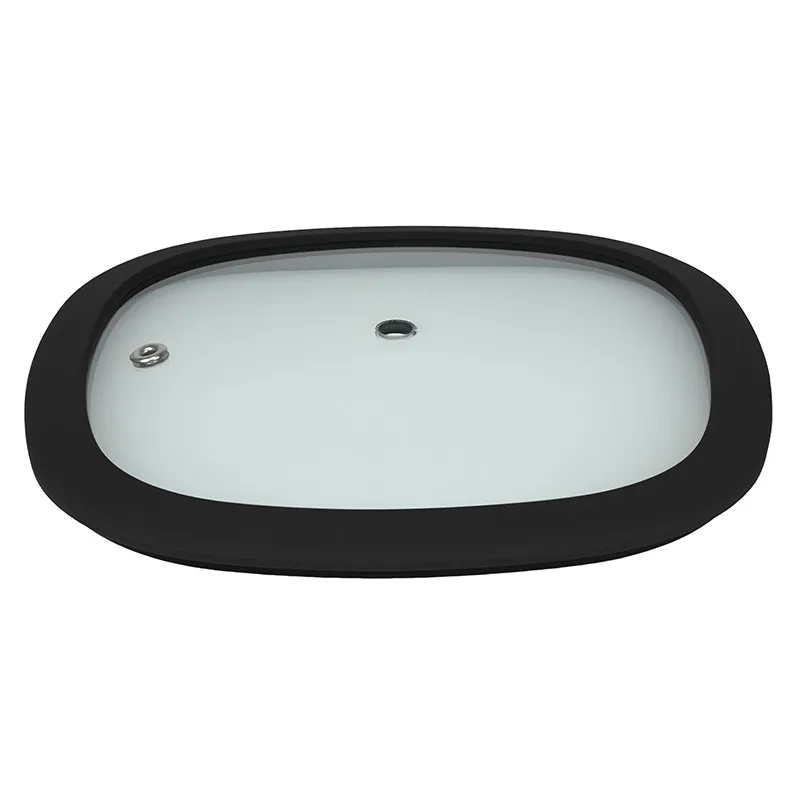
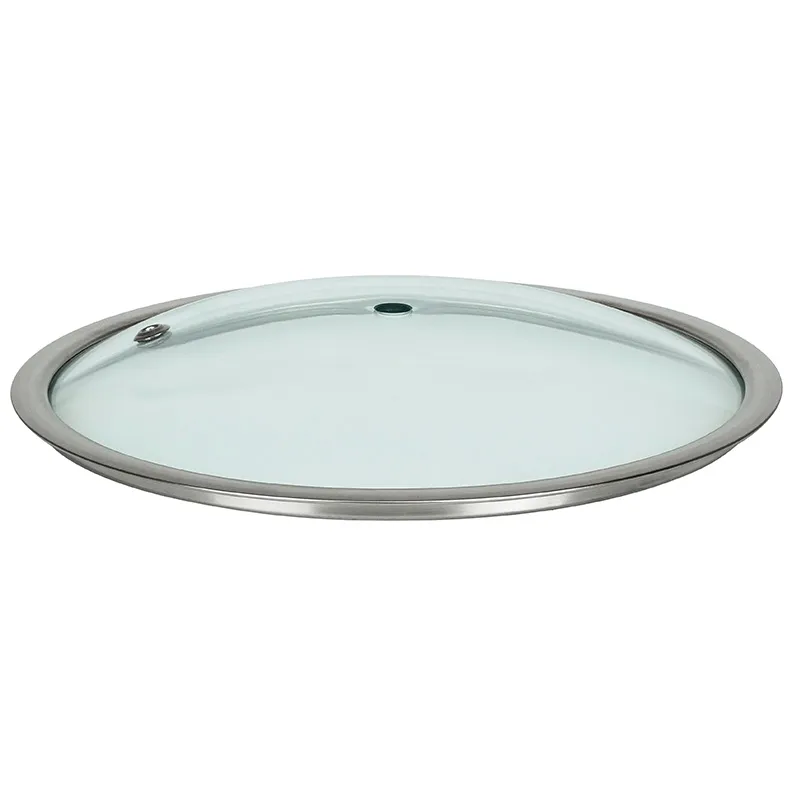
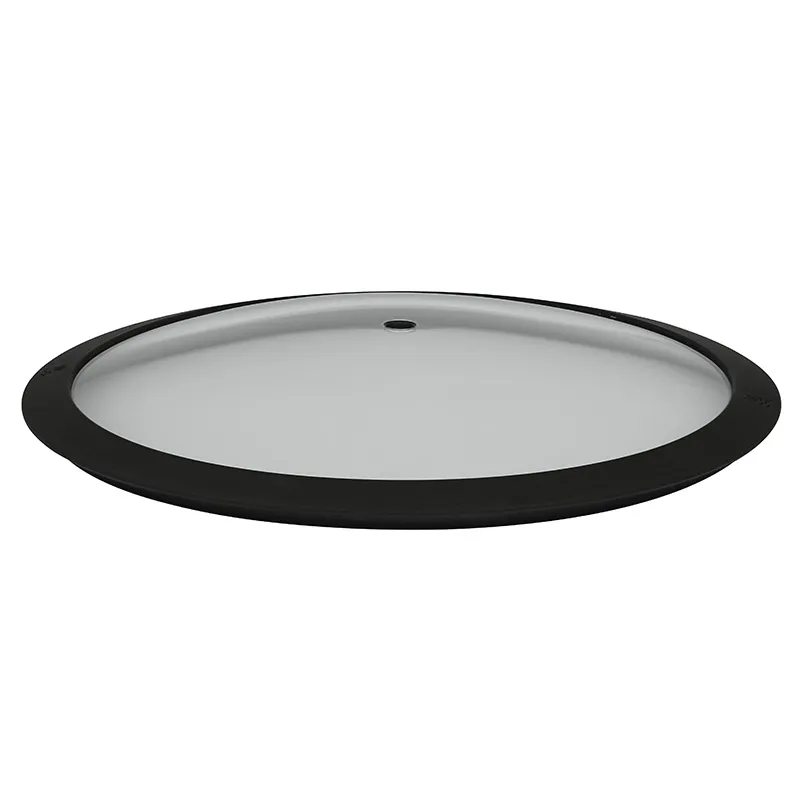
The mold is everything in silicone lid manufacturing. For a glass lid, the silicone is often a gasket that fits into a precision-ground channel on the glass edge. The tolerance here is tight—often within ±0.2mm. If the molded silicone is even slightly oversized, it's a nightmare to assemble; workers struggle to fit it, slowing production and risking glass chipping. Undersized, and you lose the seal, leading to leaks and steam escape. The mold must account for silicone shrinkage, which is predictable but varies slightly by compound and color.
We use multi-cavity, hardened steel molds with vacuum vents to prevent air traps. A tiny air bubble on the sealing lip is a reject. The injection points (gates) are designed to be minimal and placed in non-critical areas, usually on the inner vertical wall of the gasket, because any vestige on the sealing surface is unacceptable. Post-processing, like deflashing, is minimal for LSR if the mold is perfect, which is the goal. High-volume production, like the 15+ million pieces annual output at EUR-ASIA's facility, demands this level of tooling precision to maintain consistency and keep assembly lines moving.
One lesson learned the hard way: cooling channel design in the mold. Silicone cures with heat, but cooling must be uniform. An early mold we commissioned had uneven cooling, leading to differential shrinkage—one side of the gasket was dimensionally different from the other. The parts looked fine off the press but caused persistent sealing issues when assembled. The fix was a costly mold modification. Now, mold flow analysis is a mandatory step before cutting steel.
Integration with the Substrate: It's a System
The silicone doesn't exist in a vacuum. Its performance is entirely dependent on its integration with the lid body, which for EUR-ASIA COOKWARE is predominantly tempered glass. The glass edge profile is the first half of the equation. A simple flat edge is easier to manufacture but harder to seal reliably. A better design is a U or L shaped channel formed during the glass tempering and grinding process. This channel provides a physical pocket for the silicone gasket to sit in, offering mechanical retention and a more defined sealing path.
Assembly is the critical junction. Is it manual press-fitting, or automated? For high volume, automation is ideal but requires incredibly consistent components. We've moved towards a light adhesive or a self-adhesive silicone strip applied during molding for particularly demanding applications. This isn't always necessary, but for lids destined for pressure cookers or high-end stock pots, that extra bond prevents the gasket from twisting or dislodging during vigorous cleaning. You can see this approach in some of the higher-tier products from manufacturers serving the European and Japanese markets, where consumer expectations for durability are exceptionally high.
Failure to consider this system leads to the classic gasket pop-out. A customer puts a lid in the dishwasher, the high-pressure spray hits the silicone, and it flips out of its channel. It's not a silicone failure per se; it's a design failure of the retention system. Testing for this involves brutal dishwasher cycles—we run them for 50, 100 cycles—not just checking seal integrity but also checking if the silicone remains perfectly seated.
Quality Control: More Than a Dimensional Check
QC in this field can't be passive. You can't just measure a sample from each batch with calipers. The tests need to simulate real abuse. We have a battery of tests beyond the standard food contact migration tests. Heat aging: baking gaskets in an oven at 150°C for 72 hours to check for hardening, cracking, or deformation. Compression set test: compressing the gasket to 75% of its height for 22 hours at 70°C, then measuring how much it fails to recover. A poor compound might only recover 80%, meaning it's permanently squashed and will leak.
Then there's the kitchen chemistry test. We expose samples to extreme agents: lemon juice, tomato sauce, olive oil, bleach-based cleaners. We let them soak, then check for swelling, color transfer, or surface degradation. You'd be surprised how some red pigments bleed into oil or how a cleaner can cause micro-cracking. This is where the export focus of a company like EUR-ASIA COOKWARE CO.,LTD matters. A product going to South Korea might face different cooking oils and cleaning habits than one going to Brazil. The QC mindset has to be global and anticipatory.
Finally, the seal test on the final assembled product is non-negotiable. We use a simple but effective negative pressure test: place the lid on a flat, wet surface, press down, and try to lift it by the knob. The suction should hold the lid firmly. If it slips off easily, the seal is compromised. Every single piece in a shipment sample gets this test. It's low-tech, but it's a direct proxy for how the lid will perform on a pot of soup.
The Market Reality and Future Considerations
At the end of the day, silicone lid manufacturing is a balance between cost, performance, and aesthetics. The market is segmented. For a low-cost promotional item, a simple molded silicone ring with a basic glass disc might suffice. But for the medium to high-level household products that are EUR-ASIA's specialty, every detail I've mentioned becomes a competitive advantage. Their production base in Shandong, with its focus on tempered glass, is a strength, but it necessitates a deep, integrated understanding of the silicone partner's capabilities.
Looking forward, the trends are towards more complex systems. Silicone over-molded onto polypropylene (PP) knobs for better heat resistance, integrated steam vents with silicone valves, even entire lids made from flexible silicone for collapsible storage. The manufacturing processes become more complex—two-shot molding, bonding dissimilar materials. The core principles, however, remain: material integrity, precision tooling, and systems thinking. The lid isn't just glass or silicone; it's a single functional unit born from two very different manufacturing disciplines. Getting that marriage right is the real craft.
It's easy to overlook the humble lid. But in a kitchen, it's a workhorse. And its reliability hinges on decisions made in formulation labs, on mold shop floors, and on assembly lines—decisions that are anything but simple.
Related Products
Related Products