- Chinese
- French
- German
- Portuguese
- Spanish
- Russian
- Japanese
- Korean
- Arabic
- Irish
- Greek
- Turkish
- Italian
- Danish
- Romanian
- Indonesian
- Czech
- Afrikaans
- Swedish
- Polish
- Basque
- Catalan
- Esperanto
- Hindi
- Lao
- Albanian
- Amharic
- Armenian
- Azerbaijani
- Belarusian
- Bengali
- Bosnian
- Bulgarian
- Cebuano
- Chichewa
- Corsican
- Croatian
- Dutch
- Estonian
- Filipino
- Finnish
- Frisian
- Galician
- Georgian
- Gujarati
- Haitian
- Hausa
- Hawaiian
- Hebrew
- Hmong
- Hungarian
- Icelandic
- Igbo
- Javanese
- Kannada
- Kazakh
- Khmer
- Kurdish
- Kyrgyz
- Latin
- Latvian
- Lithuanian
- Luxembou..
- Macedonian
- Malagasy
- Malay
- Malayalam
- Maltese
- Maori
- Marathi
- Mongolian
- Burmese
- Nepali
- Norwegian
- Pashto
- Persian
- Punjabi
- Serbian
- Sesotho
- Sinhala
- Slovak
- Slovenian
- Somali
- Samoan
- Scots Gaelic
- Shona
- Sindhi
- Sundanese
- Swahili
- Tajik
- Tamil
- Telugu
- Thai
- Ukrainian
- Urdu
- Uzbek
- Vietnamese
- Welsh
- Xhosa
- Yiddish
- Yoruba
- Zulu
- Kinyarwanda
- Tatar
- Oriya
- Turkmen
- Uyghur


soda can glass with lid
When you hear 'soda can glass with lid', most people picture a novelty item, a cute replica of a soda can you drink from. That's the consumer view. In our line of work, it immediately brings to mind a specific set of manufacturing and material challenges that separate a gimmick from a genuinely functional, durable product. The core misconception is treating it as simple glassware. It's not. It's a composite product where the thermal properties of the glass body, the sealing mechanics of the lid—often plastic or silicone—and the structural integrity of that iconic 'can' shape have to work in unison. Fail in one area, and you have a leaky, fragile, or just unpleasant-to-use item that ends up in the back of the cupboard. I've seen it happen with early prototypes from various workshops, where the focus was purely on the visual gimmick.
The Anatomy of a Reliable Soda Can Glass
Let's break it down. The glass body itself is almost always tempered soda-lime glass. The 'soda' in its name, coincidentally, has nothing to do with the beverage but refers to sodium carbonate used in its production. The tempering process is critical. For a soda can glass with lid meant for daily use—think iced drinks, maybe even a quick microwave reheat for a latte—the thermal shock resistance from tempering is non-negotiable. We learned this the hard way years ago. A batch for a European client, destined for iced tea service, had inconsistent tempering. The result? A small percentage would crack dramatically when filled with ice-cold liquid straight from a warm dishwasher. Not a good look. It wasn't a design flaw; it was a process control failure in the quenching stage.
Then there's the shape. Mimicking the tapered aluminum can in glass is trickier than it seems. The bottom needs a substantial punt for stability, but the walls need to be thin enough to feel pleasant to hold, yet thick enough to withstand the tempering process without warping. The 'lip' of the glass, where it meets the lid, is the make-or-break zone. It has to be perfectly smooth and consistently shaped, with a precise diameter tolerance, often within +/-0.5mm. Any variation, and your lid either won't snap on securely or will sit crooked, breaking the seal. I've spent hours with calipers and sample lids from different mold batches, matching them to glass production runs. It's tedious but essential.
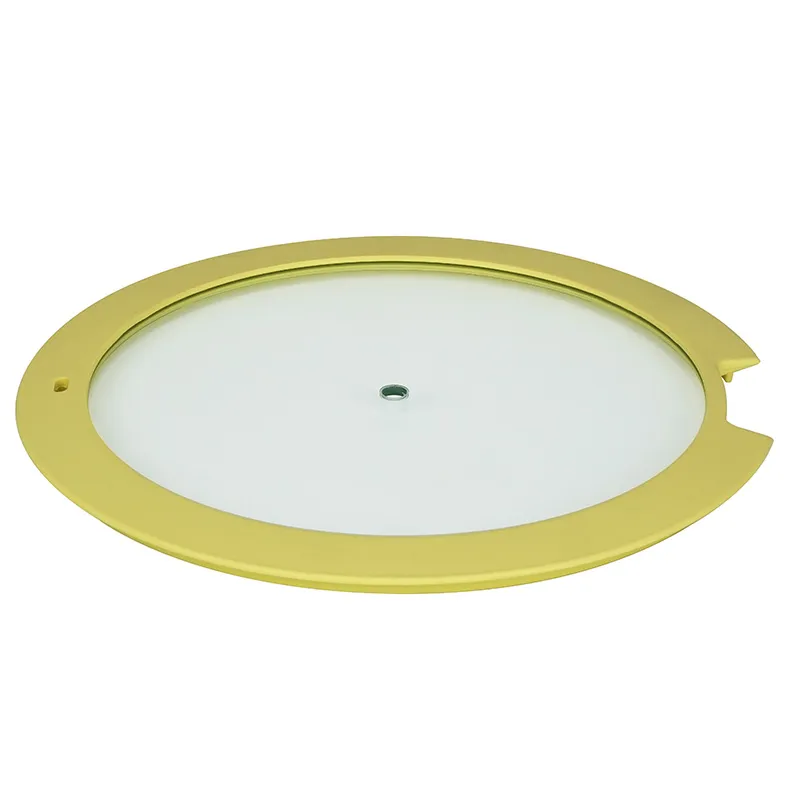
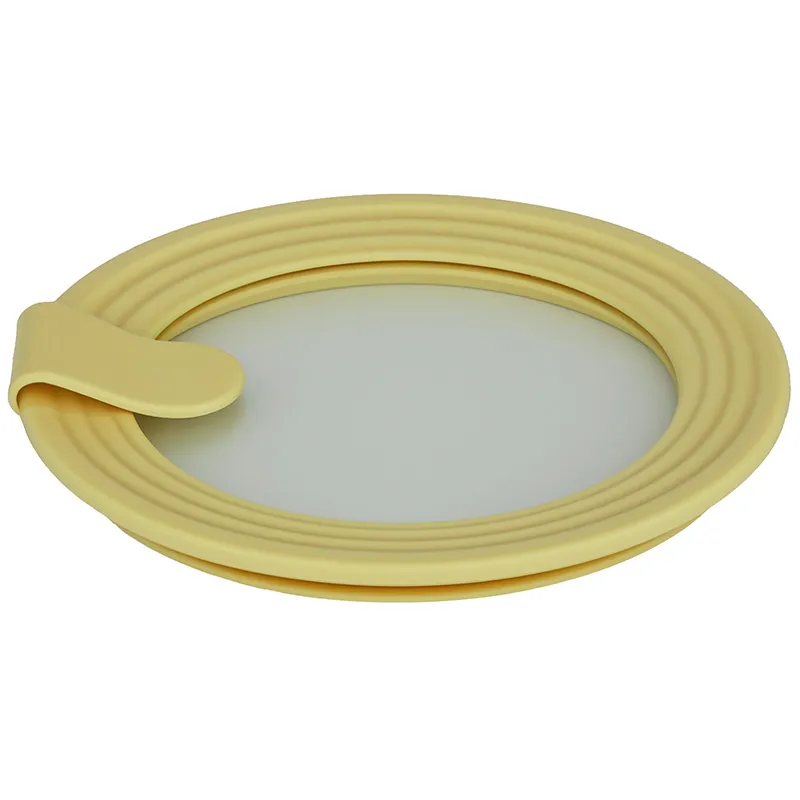
The lid is its own engineering puzzle. Most are a two-part assembly: a rigid plastic frame that provides the snap-on mechanism and a flexible silicone gasket for the actual seal. The plastic needs food-grade safety certification (think FDA, LFGB) and enough flexibility to 'click' over the glass rim but enough rigidity not to deform over time. The silicone gasket's durometer (hardness) is crucial. Too soft, and it deforms permanently; too hard, and it doesn't seal properly. For a product meant to be tossed in a bag, the lid often needs a sipping hole or a sliding closure. That adds moving parts, which adds points of failure. A common failure point we've identified is the hinge on a sliding closure wearing out after a few hundred cycles. Sourcing a higher-grade polypropylene for the slider and designing a more robust pivot pin solved that for a subsequent line.
From Factory Floor to Global Kitchen
This is where the practical reality of mass production meets design. A company like EUR-ASIA COOKWARE CO.,LTD, with their focus on tempered glass lids and kitchenware, is operating in the exact space where a product like this gets real. Visiting a facility like theirs—and I've been to several in Shandong's industrial zones—you see the scale needed. Their stated annual output of over 15 million pieces of tempered glass products isn't just a number; it speaks to a production ecosystem. For a soda can glass with lid to be viable, you need a glass factory that can handle the specific tempering for an unusual shape, a plastic injection molding partner for the lids, and a final assembly line that ensures every lid matches every glass. It's a coordination challenge.
Their export footprint, sending over 90% of products to markets like Germany, Italy, and Japan, is telling. These are markets with stringent consumer safety standards and high expectations for durability. A German retailer isn't going to stock a novelty glass that cracks easily or has a lid that leaks. The product has to function as serious drinkware. This export pressure actually drives quality. The specs for a batch headed to, say, Switzerland will have tighter tolerances and more rigorous drop tests than a batch for a less regulated market. It's an open secret in the industry. The testing often involves cycles of thermal shock (from freezer to hot water), dishwasher durability, and lid seal integrity under pressure—like shaking the sealed glass upside down.
One specific case comes to mind, not with EUR-ASIA directly, but with a similar supplier. We were developing a branded soda can glass with lid for a coffee chain's retail line. The initial samples were great, but during pre-shipment testing, we found the lid's seal failed after about 50 dishwasher cycles. The silicone gasket had flattened. The root cause? The dishwasher detergent formulation common in Europe was more alkaline than what was used in the factory's QA tests. The supplier had to source a different grade of silicone, one with better resistance to alkaline solutions. It delayed the launch by six weeks. This is the kind of gritty, real-world detail you only learn by doing. It's not in any glossy product brochure on glass-lid.com; it's the problem-solving that happens after the brochure is printed.
Beyond the Gimmick: Functional Evolution
So where does this product category go from being a cute item to a kitchen staple? It's about addressing real usage pain points. The initial wave was all about the look. Now, we're seeing iterations. Double-wall insulated versions for better temperature retention. Lids with integrated straw slots that actually seal well. Measurements marked on the side for using it as a mixing glass for cocktails or smoothies. Some are even being designed with a slightly wider mouth to accommodate ice cubes easier, moving away from the exact can replica for the sake of function.
The material science is also evolving. While soda-lime glass dominates, there's experimentation with borosilicate glass for even better thermal shock resistance, though at a higher cost. On the lid side, there's a push towards more sustainable materials. Tritan copolyester is becoming popular for the rigid frame as it's BPA-free and has excellent clarity and durability. Some brands are exploring thermoplastic elastomers (TPEs) as an alternative to silicone for the gasket, though the food-safety certification process is longer.
Ultimately, the success of a soda can glass with lid hinges on it being a genuinely useful object. Does it keep your drink fizzy longer than an open glass? Does the lid not pop off in your bag? Can it survive the dishwasher and daily knocks? When the answer is yes, it transitions from a impulse buy to a repeat purchase item. That's what manufacturers who last in this space, from large exporters like EUR-ASIA COOKWARE to smaller specialty brands, are figuring out. It's not about making a glass that looks like a can; it's about making a sealed drinking vessel that happens to have a fun, recognizable form factor. The difference in approach determines whether you're making a souvenir or a piece of reliable kitchenware.
The Unseen Details and Cost Drivers
Let's talk money and minutiae. The per-unit cost isn't just in the materials. A significant chunk is in the tooling. The mold for the glass is expensive, and if you want that authentic ribbed texture of a soda can on the glass surface, the mold becomes even more complex and costly. The injection molds for the plastic lid components are another major upfront investment. This is why you see so many generic versions on the market—once the molds are made, running millions of units spreads the cost. But it also locks in the design. Changing the diameter of the glass lip by a millimeter later means a whole new mold, a six-figure decision.
Packaging is a hidden cost driver. These glasses are awkward to box. They're tall, not very wide, and the lid needs to be either pre-assembled (which risks stress on the glass during shipping) or packed separately. Retailers want attractive, shelf-ready packaging that also protects the product. We once had a 2% breakage rate in transit because the cardboard insert wasn't holding the glass body tightly enough, allowing it to wobble and hit the lid. Redesigning the insert foam cut that to near zero, but it added $0.15 to the unit cost. In high-volume, low-margin consumer goods, that's a big deal.
Finally, compliance and certification. Every target market has its own rules. A glass sold in California needs Prop 65 warnings if it contains certain trace materials. The EU requires CE marking and compliance with EN 12724 for glass-glass ceramics. The plastic components need specific food contact certifications. For a company exporting globally, like the one described on glass-lid.com, maintaining this web of certifications for a seemingly simple product is a full-time job for a quality team. It's the ultimate proof that this isn't a toy. It's a food-contact product governed by a maze of regulations, and that, more than anything else, forces a level of professional seriousness onto its production. That's what turns a fun idea into a real, reliable soda can glass with lid sitting in someone's kitchen, used day in and day out.
Related Products
Related Products