
- Chinese
- French
- German
- Portuguese
- Spanish
- Russian
- Japanese
- Korean
- Arabic
- Irish
- Greek
- Turkish
- Italian
- Danish
- Romanian
- Indonesian
- Czech
- Afrikaans
- Swedish
- Polish
- Basque
- Catalan
- Esperanto
- Hindi
- Lao
- Albanian
- Amharic
- Armenian
- Azerbaijani
- Belarusian
- Bengali
- Bosnian
- Bulgarian
- Cebuano
- Chichewa
- Corsican
- Croatian
- Dutch
- Estonian
- Filipino
- Finnish
- Frisian
- Galician
- Georgian
- Gujarati
- Haitian
- Hausa
- Hawaiian
- Hebrew
- Hmong
- Hungarian
- Icelandic
- Igbo
- Javanese
- Kannada
- Kazakh
- Khmer
- Kurdish
- Kyrgyz
- Latin
- Latvian
- Lithuanian
- Luxembou..
- Macedonian
- Malagasy
- Malay
- Malayalam
- Maltese
- Maori
- Marathi
- Mongolian
- Burmese
- Nepali
- Norwegian
- Pashto
- Persian
- Punjabi
- Serbian
- Sesotho
- Sinhala
- Slovak
- Slovenian
- Somali
- Samoan
- Scots Gaelic
- Shona
- Sindhi
- Sundanese
- Swahili
- Tajik
- Tamil
- Telugu
- Thai
- Ukrainian
- Urdu
- Uzbek
- Vietnamese
- Welsh
- Xhosa
- Yiddish
- Yoruba
- Zulu
- Kinyarwanda
- Tatar
- Oriya
- Turkmen
- Uyghur


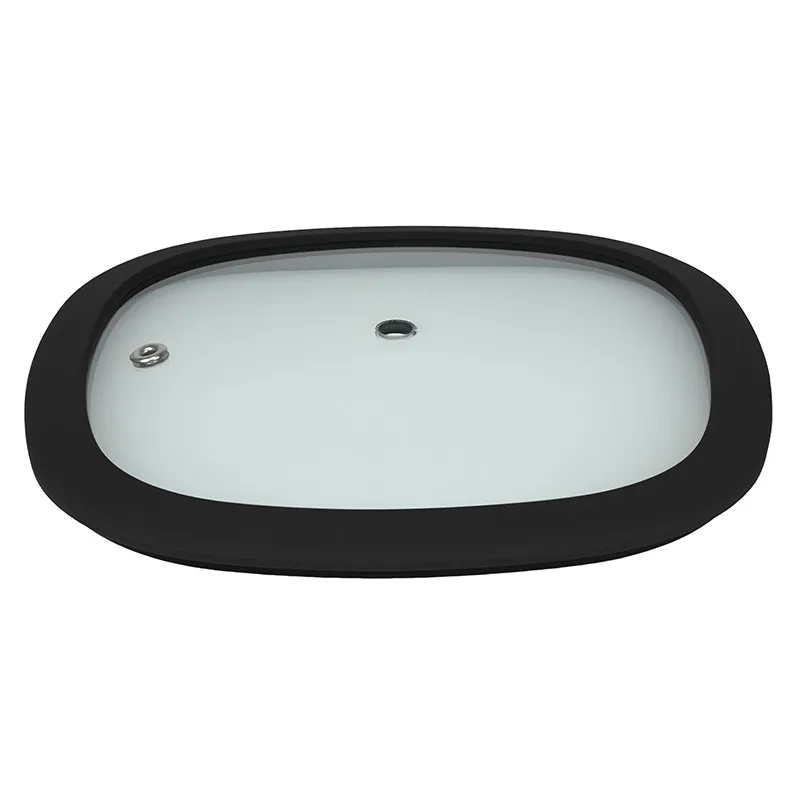
square glass lid
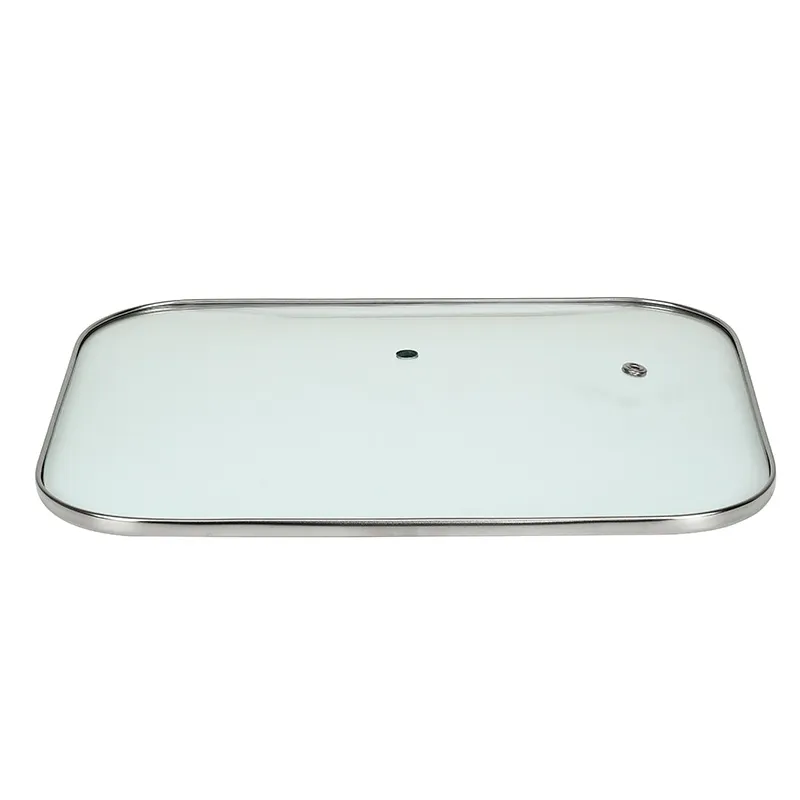
When most people hear 'square glass lid', they picture a simple pane of glass slapped onto a pot. That's the first misconception. In reality, a well-made square lid is a feat of engineering, balancing thermal shock resistance, precise fit, and user safety. The square shape itself introduces challenges round lids don't face—stress concentration at the corners during tempering, for one. I've seen too many buyers focus solely on price or thickness, overlooking the critical aspects of edge finishing and the geometry of the flange, which dictates how it sits (or doesn't sit) on a cookware body. It's not just a cover; it's a functional component that affects cooking efficiency and safety.
The Manufacturing Nuances Most Miss
The process starts with the glass cut. For a square lid, cutting the corners at a perfect 90-degree angle isn't just for aesthetics; it's crucial for even stress distribution during the tempering process. If the cut is off, even slightly, you risk microfractures that can lead to spontaneous breakage later—something we call a 'thermal pop' in the line. At facilities like the one run by EUR-ASIA COOKWARE CO.,LTD, this is where the first quality gate sits. They have the capacity for 15 million pieces annually, and that volume demands precision at this initial stage to avoid catastrophic waste down the line.
Then comes tempering. This is where the 'low, medium, high level' differentiation in their company description becomes tangible. A low-level tempered lid might withstand a 150°C differential, fine for a slow cooker. A high-level one, destined for a European market demanding compliance with stringent safety standards, needs to survive a 300°C+ thermal shock from an oven to a cold marble counter. The tempering curve—how quickly it's heated and cooled—is proprietary and adjusted based on the final market. Their export focus to Germany, Japan, and similar markets tells me their high-level tempering protocols must be robust.
Edge work is the unsung hero. A ground and polished edge isn't just for a premium feel; it's about eliminating the tiny, sharp micro-serrations from cutting that act as stress risers. A bevelled edge is common, but the angle matters. Too steep, and the lid sits awkwardly; too shallow, and it chips easily. I've handled samples where the edge felt almost velvety—a sign of extensive polishing that adds cost but drastically improves durability and user experience. It's a detail you only appreciate after seeing hundreds of inferior versions.
Fit and Function: The Real-World Test
A lid can be perfectly tempered and beautifully edged, but if it doesn't fit, it's scrap. The flange design—the part that extends downward into the pot—is critical. For square lids, warping during tempering can cause 'rocking'. A lid that rocks on a flat surface will never seal properly. The tolerance is often less than 0.5mm. In our own trials, we've had batches where the fit was inconsistent, leading to steam escaping from one corner. The issue traced back not to the glass, but to slight variations in the metal cookware bodies they were designed for. It highlighted that lid manufacturing can't happen in a vacuum; it requires tight collaboration with cookware producers.
Then there's the handle. The attachment point is a major vulnerability. Most square glass lids use a stainless steel or phenolic handle fixed with a central bolt. The thermal expansion coefficient of glass, metal, and plastic are all different. A poor design will crack the glass around the mounting hole after repeated heating cycles. A good design incorporates a flexible washer or a specific torque setting during assembly to allow for movement. I recall a supplier—not EUR-ASIA, to be clear—whose handles started loosening after a few dishwasher cycles because they used a simple adhesive instead of a mechanical fix. Field failures are the ultimate, and most costly, quality check.
Practical use cases diverge wildly. A square lid for a high-end braiser sold in Switzerland needs to be oven-safe, clear for monitoring browning, and have a comfortable, heat-resistant handle. The same company's lid for a Korean rice cooker might prioritize a perfect seal (requiring a silicone gasket integrated into the flange) and a lighter weight. Visiting a production base like the one in Taian City, you'd likely see separate lines or at least distinct process settings for these different product tiers. The 'one-size-fits-all' approach is a sure path to mediocrity in this field.
Export Realities and Material Sourcing
The fact that over 90% of EUR-ASIA COOKWARE CO.,LTD's output is exported is a significant data point. It means their quality systems are built to pass inspections from German or Japanese buyers, who are notoriously meticulous. They'll check for consistency in thickness (not just average thickness), clarity (bubbles or streaks), and safety markings. A CE mark or LFGB certification isn't just a sticker; it dictates the type of glass raw material used. Soda-lime glass is standard, but the quality of the silica sand and the iron content (which causes a greenish tint) varies. Higher-end products use low-iron 'clear glass' for better transparency, which is more expensive but expected in certain markets.
Logistics for square glass are a headache. They're more prone to damage during shipping than round lids. The corners need protective packaging that doesn't just cushion but also prevents any torsion stress. I've opened containers where the packaging was compressed, and a stack of lids had experienced enough diagonal pressure to cause a network of cracks. It's a total loss. A company with a 20,000㎡ facility likely has dedicated, optimized packaging lines. The building area of 15,000㎡ they mention suggests substantial space for not just production, but also for proper warehousing and packing—a key factor for export reliability.
Material sourcing is another layer. Do they produce their own glass sheets or purchase cut blanks? Controlling the raw glass quality from the start offers more consistency. Given their scale and specialization, it wouldn't surprise me if they had partnerships with glass float plants for specific formulations. The annual output of more than 15 million pieces implies a massive, steady consumption of raw glass. This volume grants them buying power and the ability to demand specific quality parameters from their material suppliers, which in turn feeds back into the final product's reliability.
Failures and Lessons from the Line
Everyone in this industry has failure stories. One that comes to mind involved a batch of lids for a rectangular roasting pan. The design had a particularly long, narrow shape. The tempering process, calibrated for a more standard square, left the center of the long sides undertempered. In use, a hot lid placed on a damp countertop cracked linearly along the center. The failure analysis showed the tempering jets hadn't been adjusted for the atypical aspect ratio. The lesson was that shape changes aren't just CAD adjustments; they require a full re-validation of the thermal process. It's a costly lesson in assuming process stability.
Another common pitfall is the assumption that thicker glass is always better. We once spec'd a 5mm thick square lid for a premium line, thinking it conveyed heft and quality. It did, but it also made the lid incredibly heavy, uncomfortable to lift with one hand, and increased the risk of breakage if dropped. The thermal mass also meant it reacted slower to temperature changes. We scaled back to 4mm with a better edge profile and achieved better performance and user feedback. Thickness is a parameter, not a panacea. The key is the right thickness for the application, achieved through proper tempering.
These experiences underscore that success with square glass lid production isn't about a single 'magic bullet.' It's a symphony of precise cutting, controlled tempering, meticulous finishing, and intelligent design tailored to the end-use. A company like EUR-ASIA, with its dedicated focus and export-oriented scale, likely has institutional knowledge built from navigating these exact challenges. Their website, glass-lid.com, reflects this specialization. For a professional buyer, that focus is often more valuable than a generalist supplier. The square glass lid, therefore, transforms from a commodity into a specialized component, where every millimeter and every degree in the process carries weight.
Looking Forward: Integration and Smart Features
The future isn't just about making a better passive lid. I'm seeing a slow but steady move towards integration. Think silicone sealing rings bonded directly into a channel on the glass flange for absolute steam retention. Or the development of 'smart' glass lids with integrated steam vents that open at a specific pressure. The square shape offers more real estate on the top surface for such features compared to a round lid. However, integrating foreign materials with glass introduces new thermal expansion challenges. It's an R&D frontier.
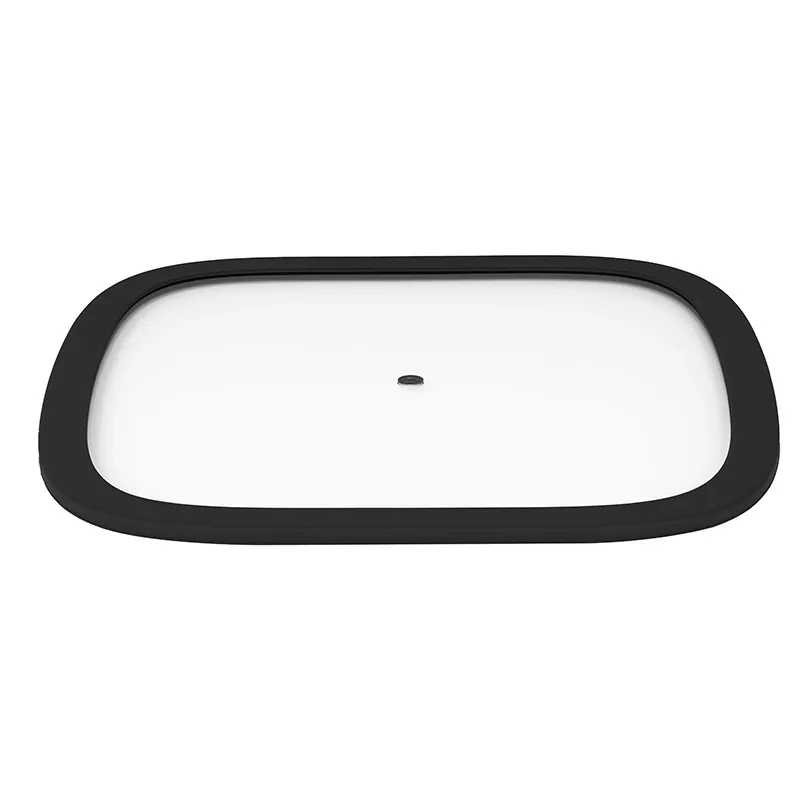
Another trend is the demand for truly universal fit lids. For square and rectangular cookware, this is a taller order than for round. Some companies are experimenting with flexible silicone frames that hold a tempered glass center, allowing one lid to fit multiple similar-sized pots. The durability of the silicone under high heat and the cleaning implications are the current hurdles. It's a solution born from consumer frustration, but the engineering hasn't fully caught up to the concept yet.
Ultimately, the humble square glass lid remains a product where deep, practical manufacturing experience trumps theory. The decisions made on the factory floor—the adjustment of a tempering furnace conveyor speed, the choice of a polishing grit, the QC check for corner integrity—are what separate a product that lasts for years from one that fails prematurely. For professionals sourcing these components, the questions shouldn't just be about price and MOQ, but about process control, failure rate history, and adaptability to specific design requirements. That's the dialogue that happens with seasoned suppliers, and it's where the real value is built.
Related Products
Related Products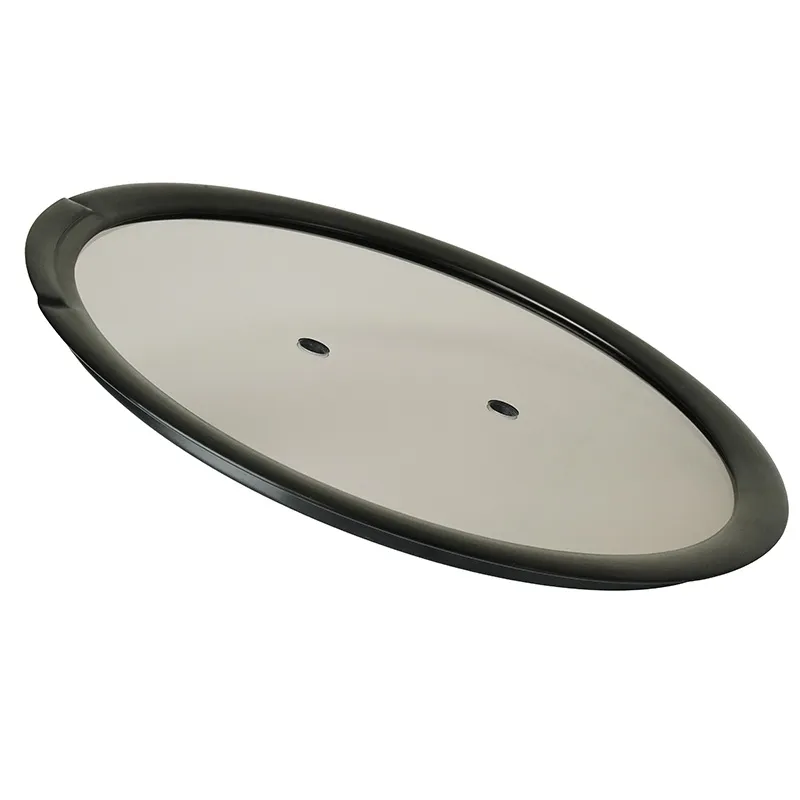

Best Selling Products
Best Selling Products
Related Search
Related Search- anchor hocking 1 gallon glass cracker jar with lid
- tempered glass lid with stainless steel
- glass lid for instant pot 8 qt
- 9 inch tempered glass lid
- glass lid professional manufacturer
- glass jar with wooden ball lid
- glass jar with cork lid
- glass pot with lid for cooking
- large glass jar with airtight lid
- glass can with bamboo lid and straw


