- Chinese
- French
- German
- Portuguese
- Spanish
- Russian
- Japanese
- Korean
- Arabic
- Irish
- Greek
- Turkish
- Italian
- Danish
- Romanian
- Indonesian
- Czech
- Afrikaans
- Swedish
- Polish
- Basque
- Catalan
- Esperanto
- Hindi
- Lao
- Albanian
- Amharic
- Armenian
- Azerbaijani
- Belarusian
- Bengali
- Bosnian
- Bulgarian
- Cebuano
- Chichewa
- Corsican
- Croatian
- Dutch
- Estonian
- Filipino
- Finnish
- Frisian
- Galician
- Georgian
- Gujarati
- Haitian
- Hausa
- Hawaiian
- Hebrew
- Hmong
- Hungarian
- Icelandic
- Igbo
- Javanese
- Kannada
- Kazakh
- Khmer
- Kurdish
- Kyrgyz
- Latin
- Latvian
- Lithuanian
- Luxembou..
- Macedonian
- Malagasy
- Malay
- Malayalam
- Maltese
- Maori
- Marathi
- Mongolian
- Burmese
- Nepali
- Norwegian
- Pashto
- Persian
- Punjabi
- Serbian
- Sesotho
- Sinhala
- Slovak
- Slovenian
- Somali
- Samoan
- Scots Gaelic
- Shona
- Sindhi
- Sundanese
- Swahili
- Tajik
- Tamil
- Telugu
- Thai
- Ukrainian
- Urdu
- Uzbek
- Vietnamese
- Welsh
- Xhosa
- Yiddish
- Yoruba
- Zulu
- Kinyarwanda
- Tatar
- Oriya
- Turkmen
- Uyghur


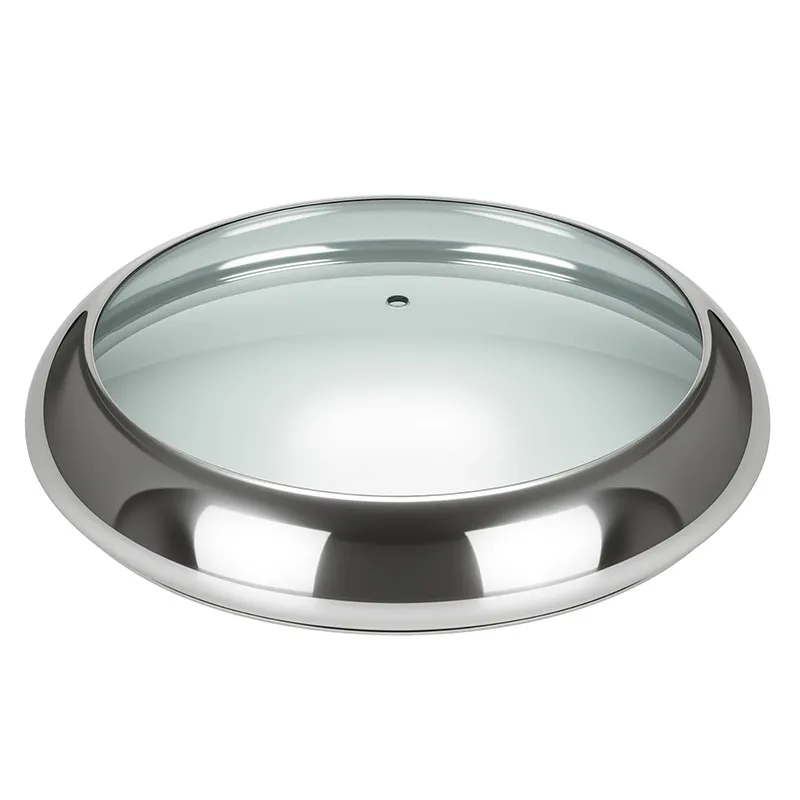
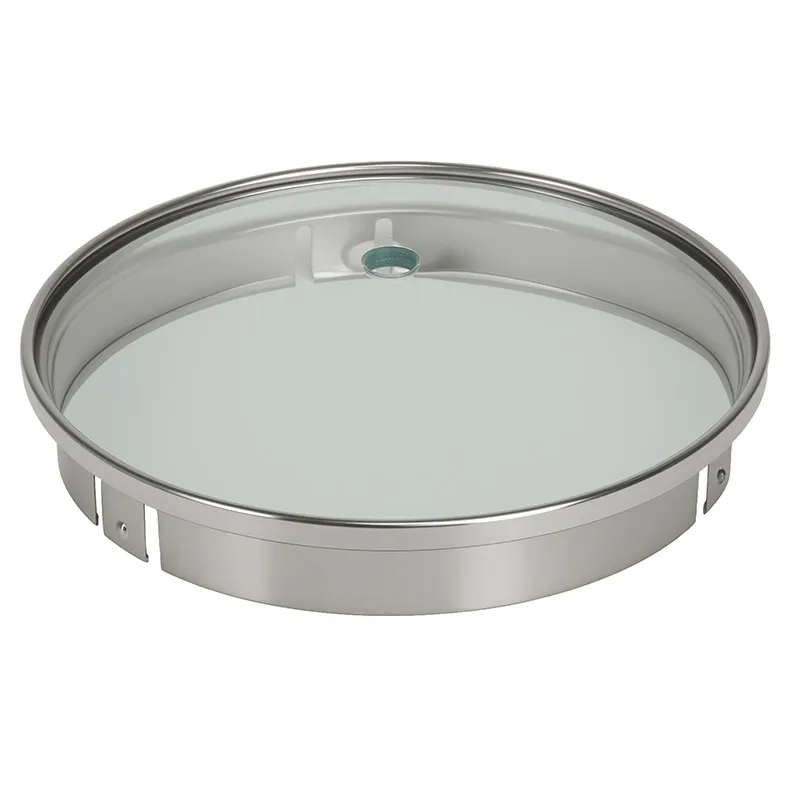
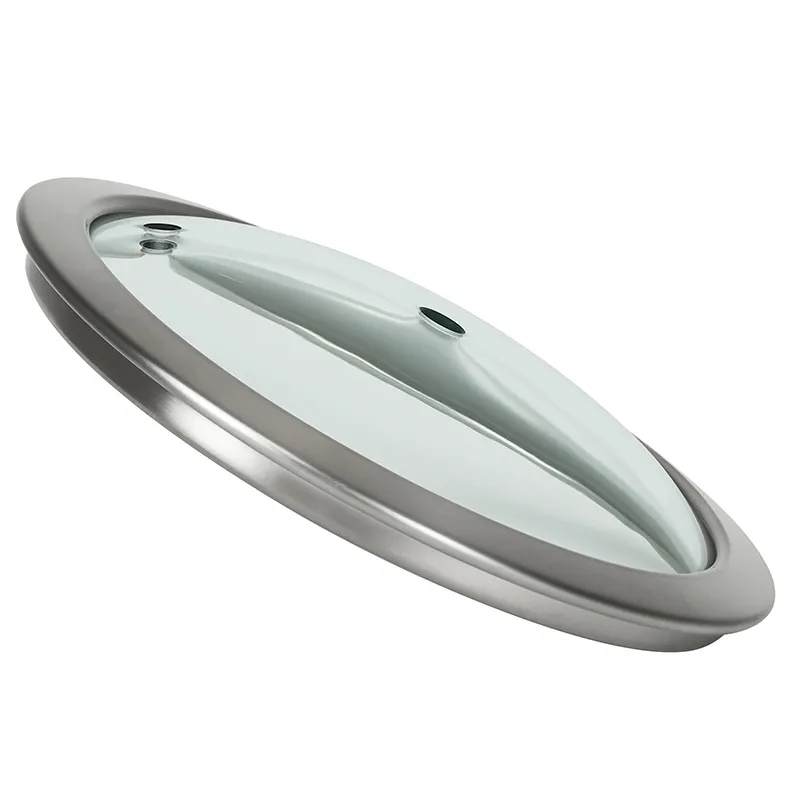
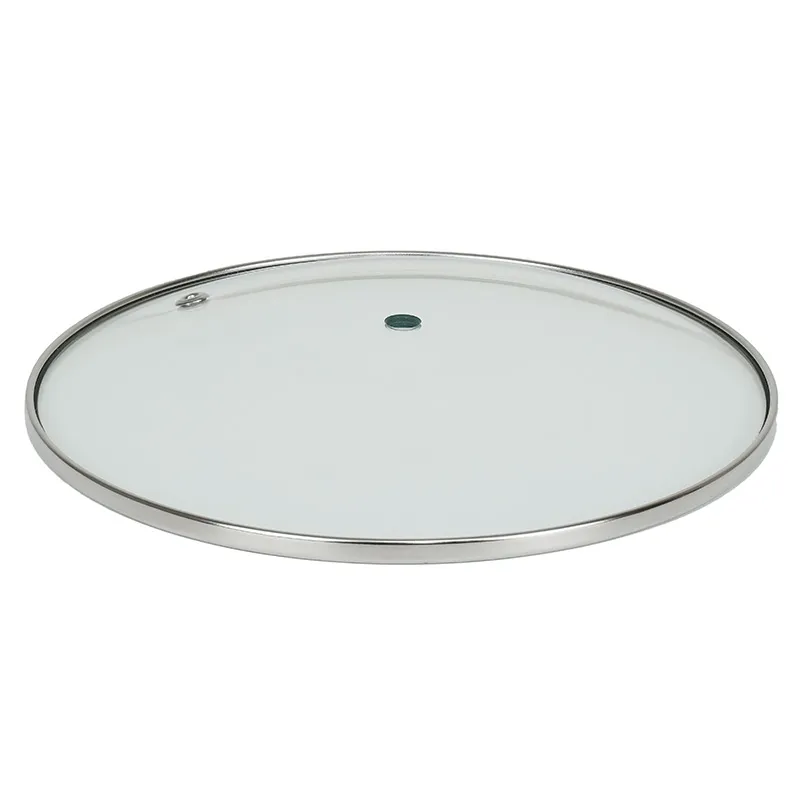
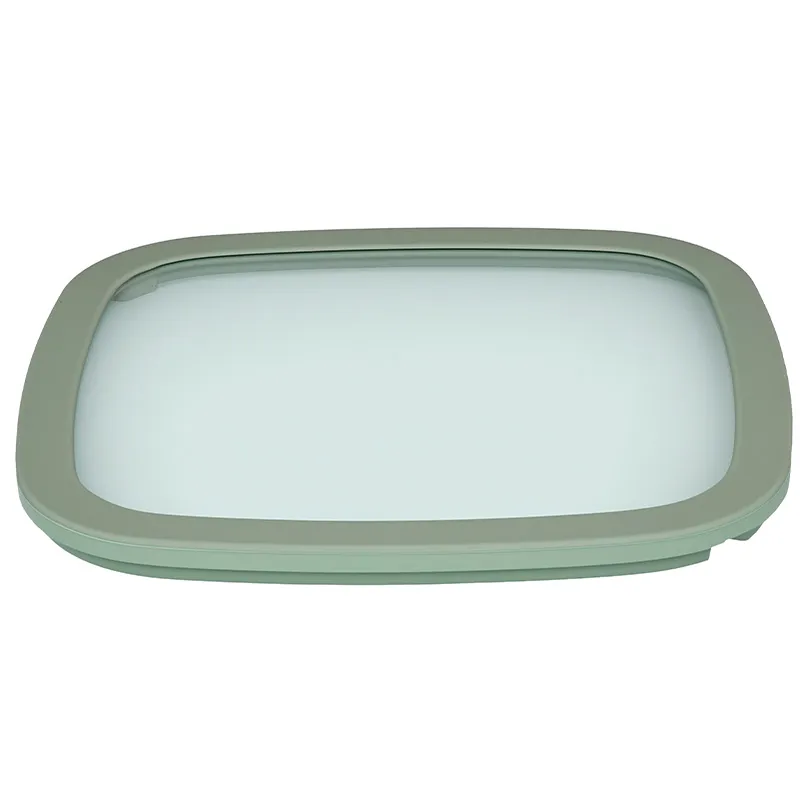
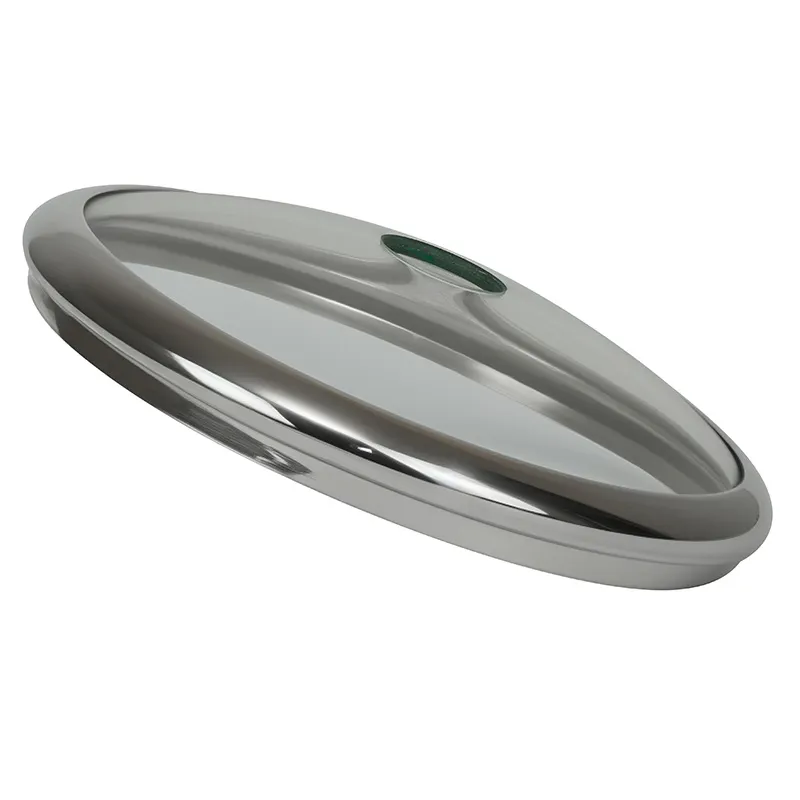
square tempered glass lid
When most people hear 'square tempered glass lid', they picture a simple pane of glass on a pot. That's the first mistake. It's not just a cover; it's a critical interface between heat, steam, and the cook. The 'tempered' part gets thrown around a lot, but true performance hinges on the annealing curve and the quality of the bevel—details most spec sheets gloss over. I've seen too many lids warp or develop microfractures because someone prioritized low cost over proper thermal shock resistance. Let's talk about what actually matters on the production line and in the kitchen.
The Manufacturing Reality Check
You can't discuss this properly without understanding the scale. Take a supplier like EUR-ASIA COOKWARE CO.,LTD. Their stated annual output of over 15 million pieces of various tempered glass lid types is a massive operation. That volume tells you they're not crafting artisanal items; they're solving engineering problems at scale. The location in Shandong's high-tech zone isn't trivial—it's about access to consistent raw material logistics and industrial-grade tempering furnaces that can handle that throughput. The challenge here is maintaining consistency across millions of units. One batch of subpar soda-lime silica glass, or a rushed tempering cycle, and you get lids that might pass a basic impact test but fail in real-world use when a boiling pot meets a cold granite countertop.
Their export focus to European markets like Germany and Italy is a quality signal. Those buyers have brutal standards. They'll test for lead and cadmium release, thermal shock cycles (think: oven-to-freezer), and mechanical strength repeatedly. A common failure point we observed early on was the handle attachment. A square lid, unlike a round one, has uneven stress distribution. Gluing a plastic or stainless steel handle onto the flat glass surface requires a specific epoxy that can handle the differential expansion rates. I've seen batches where the handle adhesive failed after 50 dishwasher cycles, not because the glue was weak, but because the glass surface treatment (hydrophobic coating, sometimes) wasn't compatible. It's a chemistry problem disguised as a hardware problem.
The low-medium-high level classification in their company intro is more honest than most. A high-level lid isn't just thicker glass. It often involves a multi-step edge finishing process. A simple ground edge can leave microscopic chips that become stress concentrators. A properly polished and thermally smoothed bevel is costlier but prevents those edge-initiated cracks. For their square lids destined for high-end cookware sets, this step is non-negotiable. The medium and low tiers might skip it, which is fine for light-duty use, but you get what you pay for.
Design Nuances Most Get Wrong
Square versus round isn't an aesthetic choice alone. Heat circulation in a square pan is different—hot spots tend to gather in the corners. A square tempered glass lid must account for this. The glass thickness often needs a slight gradient, or at least a uniform thickness that can withstand corner stress. Some designers try to make the lid completely flat, but that's a mistake. A very slight dome, almost imperceptible, is usually engineered in. This isn't for looks; it prevents a vacuum seal that makes the lid impossible to lift and allows condensed steam to roll back into the pan, not drip off the edge.
The hinge or knob placement is another subtle art. On a square lid, the center of gravity isn't the geometric center if the handle is placed in the middle of one side. You have to calculate the balance point so the lid doesn't tip backward when lifted. I recall a project where we prototyped a lid for a Dutch oven. The initial design had a centered stainless steel knob. It looked great, but in usability tests, users would grab it and the lid would wobble dangerously. We had to shift the knob 15mm toward the corner to balance it. That's the kind of hands-on tweak you only learn from failure.
Then there's the rim or the sealing edge. Most square lids sit on, not in, the pot. The underside of the glass rim often has a fired-on ceramic paint band. This serves two purposes: it hides the sealed edge of the glass (which is never perfectly aesthetic) and provides a slight friction surface to prevent sliding. The width and composition of this band matter. Too wide, and it traps heat, increasing thermal stress. The wrong paint formulation can craze or discolor after repeated high-heat exposure. It's a small detail that causes big returns if wrong.
Real-World Failure Modes and Lessons
Talk is cheap; broken lids tell the real story. One consistent issue with imported square lids, even from reputable volume producers, is cold shock failure during winter logistics. A container from China to Northern Europe in January can see interior temperatures well below freezing. If the lids aren't acclimated slowly upon arrival and go straight into a hot warehouse, you get spontaneous breakage. It looks like a defect, but it's a supply chain problem. We learned to mandate that distributors store new shipments in unheated spaces for 48 hours before moving them. Simple, but it saved thousands in claims.
Another failure is specific to induction cooktops. The high-frequency magnetic fields can, in rare cases, induce currents in any metallic components within the glass lid, like certain types of metal-based paint pigments or sensor dots for smart pans. This can create localized overheating points on the glass itself, leading to thermal fracture. It's a niche but growing problem. The solution is rigorous material testing for electromagnetic compatibility, which many factories only started doing recently.
Dishwasher safety is a given, right? Not exactly. It's not the heat or water, but the high-pH detergent attacking the glass surface over hundreds of cycles. This can slowly etch the glass, making it appear cloudy and weakening its structure. A high-quality tempered glass lid will have a surface that's resistant to this chemical attack. It's a test we run by soaking samples in a heated detergent solution for a week, simulating years of wash cycles. You'd be surprised how many lids fail the cloud test.
The Export Game and Supplier Dynamics
Looking at EUR-ASIA COOKWARE CO.,LTD's export list—Germany, Russia, Italy, Brazil, Japan—tells a story. Each market has a different preference. German buyers often want minimalist, fully clear lids with no painted rims for their premium lines. The Brazilian market might prioritize cost and vibrant color accents on the handle. Supplying all these from one production base means the factory must have extreme flexibility in its finishing lines. It's not just about making glass; it's about secondary operations like silk-screening logos, applying varied paint, and packaging to ten different standards.
This volume business, like the 15+ million pieces cited, runs on razor-thin margins. The pressure to cut corners is immense. The mark of a reliable supplier isn't that they never have issues, but how they handle them. A good factory will have a failure mode analysis process. When a batch of lids for a French client showed hairline cracks near the handle post-shipment, a capable team wouldn't just replace them. They'd section the failed lids, examine the fracture patterns under magnification, trace it back to a specific tempering furnace operator who might have shortened the cycle that week, and implement a sensor check to prevent it. That's the difference between a commodity vendor and a partner.
The future isn't just about making more lids. It's about integration. Lids with built-in steam vents that can be adjusted, lids with integrated silicone gaskets for pressure-cooking functions, or even lids with simple moisture sensors. The square format makes some of this harder due to the corners, but it's where the innovation will happen. The basic square tempered glass lid is becoming a platform, not just a cover.
Closing Thoughts from the Bench
So, what's the takeaway? Don't judge a lid by its spec sheet alone. The thickness, the diameter, the tempering claim—these are just entry tickets. The real quality is in the process control, the edge work, the material compatibility, and the factory's willingness to dig into failures. A company like the one mentioned, with its scale and export footprint, has the capacity for quality, but it's not automatic. It depends on the specific line and the specific order.
For anyone sourcing these, my advice is always to ask for the failure rate data and the root cause reports from past issues. Visit the production base if you can. Look at the annealing lehr. Ask about their thermal shock testing protocol—it should be more rigorous than the standard. The square tempered glass lid is a deceptively simple product. Its success lies in a hundred small details done right, and its failure is usually due to just one of them being overlooked. That's the reality of the game.
Related Products
Related Products