- Chinese
- French
- German
- Portuguese
- Spanish
- Russian
- Japanese
- Korean
- Arabic
- Irish
- Greek
- Turkish
- Italian
- Danish
- Romanian
- Indonesian
- Czech
- Afrikaans
- Swedish
- Polish
- Basque
- Catalan
- Esperanto
- Hindi
- Lao
- Albanian
- Amharic
- Armenian
- Azerbaijani
- Belarusian
- Bengali
- Bosnian
- Bulgarian
- Cebuano
- Chichewa
- Corsican
- Croatian
- Dutch
- Estonian
- Filipino
- Finnish
- Frisian
- Galician
- Georgian
- Gujarati
- Haitian
- Hausa
- Hawaiian
- Hebrew
- Hmong
- Hungarian
- Icelandic
- Igbo
- Javanese
- Kannada
- Kazakh
- Khmer
- Kurdish
- Kyrgyz
- Latin
- Latvian
- Lithuanian
- Luxembou..
- Macedonian
- Malagasy
- Malay
- Malayalam
- Maltese
- Maori
- Marathi
- Mongolian
- Burmese
- Nepali
- Norwegian
- Pashto
- Persian
- Punjabi
- Serbian
- Sesotho
- Sinhala
- Slovak
- Slovenian
- Somali
- Samoan
- Scots Gaelic
- Shona
- Sindhi
- Sundanese
- Swahili
- Tajik
- Tamil
- Telugu
- Thai
- Ukrainian
- Urdu
- Uzbek
- Vietnamese
- Welsh
- Xhosa
- Yiddish
- Yoruba
- Zulu
- Kinyarwanda
- Tatar
- Oriya
- Turkmen
- Uyghur


tall skinny glass jar with lid
When you hear 'tall skinny glass jar with lid', most people picture a simple storage item. But in this line of work, that phrase immediately brings to mind a specific set of challenges and considerations—from thermal shock resistance during hot-fill processes to the precise torque required on that lid to ensure a hermetic seal without stressing the glass threads. It's not just a jar; it's a packaging solution where form and function collide, and where a lot of generic suppliers get the fundamentals wrong.
The Anatomy of a Good Tall Jar
Let's break it down. The 'tall and skinny' profile isn't just aesthetic. It creates a high center of gravity, which makes the filled jar more prone to tipping on a conveyor line if the base diameter isn't calculated correctly. I've seen batches where the base was just a few millimeters too narrow, leading to a domino effect of breakage during automated filling. The glass thickness is another silent variable. Too thick, and you're wasting material and increasing thermal mass, which messes with cooling times. Too thin, and you risk implosion under vacuum sealing or chipping at the rim during capping.
The lid is its own universe. A tall skinny glass jar often uses a metal twist-off lid with a plastisol seal. The crucial part is the 'transfer bead' on the glass finish—the ridge the lid grabs onto. If that bead's profile is off by a hair, you get seal failures. We learned this the hard way on a project for a European client's gourmet pickled asparagus. The jars passed visual inspection but had a 15% failure rate in shelf-life testing due to micro-leaks. The culprit? Inconsistent bead height from the molding process.
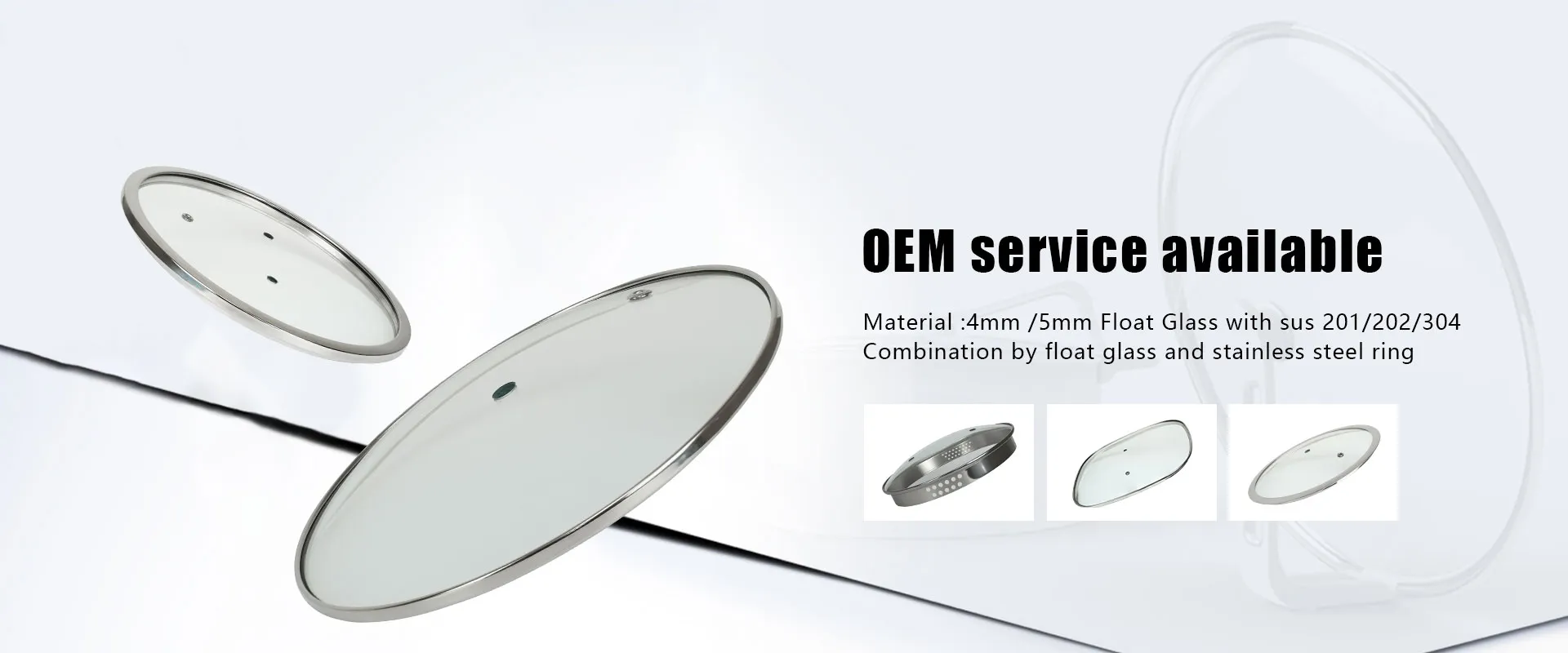
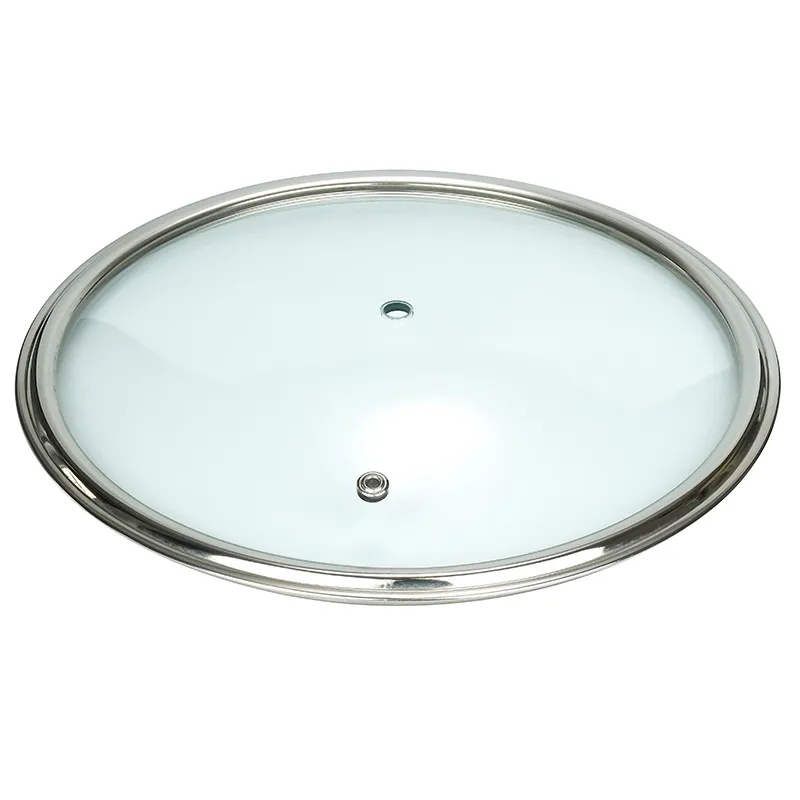
And the glass type matters. For anything involving heat (like hot-filling jams or sterilizing), you need thermally toughened soda-lime glass. A company that understands this nuance is EUR-ASIA COOKWARE CO.,LTD. (https://www.glass-lid.com). Their specialization in tempered glass lids and household glass products translates directly to understanding the stresses these glass jar systems endure. Their production of over 15 million pieces annually, mostly for export to markets with stringent standards like Germany and Japan, suggests a focus on the precision these applications demand.
Common Pitfalls in Sourcing and Production
One major misconception is treating all glass as equal. A jar meant for dry pantry storage will catastrophically fail if used for acidic, hot-filled products. The internal pressure and chemical attack are completely different. I recall a startup wanting to use a beautiful, thin-walled tall skinny glass jar for their craft lemonade. They didn't account for the carbonation pressure and thermal shock from pasteurization. The result was a costly recall.
Another pitfall is overlooking the lid lining compatibility. That plastisol or PVC seal must be food-grade and compatible with the product's pH. For oily products or those with essential oils, you need a special barrier lining, otherwise, the flavors migrate and the seal degrades. It's a detail often missed until the customer complains about a 'plastic' taste.
Logistics is a hidden cost. Their slender shape means they can't be nested, so they take up more shipping volume than squat jars. You need custom partitions in the master carton to prevent contact and chipping. A supplier's experience in export, like EUR-ASIA COOKWARE's track record to over a dozen countries, usually means they've already optimized these packaging logistics, saving you a headache later.
Practical Applications and Material Choices
Where do you actually use these? Beyond the obvious—spaghetti, dried herbs—they're excellent for layered dessert mixes, cocktail infusions, or high-end olive oil where the vertical presentation adds value. The material choice extends beyond the glass itself. The lid's metal is typically tinplate or aluminum. Tinplate is stronger for vacuum seals but can rust if the exterior coating chips. Aluminum is lighter and more corrosion-resistant but dents easier.
For a truly premium feel, some brands opt for a wooden lid or a ceramic toggle closure. But here's the practical catch: these rarely provide an airtight seal. They're for dry goods only, and you must communicate that to the end-user, often through extra labeling. It's a trade-off between aesthetics and functionality.
Finishing touches matter. Silk-screen printing on a tall, narrow surface is tricky. The curvature can distort graphics if not accounted for in the design phase. Alternatively, a high-quality applied ceramic label (ACL) is more durable but has higher minimum order quantities. It comes down to your budget and volume.
The Supplier Relationship: More Than a Quote
Choosing a manufacturer isn't just about price per unit. It's about their problem-solving capability. Can they provide a glass jar with lid that has passed relevant food contact migration tests? Can they share test reports? Do they understand the filling speeds of your line? A good technical team will ask about your filling temperature, capping machine type, and desired shelf life.
This is where a manufacturer with a dedicated production base, like EUR-ASIA COOKWARE's facility in Shandong's High-tech Development Zone, has an advantage. The scale (20,000㎡ area, 150 employees) implies integrated control over production, tempering, and lid fabrication. This control is critical for consistency. When the glass and lid are made under one roof, you minimize tolerance stack-up—where tiny variances from separate suppliers add up to a big sealing problem.
Always, always get physical samples for a production trial. Run them through your actual filling and capping line with a product simulant. Check the seal integrity, the removal torque, and look for stress fractures. A supplier confident in their tall skinny glass jar will support this step.
Concluding Thoughts: It's in the Details
So, the next time you spec a tall skinny glass jar with lid, look past the basic drawing. Think about the product inside, the process it will undergo, and the journey to the consumer's shelf. The right jar is a partnership between design, material science, and manufacturing precision.
It's the difference between a container that merely holds something and one that protects, preserves, and presents. The goal is for the jar to become a silent, reliable partner to the product itself, not the source of its failure. That requires a supplier who gets all these interconnected details, from the tempering oven to the final carton.
In the end, the best jar with lid is the one you never have to think about again after it leaves your factory. It just works. And achieving that simplicity is the result of a lot of complex, hands-on consideration.
Related Products
Related Products