- Chinese
- French
- German
- Portuguese
- Spanish
- Russian
- Japanese
- Korean
- Arabic
- Irish
- Greek
- Turkish
- Italian
- Danish
- Romanian
- Indonesian
- Czech
- Afrikaans
- Swedish
- Polish
- Basque
- Catalan
- Esperanto
- Hindi
- Lao
- Albanian
- Amharic
- Armenian
- Azerbaijani
- Belarusian
- Bengali
- Bosnian
- Bulgarian
- Cebuano
- Chichewa
- Corsican
- Croatian
- Dutch
- Estonian
- Filipino
- Finnish
- Frisian
- Galician
- Georgian
- Gujarati
- Haitian
- Hausa
- Hawaiian
- Hebrew
- Hmong
- Hungarian
- Icelandic
- Igbo
- Javanese
- Kannada
- Kazakh
- Khmer
- Kurdish
- Kyrgyz
- Latin
- Latvian
- Lithuanian
- Luxembou..
- Macedonian
- Malagasy
- Malay
- Malayalam
- Maltese
- Maori
- Marathi
- Mongolian
- Burmese
- Nepali
- Norwegian
- Pashto
- Persian
- Punjabi
- Serbian
- Sesotho
- Sinhala
- Slovak
- Slovenian
- Somali
- Samoan
- Scots Gaelic
- Shona
- Sindhi
- Sundanese
- Swahili
- Tajik
- Tamil
- Telugu
- Thai
- Ukrainian
- Urdu
- Uzbek
- Vietnamese
- Welsh
- Xhosa
- Yiddish
- Yoruba
- Zulu
- Kinyarwanda
- Tatar
- Oriya
- Turkmen
- Uyghur


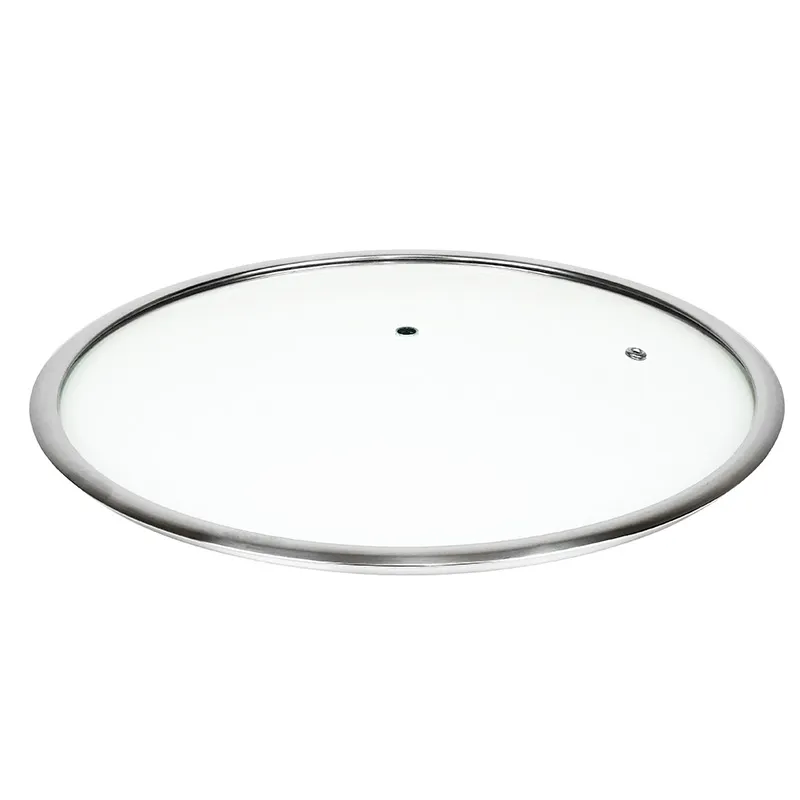
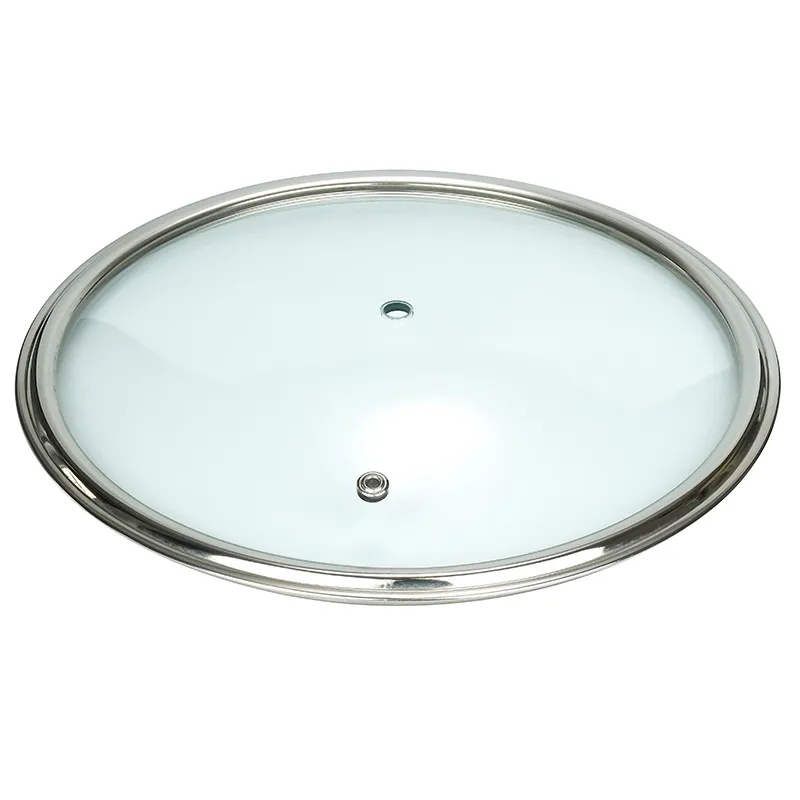
tempered glass lid export
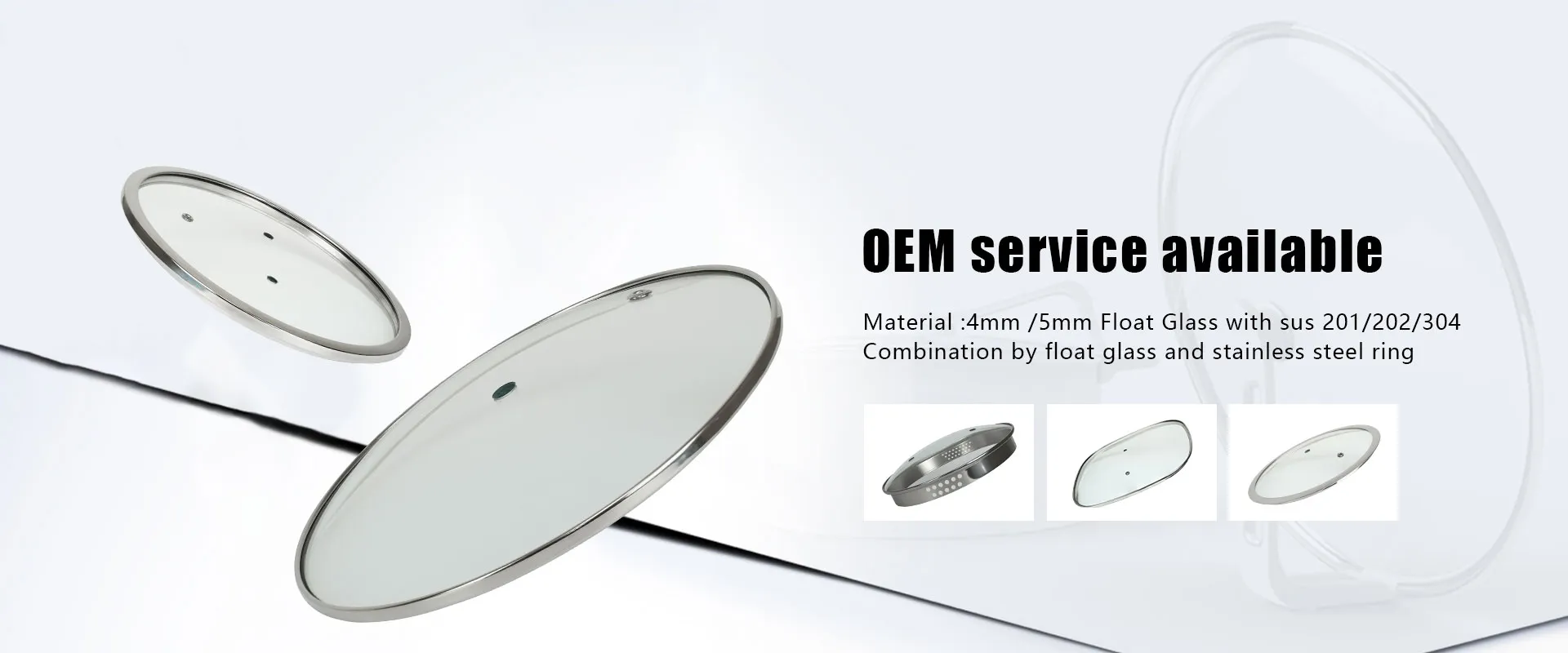
When you hear 'tempered glass lid export', the immediate thought for many is simply shipping a product from point A to B. That's the first misconception. It's not just about moving boxes; it's a chain of technical compliance, cultural nuance in packaging, and understanding that a lid isn't just a lid—it's a safety component for a cookware system halfway across the world. I've seen too many assume the hardness of the glass is the only spec that matters, overlooking how European retailers, for instance, have a near-obsessive focus on the finish of the polished edges and the clarity of the glass, which they tie directly to perceived brand value. It's these unspoken rules that define the real export game.
The Foundation: Product Integrity Before Shipment
Let's start with the product itself. Tempering is non-negotiable, but the process control is everything. A batch with inconsistent heating or quenching can pass a basic impact test but fail in thermal shock when a customer pours cold water on a hot lid—a common kitchen mishap. We learned this the hard way early on with a shipment to Poland. The lids passed our standard 300°C thermal shock test, but the local distributor conducted a more brutal test involving ice water on a 250°C lid straight from the oven. We had a 5% failure rate on that batch, which was catastrophic for them. The issue wasn't the tempering standard, but our test protocol not mirroring real-world 'abuse'. Now, our in-house destructive testing includes that exact ice-water shock scenario.
Then there's the issue of dimensions and 'pot matching'. Export isn't about making a generic 24cm lid. It's about knowing that a German manufacturer's 24cm pot often has a flange diameter of 24.7cm, requiring a precise overhang. For a company like EUR-ASIA COOKWARE CO.,LTD, whose production base in Taian churns out over 15 million pieces annually, this means maintaining hundreds of precise mould specifications. A mismatch of even half a millimeter means the lid wobbles or doesn't seal, leading to instant returns. The data on their site, showing exports to Germany, Italy, France, etc., isn't just a sales boast; it's a testament to managing this insane level of dimensional library.
Packaging for transit is another silent killer. You can't just bubble wrap and box. For glass, the enemy is point pressure. We shifted from standard corrugated cardboard partitions to molded pulp trays for high-volume orders. It's more expensive, but it eliminates micro-vibrations during sea freight that cause edge chipping. This isn't theoretical; it came from a container to Brazil where the humidity softened the cardboard, leading to movement and a 3% damage rate upon arrival. The cost of the pulp trays was less than the replacement and freight for that 3%.
Navigating the Regulatory Maze
This is where many small exporters get tripped up. 'Food contact' and 'safety' certifications are not global. A lid sold in South Korea needs KFDA compliance, which has specific migration limits for heavy metals. For the EU, it's EU 10/2011 for food contact materials, and often, retailers demand additional voluntary standards like LFGB, which includes more stringent sensory testing (no odd smell). I recall a situation where we had perfect SGS reports for EU standards, but a major Swiss buyer required a specific test from a German lab, TüV, for arsenic and cadmium release under acidic conditions. It delayed the shipment by four weeks.
The CE marking for glassware is often misunderstood. For tempered glass lids, it's not about a mandatory CE mark like machinery. It's about compliance with the General Product Safety Directive (GPSD). However, savvy importers, especially in Germany and Denmark, will ask for a Declaration of Conformity (DoC) backed by test reports that explicitly reference the safety standards for thermally toughened soda lime silicate safety glass (like EN 12150). Having this documentation pre-emptively prepared, as a professional supplier should, smoothes customs clearance immensely. The EUR-ASIA COOKWARE website mentioning exports to these stringent markets implies they've likely navigated this maze successfully.
Labeling is part of compliance, too. It's not just a SKU sticker. Each carton, and sometimes each product, needs permanent marking with the manufacturer's identity, traceable batch number, and often the tempering symbol (a little hammer or the word TEMPERED). I've seen containers held at Rotterdam because the batch code was printed on a separate label that rubbed off during transit, breaking the traceability chain. Now, we laser-etch the batch code directly onto the glass handle or knob where possible.
The Logistics and Relationship Quagmire
Choosing between FOB and EXW terms is a strategic decision, not just a cost one. For a high-volume, moderate-value item like tempered glass lids, FOB is usually safer. It gives us, the exporter, control over the freight forwarder and loading process until the goods are over the ship's rail. With EXW, the buyer's truck arrives at your factory, and any damage after loading is your headache if the relationship sours. We learned this when a Russian partner's logistics company did a shoddy container stuffing, leading to a collapsed stack. Under EXW, the dispute over whose fault it was took months to resolve.
Lead times are perpetually optimistic. You say 45 days. The factory needs 30 days for production, 5 for inspection, 5 for documentation and customs, and 5 buffer. That's 45. But the buyer hears 30. Building in that buffer and being brutally honest from the start saves relationships. The production capacity listed for EUR-ASIA COOKWARE—15 million pieces annually—is a key data point for buyers. It signals they can handle large, recurring orders, but it also means their production schedule is tight. A 'small' trial order of 50,000 pieces might get pushed back if a major German client places a 500,000-piece urgent order. Managing this expectation is crucial.
Payment terms are the lifeblood. For new clients, irrevocable LC at sight is the gold standard, despite the bank fees. We gradually move to TT with a deposit for repeat, trusted partners. The biggest risk is a buyer suddenly requesting DP (Documents Against Payment) terms after a few successful shipments. It often signals cash flow problems on their end. We had a Turkish buyer do this, and the goods sat at the port for 60 days while they scrambled for funds. We now have a firm policy against switching to easier terms without a full credit review.
Case in Point: The EUR-ASIA COOKWARE Profile
Looking at a company like EUR-ASIA COOKWARE CO.,LTD provides a concrete example of the scale and specialization needed. Their site, https://www.glass-lid.com, explicitly states specialization in household glass, which is a good signal—they're not a general glass factory dabbling in lids. The location in Shandong's National High-tech Development Zone often means better infrastructure and potentially more consistent utility supply (stable electricity is critical for tempering furnaces). The 20,000㎡ area and 90+ employees suggest a focused, mid-sized operation, not a massive conglomerate where your order gets lost.
The key figure is more than 90 percent of products are exported. This tells you everything. Their entire operation, from production line setup to quality control, is calibrated for export standards. They're not dealing with the vastly different tolerances and price pressures of the domestic Chinese market. Their client list—Germany, Russia, Italy, Brazil, Japan, etc.—shows they're dealing with diverse regulatory and market demands simultaneously. A lid for the Japanese market might need a slightly smaller, more ergonomic knob preferred there, while the Brazilian market might prioritize vibrant color options on the handle. Managing this product variation is a core competency.
Their annual output of more than 15 million pieces is impressive but also indicative of the volume game. Tempered glass lid export at this scale is about razor-thin margins made up by volume and operational efficiency. It means they likely have automated sorting lines, statistical process control on tempering furnace temperatures, and a robust internal lab. For a buyer, this means reliability and consistency, which is often more valuable than a rock-bottom price from an unproven supplier.
Failures and Unspoken Challenges
Not every venture is a success story. We once tried to penetrate the North American market with a standard European-style lid. The failure was cultural. North American cookware often uses taller pots, and our lids, designed for shallower European casseroles, looked and functioned poorly. The lesson was that even within the export category, regional design preferences are critical. You can't just ship what works in Europe.
Another silent challenge is raw material fluctuation. Soda-lime silica glass quality can vary between batch suppliers. A change in the iron content, which affects the greenish tint, can lead to a whole production run being rejected by a buyer who expects crystal clear glass. We now source from only two approved raw glass pane suppliers and test the raw material before it even enters production.
Finally, the human element. Training line workers to spot a nearly invisible stress fracture (a check) requires constant reinforcement. We implemented a simple but effective system: a well-lit inspection station with rotating sample lids showing good and bad examples, updated weekly. Reduced our customer-reported defects by over 30%. It's these gritty, on-the-ground details, not the glossy brochures, that define successful tempered glass lid export.
Related Products
Related Products