- Chinese
- French
- German
- Portuguese
- Spanish
- Russian
- Japanese
- Korean
- Arabic
- Irish
- Greek
- Turkish
- Italian
- Danish
- Romanian
- Indonesian
- Czech
- Afrikaans
- Swedish
- Polish
- Basque
- Catalan
- Esperanto
- Hindi
- Lao
- Albanian
- Amharic
- Armenian
- Azerbaijani
- Belarusian
- Bengali
- Bosnian
- Bulgarian
- Cebuano
- Chichewa
- Corsican
- Croatian
- Dutch
- Estonian
- Filipino
- Finnish
- Frisian
- Galician
- Georgian
- Gujarati
- Haitian
- Hausa
- Hawaiian
- Hebrew
- Hmong
- Hungarian
- Icelandic
- Igbo
- Javanese
- Kannada
- Kazakh
- Khmer
- Kurdish
- Kyrgyz
- Latin
- Latvian
- Lithuanian
- Luxembou..
- Macedonian
- Malagasy
- Malay
- Malayalam
- Maltese
- Maori
- Marathi
- Mongolian
- Burmese
- Nepali
- Norwegian
- Pashto
- Persian
- Punjabi
- Serbian
- Sesotho
- Sinhala
- Slovak
- Slovenian
- Somali
- Samoan
- Scots Gaelic
- Shona
- Sindhi
- Sundanese
- Swahili
- Tajik
- Tamil
- Telugu
- Thai
- Ukrainian
- Urdu
- Uzbek
- Vietnamese
- Welsh
- Xhosa
- Yiddish
- Yoruba
- Zulu
- Kinyarwanda
- Tatar
- Oriya
- Turkmen
- Uyghur


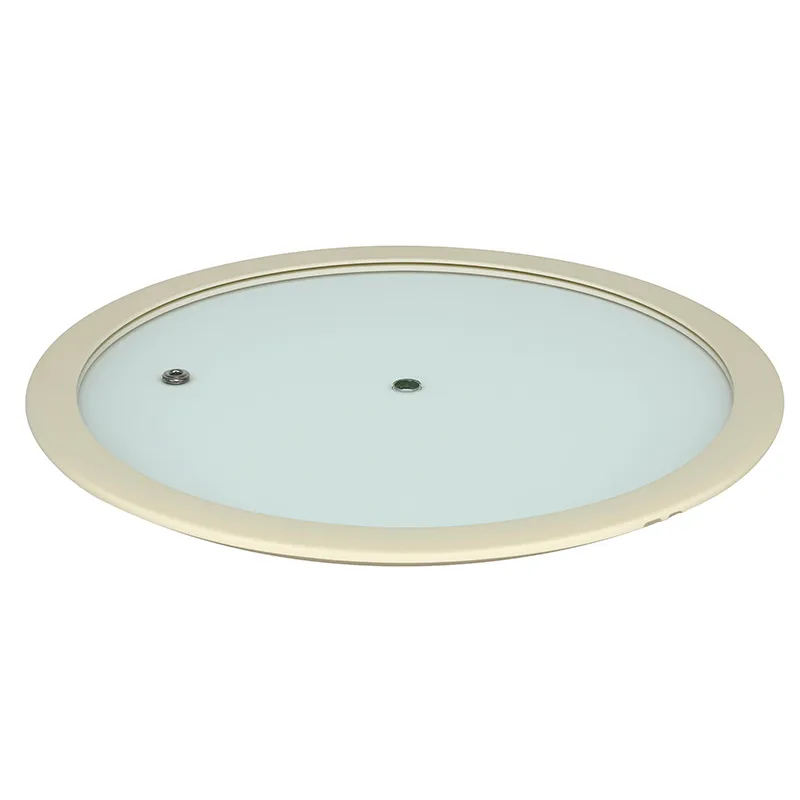
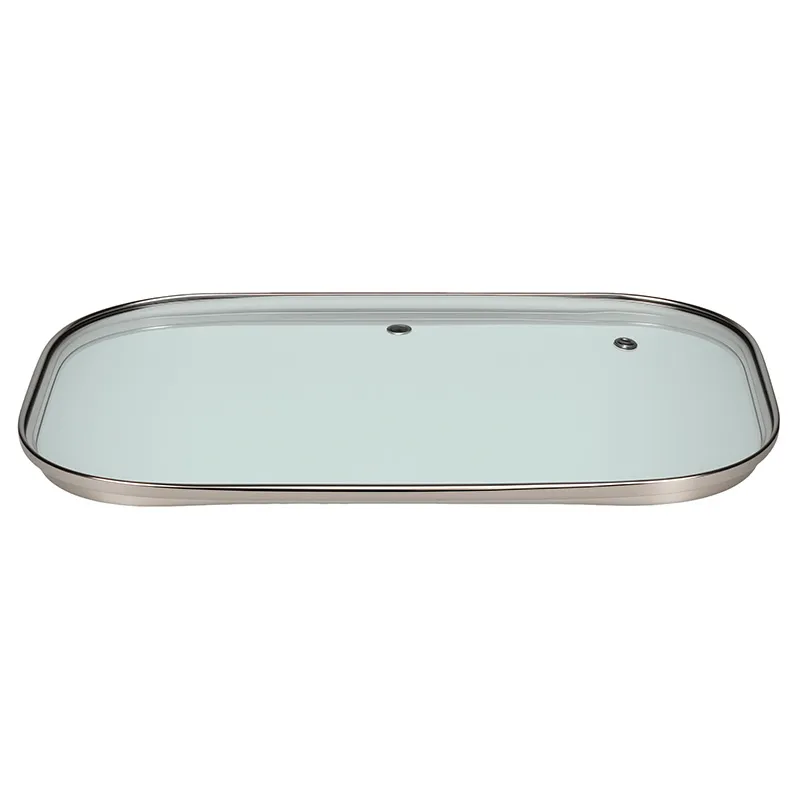
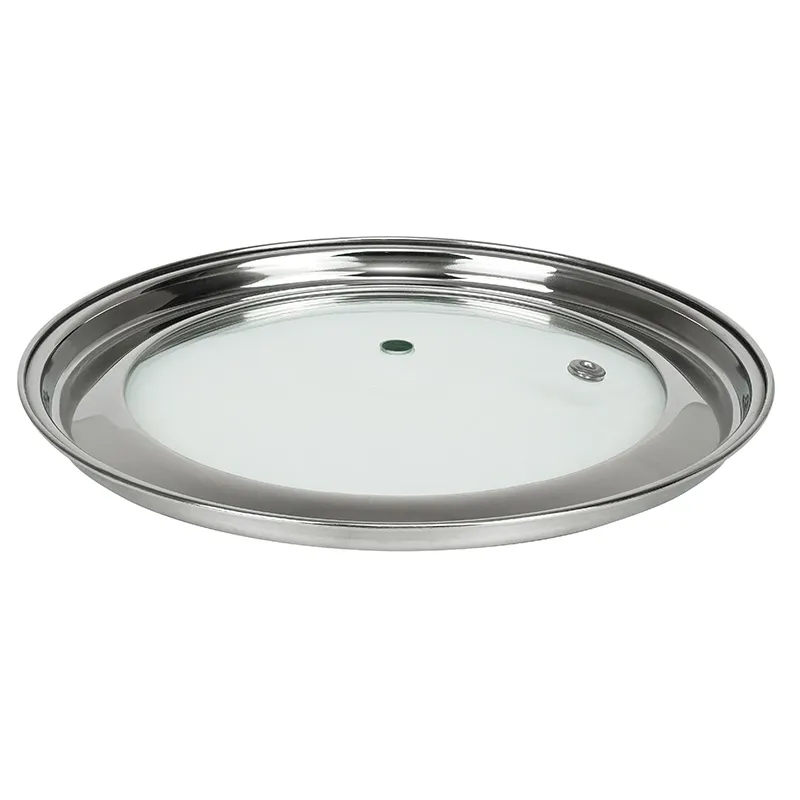
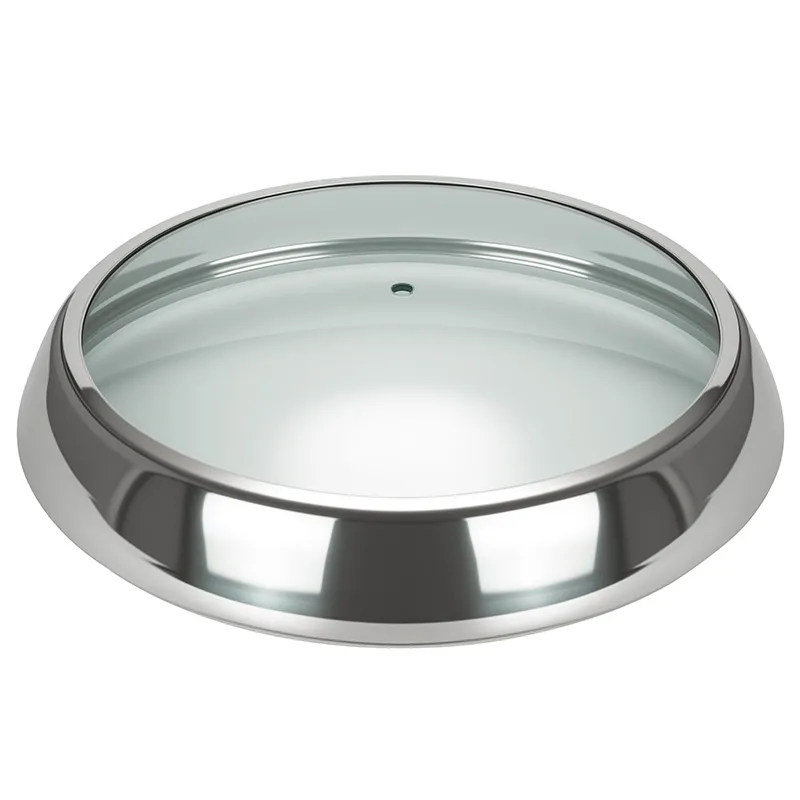
tempered glass lid factory
When you hear 'tempered glass lid factory,' most people picture a sterile, automated line spitting out perfect, identical lids. That's the first misconception. The reality is far messier, more hands-on, and hinges on a series of small, critical decisions that separate a product that survives a kitchen drop from one that shatters into a thousand pieces. It's not just about tempering; it's about the entire chain from raw material sourcing to the final packaging that prevents chips during a sea freight to Germany.
Raw Material: Where the Real Cost (and Quality) Hides
The choice of glass stock is everything. You can't temper poor-quality soda-lime glass into a reliable lid. We learned this the hard way early on, trying to cut costs on thinner, lower-iron content glass for a budget line. The tempering process itself went fine, but the resulting lids had a higher rate of spontaneous breakage—not from impact, but from minor thermal shock during normal stovetop use. The internal stresses from tempering are brutal; if the base material has subtle inconsistencies, it will find them. Now, we insist on a specific grade, often from a couple of trusted suppliers. The clarity and the slight greenish tint (or lack thereof, for premium lines) tell you a lot before it even hits the cutting table.
This is where a factory's location sometimes offers an unspoken advantage. Being in Shandong, for instance, places you relatively close to some of China's major glass raw material and processing hubs. It doesn't mean you get it for free, but logistics are simpler, and you can be on-site at the glass plant faster to inspect a batch if there's a question. For EUR-ASIA COOKWARE CO.,LTD., with their base in Taian, this proximity is a practical, not just a theoretical, benefit. It allows for tighter control on the first and most critical input.
Cutting and edging come next. The CNC cutting must be precise, but the edge grinding is an art. A perfectly smooth, uniformly rounded edge isn't just for safety; it's what allows the silicone sealing ring to sit flush and create that airtight seal customers in Europe demand. A rough or uneven edge is a guarantee of customer returns for poor fit. We go through diamond grinding wheels at a surprising rate, and the coolant mixture has to be just right to prevent micro-cracks from forming during this stage—cracks that would blow up in the furnace later.
The Tempering Furnace: It's All About the Recipe
The furnace is the heart, but it's a temperamental heart. Saying you have a tempering line means nothing. It's the recipe: the heating curve, the soak time, the quench pressure, and the air nozzle configuration. These settings vary dramatically based on the lid's thickness, diameter, and even the day's ambient humidity in the workshop. For a large, thin tempered glass lid for a stockpot, the settings are wildly different from a small, thick lid for a saucepan. One universal rule: rushing the heat-up is a disaster. It creates thermal stress before the tempering even begins, leading to a weak structure.
I remember a batch for a Polish client where the lids met all the standard impact tests but failed in the field. They were developing hairline cracks around the handle rivet holes after a few months. The issue? The furnace recipe hadn't been adjusted for the slightly different heat absorption rate of that particular glass batch, combined with the concentrated metal-on-glass stress point. The fix was a longer, more gradual soak time to ensure the entire piece, especially around the drilled holes, reached a perfectly uniform temperature before quenching. It cost us a week of production and a shipment, but it fixed the problem. You learn more from these failures than from a thousand perfect runs.
Quality control here is visual and auditory. Post-quench, every single lid gets a once-over under polarized light to check for stress patterns—any anomalies like quench marks or butterfly patterns mean instant rejection. Then there's the tap test. Experienced workers can tap a lid and, from the sound, get a sense of its tension integrity. It sounds like voodoo, but it's a surprisingly effective first-line check before samples go to the lab for formal impact and thermal shock testing.
Ancillary Processes: Where the Product Becomes a Commodity
Tempering is just the core. What surrounds it defines the product's market level. Drilling holes for handles or steam vents is a high-risk operation. It must be done before tempering. A drill bit that's slightly dull, a coolant flow that's insufficient, and you introduce micro-fractures that become failure points. The drilling stations are where you see the highest frequency of material rejection. After tempering, you can't touch the glass with anything harder than itself.
Then there's the assembly. This is where the factory's scale, like the 15,000㎡ building area of EUR-ASIA, shows its value. You need organized lines for attaching stainless steel handles, fitting silicone gaskets, and sometimes adding peripheral items like plastic knobs or clips. The handle attachment is critical. The rivets or bolts must be torqued to a precise specification—too tight, and you stress the glass; too loose, and the handle wobbles. The gasket groove must be clean of any glass dust or debris, or the seal fails. It's meticulous, low-tech work that automation still struggles with reliably for such varied product lines.
Packaging is the final, unsung hero. A tempered glass lid can survive a 1-meter drop test but shatter in a container crossing the Pacific if packed wrong. We use die-cut foam inserts that cradle the lid, not just cover it. The cardboard must be rigid, and the master carton stacking pattern must be designed to prevent point loads. For a factory exporting over 90% of its output, as their intro states, to countries like Germany, Brazil, and Japan, mastering this logistics puzzle is as important as mastering the furnace. A container of broken glass is pure loss, and it destroys client trust faster than anything.
The Export Reality: Compliance and the Feel Factor
Selling to Germany is different from selling to Brazil or South Korea. The standards—like LFGB for food contact in Germany—are non-negotiable. It's not just about the glass; it's about the silicone in the gasket, the coatings on the metal handle, the inks used for printing logos. Documentation and material traceability are huge. A factory needs a robust QC lab not just for physical tests, but for chemical migration tests. This is what separates a serious tempered glass lid factory from a workshop. The ability to provide a full compliance dossier for each shipment is a key selling point.
Then there's the aesthetic feel demanded by different markets. Italian and French buyers often prioritize flawless clarity and a minimalist handle design. Buyers in some other regions might prioritize extreme durability over optical perfection. A factory has to be flexible enough to run these different grades and specs on the same line, which is a scheduling and inventory nightmare. It speaks to a mature operation when you can visit their facility, like the one described at https://www.glass-lid.com, and see separate zones or lines dedicated to different market segments, all running simultaneously. The annual output of 15 million pieces they mention isn't just a number; it implies they've solved this complexity puzzle.
Failure in exports often comes from underestimating these soft requirements. We once produced a beautiful lid for a Scandinavian client. It passed every lab test. But the client rejected the entire order because the specific shade of the silicone gasket (a pale grey) was two Pantone shades off from their brand standard. It was a costly lesson in specification granularity. Now, color matching happens under specific lighting, and approved physical samples are locked away for every component.
Final Thoughts: The Factory as an Ecosystem
So, a tempered glass lid factory isn't a single machine. It's an ecosystem. It's the sourcing agent arguing over glass quality, the furnace operator tweaking a setting by two degrees, the assembly worker feeling for a loose rivet, and the logistics manager calculating stack height in a 40-foot container. The company profile of EUR-ASIA COOKWARE, with its specific details on size, output, and export markets, maps directly onto this reality. The 90+ employees aren't just workers; they're people performing these specific, judgment-based tasks across 20,000㎡.
The real sign of a good factory isn't in glossy brochures, but in how they talk about problems. If they claim perfection, be wary. If they can detail a past failure—like the Polish lid issue or a packaging redesign after a shipping disaster—and explain the concrete steps they implemented to prevent it, that's real expertise. It's that accumulated, sometimes painful, operational knowledge that lets a factory reliably produce millions of lids a year that will survive in kitchens from Switzerland to Japan.
In the end, the lid is a simple product. But the process to make it well, consistently, and at scale, is deceptively complex. It sits at the intersection of materials science, mechanical engineering, and gritty, hands-on production management. That's what you're really looking for when you're evaluating a supplier behind the keyword 'tempered glass lid factory'.
Related Products
Related Products