- Chinese
- French
- German
- Portuguese
- Spanish
- Russian
- Japanese
- Korean
- Arabic
- Irish
- Greek
- Turkish
- Italian
- Danish
- Romanian
- Indonesian
- Czech
- Afrikaans
- Swedish
- Polish
- Basque
- Catalan
- Esperanto
- Hindi
- Lao
- Albanian
- Amharic
- Armenian
- Azerbaijani
- Belarusian
- Bengali
- Bosnian
- Bulgarian
- Cebuano
- Chichewa
- Corsican
- Croatian
- Dutch
- Estonian
- Filipino
- Finnish
- Frisian
- Galician
- Georgian
- Gujarati
- Haitian
- Hausa
- Hawaiian
- Hebrew
- Hmong
- Hungarian
- Icelandic
- Igbo
- Javanese
- Kannada
- Kazakh
- Khmer
- Kurdish
- Kyrgyz
- Latin
- Latvian
- Lithuanian
- Luxembou..
- Macedonian
- Malagasy
- Malay
- Malayalam
- Maltese
- Maori
- Marathi
- Mongolian
- Burmese
- Nepali
- Norwegian
- Pashto
- Persian
- Punjabi
- Serbian
- Sesotho
- Sinhala
- Slovak
- Slovenian
- Somali
- Samoan
- Scots Gaelic
- Shona
- Sindhi
- Sundanese
- Swahili
- Tajik
- Tamil
- Telugu
- Thai
- Ukrainian
- Urdu
- Uzbek
- Vietnamese
- Welsh
- Xhosa
- Yiddish
- Yoruba
- Zulu
- Kinyarwanda
- Tatar
- Oriya
- Turkmen
- Uyghur


tempered glass lid manufacturer in China
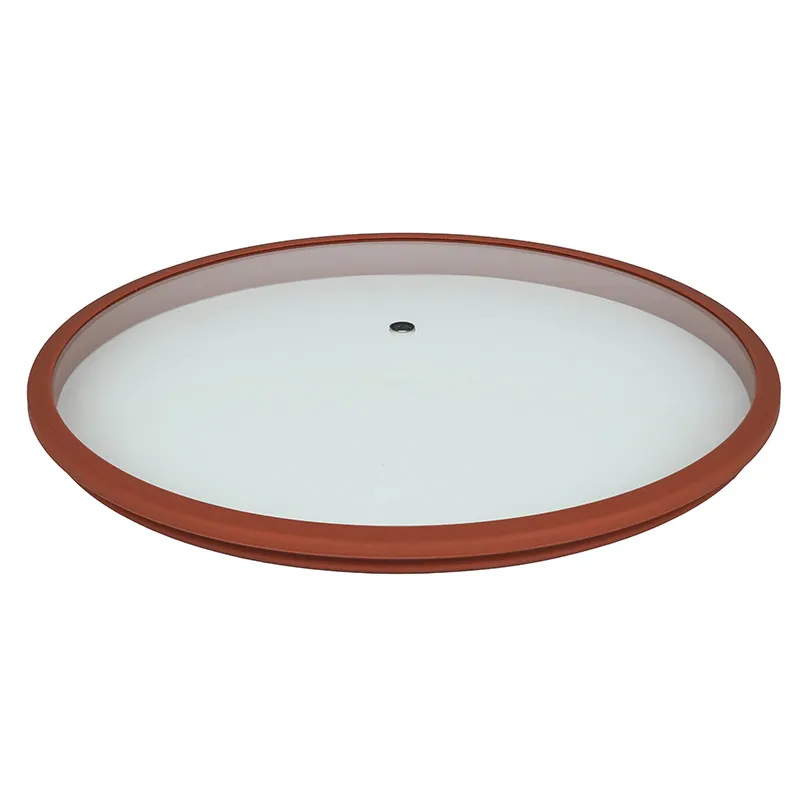
When you type 'tempered glass lid manufacturer in China' into a search bar, you're likely met with a dizzying array of options, all promising the same thing: quality, price, and reliability. The common misconception, especially for new importers, is that it's a homogeneous market. It's not. The difference between a supplier that delivers a consistent product and one that causes constant headaches often comes down to nuances most catalogs don't show—things like the specific annealing curve used in tempering, the source of their raw glass sheets, and whether their quality control is proactive or just for show. Having sourced and developed products with various Chinese factories for over a decade, I've learned that the keyword isn't just about finding a maker; it's about identifying a partner who understands the stresses a lid goes through, from a dishwasher's thermal shock to the impact of a casual drop.
The Core Hub: Shandong and the Specialization Reality
Most serious inquiries will eventually lead you to Shandong province, particularly areas like Taian. It's not a coincidence. The region has developed a mature ecosystem for glass processing, with clusters of factories specializing in different stages. You don't just find a tempered glass lid manufacturer; you find networks. One factory might excel at deep bending for wok lids, another at precision grinding edges for European-style casserole dishes. The company EUR-ASIA COOKWARE CO.,LTD., operating out of Taian's National High-tech Development Zone, is a typical example of a vertically integrated player in this space. With a 20,000㎡ facility, they control the process from cutting to tempering to packaging, which is a significant advantage for consistency.
The specialization extends to market segments. A factory's entire line might be geared toward the mid-tier German market, requiring specific certifications and edgework finishes, while another next door services the price-sensitive bulk orders for emerging markets. EUR-ASIA's breakdown—over 90% export to Europe, Japan, and Korea—immediately tells you about their positioning. They're not chasing the absolute lowest price point; they're built for buyers who need compliance with international safety standards and can appreciate a finer satin-finish edge over a simple ground one.
This geographic concentration means due diligence is somewhat easier. A visit to Taian lets you audit three or four potential partners in a day. But it also creates a herd mentality. When one factory invests in a new Italian edging machine, a dozen others claim to have the same capability within months. The real test is in their daily production logs and their rejection pile.
Beyond the Quotation: What Specs Really Matter
A quote will list dimensions, thickness (often 3mm or 4mm tempered), and maybe a handle type. The real conversation starts after. What's the actual tolerance on the diameter? Is it ±0.5mm or a sloppy ±1.5mm? That difference determines if the lid sits flush or rattles. For a tempered glass lid manufacturer, the tempering process itself is the black box. The nominal strength is a given, but how they manage the quenching (rapid cooling) affects the stress pattern. A poorly calibrated line can leave weak spots near the handle holes or cause subtle warping.
Then there's the glass itself. Are they using clear float glass from a major producer like Xinyi or CSG, or cheaper, less flat sheet glass? The clarity and lack of distortion are paramount for a premium product. EUR-ASIA's focus on household products for markets like Germany suggests they're likely using reputable source material, as those buyers routinely conduct material traceability checks. I recall a project where we insisted on a certificate of origin for the glass substrate; the factory that couldn't provide it was the same one whose lids later failed our thermal shock tests.
Handle attachment is a perpetual failure point. Stainless steel bail handles attached with rivets or silicone grommets are standard. The devil is in the torque applied to the rivet and the quality of the silicone. Cheap silicone degrades after repeated dishwasher cycles, leading to handle wobble. A good manufacturer will have a torque-testing jig on the assembly line and will use food-grade, high-temperature-resistant silicone. It's a small component that speaks volumes about their attention to detail.
The Export Machine: Compliance and Logistics
Manufacturing is one thing; getting the product to your warehouse intact is another. A true export-oriented tempered glass lid manufacturer has packaging down to a science. For glass, it's not just about protection; it's about weight optimization. EUR-ASIA's annual output of 15 million pieces hints at a highly efficient packaging and logistics operation. They'll typically use molded pulp inserts or rigid PVC clamshells inside the master carton, designed to survive a 1.2-meter drop test. The carton's ply count and the palletization pattern are non-negotiable discussion points.
Certifications are the ticket to play. CE, LFGB, FDA... the list goes on. Most serious factories in Taian will have these on file. However, the critical step is ensuring the certification applies to the specific product you're ordering. A factory might have a general CE certificate for tempered glassware, but you need documentation that covers your lid's specific size, thickness, and intended use (e.g., oven-safe up to 400°F). Reputable suppliers like the one mentioned have this process streamlined for their key markets.
Logistics from inland China adds a layer. Taian is not a port city. The factory must have reliable freight forwarder relationships to handle the land transport to Qingdao or Shanghai port without damage. Their experience exporting to over a dozen countries, as seen in EUR-ASIA's profile, means they've solved these riddles countless times. They should be able to advise on optimal container loading to minimize breakage and maximize cube utilization.
Pitfalls and the Sample vs. Production Divide
The single biggest risk is the discrepancy between the approved sample and mass production. A factory can hand-make a perfect sample. Their challenge is replicating it 50,000 times. I've been burned by this. The sample lid had a beautifully smooth, fire-polished edge. The first production batch had sharp, ground edges that felt cheap. The excuse? The fire-polishing line was down, so we used standard grinding to meet the deadline. The solution is to write your critical quality attributes (CQA)—edge finish, clarity, handle tightness, dimensional tolerance—into the purchase contract and conduct pre-shipment inspections that specifically check those points.
Another pitfall is assuming all lids are created equal for all applications. A lid for a slow cooker faces different thermal stresses than one for a stockpot used on an induction hob. A manufacturer experienced in the European market, where induction cooking is ubiquitous, will understand the need for even thicker, more uniformly tempered glass to withstand the direct and intense heat from below. This is where a manufacturer's export history becomes a tangible asset.
Communication is a subtle pitfall. The language barrier is obvious, but the technical translation barrier is worse. Terms like chamfer, radius, and stress pattern get lost. The most effective communication is visual. Providing detailed engineering drawings with clear callouts and even sending a physical golden sample that you've both marked up with notes is far better than a hundred emails.
Finding the Right Partner: A Practical Approach
So, how do you cut through the noise? Start with suppliers who are transparent about their capabilities and limitations. A website like https://www.glass-lid.com for EUR-ASIA COOKWARE gives you a baseline: location, scale (90+ employees, 15,000㎡ building), and key markets. It shows they are a legitimate, mid-sized player with a focus on export. That's a solid starting point for a contact, not an endpoint for evaluation.
The first question should never be about price. It should be about their process control. Ask for a video walkthrough of their tempering furnace line and their quality inspection station. Ask about their monthly rejection rate and what are the most common reasons for rejection. Their answers will be telling. A confident manufacturer will share this. A vague one will avoid it.
Finally, think in terms of partnership, not just procurement. The right tempered glass lid manufacturer will work with you to solve problems. When we had an issue with condensation drip from a specific lid shape, our partner in Taian prototyped three different slight curvature adjustments to the glass to direct the drip back into the pot. That kind of collaborative problem-solving is what turns a supplier into a strategic asset. It moves the relationship beyond the transactional search for the lowest cost per piece and into the realm of developing a better, more reliable product together. That's the real value hidden behind those search results.
Related Products
Related Products