- Chinese
- French
- German
- Portuguese
- Spanish
- Russian
- Japanese
- Korean
- Arabic
- Irish
- Greek
- Turkish
- Italian
- Danish
- Romanian
- Indonesian
- Czech
- Afrikaans
- Swedish
- Polish
- Basque
- Catalan
- Esperanto
- Hindi
- Lao
- Albanian
- Amharic
- Armenian
- Azerbaijani
- Belarusian
- Bengali
- Bosnian
- Bulgarian
- Cebuano
- Chichewa
- Corsican
- Croatian
- Dutch
- Estonian
- Filipino
- Finnish
- Frisian
- Galician
- Georgian
- Gujarati
- Haitian
- Hausa
- Hawaiian
- Hebrew
- Hmong
- Hungarian
- Icelandic
- Igbo
- Javanese
- Kannada
- Kazakh
- Khmer
- Kurdish
- Kyrgyz
- Latin
- Latvian
- Lithuanian
- Luxembou..
- Macedonian
- Malagasy
- Malay
- Malayalam
- Maltese
- Maori
- Marathi
- Mongolian
- Burmese
- Nepali
- Norwegian
- Pashto
- Persian
- Punjabi
- Serbian
- Sesotho
- Sinhala
- Slovak
- Slovenian
- Somali
- Samoan
- Scots Gaelic
- Shona
- Sindhi
- Sundanese
- Swahili
- Tajik
- Tamil
- Telugu
- Thai
- Ukrainian
- Urdu
- Uzbek
- Vietnamese
- Welsh
- Xhosa
- Yiddish
- Yoruba
- Zulu
- Kinyarwanda
- Tatar
- Oriya
- Turkmen
- Uyghur


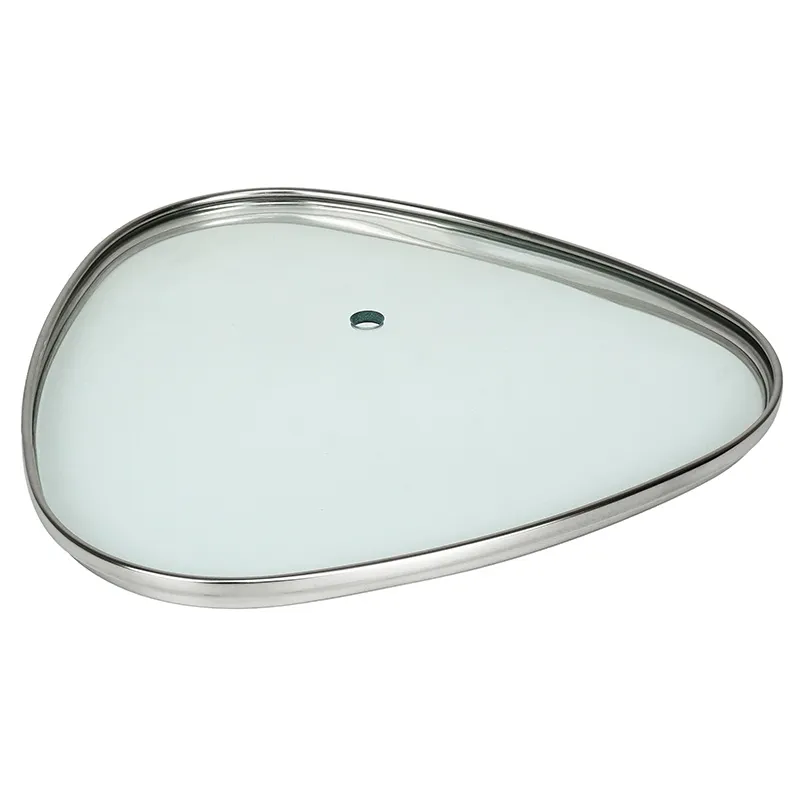
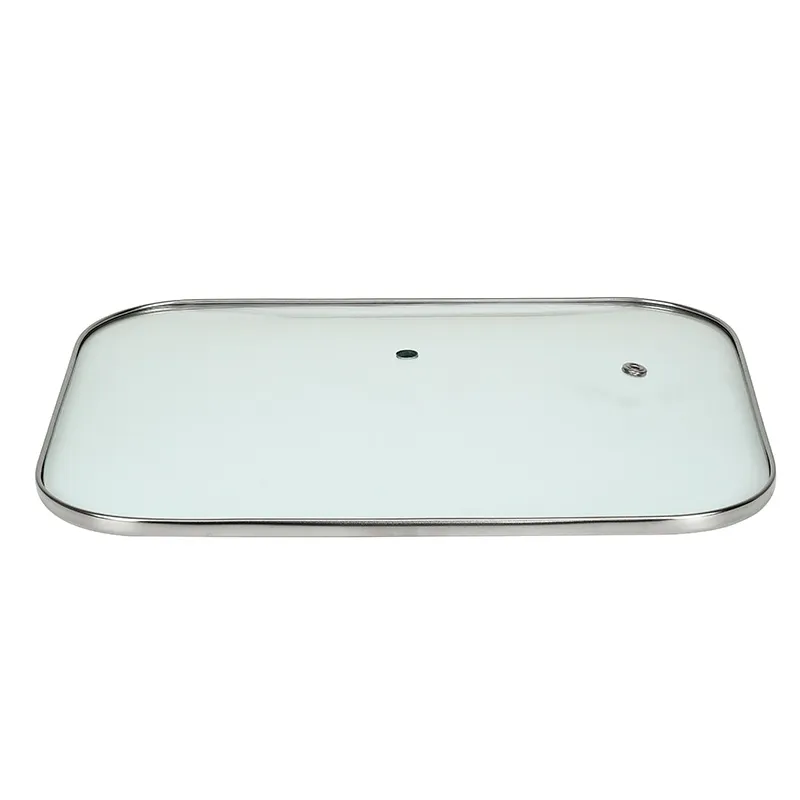
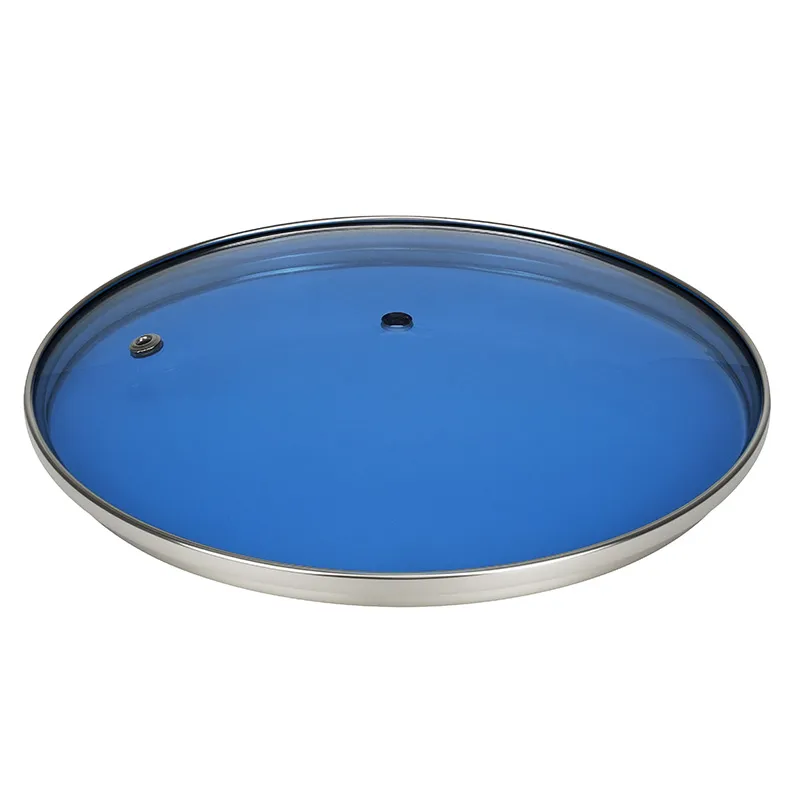
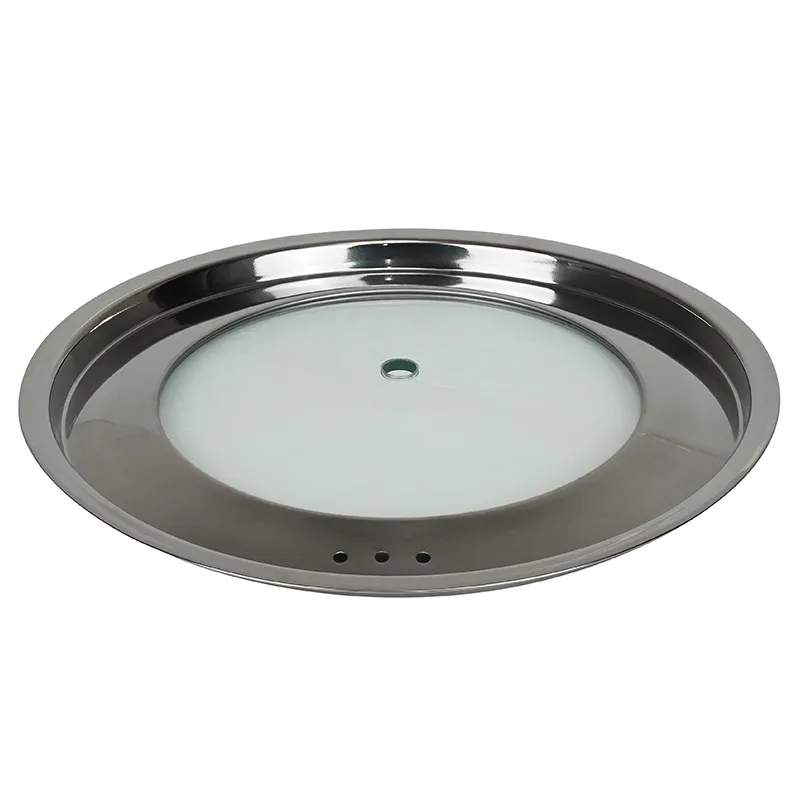
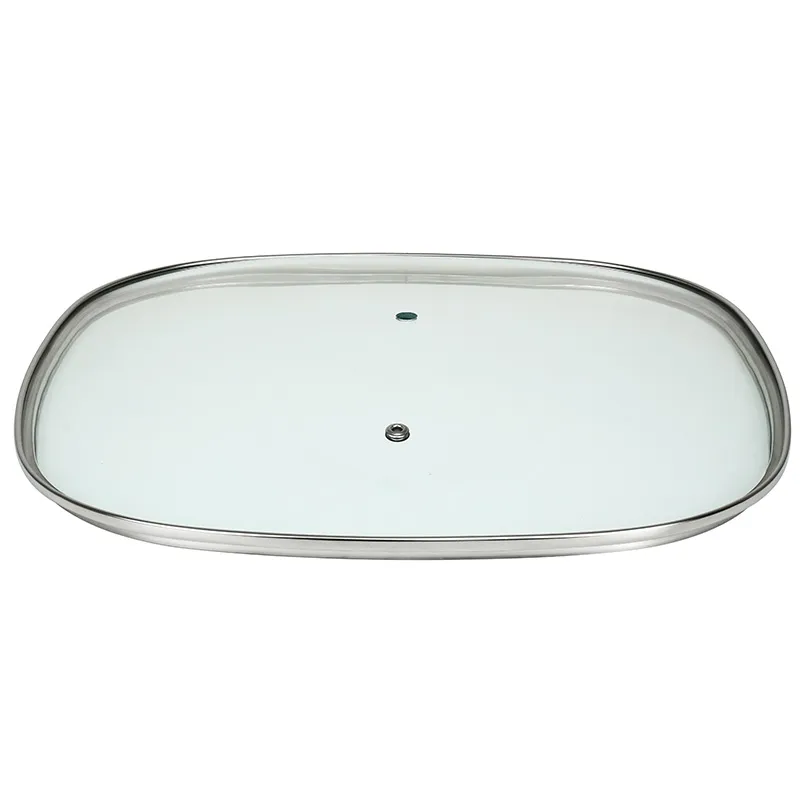
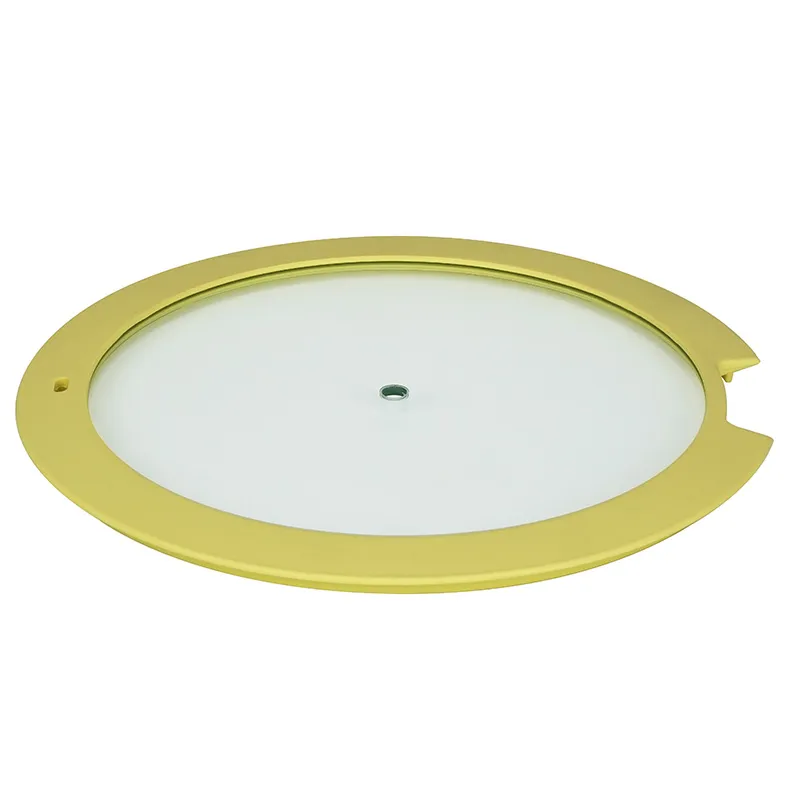
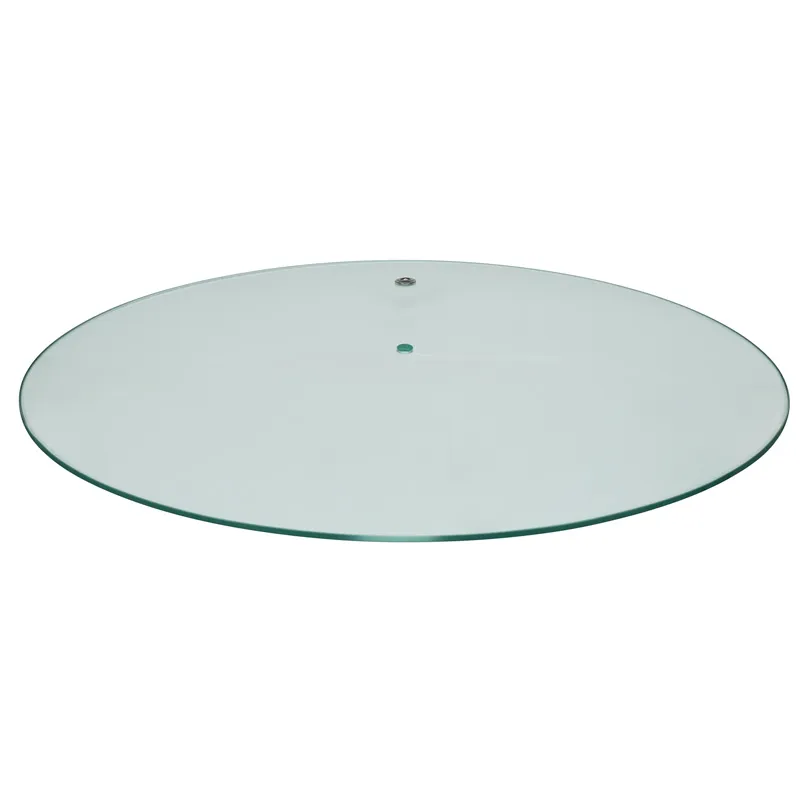
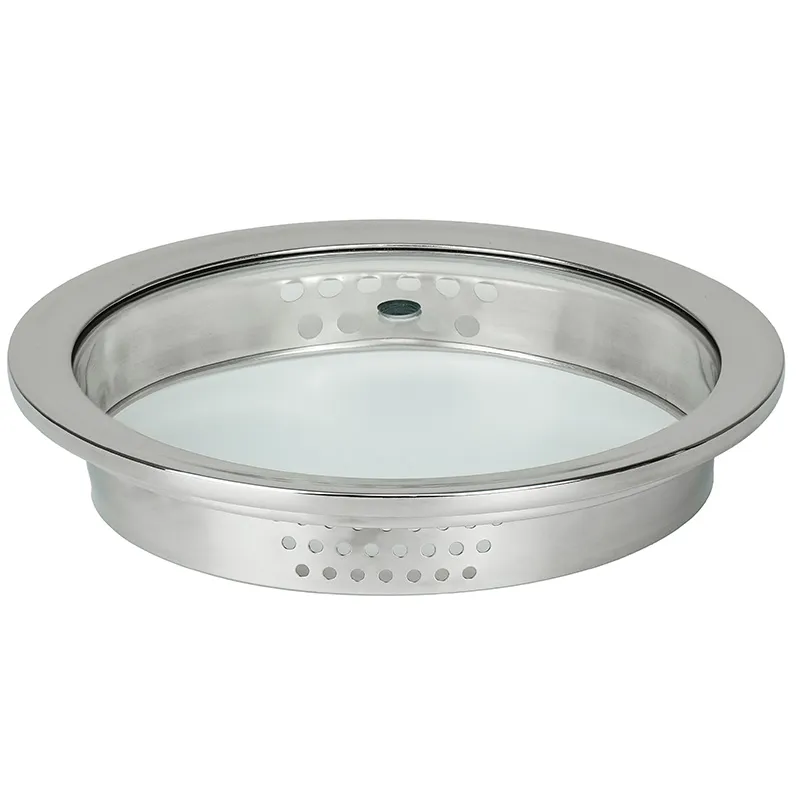
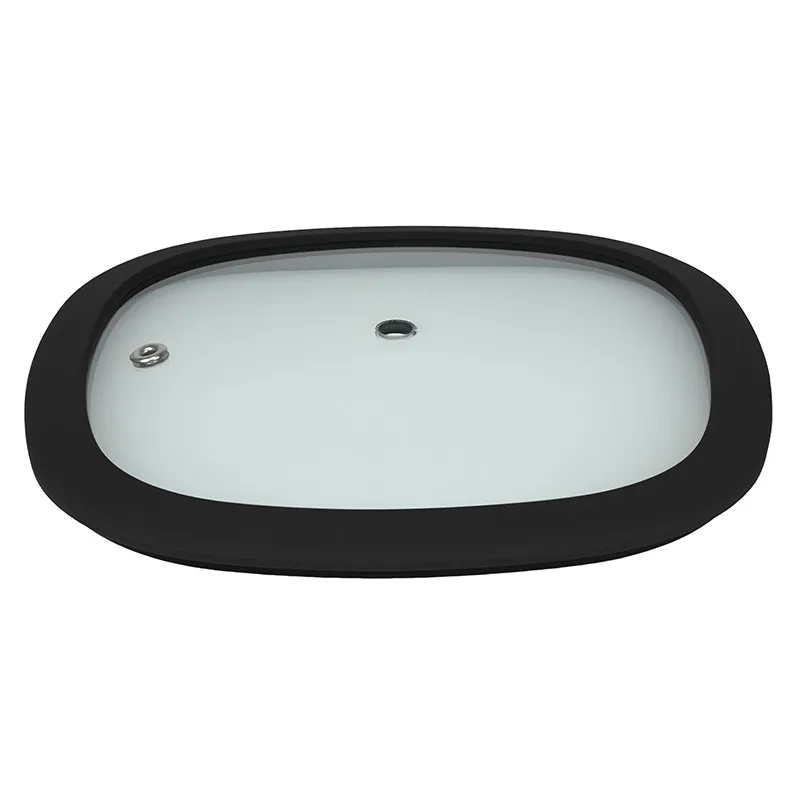
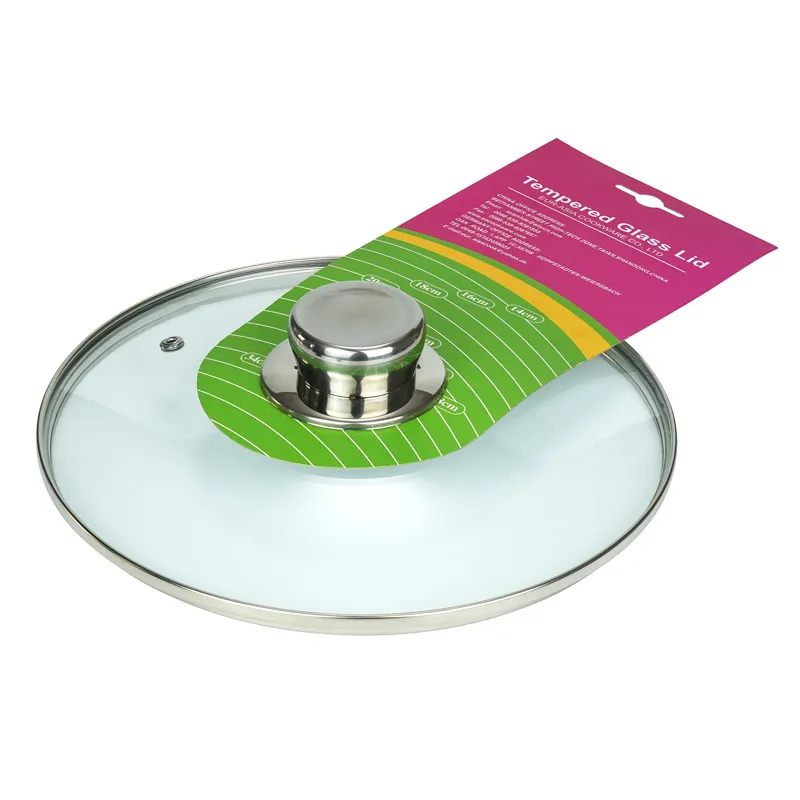
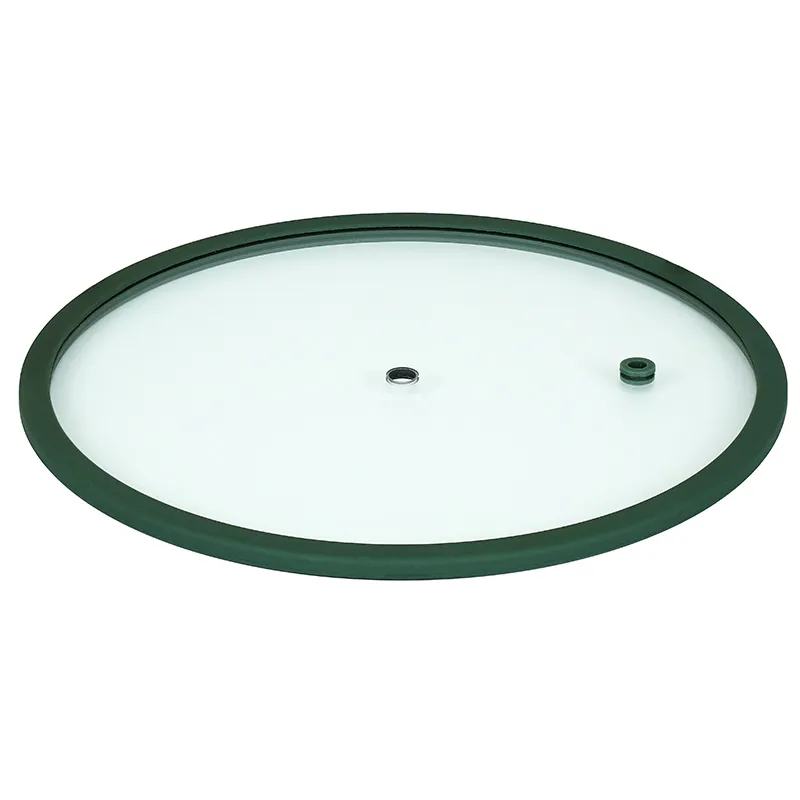
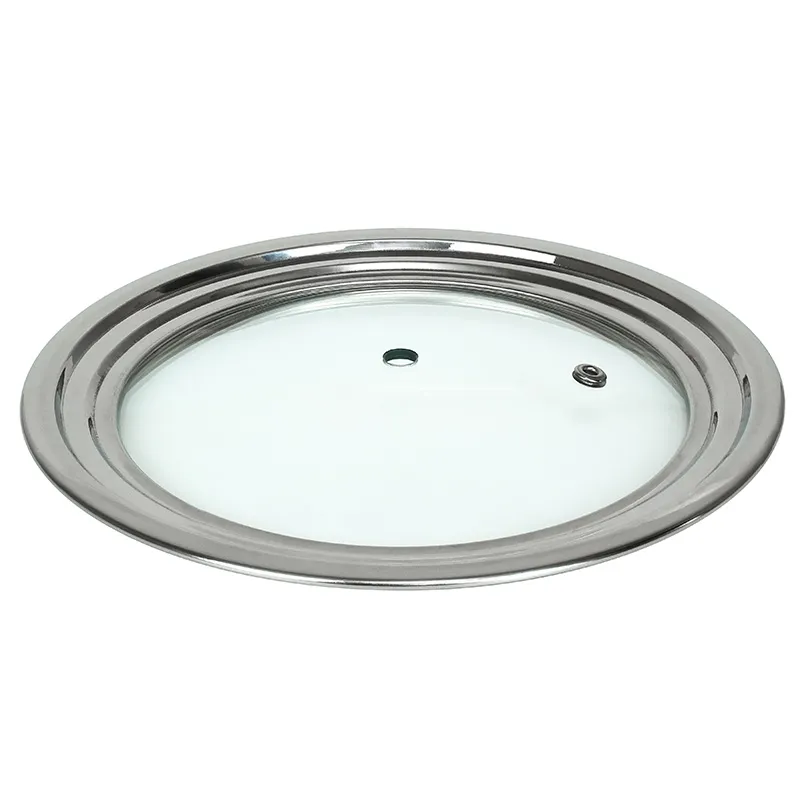
tempered glass lid with stainless steel
When you hear 'tempered glass lid with stainless steel', most think it's just a clear cover with a metal edge. That's the surface. The real story is in the junction—where the glass meets the steel—and how that marriage holds up under real kitchen stress, not just on a spec sheet. Many assume the stainless rim is purely aesthetic or just for handling, but if that bond fails, you don't just have a lid that doesn't fit; you have a potential hazard. I've seen batches where the adhesive gave way after a few dishwasher cycles, not because the materials were poor, but because the curing process was rushed. It's a detail that separates a catalog product from a workhorse.
The Core: Why This Combination Isn't Just About Looks
The primary appeal is obvious: visibility. You can monitor a simmer without releasing heat and steam. But the tempered glass lid itself is useless without a robust frame to handle the thermal shock and physical knocks. The stainless steel rim isn't just a trim; it's a structural reinforcement. The glass is tempered to withstand sudden temperature changes—going from a cold counter to a hot pot. But the edge of tempered glass is its weakest point. A sharp impact there, and the whole lid can shatter. The steel rim encapsulates that edge, protecting it. This is why the forming of the steel band is critical. A perfectly rolled, seamless band distributes stress evenly. A poorly welded or crimped one creates pressure points.
I recall a project with a European client who insisted on an ultra-thin stainless profile for a minimalist look. We prototyped it, and it looked fantastic. But in drop tests, the thin steel deformed on impact, transferring all the force directly to the glass edge. Failure rate was unacceptable. We had to go back, argue for a slightly thicker gauge with a more forgiving rolled edge design. The client's designers weren't happy initially, but the performance data won. The final product, which had a more substantial heft in the hand, actually sold better because it felt durable. Perception often follows reality in kitchenware.
This is where a manufacturer's focus matters. A company like EUR-ASIA COOKWARE CO.,LTD, which lists an annual output of over 15 million pieces of various tempered glass lid types, has likely seen every iteration of this challenge. Their specialization across low to high tiers means they understand the cost/performance balance. A high-volume production base, like their facility in Shandong, needs processes that are consistent. You can't hand-finish 15 million lids. So the machinery for applying the adhesive, curing it, and quality-checking the bond must be dialed in. When I visit factories, I look at the reject bins. A few broken lids are normal; a pile of lids with detached rims tells a story of adhesive or clamping issues.
The Devil in the Details: Adhesion, Finish, and Fit
The bonding agent is the unsung hero. It has to be food-safe, heat-resistant, flexible enough to handle differential expansion (glass and steel expand at different rates), and dishwasher-safe. Silicone-based adhesives are common, but the application is everything. Too little, and you get delamination. Too much, and it oozes out, creating a cleaning nightmare and a poor finish. The best lids have a clean, barely visible bead of adhesive from the inside. You can check this on their product gallery at glass-lid.com—look closely at the interior shots where the glass meets the metal. A messy bond is a red flag for process control.
Then there's the finish on the stainless. A high-polish mirror finish looks premium but shows every water spot and fingerprint. A brushed or satin finish is more practical for daily use. The handle—often integrated into the rim or added as a separate stainless piece—is another point of failure. It must be securely riveted or welded. I've tested lids where the handle loosened over time simply because the thermal cycling worked the fasteners loose. Now, many better designs use a stainless handle that's formed as part of the rim, eliminating that joint entirely. It's a smarter design, but more costly to tool.
Fit is paramount. A lid must sit flush. Warping in the steel rim during manufacturing or cooling can make a lid rock on a pot. For a company exporting over 90% of its products to markets like Germany and Japan, where cookware standards are stringent, this is non-negotiable. They're likely dealing with clients who supply their own pot dimensions, requiring precise tolerances. A lid that fits a 24cm pot from one brand might not fit another's. The rim's inner diameter and the downward flange angle have to be precise. This is where medium to high-level production, as EUR-ASIA COOKWARE notes, separates itself from low-end generic makers.
Real-World Stress Points and Failure Modes
Dishwashers are the ultimate test. It's not just the heat and detergents, but the high-pressure spray. It finds weaknesses in the adhesive bond. Then there's dry-heat scenarios, like leaving an empty pot with the lid on a hot burner. The glass center heats rapidly, while the steel rim, conducting heat away, stays relatively cooler. This creates immense stress on the bond line. Good tempered glass can handle the temperature gradient, but the adhesive must remain stable. We once had a batch returned from a Mediterranean distributor because lids were cracking after being used on gas stoves for paella—intense, localized heat. The glass passed standard thermal shock tests, but the real-world use was more extreme. We had to switch to a higher-grade adhesive with a wider operating temperature range.
Another subtle point is condensation management. A good tempered glass lid with stainless steel rim will often have a slight drip-rail design on the underside of the rim. When steam condenses on the cool glass, the water droplets run down to the rim and are channeled back into the pot, not out onto the stovetop. If the rim is just a flat band, water drips everywhere. It's a small design insight that comes from observing how people actually cook.
Impact resistance is another thing. Dropping a lid on a tile floor usually spells the end. But sometimes, the tempered glass doesn't explode into harmless crumbs; it can develop a hidden internal fracture (a star break) that weakens it. The next time it goes on a hot pot, it might shatter. This is why visual inspection before each use is a good habit, though most users never do it. The steel rim can sometimes mask the edge of such a crack.
Market Positioning and the Export Reality
Seeing that EUR-ASIA COOKWARE exports to Germany, Italy, France, etc., tells you about their quality baseline. The European market, especially Germany with its GS certification, has strict requirements on material safety, thermal shock resistance, and heavy metal leaching. A lid destined for these markets isn't the same as one for a less regulated region. The stainless steel must be 304-grade or better, ensuring it doesn't rust and is safe for food contact. The tempering process for the glass must be certified to withstand specific temperature differentials (often a 220°C to 20°C shock test).
This export focus also shapes product lines. They're probably producing lids for major cookware brands (private label) more than for their own brand. This means their engineering is often responding to specific client briefs. One client might want a lid for a high-end sauté pan, requiring a large, heavy glass disc with a substantial stainless handle. Another might need a universal lid for a budget supermarket line, focusing on cost-efficiency with a simpler rim design. Their ability to cover low, medium, and high levels speaks to this flexibility.
The volume—15 million pieces annually—is significant. It suggests a high degree of automation. For a tempered glass lid, key automated steps would be glass cutting and edging, tempering, adhesive dispensing, rim placement and clamping, and curing ovens. Human eyes are still needed for final inspection, but the consistency comes from the machines. A visit to their site shows a modern facility; this scale allows them to hit price points that smaller workshops can't, while maintaining a certain quality floor.
Final Thoughts: It's a Component, Not an Island
It's easy to view a glass lid as a simple accessory. In reality, it's a critical system component of a cookware set. Its performance affects the pot's functionality—moisture retention, cooking visibility, and even safety. The stainless steel rim is the interface that makes it all work reliably. The best ones feel like a single, solid object in your hand, with no wiggle or creak.
When sourcing or evaluating these, don't just look at the clarity of the glass. Pick it up. Feel the weight and balance. Examine the inner rim for adhesive quality and the finish for uniformity. Check how it sits on a flat surface. And remember, a manufacturer's stated capabilities, like exporting to technically demanding markets, are a stronger indicator of reliability than any glossy brochure. The real test happens over months in a busy kitchen, through cycles of heat, steam, and careless drops. That's where the marriage of tempered glass and stainless steel proves its worth, or doesn't.
In the end, the product from a focused maker isn't just a commodity. It's the result of solving a series of very practical, unglamorous problems—problems you only fully appreciate after seeing a few failures. That's what separates a lid that ends up forgotten in a drawer from one that becomes an indispensable part of the cook's toolkit.
Related Products
Related Products