- Chinese
- French
- German
- Portuguese
- Spanish
- Russian
- Japanese
- Korean
- Arabic
- Irish
- Greek
- Turkish
- Italian
- Danish
- Romanian
- Indonesian
- Czech
- Afrikaans
- Swedish
- Polish
- Basque
- Catalan
- Esperanto
- Hindi
- Lao
- Albanian
- Amharic
- Armenian
- Azerbaijani
- Belarusian
- Bengali
- Bosnian
- Bulgarian
- Cebuano
- Chichewa
- Corsican
- Croatian
- Dutch
- Estonian
- Filipino
- Finnish
- Frisian
- Galician
- Georgian
- Gujarati
- Haitian
- Hausa
- Hawaiian
- Hebrew
- Hmong
- Hungarian
- Icelandic
- Igbo
- Javanese
- Kannada
- Kazakh
- Khmer
- Kurdish
- Kyrgyz
- Latin
- Latvian
- Lithuanian
- Luxembou..
- Macedonian
- Malagasy
- Malay
- Malayalam
- Maltese
- Maori
- Marathi
- Mongolian
- Burmese
- Nepali
- Norwegian
- Pashto
- Persian
- Punjabi
- Serbian
- Sesotho
- Sinhala
- Slovak
- Slovenian
- Somali
- Samoan
- Scots Gaelic
- Shona
- Sindhi
- Sundanese
- Swahili
- Tajik
- Tamil
- Telugu
- Thai
- Ukrainian
- Urdu
- Uzbek
- Vietnamese
- Welsh
- Xhosa
- Yiddish
- Yoruba
- Zulu
- Kinyarwanda
- Tatar
- Oriya
- Turkmen
- Uyghur

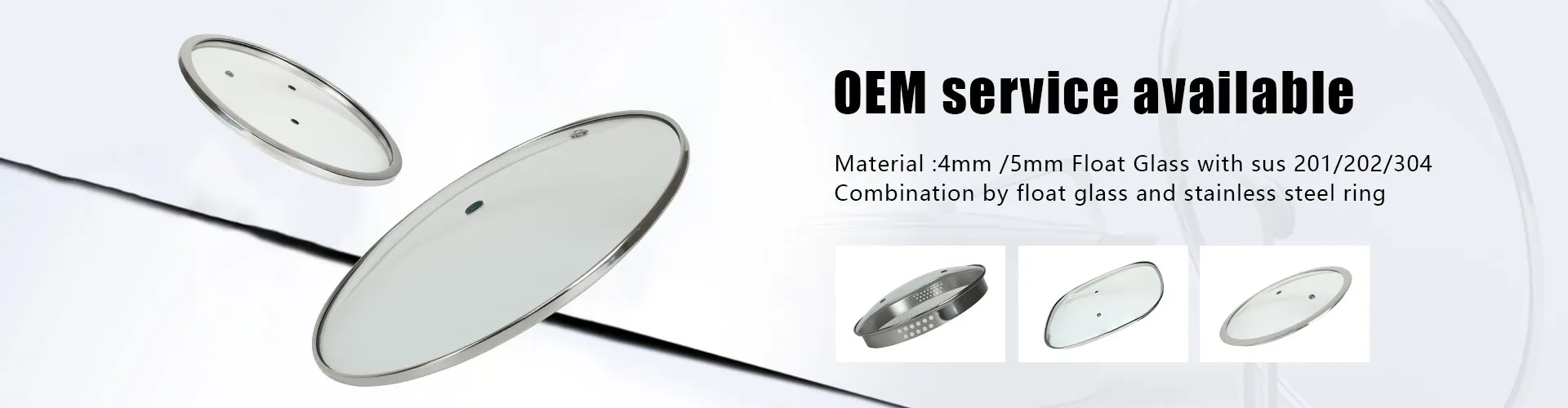
tempered glass sheet
When you say 'tempered glass sheet', most folks picture a big, pristine panel for a shower door or a phone screen. That's not wrong, but in my world, that's just the starting blank. The real story begins when you need to cut, drill, edge, and temper that sheet into something that can handle a 400-degree oven or a sudden impact. There's a common misconception that tempering is a magic bullet—once it's tempered, it's indestructible. That's a fast track to a callback and a broken product. The reality is, the quality of the initial tempered glass sheet and the precision of the fabrication before it even hits the tempering furnace dictate everything.
The Core: It Starts with the Glass Itself
Not all float glass is created equal. We source specific grades, and the first thing we check isn't just clarity, but the stress patterns under a polariscope. Even slight imperfections get amplified during tempering. I've seen batches where the glass looked perfect to the eye, but after tempering, you'd get a subtle bow or warp. Not acceptable for a cookware lid that needs to sit perfectly flat on a pot. That's why for a company like EUR-ASIA COOKWARE CO.,LTD, their production base in Taian invests in pre-processing inspection. You can't just buy any tempered glass sheet off the shelf; you have to control the process from the raw material.
The thickness is another silent variable. For lids, you're often working in the 3mm to 5mm range. Go too thin, and while it tempers beautifully for impact, thermal shock becomes a bigger risk—think cold glass lid placed on a boiling pot. Go too thick, and the tempering process needs more precise heating and quenching to achieve the required surface and core stress balance. It's a balancing act. Their annual output of over 15 million pieces tells me they've dialed in their specs for different markets. German clients might demand a different tolerance than Brazilian ones.
And the edges. This is where theory meets the grinding wheel. A sharp, cut edge on a tempered glass sheet is a failure point waiting to happen. Every edge must be seamed or polished before tempering. If you try to work on it after tempering, it'll explode into a million harmless crumbs. I learned that the hard way early on, trying to adjust a lid's diameter post-temper. A costly lesson in material science.
The Tempering Process: More Art Than Science Sometimes
The furnace is the heart of it. Convection vs. radiation heating, quench air pressure, roller speed—these aren't just settings; they're a recipe. For thin glass lids, you need a fast heat-up to avoid optical distortion, but not so fast it thermal-shocks the sheet before it even gets to the quench. The quench is the critical moment where you lock in the compressive surface stress. The nozzles have to be impeccably clean; a single clogged one can create a stress line that weakens the entire panel.
We do regular quench tests—breaking sample pieces and measuring the fragment size. It must break into small, granular pieces, not large shards. That's the hallmark of properly tempered safety glass. But here's a nuance for cookware: the thermal stability test is just as crucial. We cycle lids from ice water to a hot oven repeatedly. A poorly tempered sheet will fail this long before it fails an impact test. This is likely a key part of the quality protocol for a specialist like EUR-ASIA COOKWARE, given their export focus to markets with strict safety standards.
You also get what you pay for in a tempering line. Older furnaces can have hot spots. I recall a project where we had a consistent failure pattern—lids from the left side of the furnace kept failing thermal shock tests. Took us a week to trace it to a failing heating element bank. The data sheets for the tempered glass sheet all looked perfect, but real-world testing exposed the flaw.
Fabrication Realities: Drilling and Cutting Before the Furnace
All holes for handles, knobs, or steam vents must be drilled before tempering. The drill bit type, speed, and coolant (usually water) are vital. Too much pressure, and you cause micro-cracks that the tempering process will turn into major failures. The positioning of holes relative to the edge is governed by strict rules—typically no closer than 2x the glass thickness. For a lid with a central knob, that's fine, but for designs with side handles, it dictates the minimum glass blank size.
Cutting shapes is another thing. Straight lines are easy. Complex curves for designer lids require CNC waterjet cutting. The waterjet leaves a frosted, slightly rough edge that must be polished smooth. Any tiny chip or flaw on that cut edge becomes a stress concentrator. We do 100% edge inspection on cut blanks under high-intensity light before they even queue for the furnace. It's a bottleneck, but it saves a fortune in rejected tempered pieces.
This is where the scale of a facility matters. EUR-ASIA's 15,000㎡ building area suggests a layout designed for this linear flow: raw sheet storage -> cutting/drilling station -> edge working -> cleaning -> tempering -> inspection -> packaging. Efficiency isn't about speed; it's about minimizing handling of the fragile, pre-tempered glass.
Application Specifics: The Humble Glass Lid
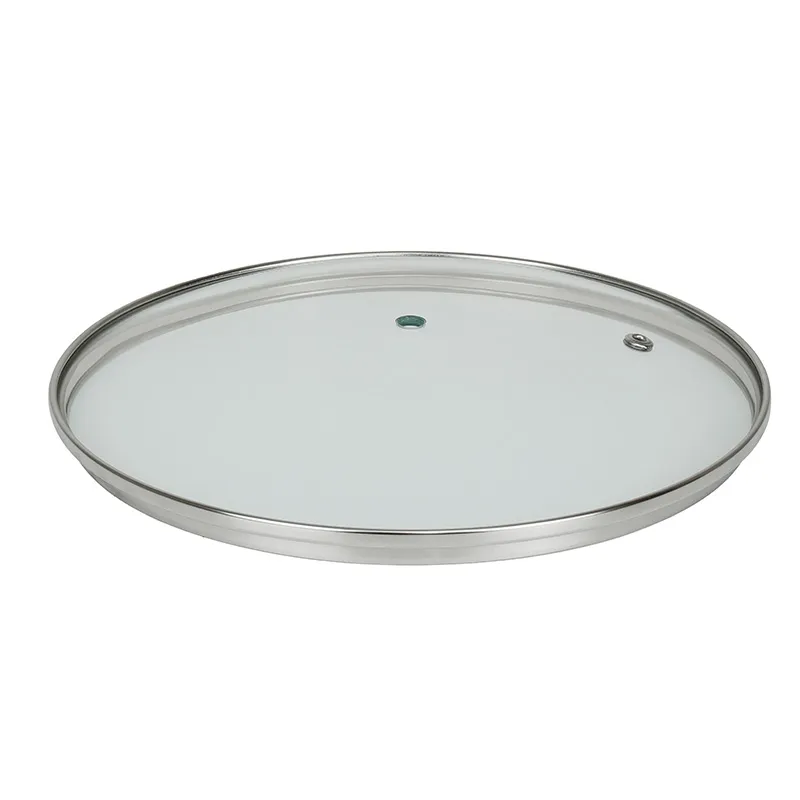
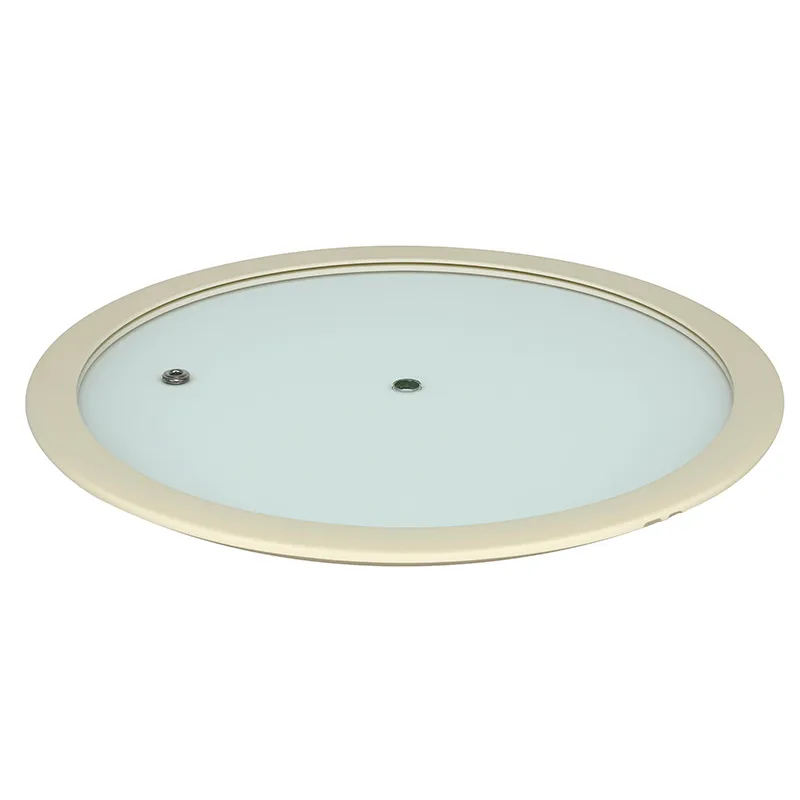
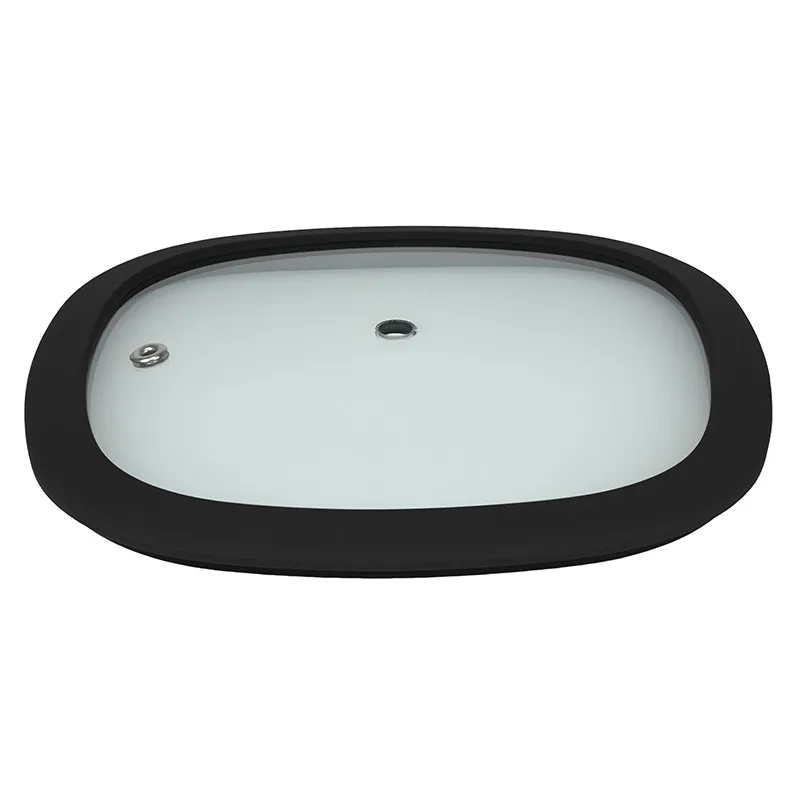
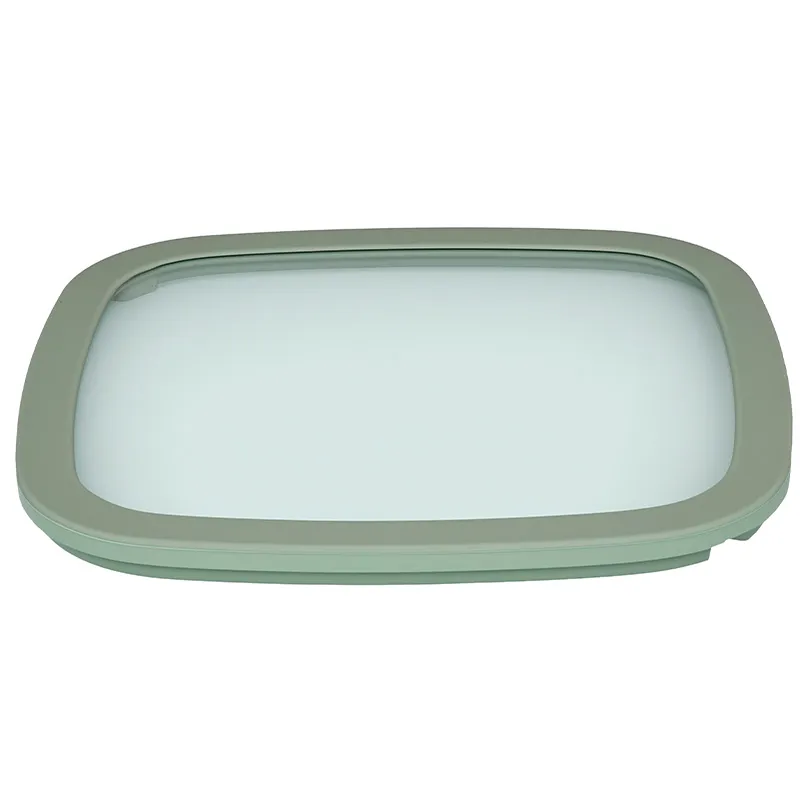
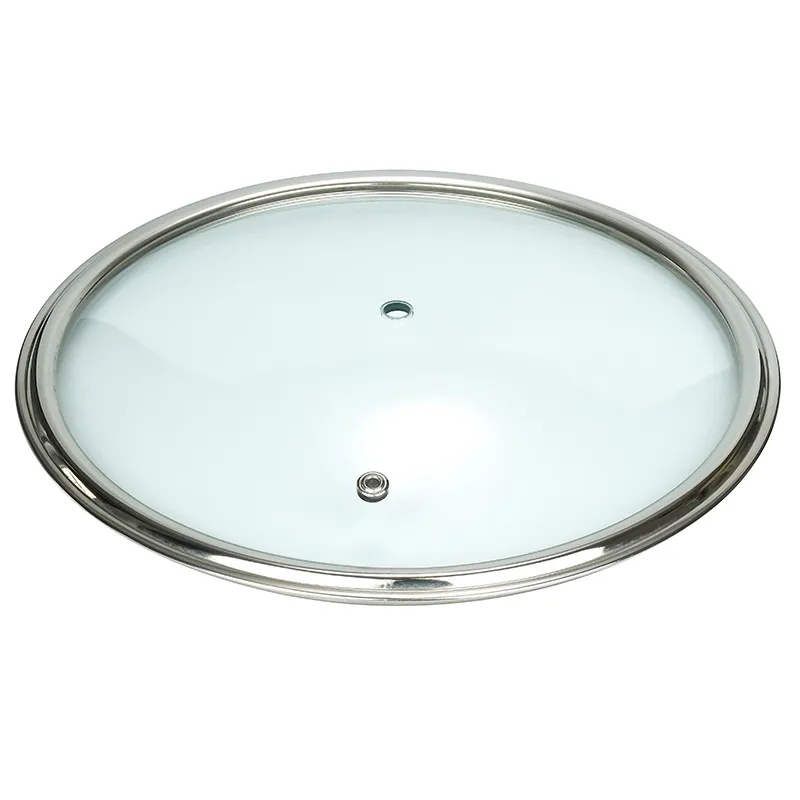
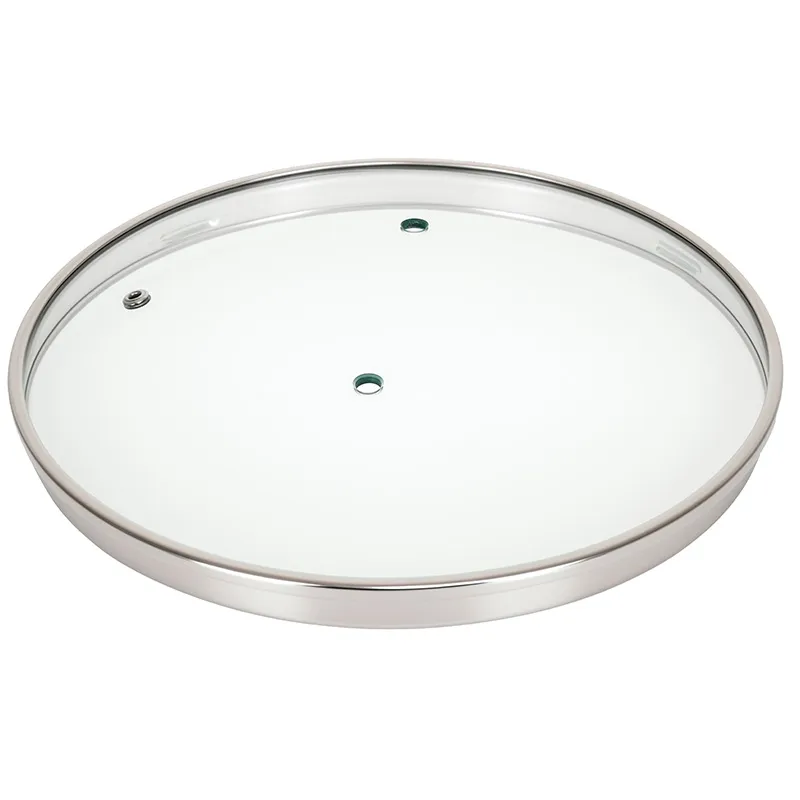
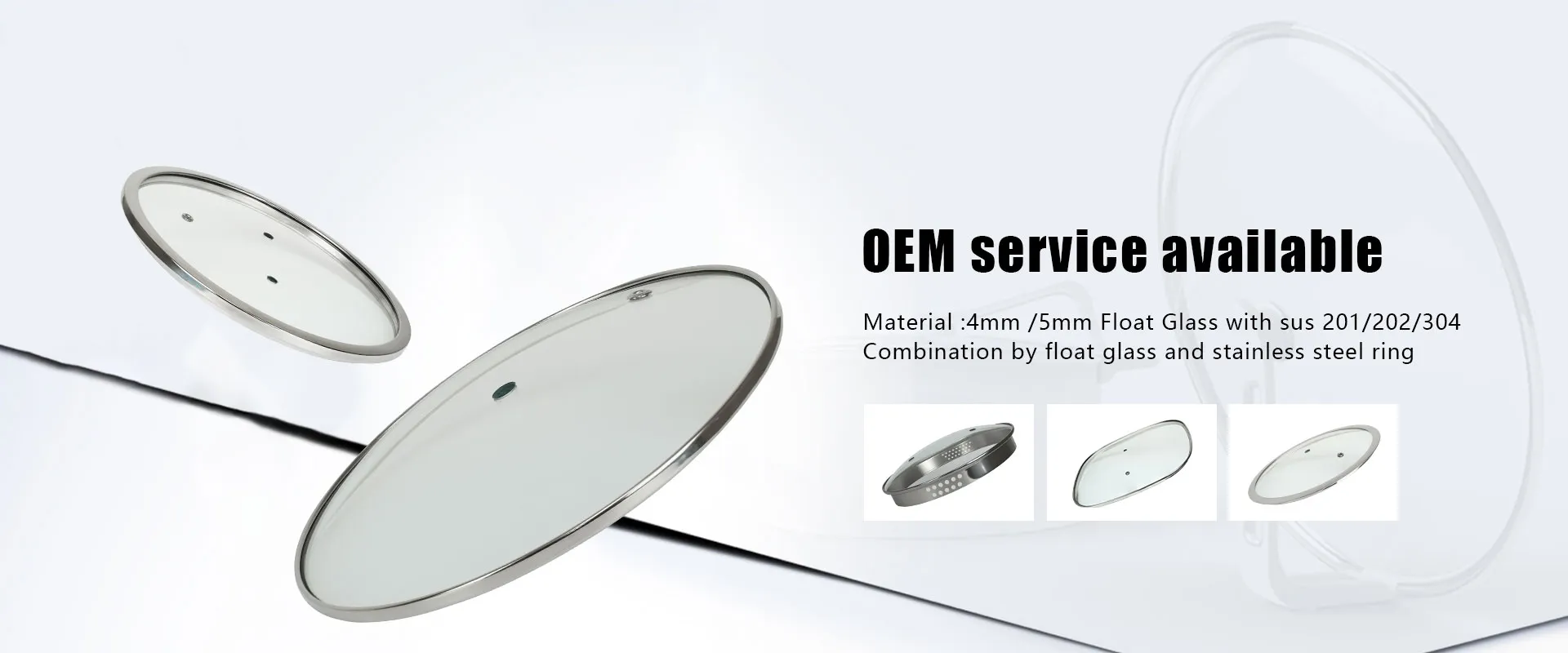
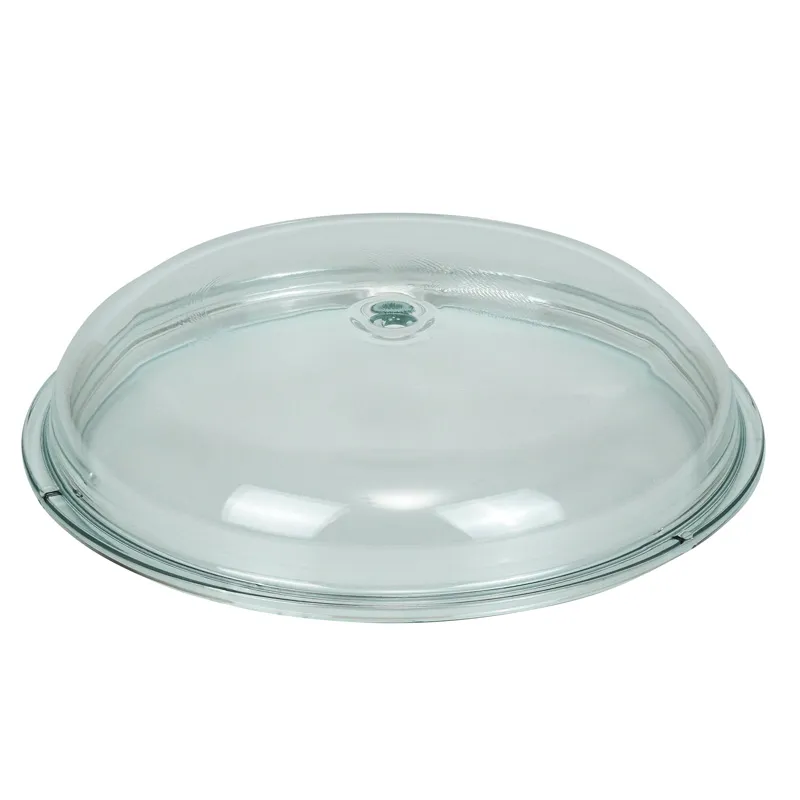
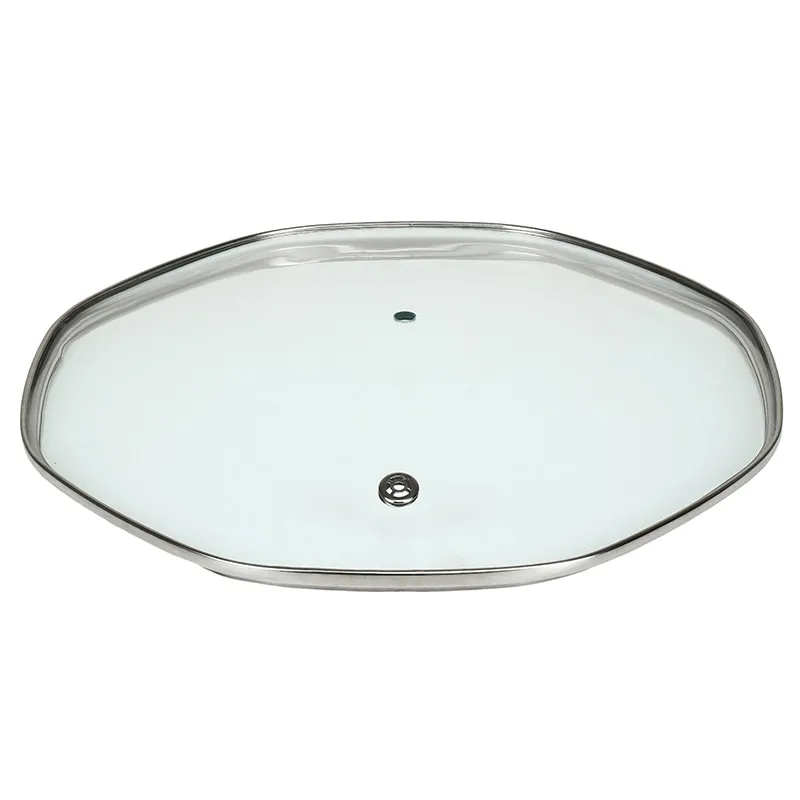
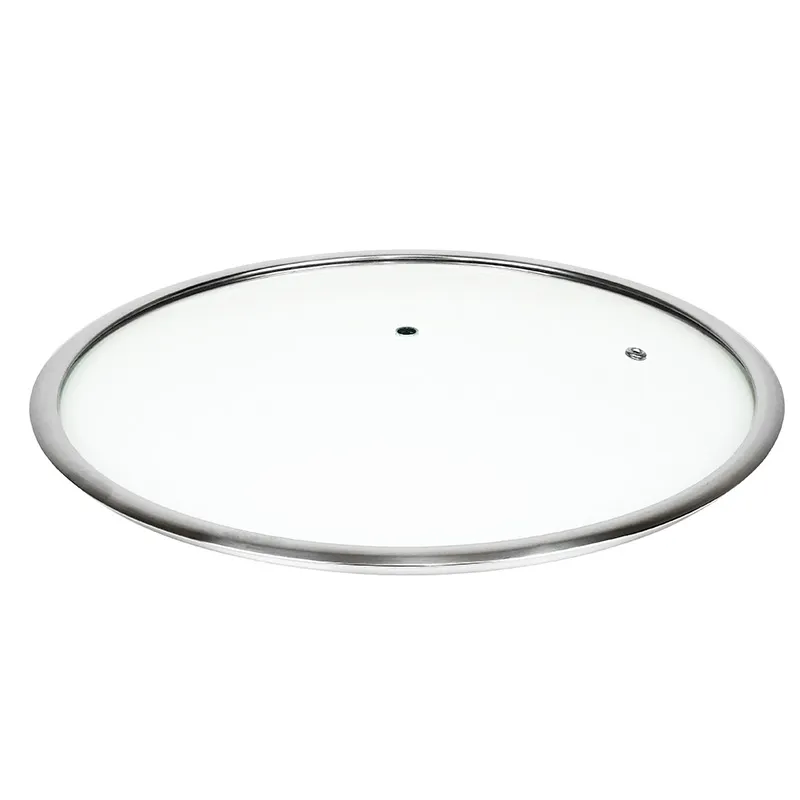
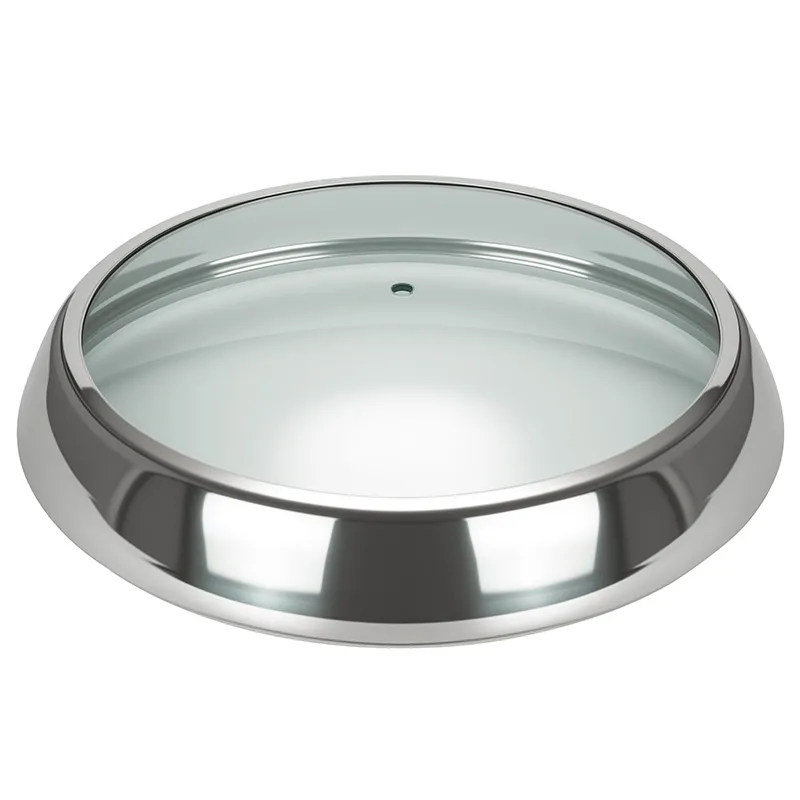
This is the end-use that makes all this precision worthwhile. A cookware lid isn't a passive cover; it's a thermal and mechanical component. It needs to withstand direct flame (for gas stoves), rapid temperature changes, and the occasional knock against a faucet. The tempering provides the strength, but the design—the slight dome, the reinforced rim—adds stiffness.
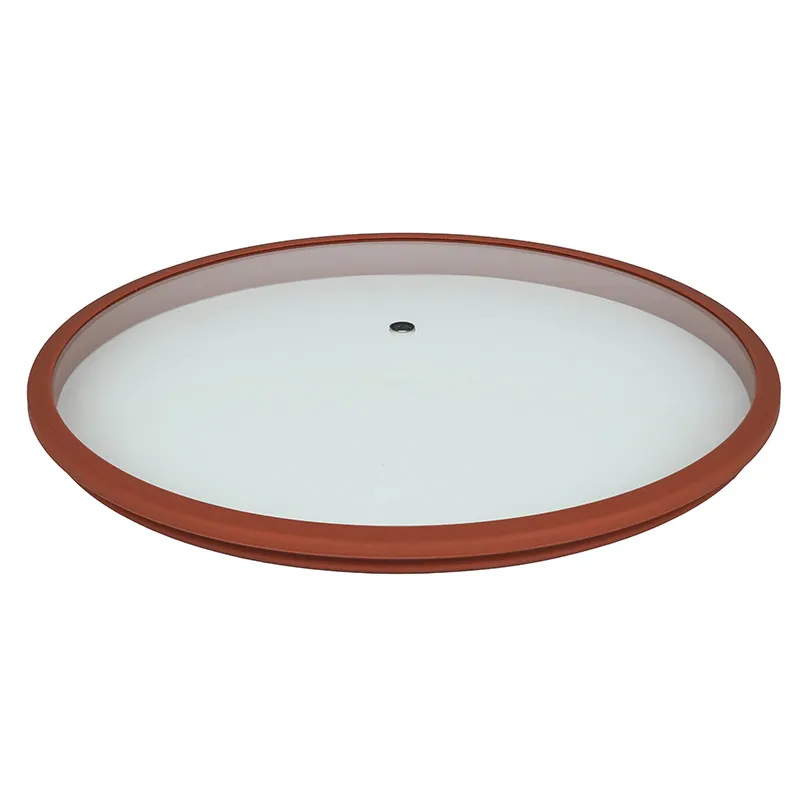
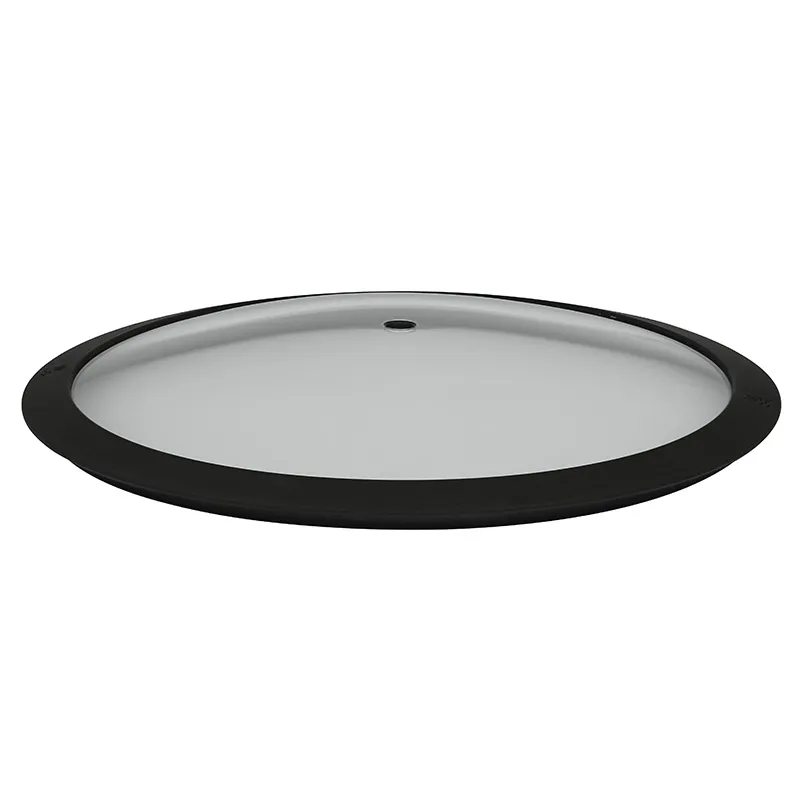
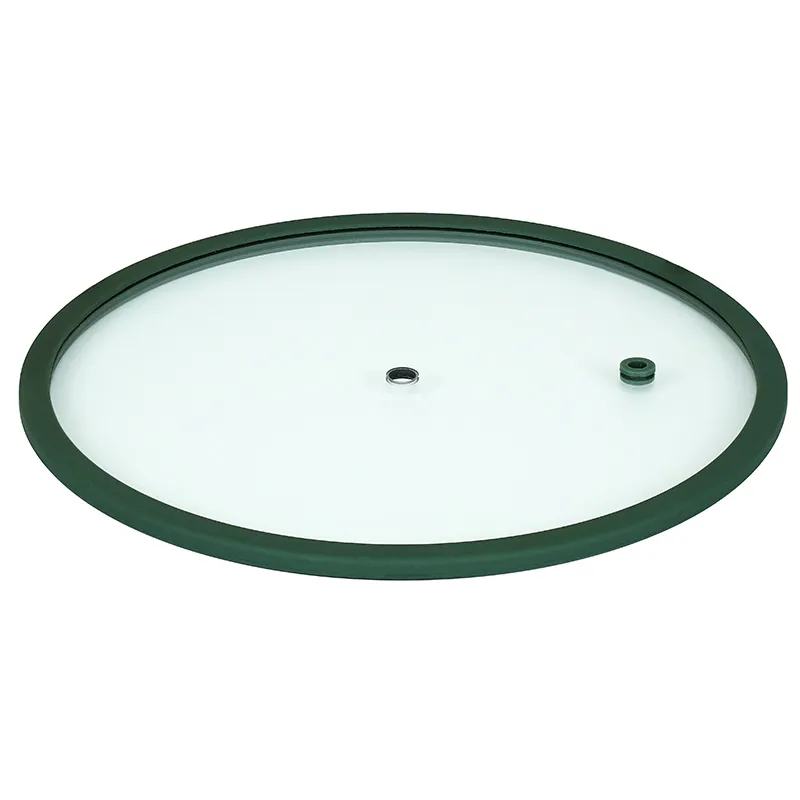
The silicone gasket that often sits in a groove around the edge? That groove must be ground into the glass before tempering. Its depth and smoothness are critical for seal integrity. A rough groove will cut into the silicone over time. I've worked with clients who sourced lids where the gasket failed prematurely, and nine times out of ten, the issue was the glass edge finish in that channel, not the silicone itself.
Looking at EUR-ASIA COOKWARE's product mix—low to high level household glass products—this speaks volumes. A high level lid isn't just about better glass; it's about tighter tolerances on that edge work, more consistent tempering for optical clarity, and perhaps more complex shapes. Their export to countries like Germany, Switzerland, and Japan tells me they're hitting those high-bar tolerances consistently. Those markets don't compromise on kitchenware safety specs.
Failures and Lessons: What Broken Glass Teaches
You learn more from a stack of broken lids than a stack of QC passes. Spontaneous breakage, for instance, is almost always due to Nickel Sulfide (NiS) inclusions in the original glass. These tiny impurities expand over time and can shatter the glass days, weeks, or years later. The only mitigation is heat-soak testing, where tempered glass is held at high temperature to force NiS inclusions to expand and break the glass in the factory. It's an extra cost, but for high-end products, it's essential. I wonder if their exports to, say, Japan or South Korea require this step. It's a premium process.
Another common failure is edge-impact breakage. Even a perfectly tempered sheet has a vulnerable zone about an inch in from the edge. A sharp knock from a metal spoon right there can cause a break. That's not a manufacturing defect; it's a material limitation. Educating the end-user is part of the job. Good instructions matter.
The biggest lesson? Consistency is everything. Producing one perfect tempered glass sheet is easy. Producing 15 million a year, with 90% destined for export markets known for rigorous inspections, that's the real challenge. It implies a mastered process, from sourcing to shipping. It's not glamorous work—it's about grinders, furnaces, and checklists—but that's what turns a simple sheet of glass into a reliable, safe product in millions of kitchens worldwide.
Related Products
Related Products