
- Chinese
- French
- German
- Portuguese
- Spanish
- Russian
- Japanese
- Korean
- Arabic
- Irish
- Greek
- Turkish
- Italian
- Danish
- Romanian
- Indonesian
- Czech
- Afrikaans
- Swedish
- Polish
- Basque
- Catalan
- Esperanto
- Hindi
- Lao
- Albanian
- Amharic
- Armenian
- Azerbaijani
- Belarusian
- Bengali
- Bosnian
- Bulgarian
- Cebuano
- Chichewa
- Corsican
- Croatian
- Dutch
- Estonian
- Filipino
- Finnish
- Frisian
- Galician
- Georgian
- Gujarati
- Haitian
- Hausa
- Hawaiian
- Hebrew
- Hmong
- Hungarian
- Icelandic
- Igbo
- Javanese
- Kannada
- Kazakh
- Khmer
- Kurdish
- Kyrgyz
- Latin
- Latvian
- Lithuanian
- Luxembou..
- Macedonian
- Malagasy
- Malay
- Malayalam
- Maltese
- Maori
- Marathi
- Mongolian
- Burmese
- Nepali
- Norwegian
- Pashto
- Persian
- Punjabi
- Serbian
- Sesotho
- Sinhala
- Slovak
- Slovenian
- Somali
- Samoan
- Scots Gaelic
- Shona
- Sindhi
- Sundanese
- Swahili
- Tajik
- Tamil
- Telugu
- Thai
- Ukrainian
- Urdu
- Uzbek
- Vietnamese
- Welsh
- Xhosa
- Yiddish
- Yoruba
- Zulu
- Kinyarwanda
- Tatar
- Oriya
- Turkmen
- Uyghur

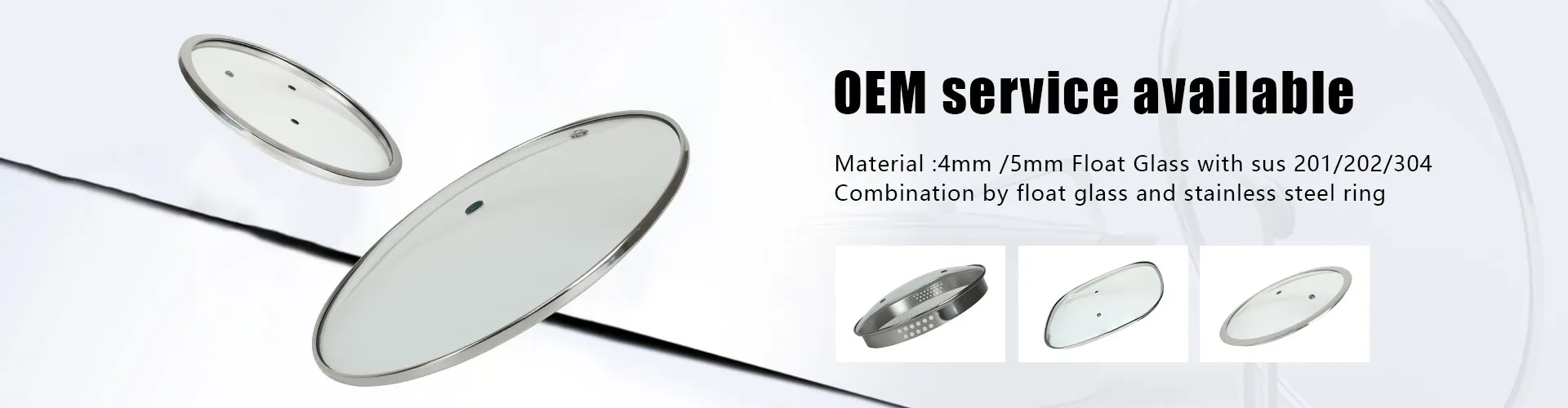
tempred glass lid supplier of China
When you search for 'tempered glass lid supplier of China', you're not just looking for a manufacturer; you're essentially trying to find a reliable partner in a complex, often opaque market. A common pitfall many importers fall into is equating a low quote with a good deal, without considering the nuances of tempered glass production—the annealing lehr cycles, the quality of raw soda-lime glass, and the precision in edge grinding. I've seen buyers get burned by lids that shattered under thermal shock because the supplier cut corners on the tempering process to meet a price point. It’s not just about finding a supplier; it’s about identifying one that understands the end-use, whether it's for a high-end European ovenware line or a commercial steam table.
The Core of Production: More Than Just Making Lids
Let’s talk about the production base itself. Location matters. Many of the capable suppliers are clustered in regions with a history in glass and kitchenware, like Shandong and Guangdong. I recall visiting a factory in Taian, Shandong—the kind of operation that doesn't always top Google searches but has been quietly supplying European brands for years. The setup is telling: a sprawling facility, not overly automated, but with a clear workflow from glass cutting to tempering to inspection. The key detail? They had separate production lines for glass lid batches destined for different markets, adjusting thickness and handle tolerances based on client specs. This level of adaptability is rare.
Take EUR-ASIA COOKWARE CO.,LTD., for instance. Their base in the Taian National High-tech Development Zone is a solid example. A 20,000㎡ area with a 15,000㎡ building isn't a backyard workshop; it signals capacity. An annual output of over 15 million pieces of various tempered glass products, with lids being a core part, means they're geared for volume. But volume alone is meaningless without consistency. What stood out during a visit was their handling of raw glass sheets—stored in controlled environments to prevent moisture absorption, which can cause bubbles during tempering. It’s a small, almost mundane detail, but one that cheaper operations consistently overlook.
The workforce of 90+ employees in such a facility suggests a mix of automation and skilled manual labor. For lids, especially those with complex handles or steam vents, the finishing—polishing the edges, fitting the stainless steel rims or plastic knobs—is often done by hand. I’ve argued with suppliers about automating this entirely; the result is usually a drop in quality, with sharp edges or poorly seated handles. EUR-ASIA’s scale suggests they’ve found a balance, likely using machines for cutting and tempering, but retaining manual lines for assembly and final QC. This hybrid model is often where quality is won or lost.
The Export Reality: Navigating Compliance and Fit
When a company states that over 90% of its products are exported to markets like Germany, Italy, France, and Japan, it’s a significant data point. It’s not just a sales boast; it’s a testament to passing the stringent, often unspoken, quality bars of these markets. A German retailer, for example, will have specific standards for lead and cadmium release (even from painted decorations on handles), thermal shock resistance (think moving from a freezer to an oven), and mechanical strength. A supplier of China serving these markets has to have its chemical and physical testing protocols down pat.
I learned this the hard way early on. We sourced a batch of clear tempered lids for a Scandinavian client. The samples were perfect. The production run? Over 30% failed the client’s drop test onto a ceramic tile from one meter. The failure was in the tempering uniformity. The supplier had increased furnace throughput to meet our deadline, creating weak spots. A supplier with deep export experience, like the one behind https://www.glass-lid.com, has presumably faced and solved these issues. Their product list showing low, medium, and high-level household products indicates they segment their production, likely using different quality raw materials and inspection regimes for different price points. This is pragmatic, not deceptive.
The geographical spread of their exports—from Europe to South America to Asia—also hints at flexibility. A lid for the Brazilian market might prioritize resistance to high-humidity environments and different stove types (like gas hobs with uneven flames), while a lid for Japan might focus on precise dimensions for standardized cookware sets. A supplier capable of managing these variations isn't just a factory; it's a development partner. It’s why I often drill down on a supplier’s R&D or sample department. Can they engineer a lid for a new pressure cooker model? Their website, EUR-ASIA COOKWARE’s portal, functions as a core hub for this communication, though the real work happens off-page.
Beyond the Lid: The Integrated Kitchen Ecosystem
It’s easy to get hyper-focused on the lid as a standalone item. But in practice, it’s part of a system—a pot, a pan, a cooker. The best glass lid supplier understands this context. They think about the fit: the overhang, the steam vent placement, the weight balance so it doesn’t tip over when you set it down. I’ve worked with suppliers who deliver lids that are technically perfect but sit awkwardly on the pot, leaving a gap. The problem often lies in the die for the stainless steel rim; it was copied without understanding the pot's curvature.
This is where a supplier’s broader range, like EUR-ASIA’s mention of other kitchen accessories, becomes relevant. If they also produce cookware handles, knobs, or even pots, they have a systemic understanding. They can anticipate how the lid interacts with other components. For a buyer, this means fewer compatibility headaches. It’s a subtle advantage that isn't always in the brochure but saves immense time and cost in product development and quality complaints.
Another practical consideration is packaging. A tempered glass lid is fragile until it’s safely in the customer’s kitchen. I’ve seen brilliant lids arrive cracked because the supplier used a flimsy cardboard partition. Export-oriented suppliers invest in packaging design—molded pulp inserts, corner protectors, vacuum-sealed plastic to prevent scratching. It adds cost, but it’s non-negotiable for long-distance shipping. When evaluating a supplier, always ask for their standard export packaging specs. It’s a quick filter for their seriousness.
The Sourcing Process: Pitfalls and Checkpoints
So, how do you actually vet a tempered glass lid supplier of China? The website is a starting point. A site like glass-lid.com gives you the basics: location, capacity, export markets. The next step is never to just request a quote. You need a technical dialogue. Prepare a spec sheet: diameter, thickness (3mm, 4mm?), type of tempering (physical or chemical?), edge work (flat polish, seamed, or arris?), handle material (phenolic knob, stainless bail?), and any certifications (LFGB, FDA?). Their response speed and depth will tell you a lot.
Always, always ask for physical samples from their standard range before discussing a custom project. Pay for them if you must. Test them yourself. Boil water, put the lid on, let it steam. Then run cold water over it. Does it crack? Try the edge with your finger—is it smooth or does it have a microscopic chip that could become a crack later? Weigh it. Consistency in weight across multiple samples indicates process control. For a company like EUR-ASIA COOKWARE, with their stated output, they should be able to provide consistent samples from stock.
Finally, consider the commercial terms. A supplier deeply embedded in export will be familiar with FOB terms, LC payments, and the importance of precise shipping marks. Their comfort with these processes reduces logistical risk. The real test is when something goes wrong—a quality issue in a shipment. A reliable partner will work on a solution (reproduction, discount) rather than disappear. That reputation is built over years, which is why a supplier with a long track record of serving demanding markets is often a safer bet than the newest, cheapest option.
Concluding Thoughts: It's a Relationship, Not a Transaction
Finding the right supplier isn't a one-off event. It's the beginning of a relationship that needs managing. Communication gaps, cultural misunderstandings, and shifting raw material costs are all part of the landscape. The supplier that works for a high-volume, low-margin promotional item might not be the right one for a designer kitchenware brand. The key is alignment.
From my experience, the suppliers that last—the ones whose names get passed around by sourcing managers—are those that combine scale with flexibility. They have the plant, like the Taian facility mentioned, to deliver volume, but they also have the technical staff to tweak a design. They have the export paperwork sorted, but they also understand that a perfect lid is one that feels right to the end-user, not just one that passes a lab test.
So, when you next evaluate a potential partner, look beyond the keyword. Dig into their production nuances, their export history, and their problem-solving attitude. The glass lid is a simple product, but making a great one, consistently, and getting it to a customer's door intact, is a complex operation. That’s what you’re really sourcing.
Related Products
Related Products
Best Selling Products
Best Selling Products
Related Search
Related Search- PVD glass lid
- hexclad hybrid cookware set w lids
- glass jar with lid for pickles
- silicone glass cover manufacturer of China
- staub cast iron cocotte with glass lid 4 qt
- glass lid professional manufacturer
- China glass cover manufacturer
- cast iron cookware with lid
- glass lid for pot
- 20 oz beer can glass with lid


