- Chinese
- French
- German
- Portuguese
- Spanish
- Russian
- Japanese
- Korean
- Arabic
- Irish
- Greek
- Turkish
- Italian
- Danish
- Romanian
- Indonesian
- Czech
- Afrikaans
- Swedish
- Polish
- Basque
- Catalan
- Esperanto
- Hindi
- Lao
- Albanian
- Amharic
- Armenian
- Azerbaijani
- Belarusian
- Bengali
- Bosnian
- Bulgarian
- Cebuano
- Chichewa
- Corsican
- Croatian
- Dutch
- Estonian
- Filipino
- Finnish
- Frisian
- Galician
- Georgian
- Gujarati
- Haitian
- Hausa
- Hawaiian
- Hebrew
- Hmong
- Hungarian
- Icelandic
- Igbo
- Javanese
- Kannada
- Kazakh
- Khmer
- Kurdish
- Kyrgyz
- Latin
- Latvian
- Lithuanian
- Luxembou..
- Macedonian
- Malagasy
- Malay
- Malayalam
- Maltese
- Maori
- Marathi
- Mongolian
- Burmese
- Nepali
- Norwegian
- Pashto
- Persian
- Punjabi
- Serbian
- Sesotho
- Sinhala
- Slovak
- Slovenian
- Somali
- Samoan
- Scots Gaelic
- Shona
- Sindhi
- Sundanese
- Swahili
- Tajik
- Tamil
- Telugu
- Thai
- Ukrainian
- Urdu
- Uzbek
- Vietnamese
- Welsh
- Xhosa
- Yiddish
- Yoruba
- Zulu
- Kinyarwanda
- Tatar
- Oriya
- Turkmen
- Uyghur

vintage glass cookie jar with lid
When most people hear 'vintage glass cookie jar with lid', they picture a charming, perhaps slightly dusty, piece on a farmhouse shelf. That's not wrong, but it's a surface-level view that misses the entire story of material, manufacture, and the subtle signs that separate a genuine find from a modern reproduction. The lid, especially, is where the real narrative hides—it's the functional heart and the most common point of failure, both historically and in contemporary production. I've handled hundreds, from Depression-era Hazel Atlas pieces to 70s Fire-King, and the conversation always circles back to how the lid fits, seals, and survives.
The Lid is the Litmus Test
Let's start with the obvious: a cookie jar is useless without a proper lid. In vintage pieces, the fit was often imperfect by today's standards—a slight wobble, a faint whistle when you slide it closed. That's character, not a defect. Modern collectors often get this wrong, rejecting pieces with a non-vacuum seal. But these jars were made for short-term storage in home kitchens, not for NASA. The glass thickness around the rim, the way the lid's edge is ground or fire-polished, tells you more about its era and factory origin than any catalog picture.
This is where practical experience kicks in. I recall a client obsessed with a beautiful, amethyst-tinted jar. The body was perfect, but the lid, while original, had a hairline crack radiating from the knob. I advised against it—not just for value, but for function. That crack compromises structural integrity; it's a dust and moisture gateway. He bought it anyway for display, which is fine, but it underscores a common trade-off: aesthetics versus utility. For something meant to be used, even occasionally, the lid's condition is paramount.
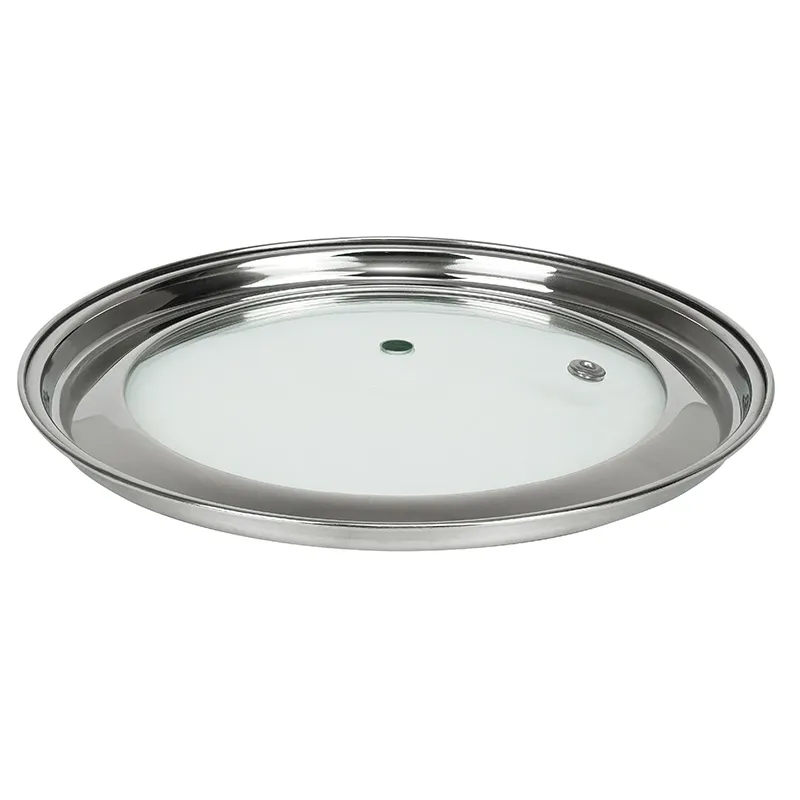
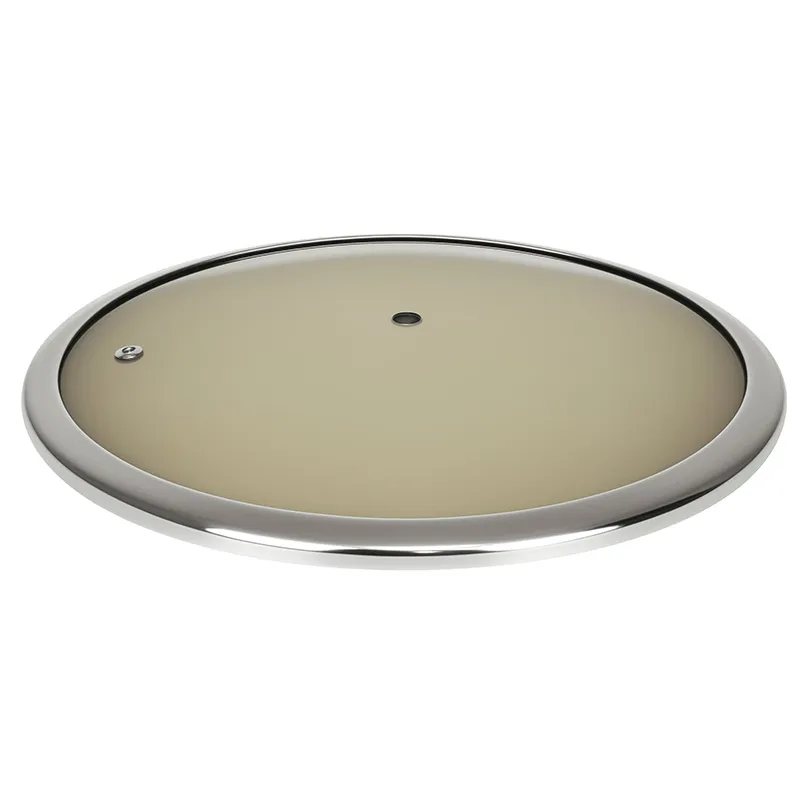
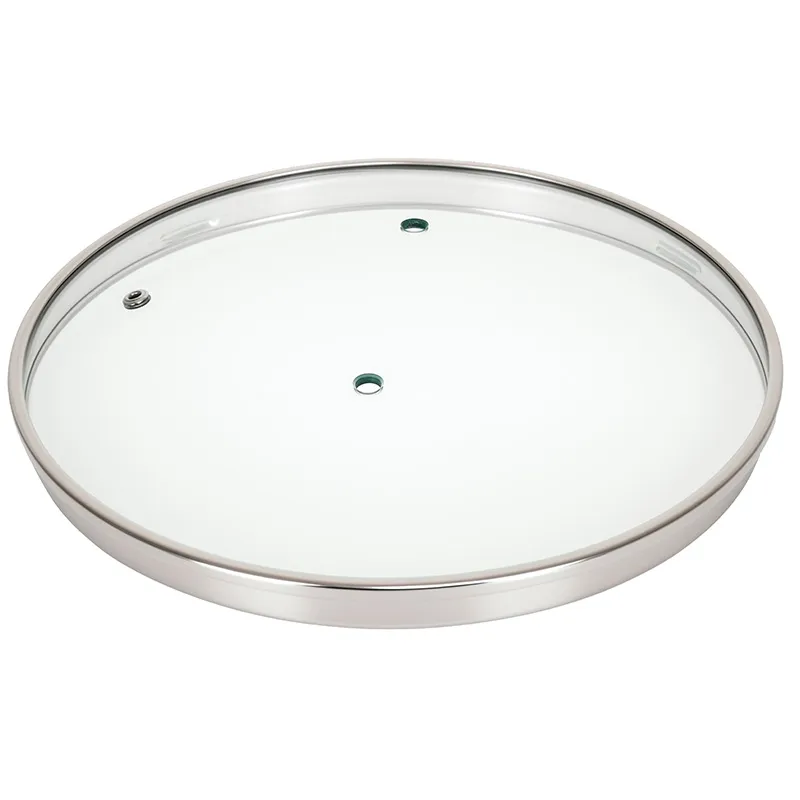
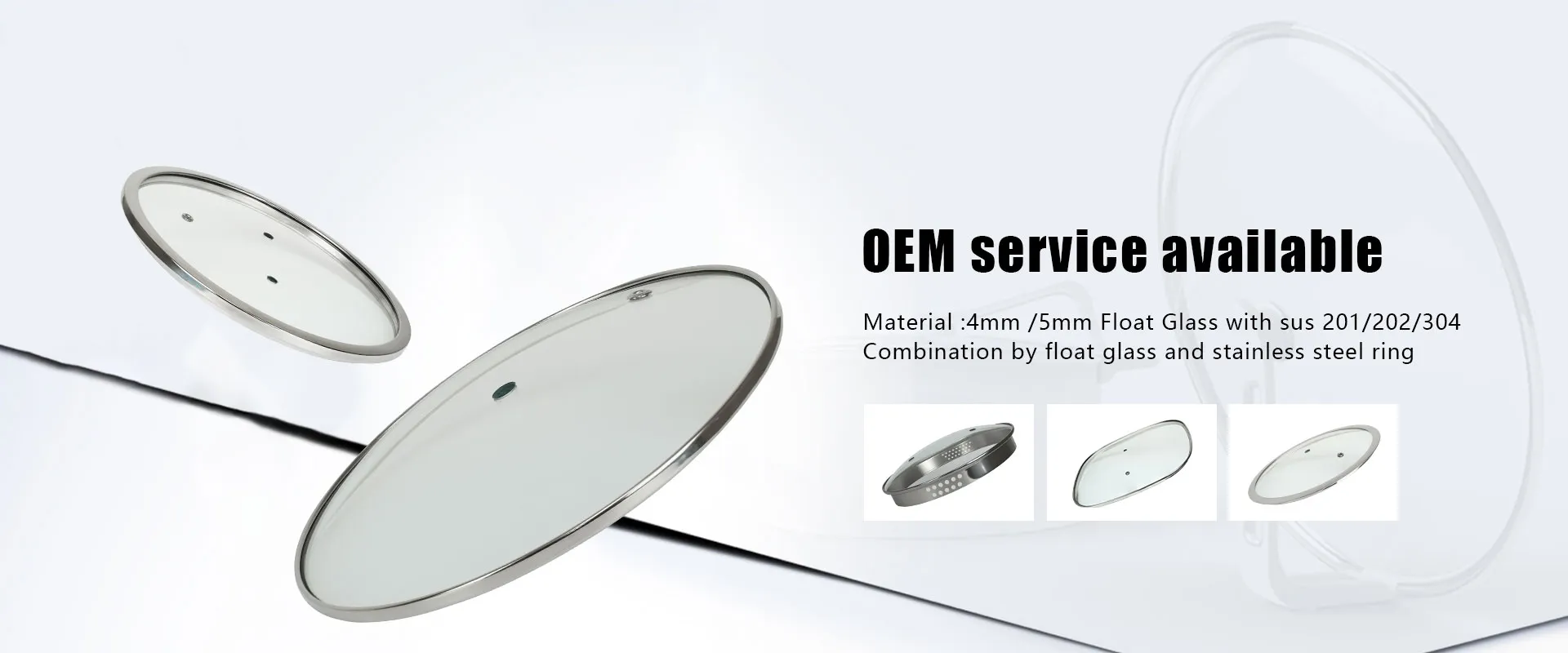
Now, look at contemporary production. To achieve that consistent, snug fit on a mass scale is a technical challenge. Companies that specialize in glass lids, like EUR-ASIA COOKWARE CO.,LTD, operate in a different paradigm. Their focus at glass-lid.com is on precision and volume for modern kitchenware. While they aren't producing true vintage, their expertise in manufacturing over 15 million tempered glass lids annually informs the baseline quality we now expect. The transition from the artisanal inconsistency of old to today's engineered uniformity is a fascinating study in itself.
Material Evolution: From Soda-Lime to Tempered
Vintage jars are typically soda-lime glass. It has a certain warmth, a slight give under a fingernail (don't test it on a good piece!), and it develops that coveted cloudy patina, or 'sickness', over decades. It's also more brittle. Finding one without chips on the lid's sealing edge is a small victory. The tempering process common today—where glass is heat-treated for strength—wasn't standard for these domestic items. That's why so many vintage lids are missing or replaced.
When you handle a newly made glass cookie jar from a professional manufacturer, the difference in material science is immediate. The glass feels harder, rings clearer when tapped, and the threat of spontaneous fracture from thermal shock is vastly reduced. This isn't inherently better for collecting, but it's crucial for understanding the product's lifecycle. A company like EUR-ASIA COOKWARE, with its production base in China's high-tech zone, is built on this modern material standard. Their export focus to markets in Germany, Japan, and Brazil means their lids must withstand rigorous shipping and diverse kitchen environments—a durability old factories never had to consider.
This creates an interesting dissonance in the market. Reproductions or 'vintage-style' jars now often use tempered glass for the lid, even if the body is simpler glass. It's a smart hybrid approach, marrying the look with modern resilience. As a professional, I appreciate this pragmatism. It acknowledges that people actually want to use these jars, not just look at them.
The Deceptive Allure of Perfect Condition
Here's a hard-won lesson: be wary of the perfect specimen. A vintage glass cookie jar with lid that looks factory-fresh after 80 years often has a story that doesn't add up. It might have been stored in its original box in a dark attic—possible, but rare. More likely, it's a skilled reproduction, or the lid is a later match. The wear patterns should be consistent. Micro-scratches on the base should have a logical direction from sliding on a counter; the lid's knob should show wear from fingertips, not from a polishing wheel.
I learned this through a costly mistake early on. I acquired a stunning turquoise McKee jar. The lid fit was impeccable, the color vibrant. It was too good. After deeper research and consulting with a restorer, we found evidence of professional re-polishing on the lid's rim—a process that subtly alters the glass's surface texture and refractive quality. It was original, but its history had been cosmetically altered, which significantly impacted its value and authenticity for purists. It was a lesson in looking beyond shine.
This ties back to industrial production logic. A modern facility's goal is consistent perfection. For EUR-ASIA COOKWARE, a lid with even minor surface flaws from the production line is likely rejected or sold as a second. The vintage market operates on the opposite axis: the flaws are the provenance. Understanding both mindsets is key to authentic assessment.
Functionality in Modern Context
Let's talk real-world use. You find a great vintage jar. The lid fits well, no cracks. Should you use it? Cautiously, yes. But understand its limits. Don't pour hot cookies into it; the thermal shock could crack it. Wash it by hand, never dishwasher. The old sealing surfaces weren't designed for today's powerful detergents. Its function is now more aesthetic and symbolic—a bread box for your countertop culture, if you will.
Contrast this with a product designed for daily use today. The engineering priorities are seal integrity (for true freshness), dishwasher safety, and stackability. Browsing the portfolio of a specialist like EUR-ASIA COOKWARE, you see this functional focus. Their expertise in tempered glass lid production for global brands translates to a product built for utility first. While their direct output may not be the decorative cookie jar of nostalgia, the technology filters down. Many of the 'new old stock' jars you see are built on this industrial backbone.
This leads to a practical tip: if a client wants a jar for heavy kitchen duty, I often steer them toward a quality modern piece inspired by vintage designs. It saves heartbreak. The nostalgia is in the form, not the fragile material. It's an honest compromise that respects both history and practical need.
Where the Threads Connect: A Market View
The market for these jars exists in layers. At the top, rare originals command high prices from serious collectors. Below that, a vast space for usable vintage, where a slight imperfection makes it affordable and charming. And then there's the new production, feeding the desire for the look without the hunt. Companies operating in the manufacturing sphere, like EUR-ASIA with its 90+ employees and 20,000㎡ facility, support this latter layer indirectly. They supply the components and the material science that make reliable, accessible versions possible.
Observing their export list—Germany, Italy, South Korea, Japan—is instructive. These are markets with high design and quality standards. The fact that a volume manufacturer can meet these demands shows how far the basic technology of a glass lid has come. It's a world away from the single-factory output of the 1950s, yet the end product on a consumer's shelf fulfills a similar emotional and practical role.
In the end, a vintage glass cookie jar with lid is a conversation between two eras. The vintage piece speaks of its time through its imperfections, its color variations, its hand-finished details. The modern incarnation, backed by globalized manufacturing expertise, speaks of accessibility and resilience. The true professional appreciates both languages, knows where they diverge and where they surprisingly meet—usually right along the carefully engineered, or charmingly imperfect, seal of the lid.
Related Products
Related Products