
- Chinese
- French
- German
- Portuguese
- Spanish
- Russian
- Japanese
- Korean
- Arabic
- Irish
- Greek
- Turkish
- Italian
- Danish
- Romanian
- Indonesian
- Czech
- Afrikaans
- Swedish
- Polish
- Basque
- Catalan
- Esperanto
- Hindi
- Lao
- Albanian
- Amharic
- Armenian
- Azerbaijani
- Belarusian
- Bengali
- Bosnian
- Bulgarian
- Cebuano
- Chichewa
- Corsican
- Croatian
- Dutch
- Estonian
- Filipino
- Finnish
- Frisian
- Galician
- Georgian
- Gujarati
- Haitian
- Hausa
- Hawaiian
- Hebrew
- Hmong
- Hungarian
- Icelandic
- Igbo
- Javanese
- Kannada
- Kazakh
- Khmer
- Kurdish
- Kyrgyz
- Latin
- Latvian
- Lithuanian
- Luxembou..
- Macedonian
- Malagasy
- Malay
- Malayalam
- Maltese
- Maori
- Marathi
- Mongolian
- Burmese
- Nepali
- Norwegian
- Pashto
- Persian
- Punjabi
- Serbian
- Sesotho
- Sinhala
- Slovak
- Slovenian
- Somali
- Samoan
- Scots Gaelic
- Shona
- Sindhi
- Sundanese
- Swahili
- Tajik
- Tamil
- Telugu
- Thai
- Ukrainian
- Urdu
- Uzbek
- Vietnamese
- Welsh
- Xhosa
- Yiddish
- Yoruba
- Zulu
- Kinyarwanda
- Tatar
- Oriya
- Turkmen
- Uyghur


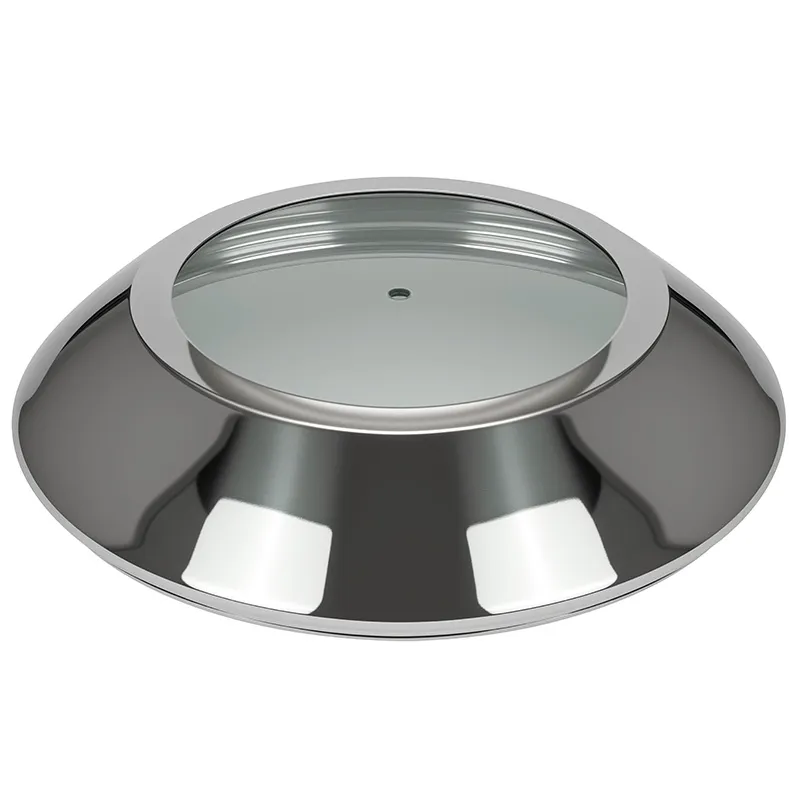
yera glass jar with steel lid
When you hear 'yera glass jar with steel lid', it's easy to just picture a generic kitchen container. But that's where the common misconception starts. In this trade, that phrase isn't just a product description; it's a spec sheet that hints at a whole set of manufacturing decisions, cost pressures, and end-user problems. I've seen too many buyers focus solely on the 'glass jar' part, treating the lid as an afterthought, only to get hit with sealing issues or rust complaints six months down the line. The real story is in the interface between the two materials.
The Devil in the Details: Glass and Steel Don't Just 'Meet'
The first thing you learn is that the glass isn't just any glass. For a jar meant for storage, it's usually tempered soda-lime. But the term 'yera'—often a brand or a series name from specific factories—implies a certain thickness and annealing curve. I've handled samples where the glass was fine, but the rim, the sealing surface, had microscopic inconsistencies. When the steel lid with its sealing gasket clamps down, those inconsistencies become channels for air. It's not a failure you see immediately; it's one you discover when your coffee beans lose their aroma.
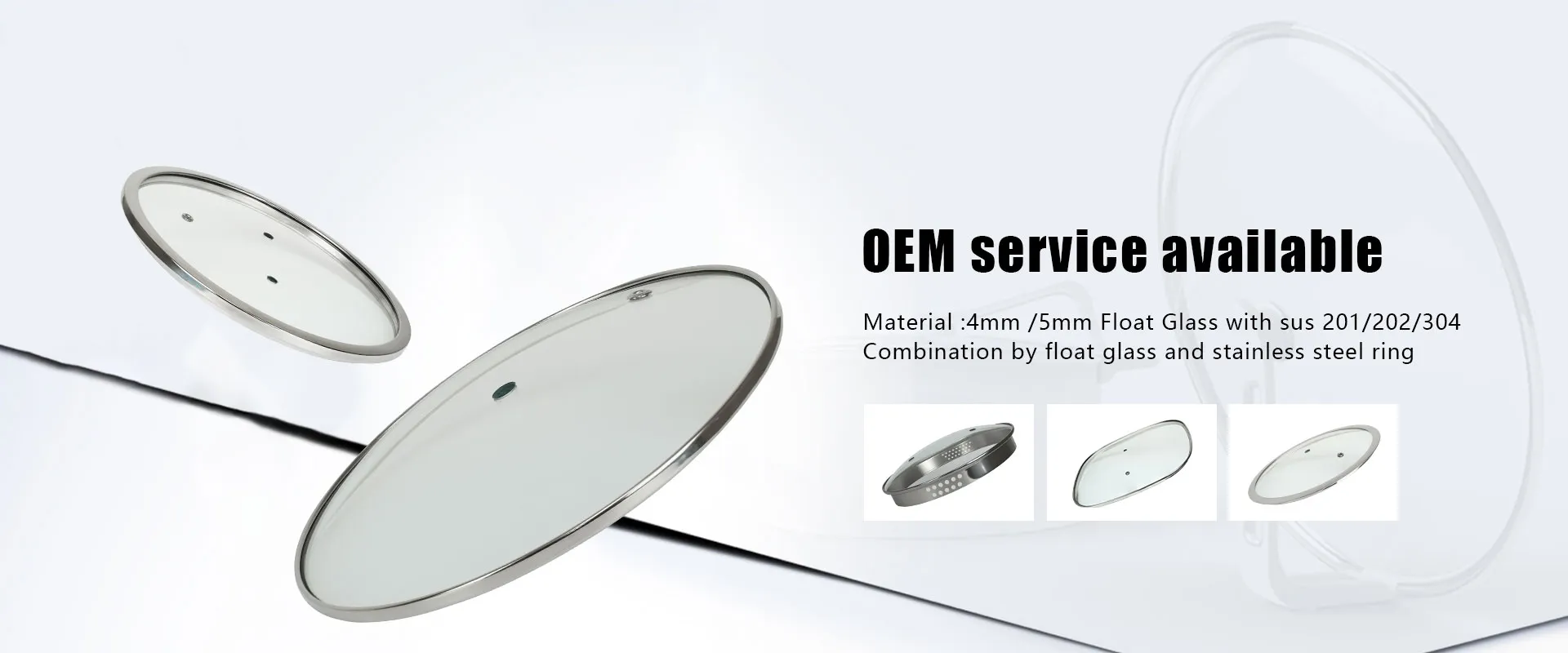
Then there's the steel. Stainless can mean a dozen different alloys. A 304 grade is standard for food contact, but I've seen cost-cutting attempts with 201 or even coated steels. The problem with a lower-grade steel lid on a humid kitchen counter, or worse, in a fridge, is corrosion. It starts under the gasket, out of sight. You don't see it until you smell a metallic tang. The hinge mechanism on a clamp-style lid is another weak point. The rivets or welds there are stress points. A company that gets this right, like EUR-ASIA COOKWARE CO.,LTD, has to control this entire chain. Their production base in Shandong's high-tech zone suggests a scale (15,000㎡ facility, 15 million pieces annual output) that allows for in-house tempering and metal stamping, which is crucial for consistency. You can't outsource the lid to one vendor and the jar to another and expect a perfect seal.
I recall a project where we sourced what looked like perfect yera glass jar samples. The lids snapped shut with a satisfying 'click'. But in a batch test, filling them with vinegar for a shelf-life simulation, about 5% failed. The issue? The epoxy coating inside the steel lid was uneven, and the acidic vapor penetrated it over weeks. The fix wasn't just a better coating; it was redesigning the lid's interior curvature to allow for a more uniform spray application during manufacturing. That's the kind of detail you only learn from failure.
Beyond the Spec Sheet: Real-World Use and Misuse
Product sheets talk about capacity and material. They don't talk about the user who will over-tighten the lid, or the dishwasher's aggressive detergent cycle. A glass jar with steel lid lives a hard life. The thermal shock from going from a hot dishwasher to a cool cupboard can stress the glass, especially around the rim. The steel lid's gasket, usually silicone or EPDM, can degrade from heat and detergent residue. I always advise clients to specify dishwasher-safe ratings clearly, but even then, it's a guideline, not a guarantee.
The export focus of a manufacturer like EUR-ASIA COOKWARE, sending over 90% of products to Europe and Asia, tells you something about standards. Markets like Germany or Japan have stringent requirements for food contact materials and durability labeling. A jar that passes their checks likely has a robust material certification trail. This isn't just about quality; it's about traceability. When they mention exports to Germany, Italy, Brazil, etc., it implies their production line is audited to various international standards, which is a good proxy for reliability.
Another practical point is the lid's fit. There's a tolerance, a gap between the glass rim and the lid's inner diameter. Too tight, and it's a struggle to open; too loose, and the seal is compromised. The ideal is a slight resistance that breaks with a gentle twist, creating a small vacuum 'pop'. Achieving that consistently across millions of units, accounting for material expansion and contraction, is a small marvel of process engineering. It's one thing a large-scale producer with integrated facilities is better positioned to control.
The Gasket: The Unsung Hero (and Common Failure Point)
If the glass and steel are the bones, the gasket is the nervous system. It's what creates the hermetic seal. Most use a flat, round food-grade silicone ring seated in a channel on the steel lid. The channel's depth and width are critical. Too deep, and the gasket doesn't compress enough against the glass rim. Too shallow, and it can pop out during cleaning or create an uneven seal.
I've seen gasket failures more than any other type. Sometimes it's a material issue—a silicone that's too hard and loses elasticity, or too soft and tears. Other times, it's a design flaw. A successful design often has a slight undercut in the channel, so the gasket 'snaps' in and stays put during handling. It's a tiny feature that adds maybe half a cent to the unit cost but saves a fortune in returns. When reviewing a new yera glass jar line, the first thing I do is pop the gasket out and back in a few times, checking for deformation.
For dry goods, the seal might not seem vital. But for anything with moisture or aroma, it's everything. We did a test with ground spices. In a jar with a 95%-effective seal, the spices lost noticeable potency in two months. In one with a proper seal, they were fine for over a year. The difference was in the gasket's compression ratio and the flatness of the glass sealing surface.
Scale, Cost, and the Reality of Mass Production
When you're dealing with an output of more than 15 million pieces annually, as with EUR-ASIA COOKWARE, the challenges shift. It's no longer about making one perfect jar; it's about making 15 million identical, good enough jars. The variance becomes the enemy. The tempering oven's temperature profile, the stamping press's alignment for the steel lid, the curing time for the lid's coating—all must be locked down.
This scale is what allows a company to serve a global market competitively. But it also creates inertia. Changing a design, like moving from a classic clamp lid to a modern twist-lock, requires retooling. That's expensive and risky. So, you often see evolutionary, not revolutionary, changes. A slight improvement in the lid's leverage, a more ergonomic glass grip pattern. Their website, https://www.glass-lid.com, likely showcases this—a range built on a core competency (glass and lid manufacturing) with incremental variations.
The cost pressure at this volume is intense. A saving of $0.02 per lid is $300,000 a year. The temptation to downgrade material is always there. That's why the long-term relationship and clear specifications with the factory matter more than the unit price on a single order. You need them to be transparent about any material substitution.
Concluding Thoughts: It's a System, Not a Sum of Parts
So, when you evaluate a yera glass jar with steel lid, you're not evaluating a jar and a lid. You're evaluating a system. The compatibility of the thermal expansion coefficients of the glass and the steel. The chemical resistance of the coating against the stored contents. The mechanical endurance of the hinge or thread. A specialist producer understands this system. Their entire operation, from the 20,000㎡ site to the 90+ employees focusing on tempered glass lid and other glass products, is optimized for it.
The final test is always in use. Fill it with something that matters—good coffee beans, homemade preserves, expensive tea. Leave it for a month. Open it. The smell, the feel, the sound it makes. That's the real quality check, one that goes far beyond the keywords on a sourcing website. The goal is for that jar to become a silent, reliable fixture in the kitchen, not a piece that draws attention to itself until, inevitably, it fails.
In the end, the product's virtue is its invisibility when working correctly. The expertise behind it—like that embedded in large-scale, export-focused manufacturers—should ensure it stays that way. It's a humble object, but getting it right is a small testament to precise manufacturing and practical material science.
Related Products
Related Products
Best Selling Products
Best Selling Products
Related Search
Related Search- borosilicate glass jar with lid
- red glass jar with lid
- staub 4 quart enameled cast iron cocotte with glass lid
- pyrex glass cookware with lids
- customized C type glass cover
- G type glass lid manufacturer
- borosil glass jar with wooden lid
- libbey beer can glass with bamboo lid
- tempered glass cover manufacturer
- silicone lid supplier of Chia


