- Chinese
- French
- German
- Portuguese
- Spanish
- Russian
- Japanese
- Korean
- Arabic
- Irish
- Greek
- Turkish
- Italian
- Danish
- Romanian
- Indonesian
- Czech
- Afrikaans
- Swedish
- Polish
- Basque
- Catalan
- Esperanto
- Hindi
- Lao
- Albanian
- Amharic
- Armenian
- Azerbaijani
- Belarusian
- Bengali
- Bosnian
- Bulgarian
- Cebuano
- Chichewa
- Corsican
- Croatian
- Dutch
- Estonian
- Filipino
- Finnish
- Frisian
- Galician
- Georgian
- Gujarati
- Haitian
- Hausa
- Hawaiian
- Hebrew
- Hmong
- Hungarian
- Icelandic
- Igbo
- Javanese
- Kannada
- Kazakh
- Khmer
- Kurdish
- Kyrgyz
- Latin
- Latvian
- Lithuanian
- Luxembou..
- Macedonian
- Malagasy
- Malay
- Malayalam
- Maltese
- Maori
- Marathi
- Mongolian
- Burmese
- Nepali
- Norwegian
- Pashto
- Persian
- Punjabi
- Serbian
- Sesotho
- Sinhala
- Slovak
- Slovenian
- Somali
- Samoan
- Scots Gaelic
- Shona
- Sindhi
- Sundanese
- Swahili
- Tajik
- Tamil
- Telugu
- Thai
- Ukrainian
- Urdu
- Uzbek
- Vietnamese
- Welsh
- Xhosa
- Yiddish
- Yoruba
- Zulu
- Kinyarwanda
- Tatar
- Oriya
- Turkmen
- Uyghur


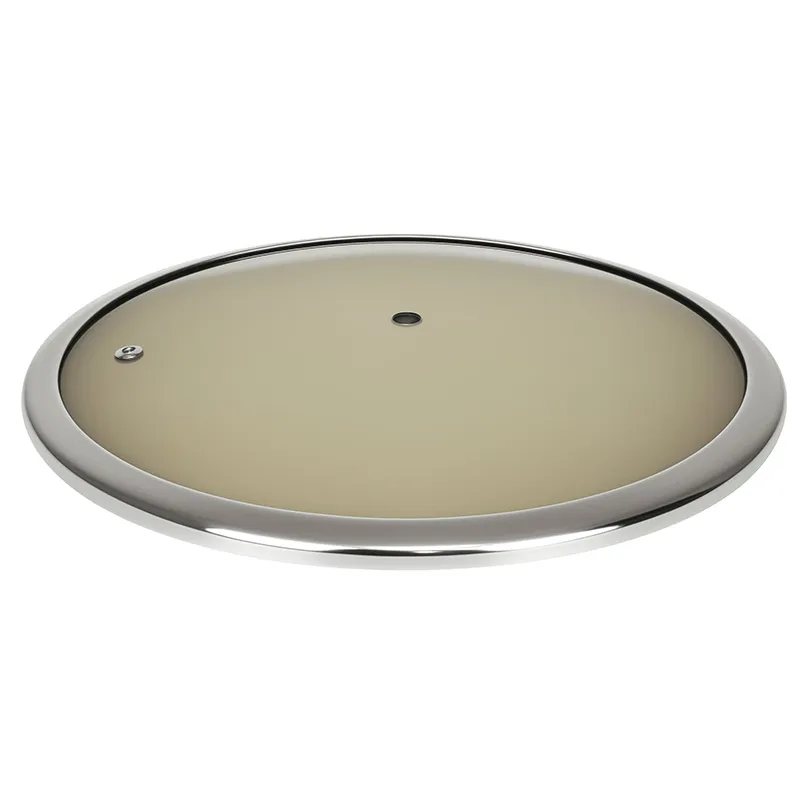
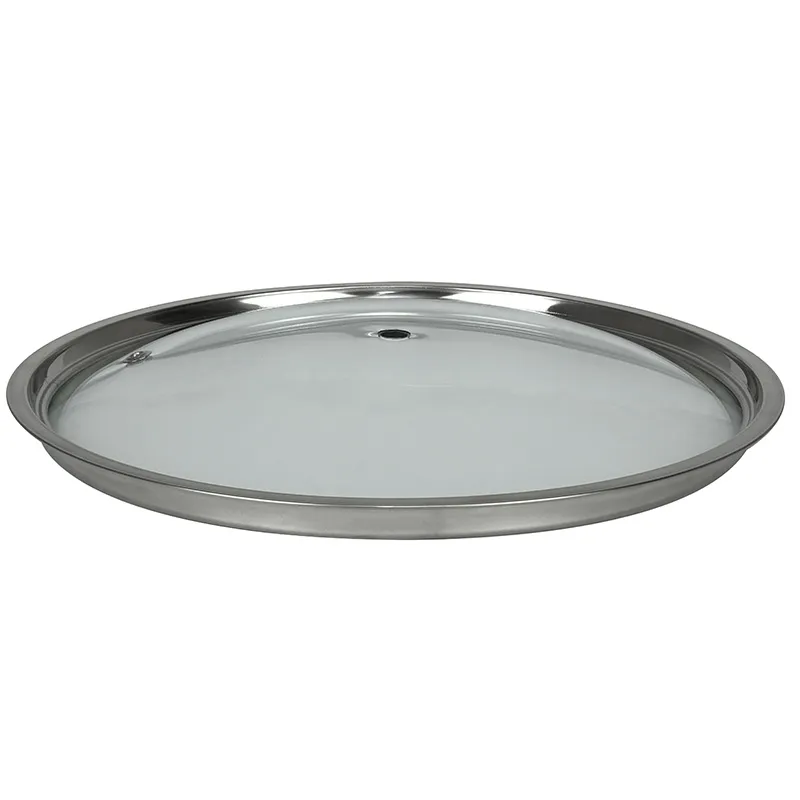
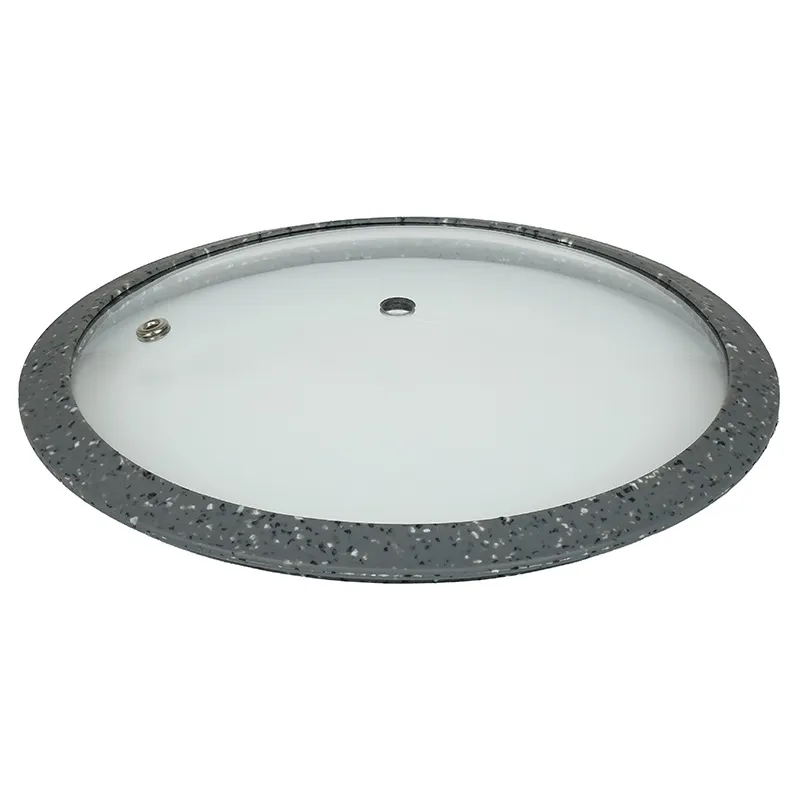
Z type glass cover
When you hear 'Z type glass cover', the immediate thought is shape. It's a common trap. Most assume it's purely about that distinct, angular handle profile, like a 'Z' stamped onto a lid. But in practice, the term often masks a more complex specification involving tempering stress patterns, sealing geometry, and frankly, a specific set of manufacturing headaches that generic round lids don't present. I've seen buyers fixate on the silhouette without asking about the edge grinding tolerance or the thermal shock cycle rating, which is where the real failures happen.
The Manufacturing Nuance Most Spec Sheets Miss
Producing a consistent Z type glass cover isn't just about cutting glass into a shape. The tempering process for that asymmetrical form is tricky. The stress distribution has to be even, but the 'Z' handle creates a thick, concentrated mass compared to the thin, extended span of the cover body. If the quenching airflow isn't calibrated perfectly—and I mean nozzle angles, pressure, the whole setup—you get weak zones. I recall a batch for a European client where the lids passed standard impact tests but failed in real-world use when placed on a cold granite counter straight from the oven. The fracture lines always originated at the inner corner of the 'Z'. The problem wasn't the glass quality; it was the quenching recipe for that specific geometry.
This is where a specialized producer makes a difference. A company like EUR-ASIA COOKWARE CO.,LTD, with their focus on volume production of various glass lids, would have dedicated jigs and furnace settings for such profiles. Their site, glass-lid.com, lists an annual output of over 15 million pieces, which suggests they've likely encountered and solved this stress distribution puzzle through sheer repetition. For high-export-volume factories, the learning curve is baked into millions of failed pieces.
Edge work is another subtle point. A round lid's edge can be uniformly ground. The Z type glass cover has that sharp internal angle in the handle cut-out. If that inner corner isn't meticulously polished to a specific radius, you create a micro-crack initiation point. It also feels terrible to the user—a sharp, unfinished feel that screams low quality. I've handled samples where the main periphery was flawless, but that one hidden corner was rough. It's a tell-tale sign of automated grinding that wasn't fully adapted to the shape.
Sealing and Compatibility: The Real-World Test
The shape dictates function. The 'Z' handle isn't just for looks; it's often designed to sit flush against a pot's long handle, creating a more compact storage profile. But this demands precision in the skirt (the downward-curving rim) of the cover. The skirt's geometry must maintain a consistent sealing surface despite the asymmetric handle pulling that edge up. If the mold or bending process is off by a degree, you get a wobble or, worse, a steam gap on one side.
We learned this through a failed compatibility test. A client sent us a suite of their stock pots, all from different batches, for lid matching. Our prototype Z type glass cover fit 80% perfectly. The 20% failure was due to slight variations in the pot rim's ovality—something a perfectly round lid might forgive, but the asymmetric Z type glass cover would not. The solution wasn't to make our lid looser, but to work with the client to tighten their pot rim tolerance. It moved from a simple lid order to a joint engineering discussion.
This is why export-focused manufacturers, like EUR-ASIA COOKWARE, likely have rigorous matching protocols. Their products are shipped to Germany, Italy, Japan—markets with demanding retailers who perform these exact compatibility tests. A lid that doesn't sit perfectly on 99.9% of units from a pot line will result in massive recalls. The pressure to get the skirt curvature exact is immense, far beyond what a domestic-only supplier might face.
Material and Thickness: The Weight Balance Act
Glass thickness for lids is usually in the 3-5mm range. For a Z type glass cover, uniform thickness is critical but harder to achieve during cutting and edging. More importantly, it's a weight distribution game. The solid 'Z' handle area is heavier. If the lid is balanced wrong, it becomes top-heavy when you lift it by that handle, wanting to tilt backward. A good design subtly thickens the glass opposite the handle or uses the stainless steel rim band to add counterweight.
I've seen cheap versions that neglect this. You lift the lid, and the back edge dips, potentially sliding off and crashing into the pot edge. It's a safety and usability flaw. The product specs from professional suppliers often include a 'center of gravity offset' measurement, though it's buried in technical data sheets. It's something you learn to ask for after a few complaints.
EUR-ASIA's mention of producing low- to high-level products is key here. The 'high-level' version of a Z type glass cover would account for this balance, possibly using a denser, clearer glass and a weighted rim. The low-level version might use thinner, greener glass and a simple stainless band, accepting the balance flaw. Both are 'Z type,' but the functional difference is night and day.
The Export Reality and Supply Chain Fit
When over 90% of your output, like EUR-ASIA's, goes to markets in Europe and East Asia, your production is dictated by foreign standards. For a Z type glass cover, this means specific certifications: FDA compliance for the glass, LFGB for the silicone gasket (if used), and passing thermal shock tests that might be stricter than Chinese GB standards. The factory's location in Shandong's High-tech Development Zone isn't just an address; it often implies better access to standardized material suppliers and more frequent audits from international buyers.
The logistics also shape the product. A lid destined for Germany needs packaging that survives long sea freight and pallet handling—think thicker EPS foam inserts and rigid outer cartons. A lid for Brazil might need different documentation. The sheer volume they mention—15 million pieces—means their entire line, from tempering furnace to packing station, is optimized for switching between SKUs like round lids, oval lids, and these Z type glass cover units with minimal downtime. That operational fluency is a product feature in itself.
It also creates a paradox. Such a factory is excellent at producing a reliable, standardized product at scale. But they can be less agile for tiny, custom modifications. Want a slightly different angle on the 'Z' or a proprietary logo fired into the glass? The MOQ might be 50,000 pieces. The 'Z type glass cover' you get from them is, therefore, often a highly refined, consensus design that fits the broadest range of European or Asian cookware sets.
Conclusion: It's a System, Not a Silhouette
So, after all this, what is a Z type glass cover? It's not a drawing. It's a tempered glass component with a specific stress pattern, a precisely calculated skirt curvature, a balanced mass distribution, and edges polished for both safety and feel. It's a product born from solving the failure points of that distinctive shape under thermal and mechanical stress.
When evaluating a supplier, the shape is the starting point. The real questions follow: How do you manage the quench for the handle junction? What's the tolerance on the skirt's ovality? How is the center of gravity offset controlled? Companies that live on export volume, like the one behind glass-lid.com, have been forced to answer these through trial, error, and customer feedback loops. Their product is, in a way, a physical record of those solved problems. The 'Z' is just what you see first.
In the end, the best Z type glass cover feels unremarkable. It lifts smoothly, sits snugly, cleans easily, and doesn't fracture under normal use. That mundane reliability is the hardest thing to manufacture. It's what you're really buying when you source from a specialist—not just a piece of glass, but the accumulated experience of millions of previous pieces.
Related Products
Related Products