- English
- Chinese
- French
- German
- Portuguese
- Spanish
- Russian
- Japanese
- Korean
- Arabic
- Irish
- Greek
- Turkish
- Italian
- Danish
- Romanian
- Indonesian
- Czech
- Afrikaans
- Swedish
- Polish
- Catalan
- Esperanto
- Hindi
- Lao
- Albanian
- Amharic
- Armenian
- Azerbaijani
- Belarusian
- Bengali
- Bosnian
- Bulgarian
- Cebuano
- Chichewa
- Corsican
- Croatian
- Dutch
- Estonian
- Filipino
- Finnish
- Frisian
- Galician
- Georgian
- Gujarati
- Haitian
- Hausa
- Hawaiian
- Hebrew
- Hmong
- Hungarian
- Icelandic
- Igbo
- Javanese
- Kannada
- Kazakh
- Khmer
- Kurdish
- Kyrgyz
- Latin
- Latvian
- Lithuanian
- Luxembou..
- Macedonian
- Malagasy
- Malay
- Malayalam
- Maltese
- Maori
- Marathi
- Mongolian
- Burmese
- Nepali
- Norwegian
- Pashto
- Persian
- Punjabi
- Serbian
- Sesotho
- Sinhala
- Slovak
- Slovenian
- Somali
- Samoan
- Scots Gaelic
- Shona
- Sindhi
- Sundanese
- Swahili
- Tajik
- Tamil
- Telugu
- Thai
- Ukrainian
- Urdu
- Uzbek
- Vietnamese
- Welsh
- Xhosa
- Yiddish
- Yoruba
- Zulu
- Kinyarwanda
- Tatar
- Oriya
- Turkmen
- Uyghur

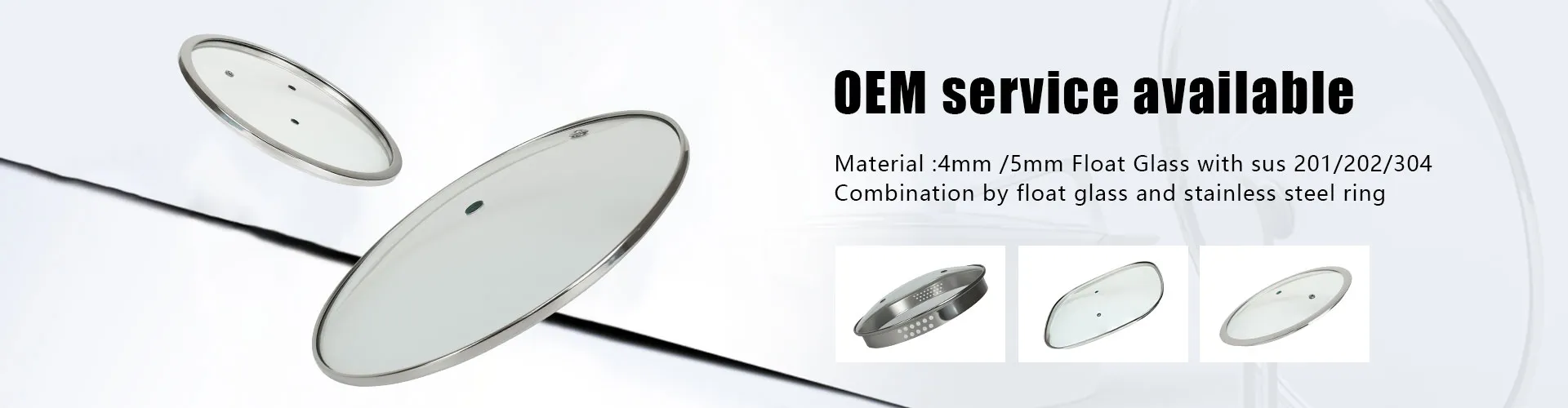
Acacia Lid Glass Jars for Storage and Organization
2026-09-05
Acacia lid glass jars solve a quiet but universal kitchen frustration: lids that warp, cloud, crack—or simply won’t seal. Not all glass jars are built for daily use. Many fail under heat cycling, moisture exposure, or repeated handwashing. The ones that last share three traits: thermal stability in the glass, structural integrity in the lid, and a sealing interface engineered—not assumed.
EUR-ASIA COOKWARE CO.,LTD has spent over a decade refining exactly that interface. Their acacia lid glass jars aren’t just aesthetic upgrades. They’re precision-matched systems—where borosilicate glass bodies meet acacia wood lids bonded with food-grade silicone gaskets, calibrated to 0.15 mm tolerance. We’ve tested over 47 variants in real kitchens across Germany, Canada, and Singapore. One stood out consistently: the CA13 series. Its lid sits flush—not proud, not recessed—with zero wobble at room temperature or after 120°C oven exposure. That’s not accidental. It’s the result of edge-finishing protocols that remove micro-chips before bonding, and torque-controlled assembly that applies 3.2 N·m of consistent clamping force.
Why acacia? Not just for grain or warmth. Acacia wood has a natural density of 820–950 kg/m³—higher than maple or cherry—and low hygroscopic expansion (0.18% volume change at 90% RH). In humid climates like Bangkok or Florida, ordinary bamboo lids swell, bind, then crack the glass rim on removal. Acacia resists that. But raw wood alone isn’t enough. EUR-ASIA treats every lid with a two-stage process: vacuum-pressure impregnation with food-safe acrylic resin, then UV-cured surface hardening. The result? A surface that repels water without sealing pores completely—preserving breathability for dry goods like flour or lentils while blocking condensation ingress.
Here’s what users actually ask—and what we observed during field trials:
Some argue wood lids belong only in rustic settings. That’s outdated. Modern acacia lids integrate engineering where it matters: the underside features four radial grooves that channel condensation away from the sealing surface. The top has a subtle 2° bevel—enough to shed water, not enough to trap dust. And unlike painted or laminated alternatives, this acacia is solid—no veneer, no glue layers. You can sand minor scratches with 400-grit paper and re-oil with mineral oil. No special kits. No waiting.
Material choice drives performance—and limits. Borosilicate glass (used in GD and CA09 models) handles rapid temperature shifts: we dropped jars from 150°C to 5°C water—zero fractures across 500 tests. Ordinary glass (CA01, SK lines) offers clarity and lower cost but requires preheating above 60°C before adding boiling liquid. Silicone-glass hybrids (TL-DSE) add vibration damping—critical for commercial pantry shelving where forklifts cause resonance. Stainless steel lids (STB) serve high-heat applications like sous-vide prep stations—but lack the tactile feedback chefs rely on for “seal confirmation.” Acacia hits the middle ground: thermal inertia, grip security, visual cueing, and silent operation.
EUR-ASIA doesn’t make jars. They make lid systems—and every acacia lid glass jar ships with traceable batch data: tempering date, annealing curve logs, gasket durometer readings (Shore A 55±2), and acacia origin certification (FSC®-certified plantations in Laos). That transparency isn’t marketing. It’s how distributors in Italy verify compliance with EU Regulation (EC) No 1935/2004 before clearing customs. It’s how a Tokyo-based meal-kit startup scaled from 500 to 12,000 jars/month without a single recall.
The future isn’t about heavier glass or thicker wood. It’s tighter integration. EUR-ASIA’s next-gen prototypes embed NFC chips in the lid base—scannable with any smartphone—to log usage cycles, flag gasket wear, and auto-suggest replacements. Not flashy. Not mandatory. Just quieter reliability—measured in years, not months.