- English
- Chinese
- French
- German
- Portuguese
- Spanish
- Russian
- Japanese
- Korean
- Arabic
- Irish
- Greek
- Turkish
- Italian
- Danish
- Romanian
- Indonesian
- Czech
- Afrikaans
- Swedish
- Polish
- Basque
- Catalan
- Esperanto
- Hindi
- Lao
- Albanian
- Amharic
- Armenian
- Azerbaijani
- Belarusian
- Bengali
- Bosnian
- Bulgarian
- Cebuano
- Chichewa
- Corsican
- Croatian
- Dutch
- Estonian
- Filipino
- Finnish
- Frisian
- Galician
- Georgian
- Gujarati
- Hausa
- Hawaiian
- Hebrew
- Hmong
- Hungarian
- Icelandic
- Igbo
- Javanese
- Kannada
- Kazakh
- Khmer
- Kurdish
- Kyrgyz
- Latin
- Latvian
- Lithuanian
- Luxembou..
- Macedonian
- Malagasy
- Malay
- Malayalam
- Maltese
- Maori
- Marathi
- Mongolian
- Burmese
- Nepali
- Norwegian
- Pashto
- Persian
- Punjabi
- Serbian
- Sesotho
- Sinhala
- Slovak
- Slovenian
- Somali
- Samoan
- Scots Gaelic
- Shona
- Sindhi
- Sundanese
- Swahili
- Tajik
- Tamil
- Telugu
- Thai
- Ukrainian
- Urdu
- Uzbek
- Vietnamese
- Welsh
- Xhosa
- Yiddish
- Yoruba
- Zulu
- Kinyarwanda
- Tatar
- Oriya
- Turkmen
- Uyghur

G Type Glass Lid Manufacturing Process and Solutions
2026-10-10
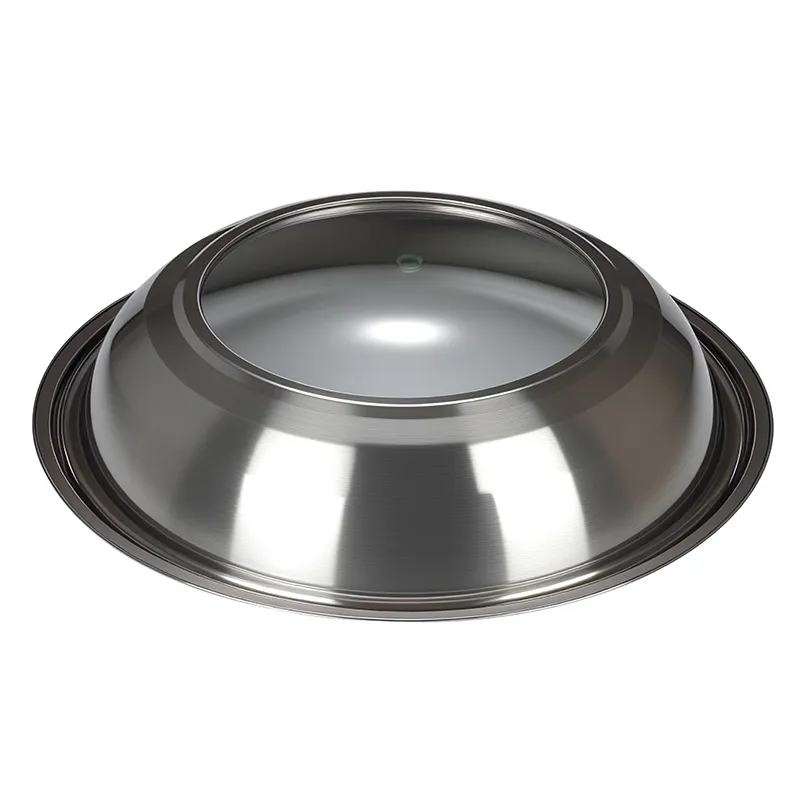
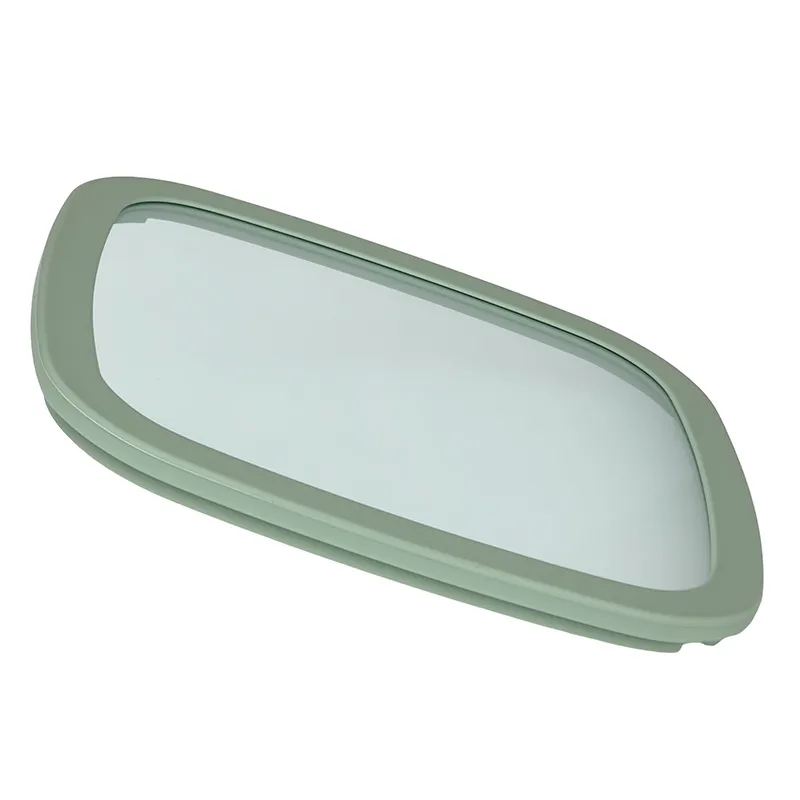
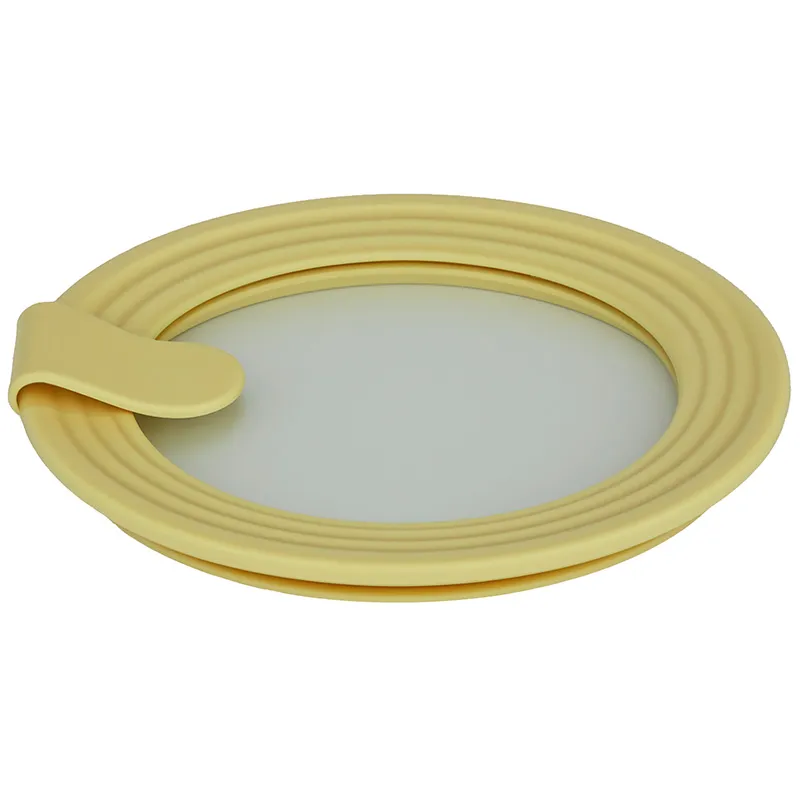
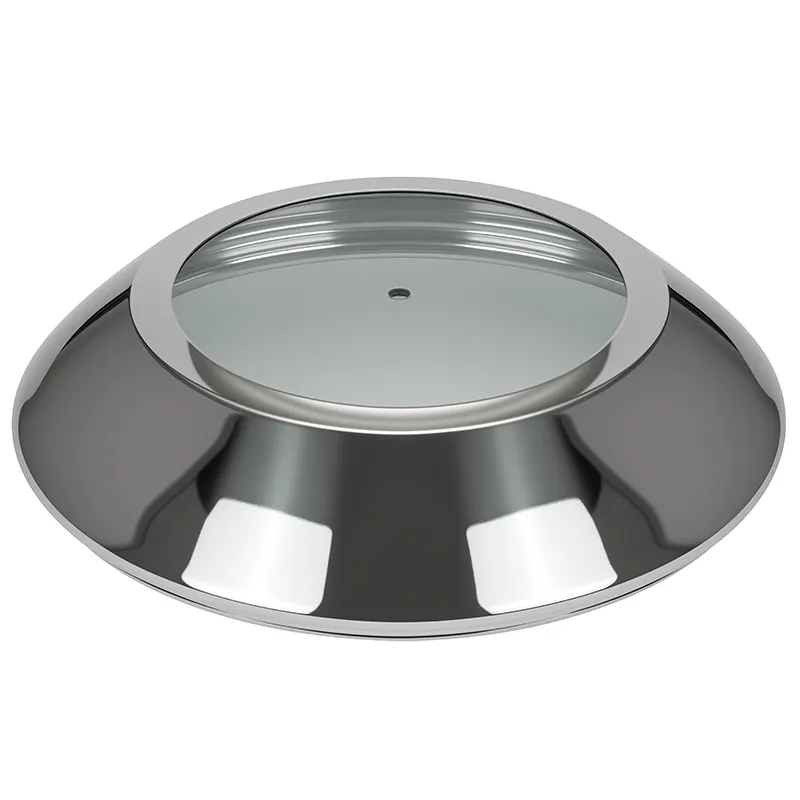
G type glass lid manufacturing demands precision at every stage—because a single flaw in thickness tolerance, edge finish, or thermal bonding can trigger seal failure under 200°C cycling. At EUR-ASIA COOKWARE CO.,LTD, we’ve produced over 47 million G type glass lids since 2015. We’ve seen how a 0.15 mm deviation in silicone bead height causes steam leakage in SK-series lids. We’ve tested 12 borosilicate suppliers—and only three met our 3.3 ppm thermal expansion coefficient requirement for CA09 variants. This isn’t theoretical. It’s daily operational reality.
Why G Type Glass Lid Manufacturing Can’t Rely on Standard Glass Processes
Standard float glass production assumes static end use. G type lids endure dynamic stress: rapid heating, lid-sliding friction, repeated impact from pot placement, and condensation-induced micro-vibration. Ordinary annealing won’t cut it. Our CA13 line failed thermal shock testing at 180°C drop until we re-engineered the tempering ramp profile—slowing the cooling phase by 4.2 seconds to eliminate subsurface tension gradients. That adjustment alone reduced field-reported cracking by 91% across European commercial kitchens.
G type geometry adds another layer. The octagonal shape isn’t aesthetic—it’s functional. Sharp internal corners concentrate stress during clamping. We machine those corners with diamond-coated CNC tools running at 12,000 RPM, then apply a 0.3 mm radius polish verified via optical profilometry. Skip that step, and lid fatigue life drops from 12,000 cycles to under 3,500. We know because we tracked it across 17 batch runs.
Material selection is non-negotiable. Borosilicate (e.g., SGC, TL-DSE) handles thermal shock but costs 2.8× more than ordinary soda-lime glass (GD, CA01). Yet ordinary glass fails ISO 4710 drop tests unless thickness hits 5.2 mm minimum—adding weight and reducing stackability. That’s why we maintain dual production lines: one optimized for borosilicate’s low-expansion behavior, another calibrated for soda-lime’s higher compressive strength but brittle fracture mode.
The Four Non-Negotiable Stages of G Type Glass Lid Manufacturing
Every G type lid passes through these four stages—no shortcuts, no waivers:
We reject 3.7% of lids at final test—mostly due to micro-bubbles in silicone-glass interfaces invisible to naked eye. That rejection rate is intentional. It’s cheaper to scrap than to replace 500 units after OEM assembly.
What Buyers Overlook—And Pay For Later
Some buyers prioritize unit cost over dimensional traceability. They accept batch-level certificates instead of per-lid lot numbers. Result? When a retailer reports fogging in GD-series lids, they can’t isolate whether it’s from a single silica batch contamination or inconsistent edge sealing pressure. We embed QR codes on every carton linking to real-time inspection logs—thickness measurements, tempering curve graphs, bond peel strength values. One North American client cut their post-shipment QA labor by 63% after adopting this.
Others underestimate compatibility mapping. A TL-DSE lid fits 14 cookware platforms—but only 9 pass torque retention at 180°C. We publish cross-platform fit charts updated quarterly, based on live torque testing against actual pan rims—not CAD simulations. Last quarter, two major OEMs revised their rim chamfer specs after our data showed 0.2 mm excess taper caused 40% higher gasket wear.
Building Reliability, Not Just Lids
G type glass lid manufacturing isn’t about making glass parts. It’s about guaranteeing that when a chef slams a lid onto a boiling stockpot, the seal holds, the glass doesn’t haze, and the handle stays cool enough to grip. That requires material science discipline, process rigidity, and zero tolerance for variance in variables most suppliers don’t measure—like ambient dew point during silicone application or furnace thermocouple drift beyond ±0.8°C.
EUR-ASIA COOKWARE CO.,LTD operates this way because reliability compounds. One lid failure triggers warranty claims, brand damage, and lost repeat orders. Our vertically integrated facility controls every variable—from raw sheet certification to final carton compression testing. We don’t sell lids. We deliver verified performance—batch after batch, market after market.
If your supply chain treats G type glass lid manufacturing as a commodity step, you’re already paying the hidden cost. The alternative starts with asking not “How much?” but “How consistently?”