- Chinese
- French
- German
- Portuguese
- Spanish
- Russian
- Japanese
- Korean
- Arabic
- Irish
- Greek
- Turkish
- Italian
- Danish
- Romanian
- Indonesian
- Czech
- Afrikaans
- Swedish
- Polish
- Basque
- Catalan
- Esperanto
- Hindi
- Lao
- Albanian
- Amharic
- Armenian
- Azerbaijani
- Belarusian
- Bengali
- Bosnian
- Bulgarian
- Cebuano
- Chichewa
- Corsican
- Croatian
- Dutch
- Estonian
- Filipino
- Finnish
- Frisian
- Galician
- Georgian
- Gujarati
- Haitian
- Hausa
- Hawaiian
- Hebrew
- Hmong
- Hungarian
- Icelandic
- Igbo
- Javanese
- Kannada
- Kazakh
- Khmer
- Kurdish
- Kyrgyz
- Latin
- Latvian
- Lithuanian
- Luxembou..
- Macedonian
- Malagasy
- Malay
- Malayalam
- Maltese
- Maori
- Marathi
- Mongolian
- Burmese
- Nepali
- Norwegian
- Pashto
- Persian
- Punjabi
- Serbian
- Sesotho
- Sinhala
- Slovak
- Slovenian
- Somali
- Samoan
- Scots Gaelic
- Shona
- Sindhi
- Sundanese
- Swahili
- Tajik
- Tamil
- Telugu
- Thai
- Ukrainian
- Urdu
- Uzbek
- Vietnamese
- Welsh
- Xhosa
- Yiddish
- Yoruba
- Zulu
- Kinyarwanda
- Tatar
- Oriya
- Turkmen
- Uyghur

Inside a Tempered Glass Lid Factory: Production Capacity, Processes, and Audits
2026-11-04
When sourcing cookware components, buyers often encounter suppliers that describe themselves as a tempered glass lid factory. However, the term is frequently used loosely. Some companies operate their own tempering lines, while others outsource this critical stage or function primarily as trading intermediaries. For procurement managers, product engineers, and quality auditors, understanding what actually happens inside a factory is essential to evaluating whether a supplier can deliver consistent, compliant products at scale.
This article explores the typical production flow of a glass lid factory, breaks down the key manufacturing processes from cutting to final assembly, and explains how to evaluate production capacity and lead times. It also provides a practical framework for conducting a factory audit, covering the equipment, records, and traceability systems you should verify. The goal is to help you ask the right questions and distinguish between genuine manufacturing capability and surface-level claims.
1. The Typical Production Flow of a Tempered Glass Lid Factory
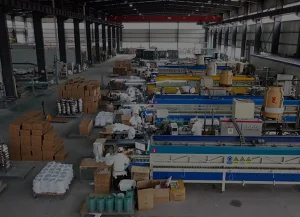
A reliable tempered glass lid factory generally organizes production into a logical sequence that separates pre-tempering and post-tempering activities. Understanding this flow provides a baseline for evaluating whether a supplier manages its processes systematically or operates in an ad hoc manner.
The typical production flow begins with raw material receiving and inspection. Glass sheets, stainless steel strips, silicone gaskets, and handle components are checked against specifications before entering the production area. This initial inspection helps prevent defects that could propagate through later stages.
The pre-tempering stage involves glass cutting and edge grinding. These processes must occur before the glass enters the tempering furnace because any cutting or grinding after tempering would compromise the glass’s structural integrity. The post-tempering stage includes rim assembly, silicone ring installation, handle attachment, final inspection, and packaging.
A well-organized factory maintains physical separation between these two areas. Tempered glass that has passed through the furnace should not be mixed with unprocessed glass. This separation prevents accidental damage and ensures that any rework is directed to the correct process. During a factory visit, observe whether the flow is linear and whether there are clear boundaries between different production zones. A factory that handles both stages in the same area without proper controls may be at higher risk of quality issues.
2. Breaking Down Key Manufacturing Processes
2.1 Glass Cutting and Edge Grinding
The cutting process determines the basic dimensions of the lid. Suppliers may use automated cutting machines or manual cutting tables, depending on their scale and product range. During evaluation, ask how dimensional consistency is maintained across production runs and how the cutting equipment is calibrated.
Edge grinding is a critical step that is sometimes underestimated. The grinding process removes micro-cracks and sharp edges that can act as stress concentration points during tempering. Poorly ground edges can lead to breakage inside the furnace or premature failure of the finished product. Buyers should ask how edge quality is inspected, what parameters are checked, and how often grinding wheels are replaced or dressed. A factory that treats edge grinding as a routine task rather than a controlled process may struggle to maintain consistent quality.
The inspection after grinding should occur before the glass enters the tempering furnace. Visual checks for chips, cracks, and uneven edges are essential. If the factory has an in-process inspection station at this stage, it indicates a systematic approach to quality control.
2.2 Tempering and the Fragmentation Test
Tempering is the defining process of a tempered glass lid factory. The glass is heated to a high temperature and then rapidly cooled, creating compressive stress on the surface and tensile stress in the core. This process increases strength and thermal resistance. However, the specific temperature and cooling parameters depend on the glass thickness, composition, and furnace design. These parameters should be documented in the factory’s process files rather than assumed.
The tempering furnace is the central piece of equipment. During an audit, verify that the furnace is operational and properly maintained. Ask for maintenance logs and check whether the furnace has been calibrated recently. A factory that cannot provide furnace maintenance records may not be monitoring its most critical equipment.
The fragmentation test is the standard method for verifying that glass has been properly tempered. A sample is fractured, and the resulting pieces are examined. Properly tempered glass breaks into small, relatively uniform fragments rather than large, sharp shards. Buyers should ask whether the factory performs fragmentation tests, how often, and whether the results are documented and retained. A factory that does not perform this test cannot reliably confirm that its tempering process is effective.
Thermal shock testing is another relevant verification method. It involves subjecting the glass to rapid temperature changes to assess its resistance to thermal stress. While not every order requires this test, the factory’s ability to perform or coordinate thermal shock testing is a useful indicator of its quality orientation.
2.3 Rim and Silicone Ring Assembly
After tempering, the glass lid is assembled with a rim and, in many designs, a silicone ring. The rim provides structural support and a sealing surface, while the silicone ring improves the seal between the lid and the cookware.
The rim assembly process involves fitting the metal rim around the glass edge and securing it. The fit must be precise; an overly tight rim can stress the glass, while a loose rim can create gaps. Buyers should ask how the rim is sized and how the factory verifies the fit after assembly. The assembly process should include an in-process inspection step to check for misalignment or gaps.
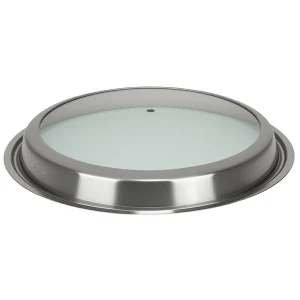
The silicone ring must be food-safe and properly seated. Ask about the material certification for the silicone and how the factory verifies the ring’s position and adhesion. A poorly seated ring can lead to leaks or detachment during use.
2.4 Handle and Knob Assembly
The handle or knob is attached to the glass lid, often through a hole in the glass or via a bracket system. The attachment method must account for the stress of lifting and the thermal expansion of different materials.
During evaluation, ask about the torque specifications for screws or rivets and how the factory verifies that handles are secure. A simple pull test or torque check during in-process inspection can reveal potential issues. Also, check how the factory protects the glass surface during handle assembly to avoid scratches or chips.
2.5 Final Inspection and Packaging
The final inspection stage is the last opportunity to catch defects before shipment. A thorough final inspection covers dimensions, appearance, rim alignment, handle security, and the condition of the silicone ring. Buyers should request the inspection checklist and sample inspection records.
Packaging for glass products requires special attention. The packaging must protect the lid from impact, vibration, and compression during transport. Ask about the packaging materials, the drop test procedure, and how the factory verifies that packaging meets the requirements. If the factory has a documented packaging specification and performs periodic drop tests, it demonstrates a proactive approach to reducing transit damage.
3. Evaluating Production Capacity and Lead Times
Assessing the production capacity of a China tempered glass lid manufacturer requires more than counting the number of tempering furnaces. Capacity is a function of equipment uptime, process yield, and the balance between different production stages.
Start by asking about the tempering furnace’s operating schedule. A furnace that runs continuously with scheduled maintenance can process more glass than one that operates intermittently. However, actual output also depends on the load size, glass thickness, and the cycle time for each batch. Instead of requesting a single production figure, ask for a breakdown of how capacity is calculated and what assumptions are used.
Process yield is another critical factor. If the factory experiences frequent breakage during tempering or grinding, effective capacity is reduced. Ask about the yield rate for the tempering process and how the factory tracks and addresses losses. A factory that monitors yield and investigates causes of breakage is more likely to provide reliable lead times.
The balance between pre-tempering and post-tempering stages also affects capacity. If the cutting and grinding stages cannot keep up with the tempering furnace, the overall throughput is limited. Similarly, if assembly and packaging are under-resourced, finished goods may accumulate. During an audit, observe whether there are bottlenecks and how the factory manages workflow.
For lead time evaluation, request a production schedule for a recent order of similar complexity. This provides insight into how the factory plans and executes orders. Ask about the typical lead time for sample production versus mass production, and clarify the responsibilities for material procurement and quality inspection. A factory that provides clear, documented lead time estimates and explains the factors that could affect delivery is more reliable than one that offers vague assurances.
4. Factory Audit Points for a Tempered Glass Lid Maker
When auditing a tempered glass lid maker, focus on three areas: equipment, records, and traceability.
Equipment. Verify that the tempering furnace is in good working condition and that maintenance records are available. Check for the presence of fragmentation test equipment and any thermal shock testing capabilities. Inspect the grinding and cutting equipment for signs of wear and confirm that calibration records exist. Also, review the condition of assembly tools and fixtures, as worn tooling can affect fit and finish.
Records. Request the process parameter records for the tempering furnace, including temperature and cycle time logs. Ask for in-process inspection records at each stage, from cutting through final assembly. Review the fragmentation test reports and confirm that samples are retained. If the factory has a quality management system, ask for documentation of corrective actions for nonconforming products. Records should be legible, dated, and traceable to specific production batches.

Traceability. A robust traceability system allows the factory to link finished products to the raw material batch and the specific tempering run. Ask how the factory identifies and segregates glass from different tempering batches. If a defect is discovered after shipment, traceability enables the factory to identify the affected batch and take appropriate action. A factory that cannot trace its products back to production records may have difficulty containing quality issues.
During the audit, observe the physical separation between tempered and untempered glass. Verify that the flow of materials matches the documented process. Ask workers about their understanding of critical control points, as their responses can reveal whether procedures are actually followed or merely written down.
5. Common Process Defects and Root Causes
The following table summarizes common defects in tempered glass lid manufacturing and their typical root causes. This information can help buyers and auditors identify where to focus their attention.
| Defect | Possible Root Cause | Prevention or Detection |
|---|---|---|
| Spontaneous breakage after tempering | Impurities in raw glass, poor edge grinding, or uneven heating/cooling | Incoming material inspection, controlled grinding, furnace parameter monitoring |
| Glass distortion or warping | Uneven heating or cooling during tempering, improper support in furnace | Furnace calibration, proper loading, post-tempering inspection |
| Loose or misaligned rim | Dimensional mismatch between glass and rim, worn tooling | In-process inspection, tooling maintenance, dimensional checks |
| Silicone ring detachment | Poor adhesion, incorrect installation, or material incompatibility | Material certification, assembly inspection, adhesion testing |
| Handle instability | Insufficient torque, incorrect fastener, or glass hole damage | Torque verification, pull testing, glass inspection |
| Surface scratches | Handling damage during assembly or packaging | Protective films, careful handling procedures, final inspection |
For each defect, the factory should have a documented procedure for detection and corrective action. During an audit, ask how the factory handles nonconforming products and whether root cause analysis is performed. A factory that treats defects as isolated incidents rather than systemic issues may struggle to improve quality over time.
6. Frequently Asked Questions (FAQ)
Q1: How can I verify that the glass lids are actually tempered?
Request the factory’s fragmentation test reports and confirm that the tests are performed on samples from the same production batch as your order. A factory that cannot provide this documentation may not be performing tempering or may not be monitoring the process adequately.
Q2: What is the thermal shock resistance of a tempered glass lid?
Thermal shock resistance depends on the glass composition, thickness, and tempering quality. Instead of relying on a single figure, ask the factory to provide thermal shock test results for the specific product you are sourcing. The test method and acceptance criteria should be documented.
Q3: How long does it take to develop a custom handle or rim?
Development time varies based on the complexity of the design, tooling requirements, and sample approval process. Ask for a development schedule and clarify the responsibilities for design review and sample evaluation. A factory that provides a structured timeline is better prepared to manage your project.
Q4: What should I do if I cannot observe active production during a factory audit?
If the furnace is not operating during your visit, request historical production records, maintenance logs, and inspection reports. You can also ask for a video walkthrough or schedule a follow-up visit. The goal is to verify that the processes are documented and controlled, even if they are not running at the moment.
Q5: Does the factory’s location in China affect lead times?
Location can influence lead times due to proximity to suppliers and logistics hubs. However, the factory’s internal planning, production capacity, and communication practices are often more significant factors. Evaluate lead times based on the factory’s documented processes and historical performance rather than location alone.
7. Next Step: Request an Audit or Sample
Evaluating a tempered glass lid factory requires a systematic approach. Equipment is the foundation, records provide evidence, and testing verifies performance. By examining the production flow, understanding the key processes, and conducting a structured audit, you can make more informed decisions about supplier capability.
If you are planning a sourcing project, consider requesting a factory audit or a product sample. A sample allows you to verify dimensions, edge quality, rim fit, and handle stability against your specifications. An audit provides insight into the factory’s actual operations and quality control practices. Contact a potential supplier to discuss your requirements and arrange the next steps.