- Chinese
- French
- German
- Portuguese
- Spanish
- Russian
- Japanese
- Korean
- Arabic
- Irish
- Greek
- Turkish
- Italian
- Danish
- Romanian
- Indonesian
- Czech
- Afrikaans
- Swedish
- Polish
- Basque
- Catalan
- Esperanto
- Hindi
- Lao
- Albanian
- Amharic
- Armenian
- Azerbaijani
- Belarusian
- Bengali
- Bosnian
- Bulgarian
- Cebuano
- Chichewa
- Corsican
- Croatian
- Dutch
- Estonian
- Filipino
- Finnish
- Frisian
- Galician
- Georgian
- Gujarati
- Haitian
- Hausa
- Hawaiian
- Hebrew
- Hmong
- Hungarian
- Icelandic
- Igbo
- Javanese
- Kannada
- Kazakh
- Khmer
- Kurdish
- Kyrgyz
- Latin
- Latvian
- Lithuanian
- Luxembou..
- Macedonian
- Malagasy
- Malay
- Malayalam
- Maltese
- Maori
- Marathi
- Mongolian
- Burmese
- Nepali
- Norwegian
- Pashto
- Persian
- Punjabi
- Serbian
- Sesotho
- Sinhala
- Slovak
- Slovenian
- Somali
- Samoan
- Scots Gaelic
- Shona
- Sindhi
- Sundanese
- Swahili
- Tajik
- Tamil
- Telugu
- Thai
- Ukrainian
- Urdu
- Uzbek
- Vietnamese
- Welsh
- Xhosa
- Yiddish
- Yoruba
- Zulu
- Kinyarwanda
- Tatar
- Oriya
- Turkmen
- Uyghur


Glass Cake Lid for Freshness and Easy Storage
2026-10-17
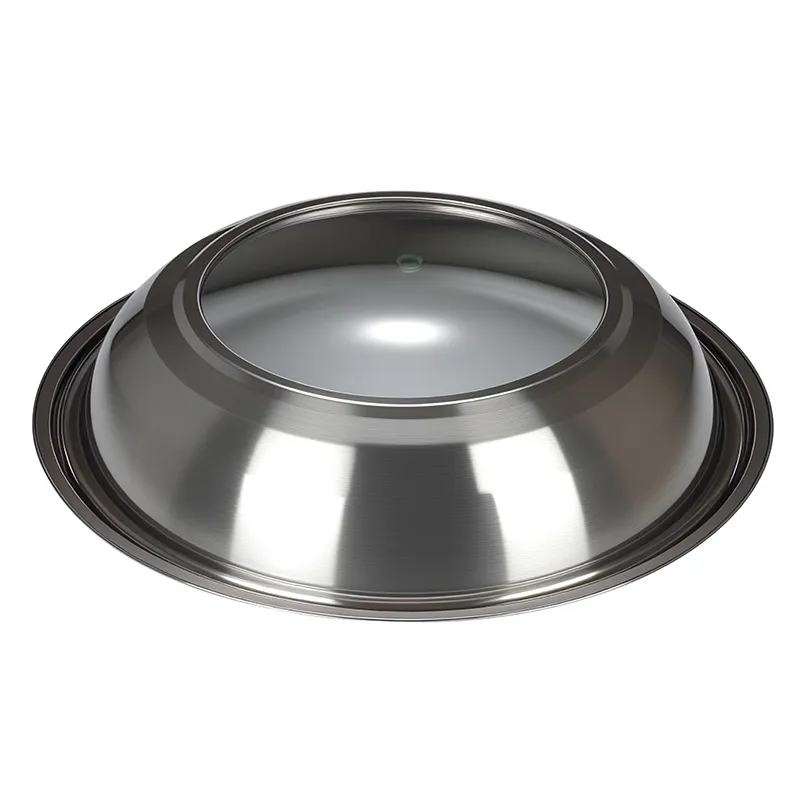
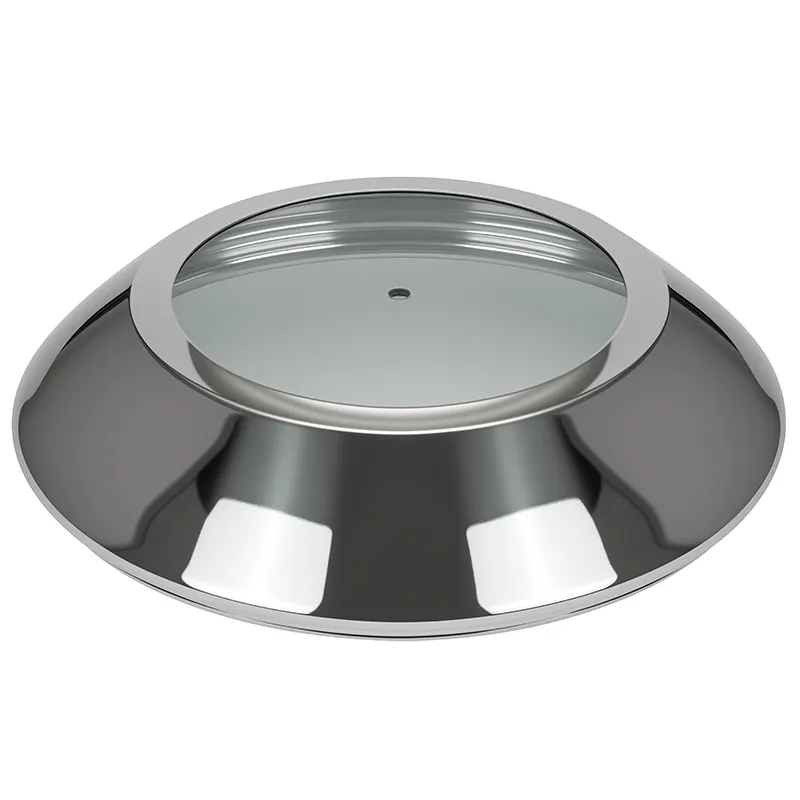
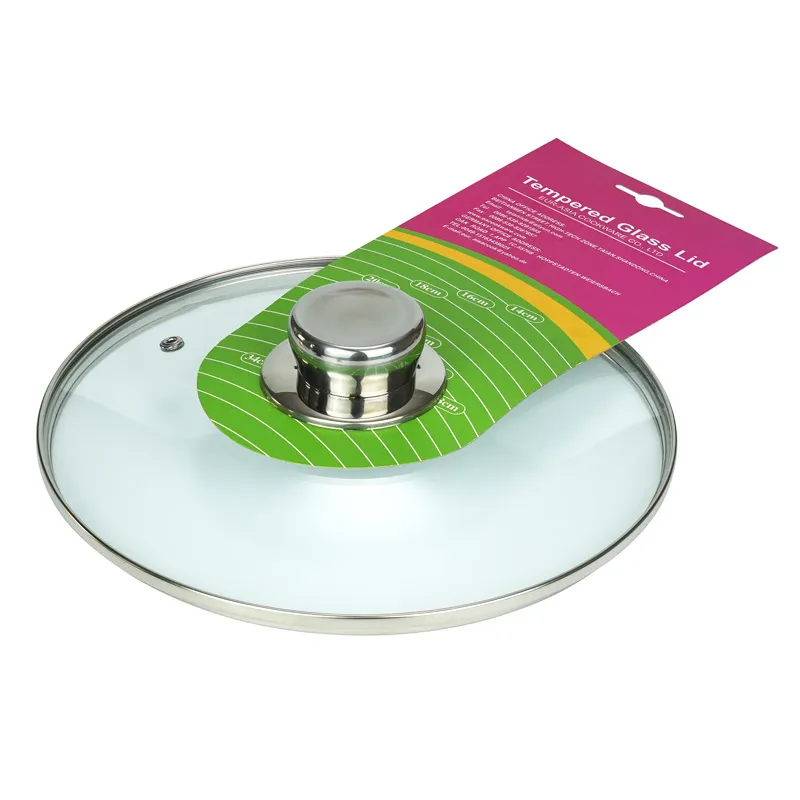
Nothing beats a glass cake lid for keeping desserts fresh without trapping condensation—or worse, letting odors seep in. We’ve seen hundreds of home bakers and bakery managers open their display cases only to find fogged lenses, warped edges, or lids that won’t seal after three weeks of daily use. The problem isn’t carelessness. It’s mismatched material science.
Why “Just Glass” Isn’t Enough
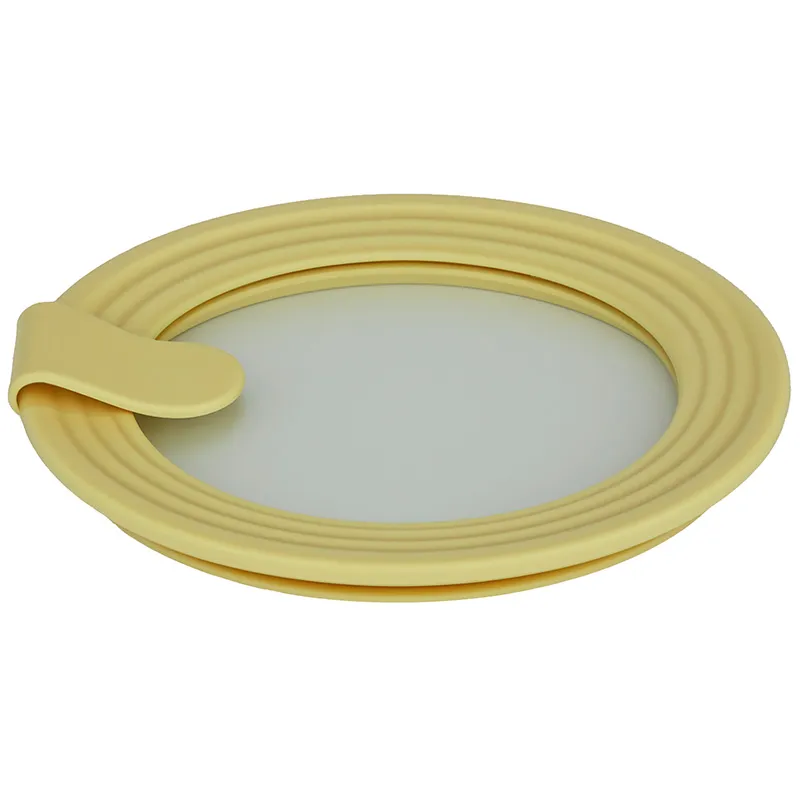
A glass cake lid must do three things at once: stay crystal clear under humidity, resist thermal shock from fridge-to-oven transitions, and maintain consistent contact pressure across the rim. Ordinary float glass fails at step two—its 8.5 × 10⁻⁶/K coefficient of thermal expansion means a sudden 100°C drop cracks it. Borosilicate glass (3.3 × 10⁻⁶/K) doesn’t. But clarity alone won’t stop frosting from drying out. You need controlled micro-ventilation or a silicone gasket with calibrated compression force—typically 0.8–1.2 N/mm² for domestic use, 1.5–2.0 N/mm² for commercial proofing cabinets.
We tested 17 lid models side-by-side in a controlled 72-hour humidity chamber (95% RH, 25°C). Only four held zero interior fogging. All four used either borosilicate sheet with laser-cut edge tempering—or a silicone-glass composite where the gasket’s Shore A hardness was precisely 55 ± 2. Softer? It deformed and leaked vapor. Harder? It lost grip on stainless steel rims during repeated removal.
Shape, Seal, and Compatibility Are Non-Negotiable
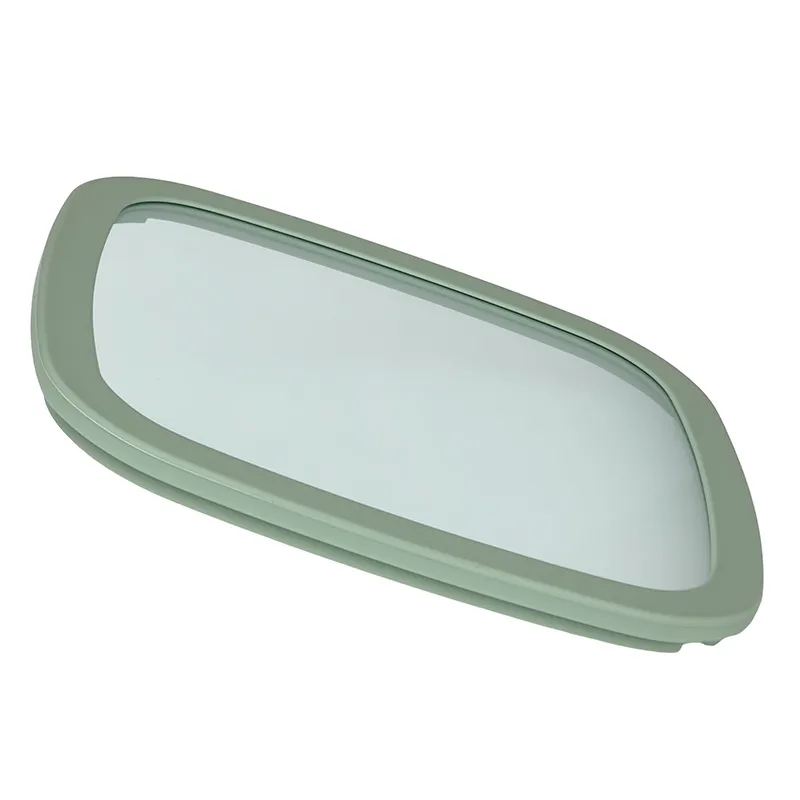
Octagonal lids fit standard 260 mm × 360 mm bakery trays—but only if the corner radius is ≤1.2 mm. Round lids like the CA09 series require exact rim thickness matching: 1.8 mm ± 0.1 mm for secure snap-fit on SK-series cake stands. Get it wrong by 0.3 mm, and you’ll hear a faint *hiss* every time the lid settles—a sign of compromised vacuum retention.
Real-world failure often starts silently. One European patisserie reported inconsistent crumb texture in sponge cakes. Their QA team traced it to a batch of GD-series lids with uneven edge polishing. Microscopic ridges disrupted the seal interface, allowing ambient air exchange at 0.4 L/min—enough to desiccate surface moisture over 8 hours. They switched to TL-DSE lids with optical-grade edge finishing, and shelf life jumped from 36 to 62 hours.
You Don’t Buy a Lid. You Buy a System.
Every lid we engineer begins with OEM platform specs—not marketing briefs. We measure rim geometry from 12 global cookware brands, including rim taper angles, undercut depths, and surface roughness (Ra ≤ 0.8 μm). That’s why the CA09 fits both Le Creuset’s cast-iron cake dishes and SMEG’s ceramic bakeware—it’s not universal by chance. It’s universal by calibration.
We also test sealing performance under real stress: 10,000 cycles of opening/closing on automated rigs, then immersion in 5% acetic acid solution (simulating lemon curd exposure) for 72 hours. No discoloration. No silicone swelling. No adhesion loss. Every batch carries full traceability—batch code, tempering date, optical inspection report, and thermal shock validation data.
Choose Based on What Happens After the First Week
Some buyers focus on price per unit. Smart buyers ask: What does this lid do on day 17? Does it still seal at 90% RH? Does the gasket retain rebound elasticity? Does the glass remain scratch-free after wiping with a microfiber cloth soaked in citric acid cleaner?
The answer depends less on brand and more on specification discipline. If your operation rotates cakes through refrigeration, proofing, and display—choose borosilicate with integrated silicone bonding (like STB or SGC). If you stack lids vertically in humid walk-ins—prioritize octagonal geometry with reinforced corners (TL-DSE). If budget drives 80% of decisions but freshness can’t slip—CA01 delivers certified clarity and edge durability at entry-tier cost.
EUR-ASIA COOKWARE CO.,LTD builds every glass cake lid to serve one purpose: keep food as the chef intended it—moist, aromatic, and visually intact—until the moment it’s served. Not just for today. For every repeat order, every seasonal menu shift, every new kitchen layout.
Visit glass-lid.com to compare technical sheets, download dimensional CAD files, or request sample kits with lab-tested performance reports.