- Chinese
- French
- German
- Portuguese
- Spanish
- Russian
- Japanese
- Korean
- Arabic
- Irish
- Greek
- Turkish
- Italian
- Danish
- Romanian
- Indonesian
- Czech
- Afrikaans
- Swedish
- Polish
- Basque
- Catalan
- Esperanto
- Hindi
- Lao
- Albanian
- Amharic
- Armenian
- Azerbaijani
- Belarusian
- Bengali
- Bosnian
- Bulgarian
- Cebuano
- Chichewa
- Corsican
- Croatian
- Dutch
- Estonian
- Filipino
- Finnish
- Frisian
- Galician
- Georgian
- Gujarati
- Haitian
- Hausa
- Hawaiian
- Hebrew
- Hmong
- Hungarian
- Icelandic
- Igbo
- Javanese
- Kannada
- Kazakh
- Khmer
- Kurdish
- Kyrgyz
- Latin
- Latvian
- Lithuanian
- Luxembou..
- Macedonian
- Malagasy
- Malay
- Malayalam
- Maltese
- Maori
- Marathi
- Mongolian
- Burmese
- Nepali
- Norwegian
- Pashto
- Persian
- Punjabi
- Serbian
- Sesotho
- Sinhala
- Slovak
- Slovenian
- Somali
- Samoan
- Scots Gaelic
- Shona
- Sindhi
- Sundanese
- Swahili
- Tajik
- Tamil
- Telugu
- Thai
- Ukrainian
- Urdu
- Uzbek
- Vietnamese
- Welsh
- Xhosa
- Yiddish
- Yoruba
- Zulu
- Kinyarwanda
- Tatar
- Oriya
- Turkmen
- Uyghur


Square Tempered Glass Lids: Design, Fit, and OEM Specification Checklist
2026-10-29
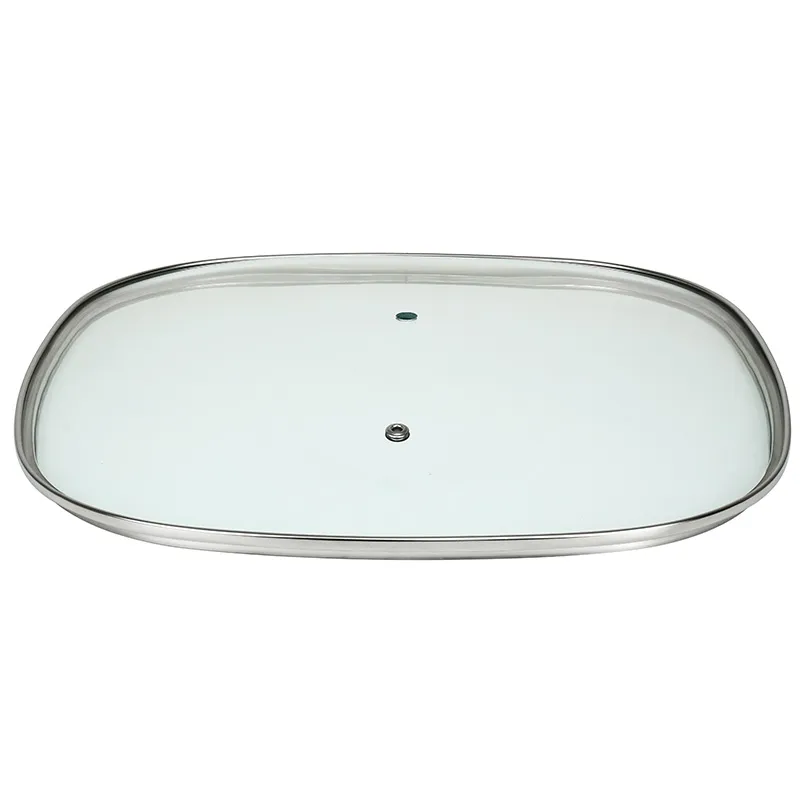
If you are sourcing a square tempered glass lid for cookware OEM projects, the biggest risk comes from square-specific structural weaknesses. Unlike round glass lids that distribute stress evenly across the whole surface, square glass concentrates tension at four corners, which easily leads to corner cracking after tempering or repeated thermal cycling. Many OEM buyers encounter fit gaps, uneven seating and broken samples simply because they copy dimension standards for round glass lids directly onto square products. This guide is built for product engineers, procurement specialists and import purchasers, covering the full design, dimension matching, accessory selection and sample approval workflow tailored exclusively for square tempered glass lid development.
1. Unique Design Characteristics of Square Tempered Glass Lids
This section answers: What structural differences make square glass lids more prone to failure than round alternatives?
- Core information: Sharp square corners create heavy stress concentration; flat straight edges bring uneven cooling during the tempering process. Round lids spread thermal expansion evenly, while square glass accumulates tensile stress at corner zones, making corners the most common fracture point.
- Technical notes: Square tempered glass cannot use the same tempering parameters as round glass. The four corners must be pre-rounded before tempering; sharp right angles carry a very high risk of cracking once quenching finishes.
- Avoid content: Do not extend discussions to oval, rectangular or round glass lid design rules.
- Fact to verify: Exact tempering air jet adjustment parameters for square glass blanks.
2. Exact Dimension Definition: Length, Width and Corner Radius
This section answers: How to mark dimensions accurately to avoid mismatches with square cookware openings?
- Core information:
- Clarify measurement baseline: Specify whether length and width refer to the outer overall contour or the inner sealing lip that contacts the pot rim.
- Corner radius is non-negotiable: A widely followed practical guideline for tempered glass is to set the corner fillet radius equal to or larger than the glass thickness to reduce the chance of corner breakage.
- Two extra key dimensions: Dome height (arch height of the lid) and glass thickness, which directly affect stacking clearance and structural strength.
- Practical example: For a 5 mm thick square glass lid, many fabricators recommend starting with an R5 corner radius; tighter radii raise the risk of micro-cracks forming during or after tempering.
- Avoid content: Do not introduce diameter measurement standards for round lids.
- Fact to verify: Industry dimensional tolerance for length and width of square tempered glass lids.
3. Lid-to-Cookware Edge Matching & Sealing Requirements
This section answers: How to keep the square lid flat on the pot rim without warping or corner gaps?
- Core information:
- Square pot openings have four straight edges plus four curved corners. Straight edges fit easily, but the four corners are prone to lifting and forming air leaks.
- The inner contour of the glass lid must match the outer profile of the square pot rim precisely. A slight deviation will create uneven contact and cause the lid to rock back and forth.
- Flat square lids have higher warping risk than domed lids; domed designs distribute weight more evenly and reduce edge lifting.
- Technical notes: The sealing gap is most likely to appear at the four corners. Always test the sample on the actual pot body instead of just checking the drawing dimensions.
- Avoid content: Do not cover sealing solutions for round cookware lids.
- Fact to verify: Acceptable gap tolerance between square lid and pot rim.
4. Rim, Handle & Accessory Selection for Square Glass Lids
4.1 Rim Options: Stainless Steel Rim vs Silicone Rim
This section answers: Which rim type works better for square glass lids and what forming limits exist at corners?
- Core information:
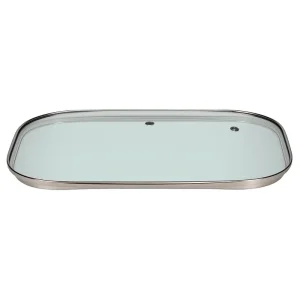
- Stainless steel rims (201 grade for mid-range goods, 304 grade for EU and US export orders) provide rigid edge protection. The four corners are the most difficult forming positions for metal rims; improper bending will create tension and pull the glass out of shape.
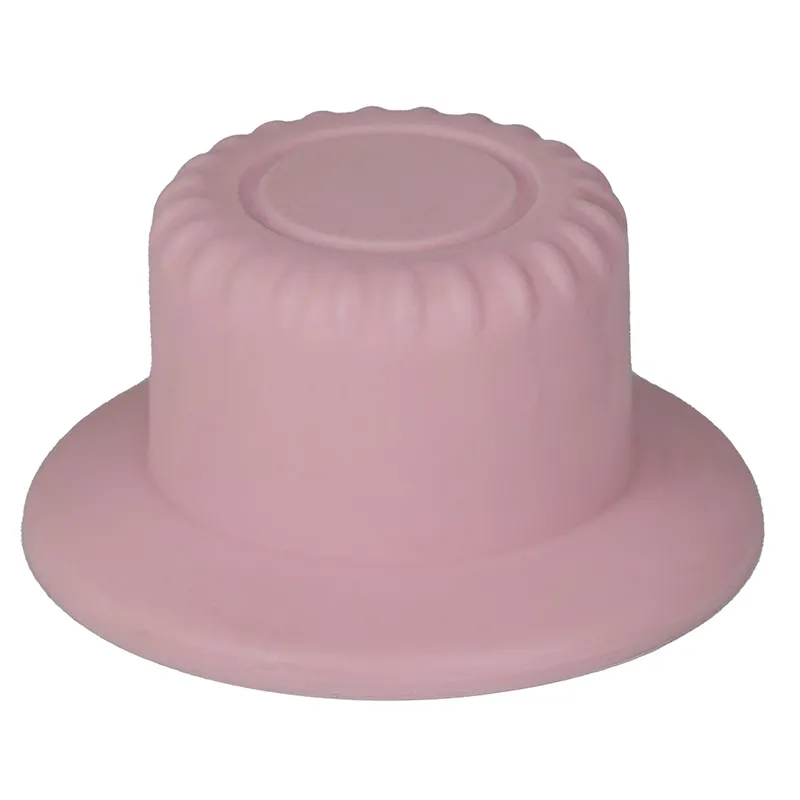
- Food-grade silicone rims fit tightly against pot edges and eliminate metal-to-metal friction. However, square corner silicone molding has higher mold tolerance requirements.
- Fact to verify: Forming limitations of stainless steel rims at sharp square corners.
4.2 Handle Types: C-type, T-type, G-type for Square Lids
This section answers: How to arrange mounting holes for C-type, T-type and G-type handles on square glass lids without triggering corner stress cracking?
- Core information:
- Handle mounting holes must stay far away from the four corner stress zones. The hole edge should maintain a safe distance from the lid corners.
- C-type and G-type pull handles fit large square stockpot lids; T-type handles balance weight well on medium square pan lids.
- The total height of the handle must be controlled to keep the full cookware set stackable inside cabinets.
- Practical example: G-type handles are commonly selected for square soup pot lids, while C-type handles are a popular option for square frying pan lids.
- Avoid content: Do not discuss handle layout for round lids.
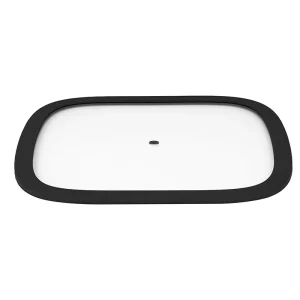
4.3 Optional Parts: Steam Vent Holes & Custom Logo
Core information: Steam vent holes cannot be drilled near the four corners, where stress is highest. Logo printing or laser etching should be placed on the central flat area, away from edge tension zones.
5. Balancing Design Features with Practical Application Needs
This section answers: How to balance structural strength, sealing performance, stacking storage and dishwasher durability in one square lid design?
- Core information:
- Generous corner radii improve anti-cracking performance without sacrificing appearance.
- Control handle height strictly to ensure nested stacking without collision between lids and pots.
- Minimize narrow gaps and welded joints to reduce grease buildup; one-piece hollow handles are easier to clean than multi-piece welded structures.
- Square glass lids face higher thermal shock risk; the whole assembly must withstand repeated hot-cold cycles without loosening or cracking.
- Fact to verify: Standard thermal shock test parameters for tempered glass cookware lids.
6. OEM Drawing, Pre-Production Sample & Specification Confirmation
6.1 Key Parameters to Mark on Engineering Drawings
Core information: The technical drawing must include all these items without omission: overall length and width, corner radius, glass thickness, dome height, handle hole center distance, hole chamfer requirements, rim outline, and handle mounting dimensions. Missing corner radius is the top reason for sample deviation in square lid OEM projects.
6.2 Pre-Production Sample Approval Procedure
Core information: Always produce a first article sample before mass production. The critical inspection step is placing the sample onto the actual square pot body to check four-corner flatness and sealing performance. Inspect every corner for tiny micro-cracks caused by uneven tempering.
6.3 Avoid Common Sample Deviations
Core information: Many buyers only mark length and width on drawings and ignore corner radius, leading to sharp-cornered glass that cracks immediately after tempering. Never copy dimension standards from round glass lids to square designs.
7. Packaging & Pre-Shipment Protection for Square Glass Lids
This section answers: How to protect fragile square corners from impact damage during shipping?
- Core information:
- The four corners are the most vulnerable parts during transit; individual plastic corner protectors are recommended for each piece.
- Separate every single glass lid with isolation paper to prevent surface scratches and edge chipping.
- Use partitioned inner cartons to avoid mutual collision between lids inside the outer shipping box.
- Fact to verify: Standard export packaging scheme for square tempered glass lids.
8. Complete Specification Sheet Content for Buyers
This section answers: What items must be filled in the procurement specification sheet to eliminate repeated sample revisions?
Core information for the checklist:
- Outer length, outer width and corner radius of the square lid
- Glass thickness and dome height
- Rim material: 201 / 304 stainless steel or food-grade silicone
- Handle style: C-type, T-type or G-type, plus mounting hole pitch
- Steam vent hole position and size (if required)
- Surface finish: polished, brushed or matte
- Material certification, dimensional tolerance and assembly requirements
- Packaging requirements and first sample acceptance standards
9. Frequently Asked Questions (FAQ)
Q1: Can I re-drill new mounting holes on finished tempered square glass to fit existing handles?
A: No. Once the glass completes tempering, any secondary drilling will cause immediate shattering. All hole positions must be fixed before the tempering process starts, and hole layout must avoid the four high-stress corners.
Q2: Why do square tempered glass lids mostly crack at the four corners after thermal cycling?
A: Square corners create concentrated tensile stress during heating and cooling. If the corner radius is too small or edges are not smoothly chamfered, micro-cracks will expand quickly after repeated temperature changes and eventually break the glass.
Q3: How do I choose between C-type and G-type handles for square cookware lids?
A: G-type handles have a larger vertical height and fit deep square stockpots. C-type handles feature a lower profile, making them more suitable for shallow square frying pans and griddle pans. Both handle holes must keep a safe distance from lid corners.
Q4: What dimensional tolerance should I set for length and width of square tempered glass lid?
A: Strict tolerance control is required to ensure full contact with the pot rim. Confirm the exact tolerance range with your glass processing factory before finalizing the drawing and RFQ documents.
Conclusion: Final OEM Checklist for Square Tempered Glass Lids
Before confirming your OEM order for a square tempered glass lid, run through this condensed checklist to prevent most engineering defects and sample rework:
- Confirm length, width and corner radius, following the practical guideline that the fillet radius is no less than glass thickness to reduce corner stress.
- Finalize rim material and corner forming solutions to avoid uneven tension on glass edges.
- Select C-type, T-type or G-type handles and fix hole positions away from four corner stress zones.
- Match lid dimensions with the square pot rim to eliminate corner lifting and sealing gaps.
- Optimize the structure for easy cleaning and long-term dishwasher use.
- Submit fully dimensioned technical drawings and pass first-article sample flatness and crack inspection.
- Add individual corner protection in packaging to prevent transit breakage.
- Compile a complete RFQ document with all dimensional, material and tolerance requirements.
With all these specifications clearly documented, you can cut down repeated sampling costs, reduce post-sale breakage claims, and keep your square glass lid OEM production on schedule.