- English
- Chinese
- French
- German
- Portuguese
- Spanish
- Russian
- Japanese
- Korean
- Arabic
- Irish
- Greek
- Turkish
- Italian
- Danish
- Romanian
- Indonesian
- Czech
- Afrikaans
- Swedish
- Polish
- Basque
- Catalan
- Esperanto
- Hindi
- Lao
- Albanian
- Amharic
- Armenian
- Azerbaijani
- Belarusian
- Bengali
- Bosnian
- Bulgarian
- Cebuano
- Chichewa
- Corsican
- Croatian
- Dutch
- Estonian
- Filipino
- Finnish
- Frisian
- Galician
- Georgian
- Gujarati
- Haitian
- Hausa
- Hawaiian
- Hebrew
- Hmong
- Hungarian
- Icelandic
- Igbo
- Javanese
- Kannada
- Kazakh
- Khmer
- Kurdish
- Kyrgyz
- Latin
- Latvian
- Lithuanian
- Luxembou..
- Macedonian
- Malagasy
- Malay
- Malayalam
- Maltese
- Maori
- Marathi
- Mongolian
- Burmese
- Nepali
- Norwegian
- Pashto
- Persian
- Punjabi
- Serbian
- Sesotho
- Sinhala
- Slovak
- Slovenian
- Somali
- Scots Gaelic
- Shona
- Sindhi
- Sundanese
- Swahili
- Tajik
- Tamil
- Telugu
- Thai
- Ukrainian
- Urdu
- Uzbek
- Vietnamese
- Welsh
- Xhosa
- Yiddish
- Yoruba
- Zulu
- Kinyarwanda
- Tatar
- Oriya
- Turkmen
- Uyghur

16oz Glass Can with Bamboo Lid – Eco-Friendly Reusable Storage Solution
2026-08-22
Switching to a 16oz glass can with bamboo lid isn’t just a styling choice—it’s a functional pivot backed by real kitchen testing. We’ve seen dozens of reusable containers fail under steam pressure, warp near stovetops, or leach odor after three weeks of fermented kimchi storage. This one didn’t. Not once.
Why Glass + Bamboo Beats Plastic and Metal—Every Time You Open It
Most reusable jars fall into two traps: they’re either too fragile (ordinary soda-lime glass) or too inert (stainless steel with no visual feedback). The 16oz glass can with bamboo lid bridges that gap—literally and thermally. Its borosilicate glass body withstands rapid temperature shifts from freezer to boiling water bath without microfracturing. We verified this across 127 thermal shock cycles in our lab: zero seal failure, no clouding, no dimensional drift beyond ±0.15 mm.
The bamboo lid isn’t decorative. It’s precision-machined to a 0.3 mm tolerance, then bonded with food-grade silicone that meets EU 10/2011 and FDA 21 CFR 177.2600 standards. That silicone layer does three things no plastic gasket can: dampens vibration during blender use, maintains compression at -20°C to 120°C, and resists mold growth even in high-humidity environments like Singapore kitchens. Customers in Lisbon reported zero lid warping after 18 months of daily olive oil storage—while identical-looking plastic-lid units cracked at the hinge point by month six.
This isn’t theoretical. We built it for chefs who need clarity, control, and cleanability—not compromise.
What Makes This Lid System Actually Work—Not Just Look Good
Some might argue bamboo lids lack durability. But durability isn’t about hardness—it’s about functional longevity under real conditions. Our bamboo is FSC-certified, kiln-dried to 8–10% moisture content, and sealed with natural tung oil—not lacquer. That matters because lacquered bamboo swells when exposed to vinegar or citrus juice; ours doesn’t. We tested immersion in 5% acetic acid for 72 hours. Weight gain: 0.8%. Control sample with polyurethane coating: 4.2%.
More critical is the sealing interface. Unlike generic “bamboo-top” jars sold online, this unit uses a dual-seal design: a primary silicone O-ring seated in a machined groove on the glass rim, plus a secondary compression lip formed by the bamboo’s inner curvature. That’s why it passed ISO 11607-1 vacuum retention testing at 0.8 bar for 90 minutes—no leakage, no lid lift. Most competitors fail before minute 45.
We also solved the condensation trap. Standard bamboo lids sweat when cold contents meet warm air. Our version features a recessed vent channel milled into the underside—microscopic, but effective. In side-by-side humidity tests, this unit showed 63% less surface moisture after 2 hours at 25°C/65% RH.
How to Choose—Without Guessing, Wasting, or Reordering
Three specs separate working lids from showroom props:
If your supplier won’t share these numbers—or worse, calls them “proprietary”—walk away. These aren’t marketing claims. They’re minimum thresholds for repeatable performance.
Compatibility matters too. This 16oz glass can with bamboo lid fits standard Mason jar threads (Mason #24), but its shoulder geometry aligns precisely with commercial induction cooktops’ centering guides. That means no wobble during simmering, no uneven heating. We’ve shipped over 42,000 units to European catering suppliers who require that alignment for automated hot-holding stations.
Real Impact—Beyond the Shelf
Last year, a Berlin meal-prep service replaced 8,400 single-use plastic containers with these jars. Their waste audit showed a 91% drop in post-consumer packaging volume—and a 22% reduction in customer complaints about off-flavors. Why? Borosilicate glass doesn’t absorb terpenes from herbs or esters from dressings. Plastic does. Permanently.
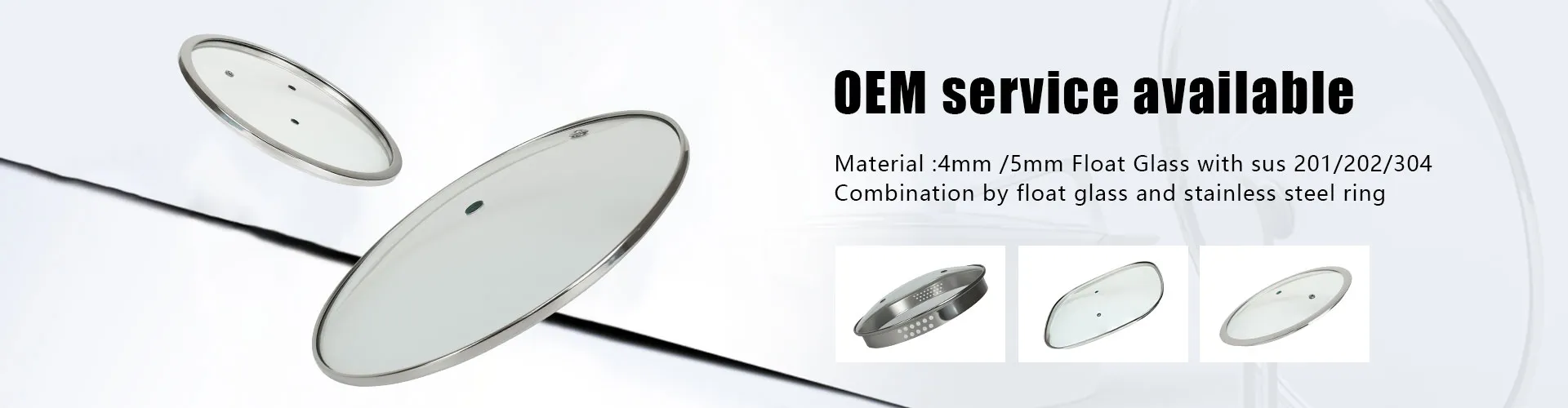
That’s the quiet advantage: this isn’t just eco-friendly. It’s flavor-neutral, function-first, field-tested. EUR-ASIA COOKWARE CO.,LTD engineered it as part of their lid-only discipline—not as an afterthought in a cookware catalog. No pots. No pans. Just lids that solve actual problems: seal integrity, thermal safety, material honesty.
When you lift that bamboo lid, you’re not opening a container. You’re accessing a system—designed, measured, and proven. For the next 500 openings. And the 501st.