- Chinese
- French
- German
- Portuguese
- Spanish
- Russian
- Japanese
- Korean
- Arabic
- Irish
- Greek
- Turkish
- Italian
- Danish
- Romanian
- Indonesian
- Czech
- Afrikaans
- Swedish
- Polish
- Basque
- Catalan
- Esperanto
- Hindi
- Lao
- Albanian
- Amharic
- Armenian
- Azerbaijani
- Belarusian
- Bengali
- Bosnian
- Bulgarian
- Cebuano
- Chichewa
- Corsican
- Croatian
- Dutch
- Estonian
- Filipino
- Finnish
- Frisian
- Galician
- Georgian
- Gujarati
- Haitian
- Hausa
- Hawaiian
- Hebrew
- Hmong
- Hungarian
- Icelandic
- Igbo
- Javanese
- Kannada
- Kazakh
- Khmer
- Kurdish
- Kyrgyz
- Latin
- Latvian
- Lithuanian
- Luxembou..
- Macedonian
- Malagasy
- Malay
- Malayalam
- Maltese
- Maori
- Marathi
- Mongolian
- Burmese
- Nepali
- Norwegian
- Pashto
- Persian
- Punjabi
- Serbian
- Sesotho
- Sinhala
- Slovak
- Slovenian
- Somali
- Samoan
- Scots Gaelic
- Shona
- Sindhi
- Sundanese
- Swahili
- Tajik
- Tamil
- Telugu
- Thai
- Ukrainian
- Urdu
- Uzbek
- Vietnamese
- Welsh
- Xhosa
- Yiddish
- Yoruba
- Zulu
- Kinyarwanda
- Tatar
- Oriya
- Turkmen
- Uyghur

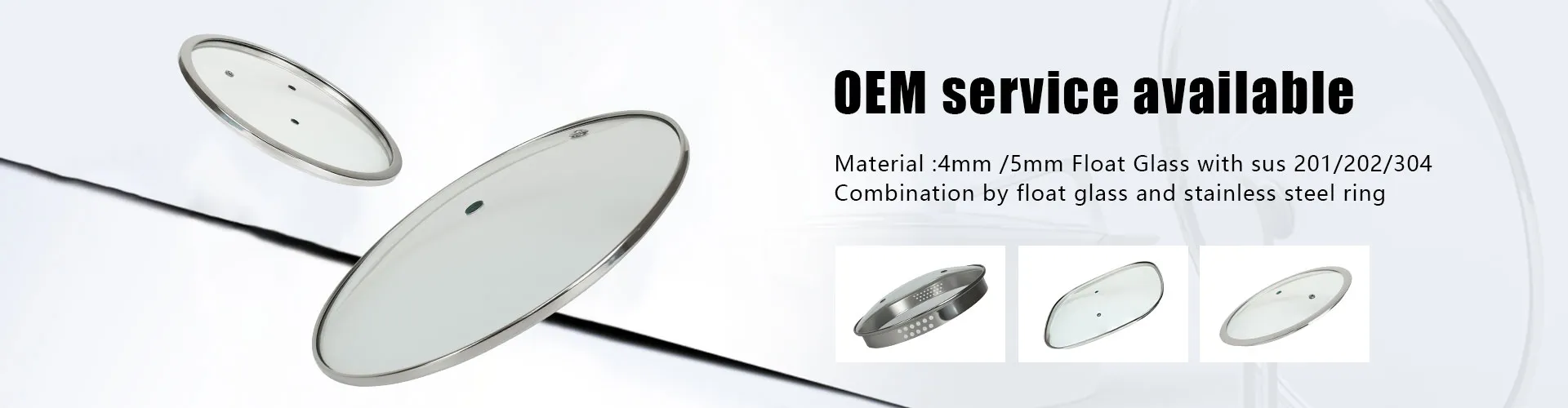
What a Professional Tempered Glass Lid Manufacturer Should Provide
2026-11-12
A professional tempered glass lid manufacturer is not defined by a single certificate, a showroom, or a competitive quote. Those signals are easy to present and nearly useless for predicting whether a batch of lids will match the approved sample, whether the glass has been consistently heat-treated, or whether the paperwork will survive an audit. What separates a professional supplier from an opportunistic one is a set of repeatable capabilities that can be checked, documented, and compared across candidates.
This article organizes those capabilities into four dimensions: tempering and quality control, product development and customization, inspection and documentation, and delivery and communication. It is a general evaluation framework, not a claim that any particular supplier—including this site—possesses every capability listed. Use it as an interview guide, an audit preparation tool, and a way to compare evidence rather than promises.
1. What “Professional” Means in This Evaluation Framework
Professionalism in tempered glass lid manufacturing is a compound of process discipline and commercial reliability. A supplier can have a modern furnace and still fail an audit because batch records are missing or a specification change was never approved. Conversely, a smaller operation can be professional if its process controls are documented, its claims match its evidence, and it communicates deviations before the buyer discovers them.
The framework in this article evaluates four capability dimensions:
- Tempering process and quality control—whether the glass itself is consistently and verifiably heat-treated, and whether production is traceable.
- Product development and customization response—whether the supplier can move from a requirement to a validated sample without losing control of the specification.
- Inspection, testing, and document management—whether quality claims are supported by records and reports that a buyer or auditor can actually use.
- Delivery and communication capability—whether planning, packaging, and problem escalation are handled with the same discipline as production.
Each dimension should be assessed through four types of evidence: documents, samples and test reports, direct observation (on-site or by live video), and the supplier’s communication record. A supplier that can produce documents but resists observation is not the same as one that welcomes both. A table like the one below is a useful starting point before requesting anything specific.
| Capability dimension | Core verification question | Acceptable evidence | Common weak signal |
|---|---|---|---|
| Tempering & QC | Can you show controlled heat treatment and batch traceability? | Process records, calibration logs, fragmentation reports tied to batches | Claims of “high quality” with no batch-level records |
| Development & customization | Can you take a requirement to a stable production specification? | Design review notes, approved samples, change records | Customization offered without a change-control process |
| Inspection & documentation | Do your inspection and test records match the product shipped? | Inspection plans, test reports with sample IDs, document version control | Reports that cannot be linked to the delivered batch |
| Delivery & communication | Can you plan transparently and close corrective actions? | Production schedules, packaging specs, CAPA records | Delivery dates given without a production review |
2. Capability Dimension 1: Tempering Process and Quality Control
Tempering is the capability that most directly separates a safety-relevant glass lid from an ordinary glass disc. The evaluation here is not about whether a supplier owns a tempering furnace. It is about whether the supplier can demonstrate that the furnace is controlled, the process is monitored, and the output is verified against an applicable standard.
2.1 Incoming Glass and Process Control
A professional manufacturer begins control before tempering. Ask how incoming glass is identified, how the furnace’s key parameters are recorded, and how equipment calibration is scheduled. The records should allow a reviewer to connect a finished lid back to a production run, not merely to a month of output.
A practical test is to request a batch record for a recent order and trace it forward: raw material lot, tempering run, edge processing, and final inspection. If the supplier can produce a coherent path, process control is real. If the trail stops at the warehouse, the “traceability” claim is superficial. Calibration records for measuring equipment and maintenance logs for the tempering line belong in the same evidence set.
2.2 Tempering, Edge Treatment, and Thermal Safety
The most widely recognized verification method for fully tempered glass is the fragmentation test. Under EN 12150-1, fully tempered glass must break into numerous small, relatively cuboidal fragments, with a minimum count of 40 fragments in a 50 mm × 50 mm counting area for 4–12 mm glass. GB 15763.2 applies a comparable logic to building safety glass, with fragmentation count requirements in a defined counting area for common thicknesses.
However, a cookware glass lid is not a building pane, and a professional supplier should be able to explain which standard actually governs the product. EN 12983-2 (2023, as amended in 2025) is the European standard that includes dedicated tests for cookware glass lids: a steel ball impact test in Annex B and a fragmentation test in Annex C, the latter requiring at least 40 particles in a 50 mm square for thermally toughened lids. A Chinese group standard, T/CNAGI 004—2023, addresses tempered glass pot lids directly, covering food-contact material safety, mechanical impact resistance, fragmentation state, and thermal shock resistance. ASTM C1048, by contrast, is written for monolithic flat glass used in general building construction, not for cookware lids. A supplier that cites ASTM C1048 without qualification for a glass lid is either using the wrong reference or being imprecise about scope; a professional supplier will distinguish between the standard it tests to and the standard that applies to the product category.
Edge treatment deserves equal attention. Chips, cracks, or insufficient seaming at the rim concentrate stress and can initiate failure during normal handling or thermal cycling. A visual edge inspection under controlled lighting is a basic incoming and in-process check, and the supplier should have a written acceptance criterion for edge quality.
2.3 Batch Traceability and Nonconforming Product Control
Traceability is the backbone of accountability. A professional manufacturer can take a finished lid and identify the glass lot, tempering run, edge-processing batch, and inspection record associated with it. This is not a bureaucratic exercise. Without it, a fragmentation failure or a dimensional drift cannot be contained to a suspect lot.
Ask how nonconforming product is isolated. Is there a designated quarantine area? Are rework and scrap decisions documented? Does the supplier’s corrective action record identify the root cause, the containment action, and the verification step? A supplier that can show a closed nonconformance record from the past six months demonstrates more than one that presents a blank template.
3. Capability Dimension 2: Product Development and Customization Response
Customization is often sold as a menu of options. The professional question is not “Can you make a different size or shape?” but “Can you take a requirement through feasibility, sampling, approval, and production without losing control of the agreed specification?”
3.1 Design Review and Feasibility Feedback
A professional supplier does not simply accept a drawing. It reviews the requirement and returns structured feedback: which dimensions affect tempering uniformity, which edge profiles are compatible with the intended rim or knob assembly, and which tolerances are realistic for the chosen process. This feedback should happen before sampling, not after a failed sample.
A useful verification question is: “What information do you need from us before you can confirm feasibility, and what risks do you see in the current requirement?” A supplier with real development capability will have a checklist and will raise specific concerns. A supplier without it will ask only for a target price and a quantity.
3.2 Sampling, Tooling, and Approval Workflow
The path from sample to mass production is where customization projects most often fail. The supplier should be able to describe a defined sampling stage, the criteria for sample approval, how the approved sample is sealed or frozen as a reference, and how tooling or fixture status is recorded.
Request the sample approval record for a recent customization project. It should include the measured dimensions, the inspection result, the customer’s approval reference, and the date. If the supplier can show that the production batch was checked against the approved sample, the workflow is functioning. If the approved sample exists only as a photograph in a chat thread, the workflow is informal.
3.3 Customization Scope and Change Control
A professional manufacturer is clear about what it can and cannot customize. Scope should be described in terms of confirmed options—dimensions, edge treatment, hole or vent configuration, knob or handle attachment, and packaging—rather than broad claims of “OEM/ODM capability.”
Change control is the more revealing test. When a specification changes—even a small dimension adjustment—there should be a record of what changed, why, who approved it, which production batch it applies to, and whether re-validation was required. Without this, a buyer may receive lids that are individually within tolerance but collectively different from the approved sample. A supplier that cannot show a change record is a supplier that cannot guarantee batch-to-batch consistency.
4. Capability Dimension 3: Inspection, Testing, and Document Management
Testing without documentation is an anecdote. Documentation without testing is a filing exercise. The professional standard is a documented inspection and test system where every report can be tied to a sample, a batch, and a specification.
4.1 Inspection Plan and In-Process Controls
Ask for the inspection plan for tempered glass lids: what is checked at incoming, in-process, and final stages, how sampling is determined, what the acceptance criteria are, and where the results are recorded. A credible plan will include dimensional checks, visual inspection for bubbles, scratches, and edge defects, and functional checks relevant to the lid’s assembly.
A strong supplier can explain how an out-of-specification result triggers escalation. A weak supplier describes inspection as “100% full inspection” without defining what is inspected, against what standard, or what happens when a defect is found. “Full inspection” is not a quality system; it is a staffing claim.
4.2 Test Reports and Applicable Standards
The test report is one of the most misused documents in supplier evaluation. A professional report identifies the standard and version, describes the sample (including dimensions and thickness), states the test conditions, and reports the result against a defined acceptance criterion.

For cookware glass lids, the first priority is to establish whether the report addresses the product category. A fragmentation or impact report citing EN 12983-2 Annex B or Annex C is directly applicable to cookware lids. A report citing a building-glass standard may still contain useful fragmentation data, but its scope must be qualified. Depending on the destination market and the buyer’s specification, additional tests may include food-contact material safety, thermal shock endurance, and mechanical impact under conditions that simulate handling and cooking.
The buyer should check whether the report’s sample description matches the product being purchased. A fragmentation report for a 5 mm flat glass pane does not automatically validate a 4 mm lid with a drilled steam vent. The supplier should be able to explain the relationship between the tested sample and the production configuration.
4.3 Document Package for Buyers and Auditors
A professional manufacturer maintains a document package that can be shared with a buyer or auditor without a last-minute scramble. At minimum, this includes the current inspection plan, a sample of recent inspection records, applicable test reports with sample traceability, calibration records for critical measuring equipment, and a nonconformance or corrective action record if one exists.
Version control matters as much as document existence. An inspection plan dated three years ago and never revised is a sign that the system is not maintained. Ask how documents are updated when a process or product changes, and who approves the change. A supplier that can produce a document version log demonstrates a level of management discipline that a stack of undated certificates does not.
5. Capability Dimension 4: Delivery and Communication Capability
Delivery capability is not only about speed. It is about whether the supplier can tell the buyer the truth about timing, protect the product in transit, and respond to problems with a process rather than an apology.
5.1 Planning, Lead Time, and Capacity Transparency
A professional supplier confirms an order against a production review, not against a sales target. Ask how the quoted lead time was calculated, what the current production load is, and what happens if a raw material delay occurs. A supplier that can describe its scheduling logic and its constraints is more reliable than one that promises a short lead time without qualification.
Capacity claims should be cross-checked against visible equipment and staffing during an audit or live video walkthrough. A monthly output figure that cannot be reconciled with the number of tempering lines and shifts is a warning sign, not a negotiating position.
5.2 Packaging, Handling, and Logistics Coordination
Glass lids are vulnerable to edge chipping and breakage in transit. Packaging should be specified, not improvised. Ask for the packaging specification for the actual product: inner separation, edge protection, carton strength, and pallet configuration. If the supplier cannot provide a packaging drawing or specification, the protection level is undefined.
Logistics coordination is part of the capability. The supplier should be able to provide shipping documents consistently and communicate deviations—port congestion, carrier changes, customs holds—before they become surprises. A supplier that treats logistics as the buyer’s problem after the container leaves is only partially professional.
5.3 Communication, Escalation, and Corrective Action
The final test of professionalism is what happens when something goes wrong. A supplier with a functioning escalation process will identify a responsible contact, acknowledge the issue within a defined window, contain the suspect product, investigate the cause, and propose a corrective action with a verification step.
Ask for a redacted corrective action record from a past quality issue. The record should show the problem description, the immediate containment, the root cause analysis, the corrective action, and the effectiveness check. A supplier that cannot produce such a record—or produces one that stops at “we will pay more attention”—has not demonstrated a closed-loop system.
6. Capability Checklist and Common Shortfalls
The following checklist converts the four dimensions into questions a buyer or auditor can use directly. It is not a scoring model. Its purpose is to generate evidence, not to reward a supplier that answers confidently.
6.1 Item-by-Item Verification Checklist
| Area | Question to ask | Evidence to request |
|---|---|---|
| Tempering & QC | Can you trace a finished lid to its glass lot and tempering run? | Batch record sample; calibration log |
| Tempering (test evidence) | Which fragmentation or impact standard do you test to for cookware lids? | Test report with sample ID and acceptance criterion |
| Development | What feasibility feedback do you provide before sampling? | Design review checklist or sample review notes |
| Development | How is a specification change controlled and communicated? | Change record with approval and effective batch |
| Inspection & documentation | What does your inspection plan cover, and how is sampling determined? | Current inspection plan; recent inspection records |
| Inspection & documentation | Can each test report be linked to the delivered batch? | Report with sample description and batch reference |
| Delivery & communication | How was the quoted lead time calculated? | Production review or scheduling record |
| Delivery & communication | Can you show a closed corrective action from the past year? | CAPA record with root cause and verification |
6.2 Common Weaknesses and Red Flags
- Certificates without sample traceability. A certificate of compliance is not the same as a test report for the product being purchased.
- Reports that do not match the product. A fragmentation report for a flat building pane does not validate a lid with holes and a rim assembly.
- Traceability that stops at the warehouse. Batch identification that cannot connect a finished lid to a tempering run is not traceability.
- Customization without change control. If the supplier cannot show a change record, the “customized” product may drift from the approved sample.
- Inspection described as “100%” but undefined. Full inspection without an inspection plan and acceptance criteria is an assertion, not a control.
- Corrective actions that stop at apology. A record that does not identify root cause and verification does not close the loop.
- Capacity claims that do not reconcile with equipment. A production figure that cannot be explained by visible lines and shifts deserves a follow-up question.
6.3 Remote vs. On-Site Verification
Remote verification can cover document review, test report validation, sample inspection, and a live video walkthrough of the production area and warehouse. It cannot fully replace physical observation of edge finishing, furnace loading, or packaging practice. If remote review raises inconsistencies, an on-site visit should target the specific gap: the batch record shelf, the quarantine area, or the calibration station.
A supplier that resists even a scheduled live video walkthrough while claiming full capability is providing information about its confidence level, not just its logistics.
7. FAQ: Evaluating a Tempered Glass Lid Manufacturer
What documents should I request first? Start with the current inspection plan, a sample batch record, a recent test report with sample traceability, and a calibration record for critical measuring equipment. If the supplier cannot produce these four documents in a coherent set, deeper technical questions will not be productive until the document system is addressed.
How can I verify tempering quality before mass production? Ask for the fragmentation or impact test report that applies to the cookware lid configuration, not a generic building-glass report. Check that the sample description matches the intended product and that the acceptance criterion is stated. If the report cannot be tied to a sample or batch, treat it as a capability indicator rather than product evidence.
Does customization capability alone prove a manufacturer is professional? No. Customization without change control produces variation. A professional supplier can show a sampling and approval workflow, a sealed reference sample, and a change record connecting the approved specification to the production batch.
What if a supplier cannot provide complete evidence? Incomplete evidence is common. The evaluation question is how the supplier responds. A professional supplier will acknowledge the gap and propose a path to close it. A supplier that dismisses the request or offers verbal assurance in place of records has told you something important about its operating system.
8. Conclusion: Using the Checklist to Make a Supplier Decision
A professional tempered glass lid manufacturer demonstrates control in four areas: tempering, documentation, customization change management, and problem closure. The checklist in this article is designed to surface evidence in each area, not to produce a score.

A practical decision path is: screen with the checklist, request the document package, review samples and test reports against the intended product, verify the gaps through live or on-site observation, and confirm that corrective actions are closed with evidence. If a supplier cannot meet the framework today but can show a credible plan to close specific gaps, that is a different commercial conversation from a supplier that cannot show the gaps at all.
If you are evaluating a tempered glass lid manufacturer for a cookware line, the next step is to send the capability questions and document requests before the first sample order. The answers—and the speed and completeness with which they arrive—will tell you more than a catalogue.If you would like to discuss your specific requirements or request our latest test reports, please contact our team.