- Chinese
- French
- German
- Portuguese
- Spanish
- Russian
- Japanese
- Korean
- Arabic
- Irish
- Greek
- Turkish
- Italian
- Danish
- Romanian
- Indonesian
- Czech
- Afrikaans
- Swedish
- Polish
- Basque
- Catalan
- Esperanto
- Hindi
- Lao
- Albanian
- Amharic
- Armenian
- Azerbaijani
- Belarusian
- Bengali
- Bosnian
- Bulgarian
- Cebuano
- Chichewa
- Corsican
- Croatian
- Dutch
- Estonian
- Filipino
- Finnish
- Frisian
- Galician
- Georgian
- Gujarati
- Haitian
- Hausa
- Hawaiian
- Hebrew
- Hmong
- Hungarian
- Icelandic
- Igbo
- Javanese
- Kannada
- Kazakh
- Khmer
- Kurdish
- Kyrgyz
- Latin
- Latvian
- Lithuanian
- Luxembou..
- Macedonian
- Malagasy
- Malay
- Malayalam
- Maltese
- Maori
- Marathi
- Mongolian
- Burmese
- Nepali
- Norwegian
- Pashto
- Persian
- Punjabi
- Serbian
- Sesotho
- Sinhala
- Slovak
- Slovenian
- Somali
- Samoan
- Scots Gaelic
- Shona
- Sindhi
- Sundanese
- Swahili
- Tajik
- Tamil
- Telugu
- Thai
- Ukrainian
- Urdu
- Uzbek
- Vietnamese
- Welsh
- Xhosa
- Yiddish
- Yoruba
- Zulu
- Kinyarwanda
- Tatar
- Oriya
- Turkmen
- Uyghur


How to Specify a Glass Lid for a Wok: Size, Shape, and Venting
2026-11-02
1. Why Wok Glass Lids Require Custom Specification
A generic glass lid for cookware will rarely fit a wok properly, even when nominal sizes match. Unlike stockpots and flat pans with straight vertical rims, woks feature curved, outward-flaring rims that create a unique sealing surface. This structural difference makes standard lids prone to loose seating, side-to-side sliding, poor sealing, and continuous steam leakage during high-heat stir-frying and braising.
For B2B cookware manufacturers, importers and product development teams, the biggest production loss comes from relying only on printed nominal sizes instead of measuring actual rim geometry. Many bulk orders end up with non-matching lids simply because the engineering team used flat cookware lid specs for curved wok rims.
There are two main wok rim styles to account for:
- Round-bottom traditional Chinese woks with heavily flared curved rims
- Flat-bottom western-style woks with moderate outward rim roll
Both deviate significantly from straight-sided cookware, so all glass lid specifications must be built around the measured wok rim rather than universal cookware standards.
2. Step 1: Confirm Exact Wok Rim Dimensions (Critical for Fit)
The fit of a glass lid for wok depends entirely on precise rim measurement. Nominal printed sizes cannot be trusted for mass production; all dimensions must come from physical cross-checking.
Follow this measurement protocol for B2B technical drawings:
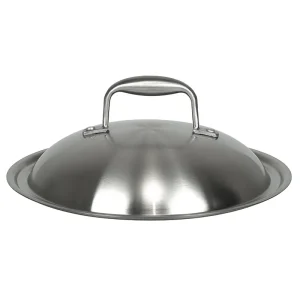
- Measure the inner diameter (ID) across the top sealing edge, not the outer rim or the base of the wok. Only the inner opening determines lid sizing.
- Take two diameter readings perpendicular to each other (cross measurement) to check for out-of-round distortion. If the two readings differ by more than 1 mm, the wok mouth is oval, and the lid must be made to match the larger dimension.
- Record the rim height, outward flare width, and the exact contact surface where the lid rests.
- Set the lid outer diameter tolerance: industry guidance for tight custom fit clearance is +0 mm to +0.5 mm. For low-precision universal lids that fit multiple cookware items, a wider tolerance of ±5 mm may be used, though this is not recommended for dedicated wok matching.
2.1 Common Measurement Mistakes When Sizing a Wok Glass Lid
Buyers and product engineers repeatedly make these sizing errors that lead to mass non-conformity:
- Measuring the outer rim diameter instead of the inner sealing diameter
- Taking the diameter of the wok bottom instead of the top opening
- Measuring only one direction without cross-checking roundness
- Ignoring the outward-flared rim, which physically blocks rigid stainless steel rims from sitting flat
- Using pan or pot lid measurements directly without adjusting for wok curvature
3. Step 2: Match Lid Contour and Rim Structure to the Wok
A correct glass lid for wok must match both the dome curvature and the sealing rim type to the wok’s flared edge. A flat lid designed for saucepans will only touch the highest rim point and leave large gaps around the curve.
Two sealing rim options are available for tempered glass lids, with clear use cases for wok applications:
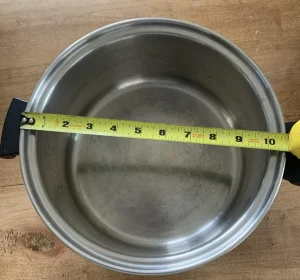
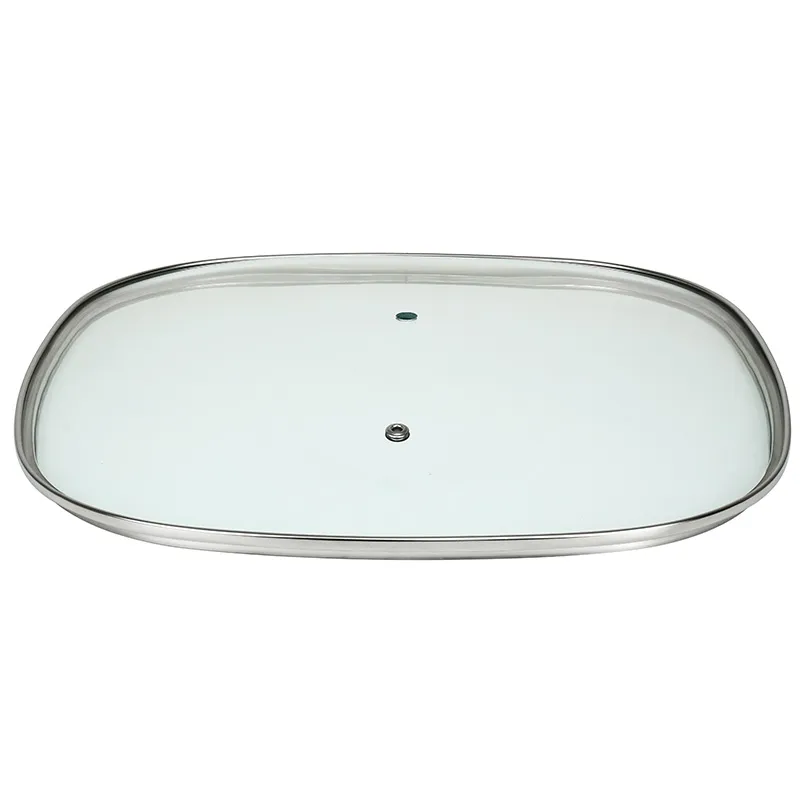
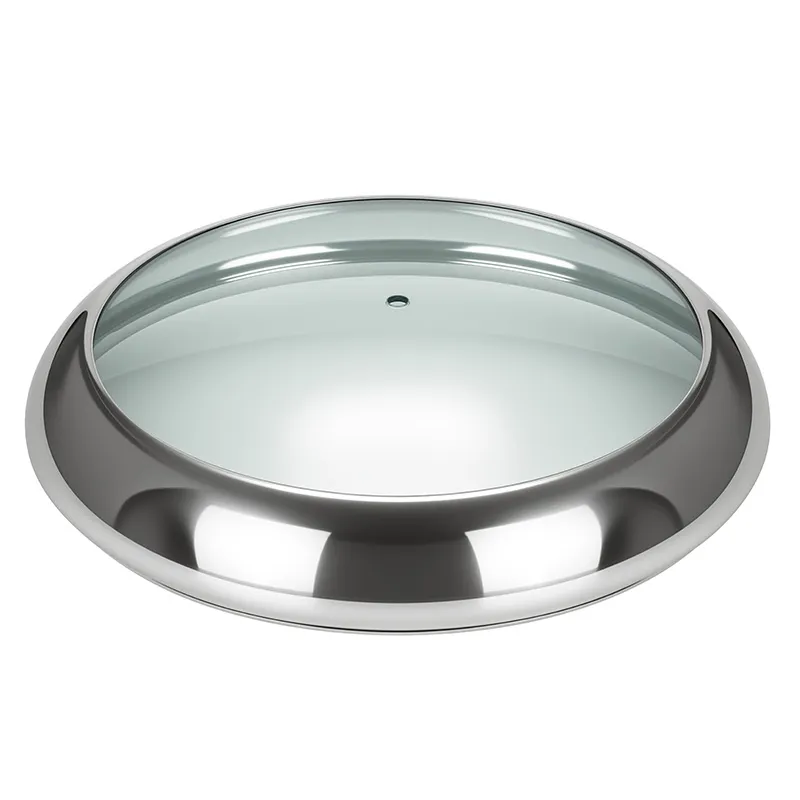
- Stainless steel rim: Rigid metal edging designed for flat, straight vertical pot lips. It cannot flex to follow curved, outward-flaring wok rims, so it only works for woks with minimal rim flare. Learn more about our stainless steel lid series.
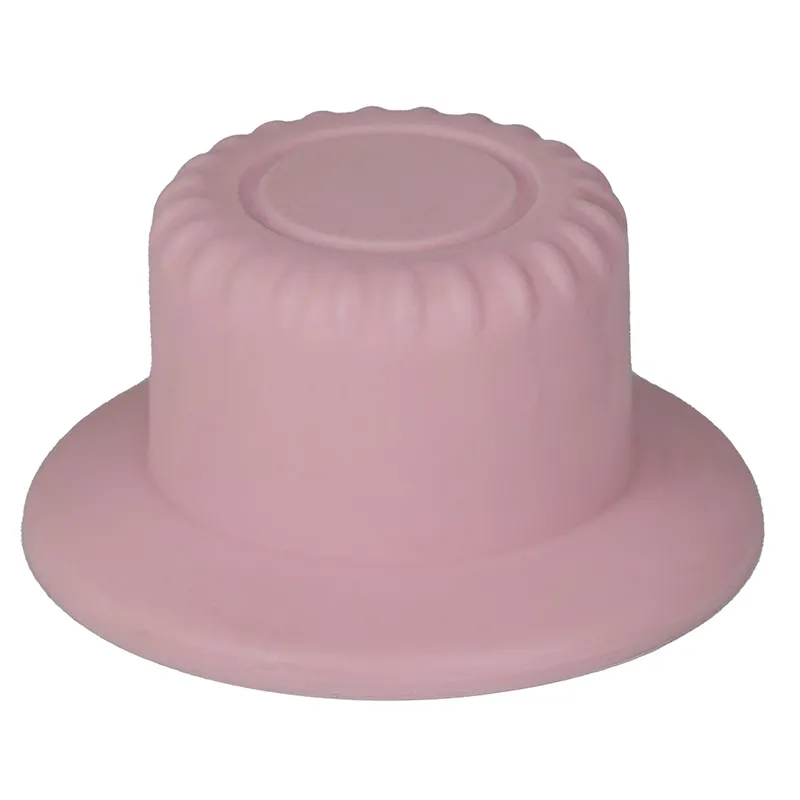
- Tempered glass lid with silicone rim: Flexible food-grade silicone creates a compliant seal that conforms perfectly to uneven, curved wok lips. This is the preferred choice for nearly all traditional curved woks, eliminating gaps and lid wobble. Explore our silicone glass lid range.
Two lid seating structures to define on your technical drawing:
- Flat resting fit: The lid sits directly on the top rim surface
- Recessed snap fit: The lid drops slightly into the rim for tighter containment, requiring extra dimension checks for rim depth.
4. Step 3: Define Handle/Knob Configuration and Clearance
When specifying a tempered glass lid with handle, the top priority is avoiding physical interference between the handle and the wok’s side ears. Many production samples pass dimension checks yet cannot fully close because the knob hits the wok handles.
Key technical parameters to lock in:
- Handle type selection: Short vertical knob for compact woks; long horizontal handle for larger commercial woks. Include stand-up (self-standing) structure if required. Check our assembled glass lid with integrated handles.
- Gap verification: Mark the minimum clearance between the lid handle and wok ears when fully closed; maintain no less than 8 mm of free space on all sides.
- Glass hole safety rule: The edge of the handle mounting hole must sit at a minimum distance of 2 times the glass thickness away from the glass edge to prevent stress cracking during tempering. For a standard 4 mm tempered glass lid, this means the hole edge must be at least 8 mm from the glass perimeter.
- Handle material temperature rating must match the wok’s open-flame cooking environment; Bakelite or phenolic knobs rated above 180°C are standard.
5. Step 4: Specify Steam Vent Design for Wok Cooking
Wok stir-frying creates rapid pressure spikes and high steam output, so steam vent parameters cannot be copied directly from low-temperature stockpot lids. Improper vent sizing causes lid bouncing, liquid boil-over, or excessive heat loss.
Define these vent specifications clearly on your drawing:
- Vent core function: Balance internal pressure, prevent lid jumping and spillage during high-heat cooking.
- Vent position rules:
- The edge of each steam vent hole must be a minimum of 2× glass thickness away from the glass edge and from the handle mounting hole.
- Holes must be chamfered smoothly with no sharp edges; unpolished hole edges create stress points that cause spontaneous glass breakage after tempering.
- Vent size selection:
- Small single hole (5 mm–6 mm): For low-simmer braising
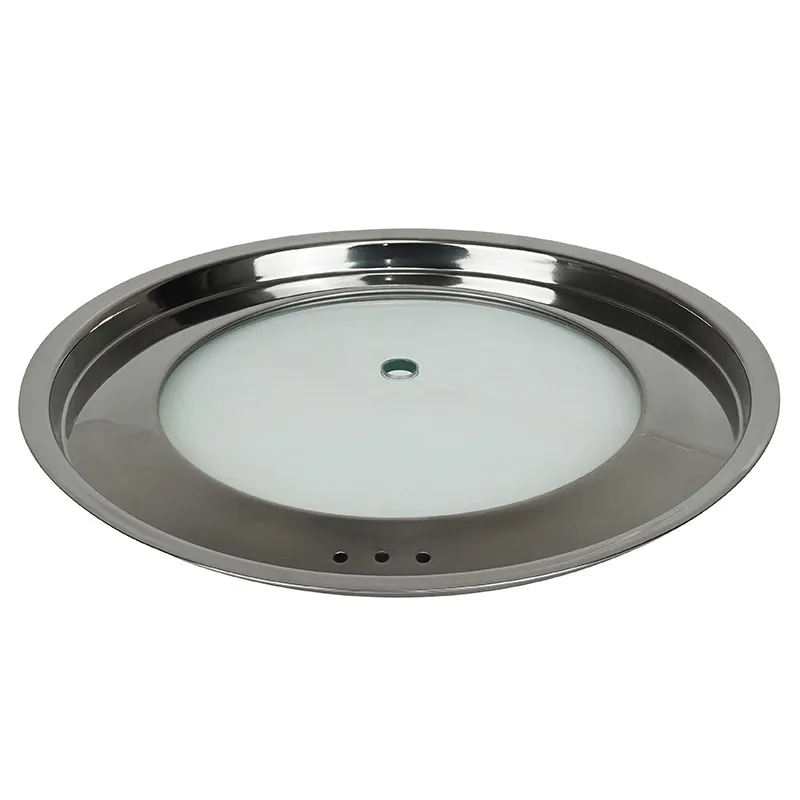
- Dual 4 mm–5 mm holes: For standard stir-frying (the most common wok lid configuration). View our G type glass lid with factory vent holes.
- Adjustable sliding vent: For dual simmer and high-heat cooking scenarios
- Avoid oversized holes: Too large a vent leads to continuous heat escape and inconsistent cooking temperatures.
6. Step 5: Material & Structural Specifications for Tempered Glass Lids
All material requirements must be written into the B2B purchase specification to meet food safety and thermal shock requirements for wok open-flame use.
Glass Body
- Standard thickness: 4 mm or 5 mm tempered soda-lime glass, the common clear glass used for cookware components (4 mm is the mainstream option for wok lids). See our ordinary glass lid for standard soda-lime options.
- Thermal shock resistance: Minimum ΔT of 180°C; premium commercial-grade lids must withstand 220°C–250°C sudden temperature changes without cracking
- All cutting and hole drilling must be completed before tempering; no post-tempering machining is allowed
Sealing Rim Options
- Stainless steel rim: Specify SUS304 grade for rust resistance; sharp edges must be fully deburred and polished.
- Tempered glass lid with silicone rim: Platinum-cured food-grade silicone complying with FDA 21 CFR 177.2600 and LFGB certification; continuous temperature resistance up to 230°C to match wok open-flame heat conditions.
Additional Structural Rules
No sharp corners or unpolished edges; all glass perimeters must be fine ground and polished to reduce stress concentration.
7. Step 6: Drawing Confirmation & Pre-Production Sample Inspection
Before mass production, finalize the technical drawing and carry out physical fit testing of pre-production samples. Written drawings alone cannot catch rim contour mismatch.

Mandatory drawing items
- Exact outer diameter of the glass lid with tolerance range
- Dome curvature profile matching the wok rim arc
- X/Y coordinates for handle hole and steam vent positions
- Mounting hole size and edge-to-hole safety distance
- Silicone rim or stainless steel rim width and depth
- Chamfer dimensions for all drilled holes
Pre-production sample test checklist
- Fit test: Check wobble, gap and seal tightness across the full rim circumference
- Interference test: Fully close the lid and confirm no contact between handle and wok ears
- Vent performance test: Simulate high-heat cooking to check pressure release and boil-over prevention
- Dimensional check: Use calipers to verify all measured dimensions stay within stated tolerance
8. Step 7: Batch Quality & Specification Checklist for Bulk Sourcing
Add these clauses directly into your bulk purchase technical specification to control batch quality:
- Dimensional tolerance: Lid outer diameter ±0.5 mm; hole position tolerance ±1 mm
- Tempered glass quality: Pass thermal shock test (180°C temperature difference); no micro-cracks, chips or edge flaws
- Rim quality: Stainless steel edging must be tightly crimped without looseness; silicone rims must be fully bonded with no peeling
- Steam vent inspection: All holes smoothly chamfered, no sharp cutting edges
- Heat safety: Silicone components must carry valid FDA/LFGB food-grade certification
- AQL 2.5 level inspection for all finished lid shipments
9. Frequently Asked Questions About Wok Glass Lid Specification
Can I use a universal glass lid for a curved wok?
Universal glass lids for cookware only work on flat straight-rim cookware. Their rigid edges cannot conform to flared wok rims, leading to poor sealing. Only a custom contoured lid with a silicone rim will deliver a tight fit on curved woks.
What is the difference between a silicone rim and stainless steel rim for wok lids?
Stainless steel rims are rigid and only fit flat, non-flared wok lips. A tempered glass lid with silicone rim uses flexible soft material that adapts to curved outward flaring rims, making it the standard choice for most traditional woks.
How far should the steam vent be placed from the lid edge?
The edge of the vent hole must be at least two times the glass thickness away from the lid edge. For standard 4 mm glass, the minimum safe distance is 8 mm.
What tolerance should I set for lid outer diameter?
For custom-matched wok lids built to pair with one specific wok model, set outer diameter tolerance to ±0.5 mm. If you are creating a universal lid that fits multiple cookware styles, a wider ±5 mm tolerance may be acceptable, though sealing performance will be less consistent.
10. Final Summary & Next Steps
Specifying a qualified glass lid for wok follows a strict step-by-step B2B engineering workflow designed to eliminate fit failures in bulk production:
- Measure the wok’s inner rim diameter with cross-checks to avoid out-of-round errors
- Match lid dome curvature and select rim type: silicone rim for curved flared wok lips
- Calculate handle placement to eliminate ear interference and maintain glass hole safety spacing
- Define steam vent quantity, size and position with anti-cracking edge distance rules
- Lock down glass thickness, thermal shock ratings and food-grade silicone certification
- Confirm all dimensions on technical drawings and validate fit with pre-production samples
- Write all tolerance and quality test requirements into bulk sourcing documents
The biggest risk in wok lid procurement comes from copying generic glass lid for cookware specs without adjusting for curved wok rim geometry. By documenting every dimension and structural detail above, you can produce a fully compliant technical specification sheet ready to send directly to your manufacturing partner. contact our team for custom wok glass lid development and bulk quotation.